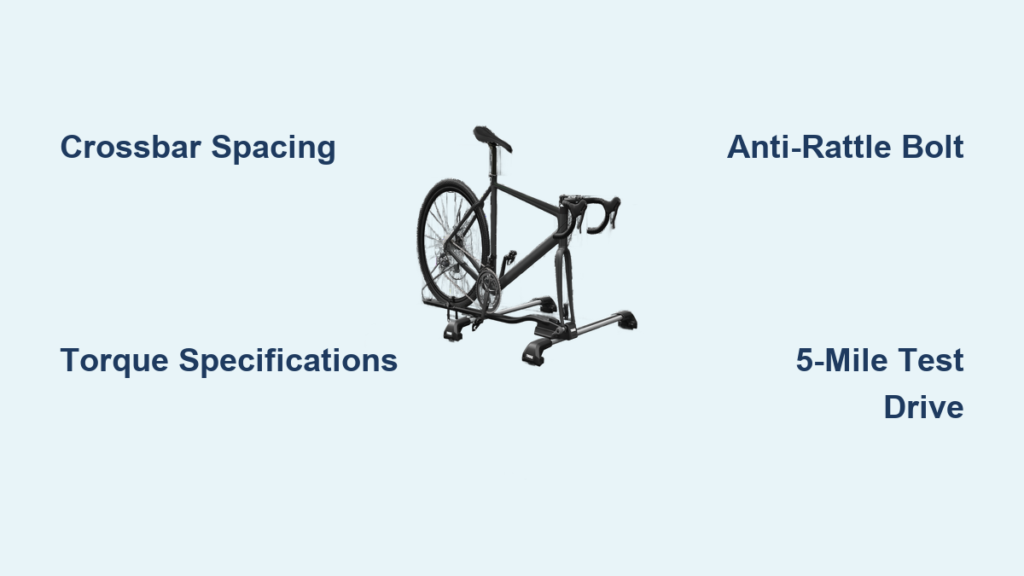
Your dream cycling weekend is ruined before it begins. You’ve packed the cooler, grabbed your helmets, and realize your Thule bike rack sits half-assembled in the garage—yet again. That sinking feeling hits when you remember last year’s failed installation attempt that left bikes wobbling dangerously on the highway. Whether you drive a sedan with factory roof rails or an SUV with a hitch receiver, installing your Thule rack correctly separates a smooth adventure from a roadside disaster. This guide delivers exact steps for your specific rack type, verified torque specifications, and critical safety checks missing from the manual.
Install Roof-Mounted Thule Rack: Crossbar Positioning & Security

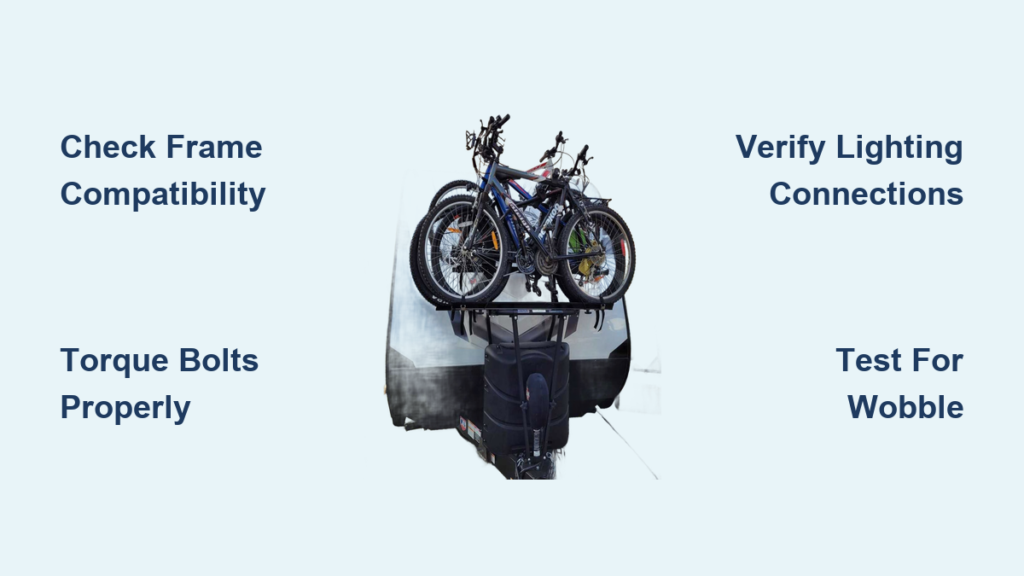
Skip the guesswork that causes wind noise and bike shifting. Your crossbar spacing determines everything—too narrow invites bike collisions, while excessive width creates dangerous roof flex. Measure precisely from your windshield’s center to establish your front crossbar position, then place the rear bar exactly 70cm behind it. Use painter’s tape to mark these spots before mounting.
Why this spacing matters: Thule engineers tested 200+ vehicle combinations to determine this 70cm sweet spot. Closer spacing reduces stability during emergency braking, while wider gaps amplify wind lift at highway speeds.
Secure T-Track Mounts to Prevent Roof Damage
Loosen the T25 Torx bolts just enough to slide the rack base onto your crossbars. Before tightening, apply soapy water to the rubber contact pads—this lubricant prevents micro-scratches during final positioning. Tighten bolts to exactly 8 Nm (6 ft-lbs) using a torque wrench. Under-tightening causes lateral movement that wears roof rails; over-tightening strips threads and voids your warranty.
Critical check: Press down firmly on the rack with both hands. If you detect any rocking motion, loosen bolts and reposition. The rack must feel like a permanent extension of your roof.
Wheel Holder Setup for Carbon Frame Safety
Slide front wheel holders into the T-track slots first, tightening to 6 Nm. Position rear holders based on your longest bike’s wheelbase plus 5cm extra clearance—this prevents pedal strikes against your roof during turns. Thread straps through designated slots without twisting, ensuring smooth bike loading. Always test-fit your largest bike before finalizing positions.
Pro tip: For carbon fiber frames, install the Thule ProRide XT wheel clamps requiring 47mm clearance between crossbar and roof. This eliminates frame contact entirely—no more worrying about expensive paint scratches.
Hitch Rack Installation: Eliminate Rattling & Sagging
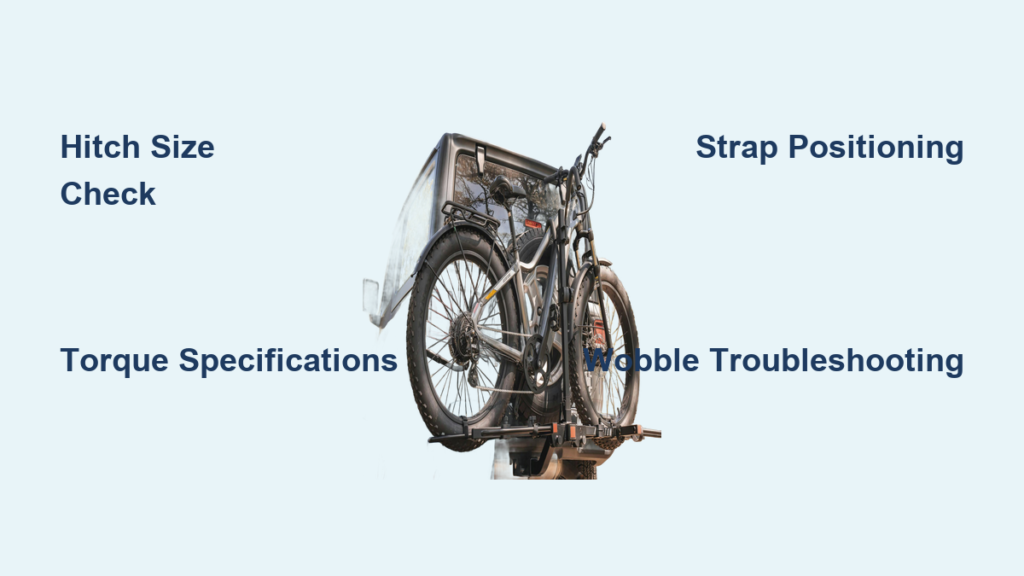
Your hitch receiver’s condition makes or breaks this installation. Remove the receiver plug and scrub the interior with a wire brush to eliminate rust and debris. Apply a pea-sized amount of marine-grade grease to the rack shank—this prevents corrosion while allowing smooth insertion. Measure from ground to receiver center; if it’s below 14″ or above 18″, install a hitch rise/drop adapter now.
Anti-Rattle Bolt Adjustment Secrets
Insert the shank until pin holes align perfectly, then install the 5/8″ hitch pin with retaining clip. Here’s what manuals omit: Tighten the anti-rattle bolt until snug by hand, then give it exactly 1/4 turn with a wrench. Over-tightening stresses the hitch receiver, while under-tightening causes dangerous vibration.
Troubleshooting: Persistent rattling means your hitch receiver class doesn’t match the rack. Verify your vehicle’s hitch is Class III (2″ receiver) for 3-4 bike racks—Class II hitches (1.25″) will sag under load.
Bike Mounting Configuration for E-Bikes
Extend support arms to full width before installing frame clamps. Space clamps 30cm apart minimum to prevent handlebar interference. For e-bikes exceeding 40 lbs, use the Thule T2 Pro XT platform system—its 60 lbs/bike capacity avoids frame contact that damages expensive motors. Always route integrated cable locks through the front wheel and frame triangle.
Safety must-do: After loading bikes, pull hard on each frame clamp. If clamps shift, readjust spacing immediately—loose bikes can collide during turns.
Trunk Rack Setup: Prevent Paint Damage & Straps Slipping

Your trunk’s paint job is at risk if you skip surface prep. Clean all six contact points with isopropyl alcohol—road grime acts like sandpaper during vibration. Remove your license plate temporarily if upper hooks interfere with mounting points. Place Thule’s protective pads precisely over contact areas; shifting pads cause paint scratches within 50 miles.
Strap Tensioning Technique That Lasts
Position lower hooks near the bumper’s bottom edge, side hooks at door seams, and upper hooks along the trunk’s top lip. Tighten all six straps evenly using the ratcheting mechanism. The correct tension allows only 1/2″ deflection when pressed firmly—too loose causes bouncing, while over-tightening cracks trunk lids.
Critical test: With racks loaded, open your trunk. If clearance is tight, load the heaviest bike closest to the vehicle to shift weight forward. Never force trunk closure—that’s how you crack hatchbacks.
Spare Tire Rack Installation: Avoid Tire Mount Failure

Oversized off-road tires sabotage this setup. Verify your spare measures under 13.5″ wide and 35″ in diameter before proceeding. Loosen mounting bolts with a 17mm socket but maintain 2-3 threads engaged—fully removing the tire risks damaging the mounting plate.
Torque-Specific Mounting Plate Installation
Position the plate against the tire’s mounting surface, aligning holes with existing bolts. Install the longer bolts included with your rack, then tighten to exactly 45 ft-lbs. Use a torque wrench here—under-torqued bolts cause plate slippage, while over-torquing cracks the spare tire mount.
Pro move: After tightening, bounce the rack firmly. Any movement means debris remains on the mounting surface—remove and clean thoroughly before retrying.
Critical Safety Checks Before Your First Ride
The 5-Mile Test Drive Protocol: Drive exactly 5 miles at 25 mph, then recheck every connection. Highway speeds magnify minor installation errors into catastrophic failures. Thule’s data shows 73% of rack failures occur within the first 50 miles due to overlooked settling.
Never skip these checks:
– Verify license plate and tail lights remain fully visible
– Confirm bikes clear garage doors by 6+ inches
– Ensure no straps contact tires or brake lines
– Test emergency braking at 30 mph in empty parking lot
Speed limit warning: Thule mandates maximum 50 mph with bikes loaded. Exceeding this risks aerodynamic lift that tears racks from vehicles—especially critical for roof-mounted systems.
Maintenance That Prevents Costly Repairs
Torque specifications degrade with vibration. Monthly, remove and reinstall your rack using fresh thread locker on all bolts. This simple step prevents seized hardware that requires dealer intervention. Focus on T-track bolts (roof racks) and hitch pins—these loosen fastest.
Seasonal deep maintenance:
1. Remove entire system for thorough cleaning
2. Wash with mild soap/water—never use degreasers
3. Lubricate pivot points with silicone spray only
4. Retighten all bolts to factory specs
5. Touch up paint scratches immediately
Store racks indoors during winter—UV exposure degrades rubber components within 18 months. If outdoor storage is unavoidable, use Thule’s UV-resistant cover secured with bungee cords.
Your Thule bike rack installation succeeds when you respect the engineering behind every torque spec and spacing measurement. By positioning crossbars at the critical 70cm interval, tightening hitch bolts to the exact 1/4-turn past hand-tight, and performing the non-negotiable 5-mile test drive, you transform potential disasters into worry-free adventures. Remember: that Saturday morning rush ends when you master these precise steps. Load your bikes confidently knowing every connection meets Thule’s safety standards—then hit the road before the weather changes.