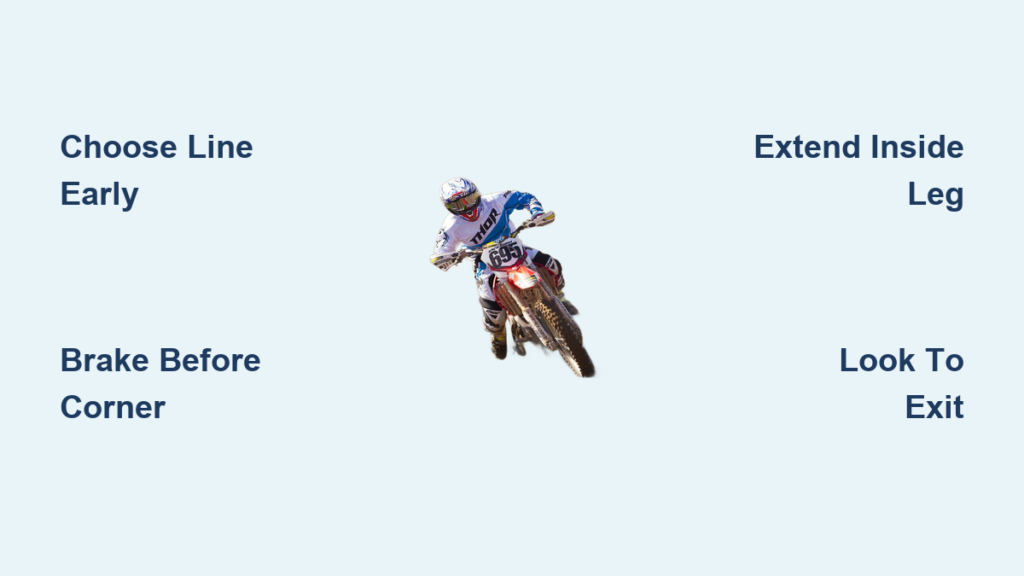
Every race you’ve ever lost came down to corners, not straightaways. While throttle control gets you down the straights, mastering dirt bike cornering is what separates podium finishers from the pack. Seasoned riders gain or lose critical seconds in every single turn, making cornering proficiency the most valuable skill in your riding arsenal. Whether you’re navigating tight forest trails or competitive motocross tracks, these techniques transform weak cornering into your greatest strength.
The truth is simple: following a skilled rider reveals exactly where you’re bleeding time—those seemingly identical corners they blast through while you struggle. This time loss compounds lap after lap until you’re hopelessly behind. But here’s the good news: with targeted practice of these specific techniques, you’ll learn the exact sequence of setup, execution, and exit that transforms your cornering from a liability to your secret weapon.
Complete These 3 Steps Before Every Dirt Bike Corner (Avoid Last-Minute Panic)
Your cornering success is determined before you even enter the turn. Rushing setup guarantees poor execution, while deliberate preparation creates smooth, confident cornering. The riders who consistently lose time scramble at the last moment—they’re still braking as they enter the turn or frantically shifting position mid-corner.
Choose Your Line Before You See the Corner Entrance
Commit to your line while you’re still approaching the turn, not when you’re already inside it. Identify your entry point, apex, and exit well in advance—this mental preparation gives you time to adjust speed and position without panic. The moment you spot an upcoming corner, immediately select your path and stick with it. This proactive approach eliminates the hesitation that kills momentum and creates instability.
Finish All Braking Before the Corner Begins
This rule becomes critical when facing braking bumps on your approach. Stand up to absorb these bumps if present, keeping elbows flexed and core engaged. Never use the clutch during braking—it reduces stopping power and delays your throttle response when you need it most. Complete your deceleration while traveling straight, then release the brake lever fully before initiating your turn.
Position Your Body for Optimal Weight Distribution
Once braking ends, slide forward into the pocket of the seat just behind the fuel tank lift. This placement creates ideal weight balance for cornering—enough forward weight for steering precision while maintaining rear traction for acceleration. Your inside leg should extend outward as high as possible with toes pointing inward. This position feels unnatural at first but provides crucial stability during turns.
Why Your Inside Leg Position Makes or Breaks Dirt Bike Cornering

Most riders underestimate how dramatically inside leg positioning affects cornering performance. Your leg extension creates stability, lowers your center of gravity relative to the bike’s lean angle, and provides a quick-attach point for regaining control during exit. Ignoring this fundamental element undermines every other aspect of your technique.
Keep Your Body Straight from Hips to Shoulders
Maintain a stable spine as your central axis while allowing the bike to move beneath you. Your elbows should point upward and outward, ready to absorb unexpected movements without losing grip or becoming rigid. Riders with locked arms constantly fight their bike instead of working with it through corners.
Look Where You Want to Go, Not Where You Are
Your head position affects cornering more than you realize—the bike naturally follows your gaze. During setup, look at the corner entrance; as you enter, shift focus to the apex; while traversing the corner, look at the exit; and once exiting, immediately scan ahead to the next obstacle. This continuous forward-looking habit becomes instinctive with practice and dramatically improves your line selection.
How to Conquer Rutted Berms Without Wiping Out
Rutted corners provide vertical tire support that makes them somewhat easier than flat corners—but only if you use the correct technique. The key decision involves your braking and throttle approach through the turn, with two successful methods depending on corner characteristics and your riding style.
Choose Between Two Effective Braking Techniques
Some riders get completely off the rear brake before entering the rut, then coast through until applying throttle at the transition point. This method provides smooth, predictable entry and allows the bike to settle into the rut without fighting brake inputs. Others prefer braking through the corner entry and applying gas at the transition point—this maintains more consistent speed but requires precise timing.
Maximize Rut Support With Proper Body Position
Keep your leg up with the foot extended outward and toes pointing inward. The rut’s vertical containment allows you to lean the bike more aggressively than on flat ground while maintaining confidence. Use this terrain support to carve smooth arcs rather than fighting to maintain a straight line through the corner.
Flat Corners Demystified: The Speed vs. Traction Balance You’re Missing
Flat corners present the greatest challenge because they lack natural support for your tires. Without berms or ruts, you must create traction through precise body positioning and throttle control. Many riders approach these corners incorrectly, either slowing too much or carrying excessive speed.
Lean the Bike While Keeping Your Body Upright
Position yourself on the edge of the seat and lean the bike beneath your stable upper body. This technique places more weight on the outside peg, allowing the bike to turn while your center of mass remains stable. Slowing too much in flat corners often causes more problems than carrying appropriate momentum—you need sufficient speed for tire edges to hook up effectively.
Apply Throttle Smoothly, Not Aggressively
Progressive throttle application maintains momentum without triggering traction loss. If the bike begins to step out, subtle front brake application can help regain control—this technique requires practice to apply correctly without losing momentum. Jerky throttle inputs disrupt the delicate balance needed for flat corner traction.
Sand Cornering Secrets: Why Sitting Beats Standing in Deep Powder

Sand transforms cornering into an entirely different challenge that can humble even experienced hardpack riders. Deep sand requires specific techniques that contradict what works on harder surfaces. The key is keeping the front tire from knifing or diving while maintaining enough momentum to hold your line.
Slide Back on the Seat With Extreme Inside Leg Extension
Position yourself noticeably rearward on the seat and extend your inside foot toward the front fender. This extreme position keeps the front end light and responsive, preventing sudden steering changes when the front tire encounters soft sand. Standing through sand corners reduces control—stay seated for better stability in soft conditions.
Maintain Consistent Throttle Through the Turn
Lay off heavy braking while applying steady throttle input through the corner. The soft sand provides ample contact patch, allowing you to lean hard into corners while maintaining power. Heavy braking transfers weight forward and can instantly cause the front tire to knife into the sand.
The Smooth Exit Technique That Preserves Your Hard-Earned Momentum
Your corner exit determines whether all your careful cornering work pays off or falls apart. Smooth acceleration carries you onto the next section with momentum, while jerky throttle application wastes the speed you carefully maintained through the turn.
Return Your Inside Leg to the Peg Immediately
As you approach the exit, bring your inside leg and foot back to the peg as quickly as possible. This quick return provides a stable platform for applying power and improves overall bike control during acceleration. The longer you leave that leg extended, the more unstable your position becomes when you need maximum control.
Shift Your Vision to What’s Ahead
During exit, immediately look forward to identify what’s coming next—another corner, straight section, or obstacle. This forward-looking habit prevents the mental hiccup that occurs when you finish one corner and suddenly have to process what’s ahead. Smooth throttle application transfers weight to the rear wheel while maintaining traction.
3 Deadly Dirt Bike Cornering Mistakes Even Experienced Riders Make
Understanding what not to do accelerates your learning curve almost as much as practicing correct techniques. These common errors undermine cornering performance even among riders who consider themselves skilled.
Slowing Too Much Out of Fear of Going Wide
This counterproductive cycle creates more problems than it solves—slowing excessively makes maintaining your line more difficult than carrying appropriate momentum. The mental block of taking corners too slowly often becomes self-defeating, limiting both your speed and enjoyment.
Taking Weight Distribution Advice Too Far
In sand, the common advice to keep weight back can be overdone, causing the front tire to lose steering effectiveness. A more balanced position typically outperforms extreme weight placement. Conversely, some riders remain too far forward when conditions require more rearward bias.
Staring at Your Front Fender Instead of the Exit
This vision mistake affects cornering quality more than most riders realize. The bike follows where you look, so focusing on the front fender literally steers you into the ground rather than through the corner. Looking at the apex and exit improves line selection and overall cornering flow.
15-Minute Cornering Drills That Build Muscle Memory Fast
Deliberate practice accelerates skill development far more effectively than simply riding more laps without focus. When practicing cornering, resist the urge to go fast immediately—instead, focus intensely on specific technical elements at controlled speeds.
Practice Entry Setup at Walking Pace
Focus exclusively on one element per session—body position, throttle control, or vision—to develop proper habits without speed pressure. During setup practice, check your elbow height, leg extension, and head position on every corner. These isolated practices build individual skills that combine into dramatically improved overall cornering.
Transition Between Sitting and Standing Positions
Practice moving between positions through corners to develop the ability to adjust based on terrain. This builds the muscle memory needed for quick adjustments during actual riding without conscious thought. Gradually increase speed as techniques become instinctive, but never sacrifice proper form for velocity.
Mastering dirt bike cornering requires understanding interconnected elements including setup, body position, throttle control, and vision. The most critical habits include setting up for turns early, completing all braking before entering the corner, and positioning your body forward into the seat pocket. Throughout the corner, smooth throttle control replaces aggressive inputs, with minimal clutch use. If the bike steps out, subtle front brake application helps regain control. Progress comes through deliberate practice focused on specific elements, combined with the confidence to maintain appropriate speed through corners rather than slowing excessively. Take these techniques to your local track or trail, practice the drills systematically, and watch your cornering transform from a weakness into a strength that sets you apart from other riders.