Your dirt bike foot position directly determines how well you control the bike across technical terrain, yet most new riders never receive specific instruction on proper foot placement techniques. When your feet sit correctly on the pegs, you transform your legs into active suspension components that absorb impacts while keeping your upper body stable for precise handlebar control. New riders often struggle with flat-footed positioning that transfers every bump directly to their spine, causing fatigue and reducing trail awareness. This guide reveals the exact foot placement techniques professional riders use to maintain control through rocks, roots, and challenging off-road conditions—techniques that work whether you’re riding a 50cc beginner bike or a 450cc trail machine.
The relationship between your dirt bike foot position and overall bike handling creates a critical feedback loop where proper technique enables better trail reading and obstacle navigation. When you position your feet correctly, you gain the stability to focus on upcoming terrain rather than constantly correcting balance issues. Many riders discover that refining their foot placement habits delivers immediate improvements in confidence and control without requiring expensive equipment upgrades. By implementing these techniques consistently, you’ll develop the muscle memory that separates casual trail riders from those who handle challenging terrain with apparent ease.
Ride on Balls of Your Feet for Instant Terrain Response
Positioning your feet on the balls rather than flat on the pegs creates immediate improvements in bike control that compound during technical riding. This specific dirt bike foot position allows your ankles to function as additional suspension points, absorbing small bumps through natural joint movement rather than rigidly transferring impacts to your knees and hips. When riding on the balls of your feet, you maintain constant micro-adjustments to your balance that keep the bike stable through changing terrain without requiring major upper body corrections.
Achieve Optimal Suspension Through Ankle Flex
Your ankles become critical shock absorbers when properly positioned on the balls of your feet. As you encounter trail irregularities:
- Allow your ankles to flex upward when hitting bumps
- Maintain slight knee bend to work with your ankle movement
- Keep weight centered over the foot pegs rather than leaning back
- Practice this position standing on smooth terrain before attempting technical sections
This technique prevents the “pogo-stick” effect where rigid legs cause the bike to bounce uncontrollably through rough sections. The ball-of-foot position gives you the flexibility to absorb impacts while maintaining consistent contact with the pegs for immediate control access.
Maintain Gear Shifter and Brake Access Simultaneously
The neutral ball-of-foot position creates what experienced riders call a “ready stance” that balances multiple control requirements:
- Left foot stays positioned to reach the shifter with minimal movement
- Right foot maintains constant contact with the rear brake pedal
- Weight distribution stays centered for optimal balance
- Ankle flexibility allows quick transitions between controls
After executing gear shifts, immediately return to this neutral position rather than resting your foot on the shifter. This habit ensures consistent brake access and maintains your suspension benefits throughout the entire ride.
Fix Your Gear Shifter Position for Clean, Confident Shifts
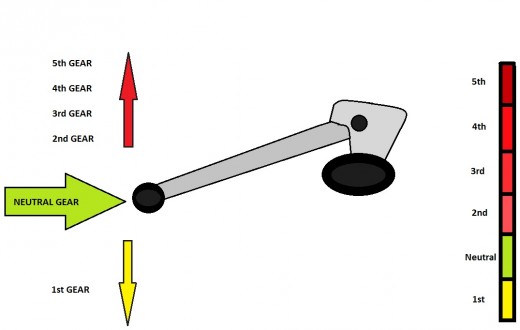
The optimal gear shifter position sits slightly above the foot peg surface, creating an ergonomic angle that allows you to engage gears with minimal foot movement. When properly adjusted, your left foot should reach the shifter with only a slight forward extension while maintaining the ball-of-foot position on the peg. Shifter positioning that requires significant foot movement disrupts your balance and compromises the suspension benefits of proper dirt bike foot position.
Diagnose If Your Shifter Sits Too High or Too Low
Check your shifter position by standing on the pegs in riding position:
- If you must lift your heel significantly to reach the shifter → shifter is too high
- If you struggle to find the shifter without looking down → shifter is too low
- If shifting causes your right foot to accidentally contact the brake → shifter is too close to brake
Shifter height issues create a cascade of control problems that undermine your confidence during technical riding sections where precise gear selection matters most.
Adjust Shifter Height for Seamless Gear Changes
Make small adjustments to your shifter position until you achieve these characteristics:
- Minimal foot movement required to engage shifter
- No need to change foot angle during shifts
- Immediate return to neutral position after shifting
- Consistent shift quality in both directions
Many riders find factory shifter positions don’t match their anatomy or riding style. Take time to fine-tune this critical control point until gear changes become automatic without disrupting your riding posture.
Master Rear Brake Control with Proper Foot Placement
The rear brake pedal should sit at or slightly below the foot peg level to enable quick, controlled access without causing accidental engagement during normal riding. Proper positioning allows you to maintain constant contact with the brake pedal—the “covered brake” technique—that dramatically reduces reaction time when sudden speed reduction becomes necessary. This covered position creates a state of readiness that doesn’t interfere with normal riding but provides immediate response capability when unexpected obstacles appear.
Cover the Brake Without Accidental Engagement
Practice these techniques to maintain proper rear brake coverage:
- Rest the ball of your foot lightly on the brake pedal surface
- Keep your heel slightly elevated above peg level
- Apply pressure with the ball of your foot rather than toes or heel
- Maintain constant contact even during standing riding positions
This technique becomes particularly valuable during technical sections where sudden obstacles require immediate speed adjustments without disrupting your balance.
Customize Brake Pedal Feel for Your Riding Style
Individual preference plays a significant role in optimal brake positioning:
- Experiment with using your big toe versus ball of foot for braking
- Adjust brake spring tension for clearer feedback (many prefer slightly heavier springs)
- Consider your boot sole thickness when determining final position
- Test different positions on varied terrain before making permanent adjustments
The goal is finding a position that allows immediate brake access while eliminating accidental engagement from normal riding movements.
Shift Gears Without Losing Control: The Neutral Position Method

Professional riders follow a specific sequence for gear changes that maintains control throughout the shifting process. When a gear shift becomes necessary, move your left foot forward to engage the shifter, execute the shift, and immediately return to the neutral ball-of-foot position. This forward-neutral-forward movement pattern preserves your suspension benefits and keeps your right foot positioned for immediate brake application.
Execute Smooth Left Foot Movement for Perfect Shifts
Develop this muscle memory through deliberate practice:
- Start in neutral ball-of-foot position on both pegs
- Move left foot forward only as far as needed to engage shifter
- Complete shift with minimal foot movement
- Return left foot to neutral position immediately
- Verify right foot remains in brake coverage position
Riders who maintain pressure on the shifter after shifting often develop inconsistent foot placement that compromises control during technical sections.
Fix These 5 Common Dirt Bike Foot Position Mistakes
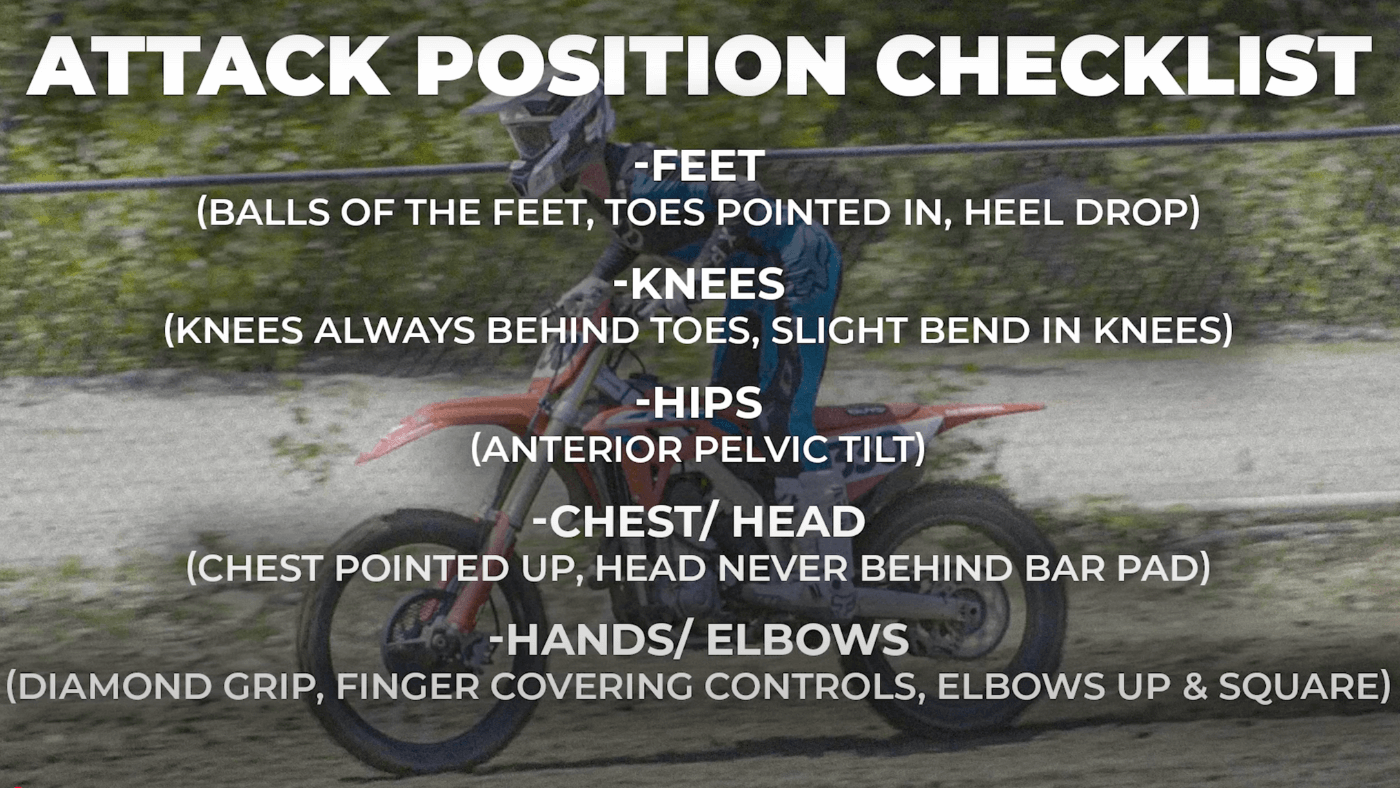
Many riders unknowingly develop habits that undermine their control and comfort. Recognizing and correcting these common errors delivers immediate improvements in riding performance:
- Flat-footed positioning that eliminates ankle mobility and transfers impacts to your spine
- Feet sliding forward on pegs during braking, which disrupts balance and control access
- Heel-down riding that creates an unstable platform and reduces leg extension range
- Toes pointed downward that strains calf muscles and reduces brake control effectiveness
- Inconsistent foot placement after gear shifts that creates delayed brake response
The correct neutral position maintains your feet parallel to the ground with weight distributed across the ball of the foot and toes pointing naturally forward.
Adapt Foot Position for Technical Terrain Challenges
Technical terrain demands specific foot position adjustments that prioritize immediate control access over long-term comfort. In situations with limited visibility and rapidly changing trail conditions, you benefit from maintaining heightened readiness with your feet positioned for instant control access. The ball-of-foot position remains optimal even in technical terrain, as it provides the best combination of control access and leg suspension benefits regardless of trail difficulty.
Navigate Rocks and Roots with Precision Foot Placement
When riding technical sections:
- Increase ankle flex to absorb larger impacts
- Slightly widen foot placement for greater stability
- Maintain consistent brake coverage for sudden obstacles
- Keep weight centered rather than leaning back excessively
Balance Speed and Control on Flowing Trails
On open trails with good visibility:
- Relax ankle tension slightly while maintaining ball-of-foot position
- Allow more natural weight transfer during turns
- Focus on smooth transitions between standing and seated positions
- Practice maintaining consistent foot placement at higher speeds
Build Automatic Foot Position Habits That Last
Consistency in dirt bike foot position creates the foundation for developing advanced riding skills that depend on predictable control access. Start each ride with conscious attention to your foot placement, checking that you’re maintaining the ball-of-foot position and keeping your brake covered during technical sections. Practice foot position awareness in safe environments until these techniques become automatic, freeing your mental capacity for trail reading and obstacle navigation.
The most successful off-road riders treat proper dirt bike foot position as a living skill that continues developing throughout their riding career. By implementing these techniques consistently and refining them through experience, you’ll transform your foot placement from a conscious effort into an automatic foundation for confident, controlled riding across all terrain types.