Stranded with an empty tank miles from the nearest gas station—that’s the nightmare scenario every off-road rider fears, yet it happens daily to riders who misunderstand their dirt bike gas mileage. Whether you’re navigating tight single-track trails or blazing across open desert, knowing exactly how far your bike will carry you on a single tank transforms anxiety into confidence. The truth? Your actual range could be 50% less than manufacturer estimates depending on your riding style and terrain, with most dirt bikes delivering between 25-60 miles per gallon in real-world conditions. This guide cuts through the confusion to give you precise fuel consumption data for every major displacement class, revealing exactly what to expect from your specific machine under different riding conditions.
Most riders discover the hard way that official fuel economy figures rarely match reality once they hit the trail. A 450cc machine might manage just 25 miles per gallon in sand dunes while the same bike achieves 40 mpg on flowing fire roads. Understanding these dramatic variations—and learning to calculate your personal consumption rate—means the difference between completing that epic backcountry loop or pushing your bike home in the dark. Let’s break down exactly what affects your dirt bike gas mileage and how to maximize every drop of fuel.
Why Your 450cc Bike Drains Fuel Twice as Fast as Smaller Models
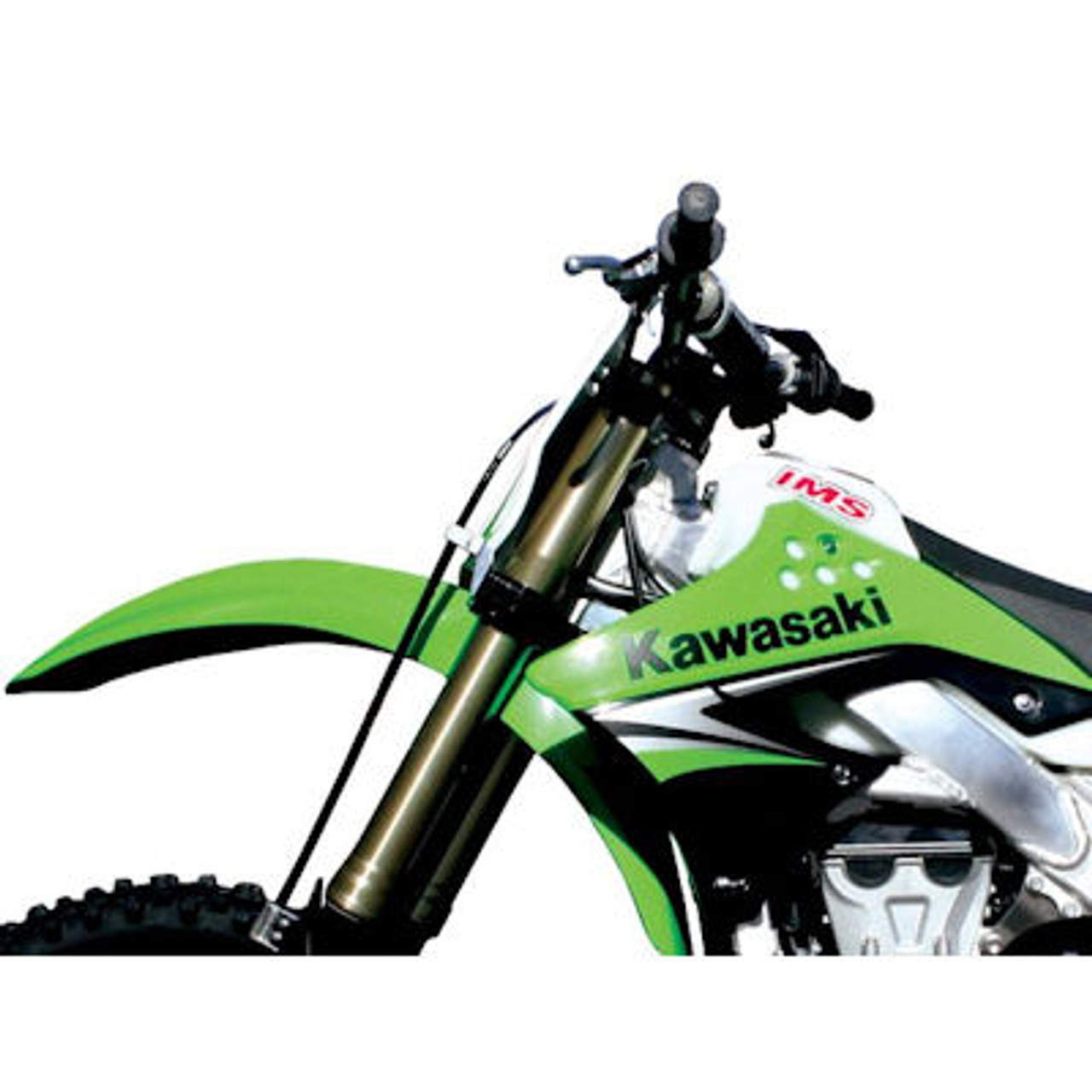
Larger displacement dirt bikes deliver thrilling power at the cost of significantly reduced fuel economy, creating a critical trade-off for serious trail riders. The Kawasaki KX450, for example, consistently achieves only about 25 miles per gallon during trail riding, forcing riders to calculate fuel stops every 25-40 miles depending on tank size. Suzuki RMZ450 owners report just 40 minutes of runtime on most tracks during aggressive riding, with some experiencing complete fuel depletion before finishing long practice sessions.
These high consumption rates aren’t just an inconvenience—they fundamentally impact your riding strategy. Competitive desert racers routinely install aftermarket 3.5-gallon tanks on their 450s (replacing the standard 2-2.5 gallon units) or carry auxiliary fuel containers to complete endurance events. If you’re riding a large-displacement machine in remote areas, always assume your actual range will be 20-30% less than optimistic manufacturer claims, especially when navigating soft terrain or riding aggressively.
Two-Stroke Efficiency Surprises You Might Not Expect
Contrary to popular belief, two-stroke dirt bikes often deliver better-than-expected fuel economy in real-world off-road applications. The KTM 300 XC-W, despite its reputation for explosive power delivery, achieves 18-20 miles per gallon when ridden aggressively—a figure that improves significantly with smoother throttle control. Many riders transitioning from four-strokes to two-strokes are pleasantly surprised by the reasonable economy these lightweight machines provide when properly maintained.
Critical mistake to avoid: Two-strokes consume fuel most efficiently at partial throttle openings rather than full throttle. The very power delivery that makes two-strokes so fun—explosive acceleration through the powerband—actually worsens fuel economy. For maximum range, maintain steady throttle positions in higher gears rather than constantly blipping the throttle over obstacles.
How Your Riding Style Slashes Range by 40% Without Warning
Aggressive throttle inputs represent the single biggest factor destroying your dirt bike gas mileage, often cutting effective range by nearly half compared to smooth riding techniques. Riders who constantly “brap” the throttle over obstacles—rapidly modulating between closed and wide-open throttle—create inefficient combustion cycles that waste substantial fuel with each acceleration burst. Each unnecessary throttle blip that doesn’t contribute to forward momentum represents pure fuel waste.
Lighter riders consistently achieve better fuel economy than heavier counterparts on identical machines, with professional test riders around 140 pounds reporting noticeably better mileage. But weight isn’t destiny—your technique matters more. Pro tip: Practice riding technical sections in higher gears at moderate RPM rather than constantly downshifting and hammering the throttle. This smoother approach maintains momentum with less fuel consumption, particularly on flowing trails where consistent speed trumps explosive acceleration.
Sand Riding: The Silent Fuel Killer You Can’t Ignore
Nothing drains your fuel tank faster than sand riding, with consumption rates often doubling compared to firmer terrain. When your bike constantly sinks into soft sand, the engine works dramatically harder to maintain forward progress, burning through fuel at alarming rates. Many riders report their tanks emptying in just 20-30 miles during aggressive sand riding sessions—less than half the range achievable on hard-packed trails.
Rocky terrain and steep hill climbs create similar but less extreme fuel consumption spikes, as intermittent full-throttle applications for obstacle clearance increase average consumption. For accurate range planning, always calculate your fuel needs based on the most demanding terrain you’ll encounter, not the easiest sections of your route. If your next ride includes significant sand sections where consumption drops to 30 mpg, plan accordingly rather than relying on your usual 50 mpg trail riding figure.
Maintenance Mistakes That Waste a Quarter Tank Before You Ride

A neglected air filter can silently destroy your dirt bike gas mileage by forcing the engine to run rich, wasting fuel without obvious performance symptoms. Clogged filters restrict airflow, causing the engine management system to add extra fuel to compensate, which means you’re literally burning money with every ride. Checking and cleaning your air filter after every dusty ride maintains peak efficiency and prevents the gradual performance degradation that often goes unnoticed until your range noticeably decreases.
Critical oversight: Incorrect tire pressure significantly impacts fuel consumption. Underinflated tires increase rolling resistance substantially, requiring more engine power to maintain speed. Check your pressure before every ride—manufacturer-recommended levels optimize the balance between traction and efficiency for your specific riding conditions. Even a 2-3 PSI difference can noticeably affect your range on long rides.
Carburetor Jetting Errors That Drain Your Tank
Improper carburetor jetting represents one of the most common yet overlooked causes of poor fuel economy, particularly for riders who’ve modified their exhaust systems or ride at varying elevations. A too-rich jetting setup drowns the engine in excess fuel, while a too-lean setup creates inefficient combustion that wastes fuel through incomplete burning. For fuel-injected models, a dirty throttle position sensor can create similar issues by sending incorrect signals to the ECU.
The solution? Regularly inspect your spark plugs—black, sooty deposits indicate a rich condition wasting fuel, while white or blistered electrodes suggest a lean condition that reduces efficiency. Proper jetting tailored to your riding conditions and elevation can improve your dirt bike gas mileage by 10-15% without sacrificing performance.
Calculate Your True Fuel Consumption in 3 Simple Steps

Manufacturer tank capacity figures often mislead riders by underestimating actual volume, as internal passages hold additional fuel beyond the visible tank level. To determine your bike’s real-world range, perform this simple test: Fill your tank completely until fuel reaches the overflow, reset your trip meter, ride a representative route, then refill to overflow and record the exact amount required.
Step-by-step measurement:
1. Fill tank to absolute capacity (until fuel appears in overflow tube)
2. Record starting odometer reading or reset trip meter
3. Ride a route matching your typical conditions (30+ miles for accuracy)
4. Refill to exact same overflow point and note fuel amount used
5. Divide distance by fuel consumed to get your true MPG
Repeat this process under different conditions (tight trails vs. fire roads) to establish consumption ranges rather than relying on a single optimistic figure. Many riders discover their bikes hold 10-15% more fuel than advertised, significantly extending their estimated range.
Extend Your Range 50% Without Modifying Your Bike

Carrying a single gallon of reserve fuel in a purpose-built container effectively doubles the range of most dirt bikes, providing critical peace of mind for remote area riding. High-quality motorcycle-specific fuel containers like the MSR Fuel Container or Repsol Moto Jerrycan feature secure mounting points and safe transfer systems that prevent spills during transport.
Proven range-extending strategies:
– Mount a 1-gallon auxiliary tank using bungee cords to fork tubes
– Use a 2-liter hydration pack filled with fuel (separate from drinking reservoir)
– Carry fuel in a reinforced antifreeze jug strapped securely to rear rack
– Install a permanent siphon system allowing auxiliary fuel to feed into main tank
For multi-day adventures, consider the Beta 300 with an IMS 3.5-gallon tank—this combination delivers exceptional range without requiring external containers. While larger tanks add weight that affects handling, the trade-off proves worthwhile when fuel sources are scarce.
Practical Range Planning That Prevents Stranded Riders
Smart riders calculate expected range based on worst-case consumption rates rather than optimistic averages. If your 250cc machine typically achieves 40 mpg but you’re heading into sand dunes where consumption drops to 25 mpg, plan accordingly. Many experienced trail riders carry at least one additional gallon of fuel for rides extending beyond 50 miles from established roads.
Critical safety margin: Never push beyond 80% of your calculated range in remote areas. If your bike holds 2 gallons and consumes 25 mpg, that’s a theoretical 50-mile range—but in reality, you should turn around at 40 miles to account for unexpected terrain challenges or riding intensity increases. Time-based monitoring provides real-time feedback: if you expect to cover 50 miles in 2 hours but notice faster-than-expected fuel consumption after the first 25 miles, reduce pace immediately or turn back before depleting your supply.
Understanding your specific dirt bike gas mileage patterns transforms fuel management from a source of anxiety into a predictable aspect of ride planning. By accounting for engine displacement, typical terrain, riding style, and maintenance practices, you’ll gain the confidence to tackle longer adventures knowing exactly how far your bike will carry you on each tank of fuel.