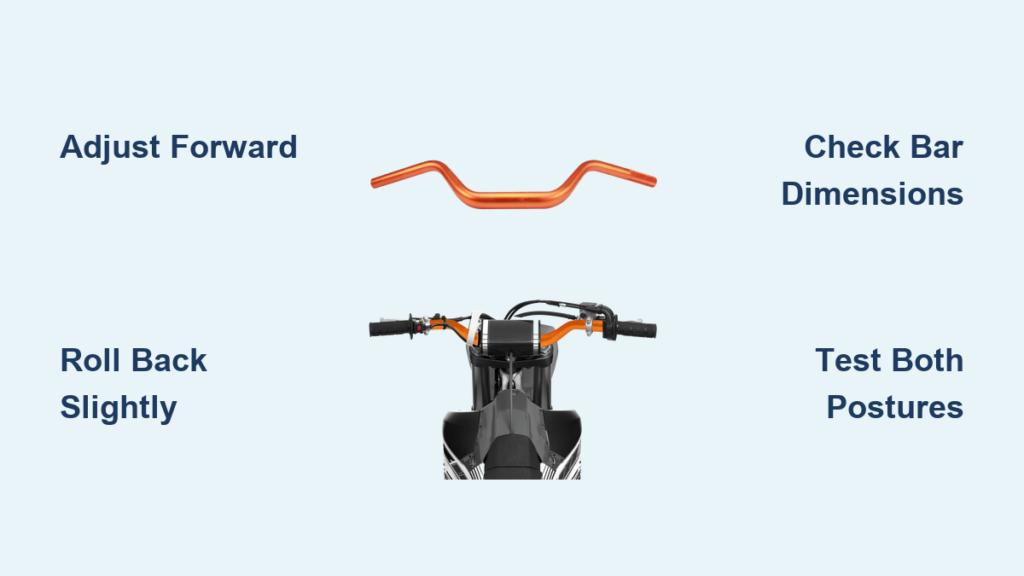
Your dirt bike handlebar position directly impacts your control, comfort, and confidence on the trail—whether you’re navigating technical singletrack or charging through berms at speed. Getting this fundamental adjustment right transforms how your bike responds to input, how your body absorbs impacts, and how effectively you can execute critical riding techniques. When your handlebars sit in the optimal position, you’ll notice improved front wheel control, reduced fatigue during long rides, and more precise cornering. This guide shows you exactly how to dial in your handlebar position for maximum performance based on your riding style, body proportions, and specific dirt bike model.
Why Forward Handlebar Position Transforms Technical Trail Riding

Rolling your handlebars slightly forward creates immediate benefits for off-road riders who spend significant time standing on the pegs navigating technical terrain. This subtle adjustment changes your wrist angle and arm position in ways that dramatically improve control when the trail gets challenging.
Enhanced Standing Riding Control on Technical Terrain
When you position your handlebars forward, lifting the front wheel for rocks, logs, and steep inclines becomes noticeably easier. The forward position places your hands closer to your body while creating a more natural wrist angle that reduces strain during hard landings. Riders consistently report feeling more “connected” to the front wheel in this configuration, which translates to finer control when navigating tight switchbacks or rocky sections where precise input makes the difference between clean navigation and a stumble.
This position also improves your ability to absorb impacts while standing. During aggressive riding through rough sections, forward-positioned bars reduce the strain on your wrists, allowing you to maintain control without excessive fatigue. Many experienced trail riders consider slight forward positioning essential for technical trail navigation where standing position dominates.
Common Mistakes When Rolling Bars Too Far Forward
While forward positioning offers significant benefits, rolling your bars excessively forward creates handling problems that counteract the advantages. Extreme forward positioning restricts your ability to “get your elbows up”—a critical technique for maintaining control through berms and ruts when seated. Some riders report feeling disconnected from front tire feedback when seated with bars rolled too far forward, making it harder to sense traction loss.
The most serious issue occurs when you roll bars so far forward that the back sweep transforms into the rise, creating compound ergonomic problems that worsen over time. If you find yourself needing extreme forward positioning, consider whether a straighter handlebar bend or additional height from the mount would solve your underlying need more effectively.
Back Handlebar Position Benefits for Competitive Cornering
Positioning your handlebars slightly back from neutral creates handling characteristics that many motocross racers and track-focused riders prefer, particularly when seated cornering dominates your riding time.
Improved Seated Cornering Feedback and Control
Riders who prefer back-positioned bars consistently report noticeably better front wheel feedback while seated in corners. This configuration allows you to get your elbows up more easily during cornering transitions, facilitating better weight distribution to the outside footpeg and more aggressive leaning angles. In race situations where cornering speed directly impacts lap times, this advantage becomes critical.
The back position also makes it easier to shift body weight rearward for controlled front wheel lifts during jump approaches. By positioning the bars back, you can more effectively use your body weight to lift the front wheel for obstacles, making wheelie entries more controllable and jump technique more consistent.
When Back Position Creates Handling Problems
Moving bars backward alters the relationship between rise and sweep in ways that impact overall ergonomics. Extreme back positioning may make precise front wheel control more challenging for some riders and can actually make the bike more prone to aggressive reactions during steep descents. Similar to forward positioning, rolling bars dramatically back causes the rise to transform into back sweep, creating compound ergonomic problems that degrade comfort over extended sessions.
Finding Your Perfect Neutral Handlebar Alignment
The neutral or zero position on the bar alignment grid represents what many experienced riders consider the sweet spot for handlebar positioning—providing balanced handling that serves as an excellent starting point regardless of your riding discipline.
Achieving Proper Fork Angle Alignment
When your handlebar bend matches your needs precisely, you should be able to run the bar close to neutral with only slight backward rotation to align with the front forks. Your hands should rest comfortably without requiring extreme wrist angles to reach the grips in both sitting and standing positions. This neutral position provides balanced handling characteristics that don’t favor any particular riding style or terrain type.
Why +1/-1 on the Alignment Grid Is Your Safety Zone
Industry experts generally recommend avoiding rotational adjustments beyond the plus-one or minus-one markers on standard bar alignment grids. Staying within this range prevents the compound ergonomic issues that arise from extreme positioning while still allowing sufficient adjustment for rider preference. If you consistently find yourself wanting to roll bars dramatically forward or back, your bar bend dimensions likely don’t match your needs, and addressing the underlying dimension issue produces better results.
Handlebar Dimensions That Actually Solve Positioning Problems

Beyond rotational position, the physical dimensions of your handlebars—height, rise, sweep, and width—collectively determine your optimal setup. Understanding these dimensions helps you select bars that work with your positioning preferences rather than fighting against them.
Why Height Adjustments Belong in the Mount, Not the Bar
When bars feel too low, experts recommend obtaining additional height from the bar mount rather than from the handlebar itself. This approach preserves proper technique through corners, where most lap time is typically made up on a track. Adjusting mount height maintains the bar’s intended bend characteristics while providing necessary elevation.
Different rider heights require different bar mount configurations. Taller riders often benefit from forward hole and back position adjustments that increase effective reach and open the rider triangle. These adjustments should be made incrementally and evaluated in both sitting and standing positions.
The Width Cutoff Point That Improves Technical Handling
Handlebar width affects leverage, control, and your ability to maneuver in tight terrain. Some manufacturers provide stock bars that are excessively wide for certain applications. For example, the stock handlebar on the Husqvarna FC450 and 250 models is often cut from 811mm to 803mm to improve handling character when leaning into corners.
Narrower bars provide better leverage for technical maneuvering and reduce the risk of contacting obstacles in tight terrain, though excessively narrow bars can limit control during aggressive riding.
Honda CRF 450R/250R Handlebar Setup Secrets

The 2019 Honda CRF models received updated handlebar geometry with a lower and flatter bend compared to previous years. The stock Renthal 819 FatBar dimensions (802mm width, 91mm height, 52mm rise, 51mm sweep) work well for most riders without modification.
Riders preferring additional bar flex can consider the Pro Taper EVO SX Race (800mm width, 87mm height, 54.5mm rise, 54mm sweep), which provides slightly less height and more rise than stock. Bar mount height should remain at stock position for these models unless rider height necessitates adjustment.
Yamaha YZ450F/250F Positioning for Competitive Riders
Yamaha’s stock handlebar configuration provides a fairly neutral bend that accommodates a wide range of rider heights, typically fitting riders from 5’8″ to 6’2″ effectively. The Pro Taper EVO SX Race serves as a preferred alternative for riders seeking different performance characteristics.
Taller riders may benefit from repositioning the bar mount to the forward hole and back position to increase effective reach and open the rider triangle for better comfort during extended rides.
Diagnosing Your Handlebar Position Problems
Riders who consistently roll their bars forward should assess what they’re trying to accomplish with this adjustment. If seeking a straighter feel, a straighter handlebar bend may solve the issue more effectively than extreme rotation. If seeking additional height, bar risers provide height without compromising the bar’s intended geometry.
Rolling bars forward until the sweep turns into the rise creates compound ergonomic problems. Riders experiencing wrist discomfort, hand numbness, or reduced control should evaluate whether their bar bend dimensions match their needs rather than relying on rotational compensation.
Building Your Personalized Rider Triangle
Handlebar position interacts with every other element of the rider triangle, including seat height and peg position. Changes to any element affect the others, requiring holistic evaluation when making adjustments. A handlebar position that works perfectly with one peg height may become uncomfortable if peg position changes.
Finding optimal handlebar position that works well for both sitting and standing requires systematic evaluation and often some compromise. Test position changes in both postures before committing to significant adjustments. Handlebar position should be treated like car seat position—personalized to you for maximum comfort and control.
Getting your dirt bike handlebar position dialed in requires understanding the fundamentals of forward and backward positioning, recognizing how position affects fundamental riding techniques, and selecting appropriate dimensions for your specific bike model and riding style. Start with neutral positioning, make incremental adjustments while evaluating both sitting and standing comfort, and address underlying dimension issues rather than relying on extreme rotational compensation. With systematic evaluation, you can achieve a setup that enhances control, reduces fatigue, and improves your overall riding experience across all terrain types.