Mud transforms ordinary dirt bike trails into challenging obstacle courses where traction disappears and every rotation of the wheels tests your skills. When water mixes with dirt, it creates unpredictable conditions that separate experienced riders from beginners—your bike feels heavier, controls get sluggish, and maintaining momentum becomes essential just to keep moving forward. Without proper preparation, a single muddy ride can lead to mechanical failures, dangerous falls, or frustratingly stuck situations that leave you walking your bike home.
The most successful dirt bike mudding experiences come from riders who understand this isn’t just wet riding—it demands different gear, specific bike modifications, and specialized techniques that work with the mud rather than against it. While some riders avoid muddy conditions entirely, those who master dirt bike mudding discover a uniquely satisfying challenge where every successful section conquered brings a rush that dry trail riding can’t match. This guide delivers exactly what you need to transform from mud-avoider to mud-master with practical, field-tested strategies you can implement immediately.
Critical Gear Upgrades Every Mud Rider Must Have
Standard dirt bike gear fails quickly in muddy conditions—your goggles fog and clog within minutes, gloves lose grip as mud accumulates, and ordinary boots fill with water that weighs down your feet. Investing in purpose-built mud riding equipment isn’t optional; it’s the difference between an exhilarating adventure and an early trip home covered in frustration.
Goggle Systems That Actually Work in Deep Mud
Your vision determines your success in mudding, and standard goggles become useless within minutes as mud coats the lens. Tear-offs provide temporary relief but often get pulled off in multiples when your gloves are wet, wasting precious layers before the ride ends. Instead, install a roll-off system that gives you continuous fresh film with a simple flick of your wrist—most quality systems last through multiple rides and pay for themselves in saved tear-offs.
For extreme conditions, tape a secondary clear shield over your primary goggle lens to create an additional barrier that slows mud accumulation. This simple modification gives you precious extra minutes of clear vision before needing to access your roll-off system. Always carry spare tear-offs or a replacement roll in your pit bag for extended rides where visibility means safety.
Specialized Hand and Foot Protection
Tuck a thick, absorbent towel into your pants like a quarterback—this simple trick gives you instant access to a clean surface for wiping hands, levers, and goggles without searching through your gear. When mud coats your handlebars and controls, this towel becomes your lifeline for maintaining grip when you need it most.
Your boots must feature aggressive tread patterns and water-resistant materials rather than standard motocross footwear. Look for models with drainage ports that let water escape rather than pool inside, preventing discomfort and potential foot issues during long rides. Boots with reinforced ankle support also prevent mud from working its way inside through standard boot openings.
Transform Your Bike for Serious Mud Performance

Standard dirt bike setups guarantee failure in muddy conditions—your tires pack with mud, critical components clog, and handling becomes unpredictable. These essential modifications address the specific challenges of dirt bike mudding so your machine works with you rather than against you when conditions turn sloppy.
Mud-Specific Tires That Actually Bite
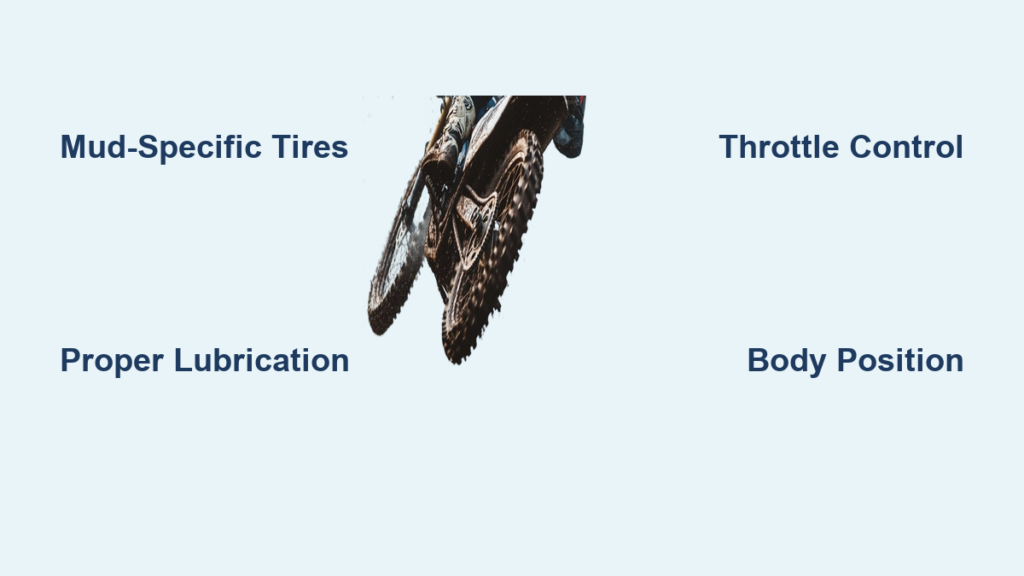
Standard motocross tires quickly become useless in mud as the spaces between knobs fill with material, creating a smooth surface that slips rather than grips. Genuine mud tires feature wider spacing between knobs that allows mud to eject rather than accumulate, maintaining traction throughout your ride. Softer compound tires provide superior grip in muddy conditions but wear faster—many serious mud riders keep dedicated soft-compound tires for spring and fall riding seasons.
The Pirelli MXMS has earned legendary status among experienced mudders for its exceptional mud-clearing capabilities. If you use the same tires year-round, a Knobby Knife tool can refresh worn knobs to restore some of that crucial mud-biting edge when fresh tires aren’t an option.
Essential Frame and Component Protection
Metal hand guards serve dual purposes in mud—they prevent mud buildup on your gloves and keep brake/clutch levers operational when plastic alternatives might fail. Install footpeg covers to prevent mud from packing into spring mechanisms that cause pegs to stick upright when you need them down for stability.
Cover your seat with a grippy seat cover that maintains traction when wet—standard seats become dangerously slippery in muddy conditions, forcing you to constantly fight to stay positioned correctly. This simple upgrade lets you focus on riding rather than staying on the bike.
Pre-Ride Mud-Specific Bike Preparation Checklist
Skipping these critical preparation steps before hitting muddy trails guarantees mechanical problems and poor performance. Proper mud-specific setup takes just 15 minutes but prevents hours of post-ride cleaning and potential damage to your bike.
Strategic Lubrication and Coating
Apply silicone spray or Maxima SC1 to the underside of fenders and frame areas where mud accumulates heavily—this creates a slick surface that helps mud fall off rather than build up. Crucially avoid spraying seat, handlebars, or footpegs as these surfaces need grip for control. Insert foam pieces between the skid plate and brake pedal in tight spaces where mud packs and adds dangerous rotating weight.
Before riding, slightly loosen your chain since mud accumulation will tighten it during the ride. Grease the chain, sprockets, and control cables thoroughly to prevent mud from causing bogging or mechanical failure. Carry silicone spray for quick reapplication during extended rides when protective coatings wear off.
Critical Engine and Cooling Protection
Tape your airbox securely and add extra filter oil to prevent water and mud from entering your engine—ingesting just a small amount of water can cause catastrophic damage requiring expensive repairs. Cover radiators with pantyhose (use larger sizes to prevent tearing) which allows airflow while blocking mud accumulation that causes overheating.
Adjust suspension settings several clicks stiffer to compensate for the added weight of accumulated mud—most riders overlook this critical step, resulting in poor handling and premature component wear. Check that fork seals have mud scrapers installed to prevent abrasive material from damaging these critical components.
Master Throttle Control for Maximum Mud Traction

Aggressive throttle inputs destroy what little traction exists in muddy conditions—your success depends on smooth, precise control that works with the terrain rather than fighting it.
Instead of jamming the throttle to gain traction, use progressive acceleration that lets the rear tire find grip naturally. In thick, sticky mud, a free-spinning rear wheel actually helps fling mud away while maintaining momentum. When the rear wheel spins without moving you forward, downshift rather than adding more throttle—this provides more torque at lower speeds to potentially regain traction.
Feather the clutch for controlled bursts of power rather than dumping it all at once. If you get stuck, shift your weight backward to put more load on the rear wheel—that small adjustment often provides just enough extra grip to get moving again.
Perfect Your Body Position for Muddy Conditions

Your body positioning dramatically affects traction and control in muddy conditions—standing provides superior balance while seated riding becomes necessary when momentum fails.
Adopt an 80/20 stance ratio: stand on your pegs 80% of the time for better control, and sit only 20% for rest. Standing lowers your center of gravity, improves stability, and lets you use your legs as additional suspension to absorb unexpected terrain changes. Keep your weight shifted slightly rearward to maintain rear-wheel traction and prevent the front end from washing out.
When descending muddy hills, let momentum carry you rather than braking aggressively—use only gentle rear brake application to control speed while maintaining acceleration capability. If your rear wheel starts sliding sideways, pull the clutch immediately to disengage engine power and regain traction before a fall occurs.
Smart Line Selection and Braking for Muddy Trails
The center of trails contains the deepest, most slippery mud as traffic pushes material toward the middle—ride along the outside edges where previous riders have cleared paths with better traction.
Keep your throttle open when entering thick mud sections—momentum carries you through rather than allowing you to get stuck. Brake before entering muddy areas rather than attempting to slow down while already in them. Focus primarily on rear brake application since front brake use in mud almost guarantees a dangerous slide.
If your rear wheel begins slipping during braking, pull the clutch to disengage engine power and allow the wheel to regain traction. Look further down the trail to anticipate high-traction areas and let your vision guide your line selection through the muddy maze.
Post-Ride Mud Bike Maintenance Essentials
Cleaning your dirt bike immediately after mudding prevents rust and component damage that occurs when mud dries on metal surfaces. Use a mud scraper to remove caked material before it fully hardens—pay special attention to wheel rims and brakes where accumulated mud creates dangerous vibrations at speed.
Thoroughly clean your air filter and reapply proper oiling—mud clogs filters quickly, restricting airflow and potentially causing engine damage. Inspect fork seals for leaks and clean all pivot points where mud has accumulated. Chains and sprockets wear faster in muddy conditions, so check wear more frequently and replace components before they fail.
Regular mud riders know that proper post-ride care extends their bike’s life significantly—those who neglect this critical step face expensive repairs and shortened component lifespans. Spend the extra 20 minutes cleaning thoroughly now to avoid hours of repair work later.