You’re riding your dirt bike hard up a trail when suddenly it feels like you’re dragging an anchor. The throttle response turns soggy, black smoke pours from the exhaust, and your spark plug fouls after just one ride. This frustrating scenario means your dirt bike running rich—a common but fixable problem that wastes fuel, robs power, and threatens engine health if ignored. When your two-stroke or four-stroke carbureted bike consumes more fuel than the available air can burn completely, the unburned fuel exits as black smoke while leaving carbon deposits on critical components. This guide delivers the precise diagnostic steps and adjustment techniques you need to identify rich running conditions and restore peak performance.
Most riders mistakenly assume poor performance stems from engine wear or electrical issues when the real culprit is often a simple jetting problem. A properly tuned dirt bike delivers crisp throttle response, clean exhaust, and consistent spark plug color—signs you’ll achieve by following these proven diagnostic procedures. Whether you ride a Yamaha YZ, Honda CRF, or KTM SX, the principles of air-fuel mixture adjustment remain consistent across all carbureted dirt bikes. By the end of this guide, you’ll confidently diagnose rich conditions, perform critical tests, and implement lasting fixes that keep your bike running strong mile after mile.
Spot Black Smoke and Gasoline Smell During Riding
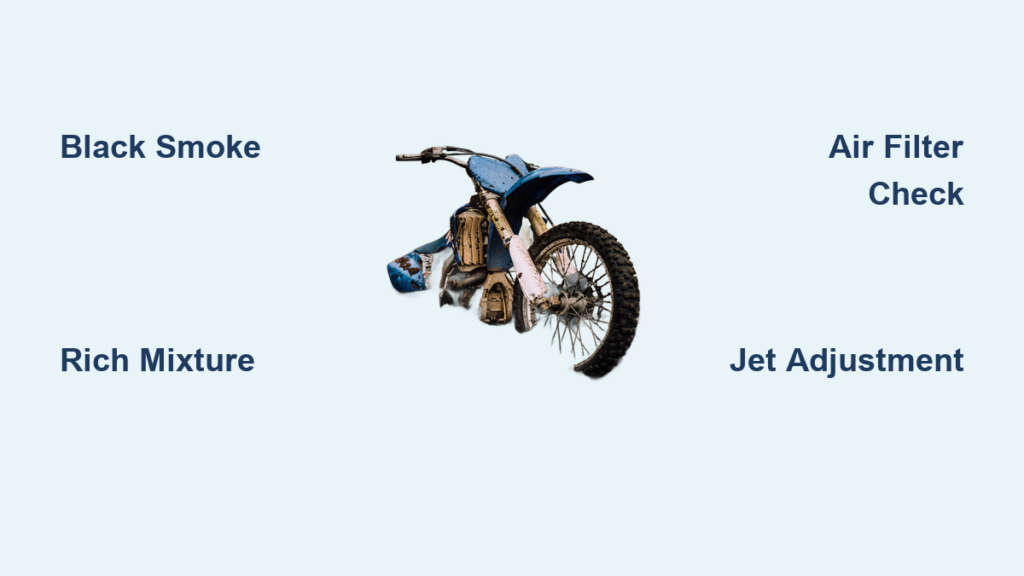
Black smoke billowing from your exhaust is the most obvious telltale sign your dirt bike running rich. This dark smoke appears when unburned fuel exits the combustion chamber—there’s simply more gasoline than oxygen available to ignite it completely. You’ll notice this smoke intensifies during hard acceleration or when climbing hills, accompanied by a strong raw gasoline odor that differs from the clean exhaust of a properly tuned machine. Unlike the light gray smoke sometimes seen in two-strokes, this black smoke indicates serious mixture imbalance requiring immediate attention.
Your fuel economy provides another clear indicator of rich running. If you’re filling the tank twice as often despite similar riding patterns, your bike consumes excess fuel without converting it to proportional power. Many riders discover this symptom first when their bike suddenly requires more frequent refueling on familiar trails. The strong gasoline smell permeating your riding gear after each ride confirms unburned fuel is escaping through the exhaust system rather than powering your engine.
Performance issues become painfully obvious as your bike feels “bogged down” across the entire rpm range. Sluggish throttle response makes the bike feel like it’s riding uphill even on flat terrain, with hesitant acceleration that worsens when climbing or passing. At idle, the engine stumbles frequently or stalls when you blip the throttle. This power loss occurs because excess fuel displaces air in the combustion chamber, preventing complete burning and robbing you of usable power. Warning: Ignoring these symptoms leads to spark plug fouling, carbon buildup, and eventual engine damage.
Confirm Rich Condition with Air Filter Removal Test
The air filter removal test delivers instant confirmation whether your bike runs rich or lean—no special tools required. Find a clean, debris-free area, then remove the air filter housing cover and pull out the filter itself. Start the engine and carefully observe how it responds to this increased airflow. If the engine suddenly runs stronger, smoother, and more responsive with the filter removed, you’ve confirmed a rich condition. The additional unrestricted air balances the excess fuel, improving combustion efficiency and power output.
Conversely, if the engine runs worse—exhibiting hesitation, stumbling, or reduced power—with the filter removed, your bike was likely running lean. The extra air made an already fuel-starved mixture even leaner, worsening combustion. Pro Tip: A properly jetted bike typically runs slightly worse with the filter removed because the increased airflow leans out the mixture beyond specification. Your observations during this 2-minute test provide immediate diagnostic direction without disassembly.
Diagnose Mixture Problems Using Spark Plug Color
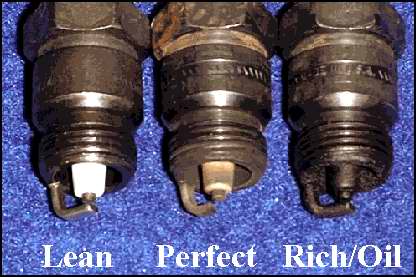
Your spark plug serves as a diagnostic window into combustion chamber conditions—perform this test correctly for accurate results. Install a fresh spark plug of the correct heat range, then take the bike for a ride that includes warm-up time, steady cruising, and full-throttle acceleration through the gears. Immediately after wide-open throttle, pull in the clutch and kill the engine without idling. Remove the plug and examine the electrode area:
- Rich Condition: Wet, black, oily appearance with heavy carbon deposits
- Proper Mixture: Light brown or tan color indicating near-stoichiometric ratio
- Lean Condition: White, flaky, or chalky appearance showing overheating
The timing of your inspection matters significantly—always use a freshly installed plug for accurate diagnosis. Some riders perform multiple tests with new plugs at different throttle positions to map mixture problems across the entire rpm range. Critical Note: A plug that has been running rich may temporarily show dark coloring even after correction, so always test with a new plug for definitive results.
Fix Common Air Intake Restrictions Causing Rich Running
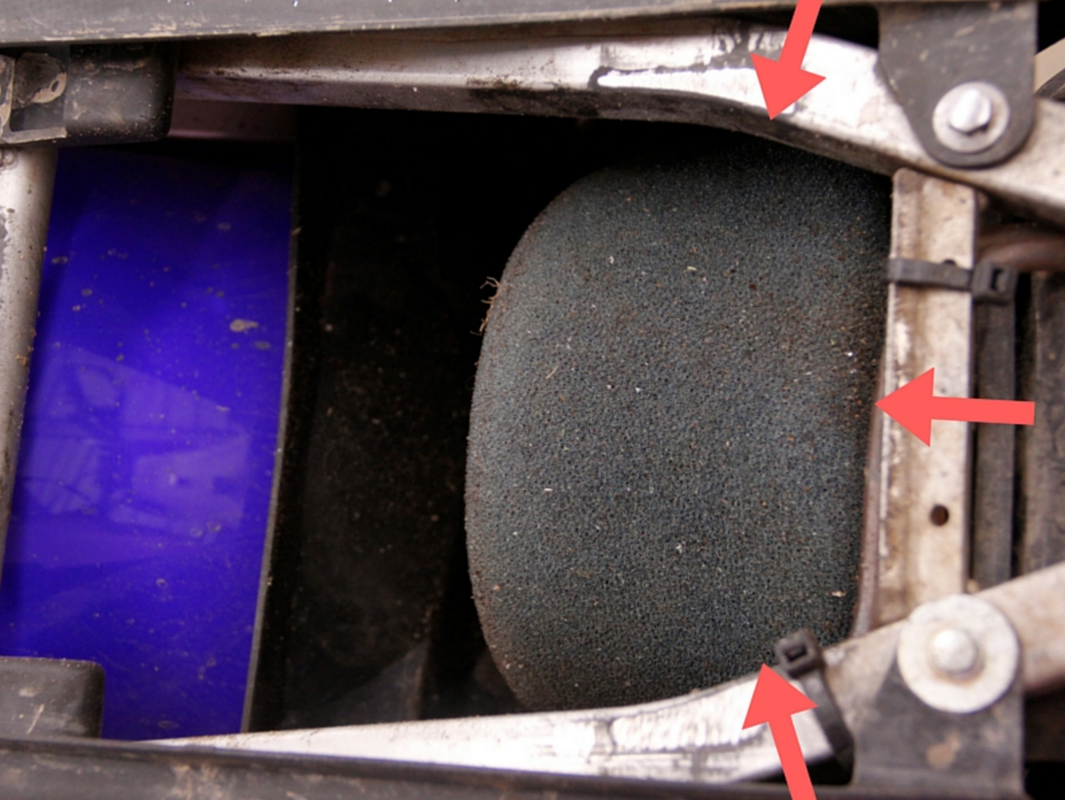
A restricted air filter ranks among the most common and easily overlooked causes of rich running. When your foam filter becomes caked with dirt or saturated with excess oil, it restricts airflow into the carburetor, forcing the engine to run rich. Hold your filter up to light—the clean version should allow light to pass through relatively easily. If it appears clogged or oil-soaked, clean it properly using appropriate filter cleaner, then apply oil in a thin, even coat. Too much oil restricts airflow just as effectively as dirt does.
Beyond the filter itself, inspect these critical components:
– Air box drains for mud clogs
– Carburetor boot for cracks or deterioration
– Intake tract for any obstructions
Even small blockages disrupt the delicate air-fuel balance, so examine each component systematically. Time-Saver: Carry a spare clean filter during long rides in dusty conditions—swapping filters takes less than 5 minutes and often solves rich running issues immediately.
Adjust Carburetor Settings to Eliminate Rich Running
Proper idle adjustment both diagnoses and resolves idle-related rich conditions. Start with a fully warmed engine, then set baseline idle speed to 1200-1500 rpm using the idle speed screw. Now adjust the air screw in quarter-turn increments while monitoring idle quality—the position producing the highest, smoothest idle indicates correct mixture. If the screw sits more than one and a half turns out from seated, your pilot circuit runs too rich and requires a smaller pilot jet.
When adjusting main jetting for altitude changes:
– Richen main jet by one or two sizes for every 2000-3000 feet elevation increase
– Cold weather requires richer jetting (denser air)
– Hot weather requires leaner jetting (thinner air)
Critical Warning: Always change only one variable at a time when adjusting jetting—modifying multiple components simultaneously makes problem-solving impossible. After each adjustment, test thoroughly before making additional changes.
Prevent Future Rich Running with These Maintenance Habits
Regular maintenance prevents rich running before it starts, protecting your engine and saving diagnostic time. Implement these essential practices:
- Air filter maintenance: Inspect before every ride in dusty conditions
- Carburetor cleaning: Drain float bowl before storage to prevent varnish buildup
- Fuel quality control: Use fresh fuel with stabilizer for bikes that sit between rides
- Periodic component replacement: Swap float needle and seat assembly per service intervals
A clean air filter represents your first line of defense—properly maintained filters prevent 80% of rich running issues according to veteran mechanics. Pro Tip: Keep a basic jet kit in your riding gear with pilot and main jets one size smaller than stock—these often solve rich conditions when riding at lower elevations.
| Condition | Spark Plug Appearance | Exhaust Color | Risk Level | Immediate Action |
|---|---|---|---|---|
| Rich | Wet, black, oily | Black smoke | Moderate | Check air filter, reduce pilot jet size |
| Lean | White, flaky, chalky | White/gray smoke | High | Stop riding, check for air leaks |
Your dirt bike running rich wastes fuel, reduces power, and causes cumulative engine damage if ignored. By recognizing symptoms early, performing targeted diagnostics, and implementing proper jetting adjustments, you restore performance and protect engine longevity. Remember that while slightly rich conditions pose less immediate danger than lean running, neither should be tolerated long-term. Regular air filter maintenance, proper carburetor adjustments for changing conditions, and attention to spark plug condition keep your air-fuel ratio in the optimal range. When you master these techniques, your dirt bike delivers the crisp throttle response, clean exhaust, and consistent power that makes every ride more enjoyable and extends your engine’s life significantly.