Your dirt bike sitting position determines whether you’ll glide through corners with confidence or struggle with balance and control on the trail. While most beginners instinctively stand on rough terrain, mastering the seated position unlocks superior cornering precision, reduces fatigue during long rides, and provides critical stability that standing alone cannot offer. Professional riders like AJ Catanzaro emphasize that smooth transitions between standing and seated positions separate competent riders from truly skilled ones. Without proper seated technique, you’ll waste energy, compromise traction, and limit your overall riding capability—especially when navigating smooth sections, long straights, or technical corners that demand precise weight distribution.
This guide reveals exactly how to position your body for maximum control while seated, avoid common mistakes that cause crashes, and transition seamlessly between positions based on terrain demands. You’ll learn the specific arm angles, foot placements, and weight distribution techniques that professional riders use to maintain stability while seated—techniques that transform your riding efficiency and endurance.
Perfect Your Upper Body Posture
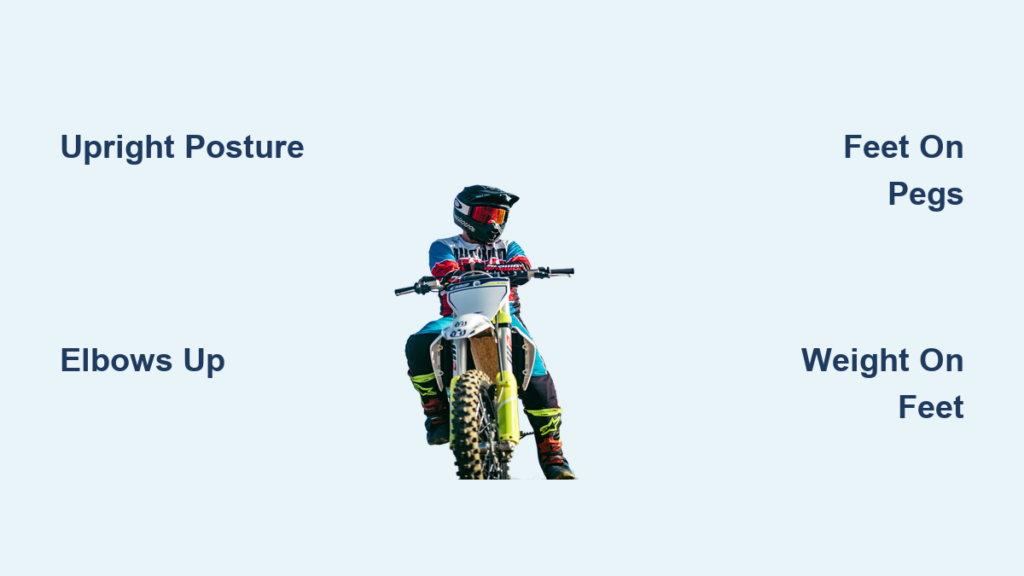
Maintaining proper upper body alignment while seated requires keeping your torso upright with your head elevated—not leaning excessively forward or backward. Your spine should remain elongated with shoulders relaxed down (not hunched toward your ears), creating a balanced foundation that allows quick weight adjustments without unnecessary fatigue. This perpendicular orientation to the ground gives you optimal control over handlebar inputs while preserving energy during extended rides.
A straight back proves essential for reducing upper body exhaustion when seated for more than a few minutes. Slouching or rounding your shoulders quickly drains your stamina and compromises your ability to make precise steering inputs. Keep your shoulders relaxed and down—this simple adjustment prevents tension from traveling through your arms to the handlebars, which would otherwise amplify every bump and vibration from the trail.
Your head position directly influences bike behavior since your dirt bike naturally follows your gaze. Always look through corners to your exit point, not directly at the front tire. This elevated head position prevents the common mistake of leaning too far forward, which reduces front tire traction and increases arm fatigue significantly.
Optimize Arm and Hand Position

Your grip strength while seated makes or breaks your control and endurance. Maintain a firm but gentle grip on the handlebars—applying just enough pressure for responsive steering without causing premature forearm fatigue. Many riders unknowingly squeeze the bars too tightly as they focus on the trail, creating tension that travels through their arms and shoulders, ultimately reducing steering precision.
Keep your elbows raised at approximately 90 degrees rather than dropping them toward the tank. This “elbows up” position dramatically improves your shock absorption capabilities and allows you to push against the handlebars for quick weight adjustments. Practice this position until it becomes automatic, as it significantly enhances your ability to respond to unexpected terrain changes while seated.
Periodically check your grip strength during practice sessions to reset to that ideal light-but-controlled grasp. Try this simple exercise: every few minutes while riding, consciously relax your grip completely for two seconds before re-establishing proper contact with the handlebars. This prevents the gradual grip tightening that naturally occurs during focused riding.
Position Your Feet for Maximum Control
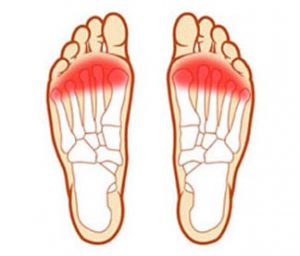
Despite being seated, your legs and feet should bear most of your weight—not the seat. This “legs as suspension” technique maintains your connection to bike dynamics and allows quick adjustments when terrain changes unexpectedly. Position the balls of your feet on the pegs with your heels slightly lower than your toes, enabling rapid weight shifts while maintaining stability through your lower body.
Your knees should remain slightly bent rather than locked straight, preserving shock absorption capability for minor impacts. Point your knees forward or slightly outward to maintain proper hip mobility for steering inputs—avoid letting them collapse inward, which restricts movement and reduces tank contact stability.
After shifting gears or using the brakes, consciously reset your feet to the proper position on the pegs. The physical movement of operating controls often pulls feet into suboptimal placements that compromise your seated position effectiveness.
Fix Weight Distribution Mistakes Immediately
Two critical weight distribution errors plague riders using the seated position: leaning too far forward and sitting too far back. Each creates distinct handling problems that compromise control and safety in different ways.
Leaning too far forward causes the front of your bike to tuck and wash out during cornering or when hitting bumps. This front-weight bias reduces front tire traction and often leads to front-end slides. You’ll notice yourself sliding forward on the seat and gripping the handlebars tighter, which worsens the problem by further weighting the front wheel.
Sitting too far back shifts excessive weight to the rear wheel, reducing front-end responsiveness and potentially causing the front wheel to lift during acceleration. Riders in this position struggle to weight the front wheel adequately for tight cornering or technical sections requiring precise front tire contact.
The solution? Keep most of your weight through your feet even while seated. This preserves your ability to make quick adjustments and absorb unexpected bumps without disrupting your balance.
Master Standing-to-Seated Transitions
The movement from standing to sitting should be rapid and precise to maintain balance, especially on rough track sections. Practice transitions on a stand without holding the handlebars to develop proper leg strength and coordination without relying on your arms for balance. This exercise isolates the lower body mechanics essential for successful transitions.
Before attempting transitions, establish a balanced attack position—standing on the pegs with knees slightly bent, hips positioned back, and arms relaxed. From this stable starting point, lower yourself smoothly onto the seat while maintaining grip on the pegs. Count your transitions during practice sessions, aiming for 20-30 quality repetitions before considering practice complete.
Timing matters—plan transitions before entering corners, not mid-corner when balance is critical. Similarly, transition to seated position before encountering rough sections rather than trying to shift while the bike is already bouncing beneath you.
Corner Effectively While Seated
Cornering while seated requires specific techniques that differ from standing approaches. Press the outside footpeg firmly to balance the bike through turns—this pressure preloads the suspension for the corner exit while providing additional lateral stability. Combined with looking through the turn to your exit point, this technique guides your bike along the desired line with greater precision.
The key principle is “lean, don’t tilt”: your body should lean into turns while keeping the bike more upright than traditional motorcycle cornering suggests. This approach maintains better tire contact patch for traction while allowing your mass to contribute to turning forces without overwhelming grip limits. Your lean should come from your ankles and hips, not by bending at the waist.
Practice this technique through a slalom course with cones, starting with wide, slow corners before progressively narrowing your line and increasing speed as your confidence grows.
Configure Your Bike for Seated Comfort
Seat design significantly impacts your ability to maintain proper seated position. Choose a seat with appropriate firmness—too soft allows you to sink in and lose connection with bike dynamics, while too firm causes premature fatigue. The ideal seat provides a stable platform that lets you sit consistently without sliding during aggressive riding.
Adjust handlebar height relative to your seat to optimize seated riding geometry. Handlebars positioned too low force you into a cramped position that increases fatigue, while bars set too high reduce steering leverage. Even small adjustments (5-10mm) can dramatically affect your seated position effectiveness.
Footpeg placement directly impacts your ability to maintain proper foot position while seated. Position pegs so your knees bend slightly—typically with your feet directly below or slightly behind your hips. This placement enables optimal weight distribution through your legs while seated.
Integrate Seated and Standing Techniques Seamlessly
Effective dirt bike riding requires fluid integration of both positions rather than viewing them as separate skills. Develop the ability to transition automatically based on terrain requirements—rough sections favor standing, while smoother trails benefit from seated riding.
Understand when each position offers advantages: use seated position for longer straights, endurance riding, and precise throttle control sections. Standing position works better for rough terrain, technical sections, and aggressive cornering approaches.
Some situations call for hybrid approaches—maintain slight knee bend while seated to preserve weight shift capability, or keep slight pressure through your feet while seated to maintain connection with bike dynamics. These intermediate positions expand your technical capability significantly.
Mastering your dirt bike sitting position takes dedicated practice, but the payoff in improved cornering, reduced fatigue, and enhanced overall riding capability makes it worthwhile. Start with fundamental body positioning, practice transitions deliberately, and gradually expand your capability through consistent exposure to varied riding conditions. Your future self will thank you when you’re carving corners effortlessly and finishing rides with energy to spare.