Your dirt bike’s exhaust system hangs precariously low, taking direct hits from rocks, stumps, and trail debris on every ride. When that distinctive ping signals impact damage, you face an immediate dilemma: replace the entire system at significant cost or pursue professional dirt bike exhaust repair that can restore performance for a fraction of the price. For most riders, professional repair delivers exceptional value while recovering both horsepower and aesthetics. Understanding exactly how the repair process works—from documenting damage to shipping your pipe and evaluating repair options—can save you hundreds of dollars and get you back on the trail faster than a full replacement.
The economics of dirt bike exhaust repair have never been more compelling. High-performance exhaust systems from premium manufacturers often cost $500-$1,500 or more to replace, while professional repair typically runs 30-60% of that cost. This guide cuts through the confusion by detailing exactly what happens during professional exhaust repair, how to prepare your damaged component for shipping, and what to expect at each stage of the process. You’ll learn specific techniques repair specialists use to restore both 2-stroke expansion chambers and 4-stroke exhaust systems to factory specifications.
How Dented Exhaust Pipes Steal Your Dirt Bike’s Horsepower
A minor dent might seem like just a cosmetic issue, but even small deformations in your exhaust pipe create measurable power loss by disrupting critical exhaust gas flow. In 2-stroke systems, dents in the expansion chamber alter the precise pressure waves that create the engine’s power band, often robbing peak horsepower where you need it most. Four-stroke systems suffer differently—dents create turbulence that interferes with the scavenging effect, reducing torque and causing uneven power delivery across the RPM range.
The performance hit becomes especially noticeable when the dent occurs near critical tuning zones. On 2-strokes, damage within 6 inches of the cylinder head port severely impacts top-end power, while dents in the mid-section affect mid-range punch. Four-stroke riders commonly report sluggish throttle response and reduced low-end torque when their header pipes get dented. Professional repair specialists measure these effects using dyno testing before and after repair, consistently demonstrating 5-15% horsepower recovery in properly restored systems.
Beyond performance loss, ignoring exhaust damage risks serious engine complications. Cracks or severe dents allow exhaust gases to escape at unintended points, disrupting the carefully engineered pressure dynamics that keep your engine running efficiently. This can cause overheating in specific engine areas, oil contamination from escaping gases, and even piston damage from altered combustion characteristics. The documentation from repair specialists explicitly warns that prolonged operation with damaged exhaust systems can lead to catastrophic engine failure.
5 Trail Hazards That Crack and Dent Dirt Bike Exhausts
Rock Impacts: The Silent Power Killer
Rocks thrown by your own rear wheel or other riders create the most frequent exhaust damage. These impacts range from minor cosmetic dents to deep creases that significantly restrict exhaust flow. The severity depends on rock size, speed, and impact angle—smaller rocks at high speed often cause more damage than larger rocks at low speed due to kinetic energy transfer. Pay special attention to damage on the pipe’s underside, where repeated small impacts gradually weaken the metal.
Stump and Log Collisions: Sudden, Severe Damage
Technical trail riding inevitably brings encounters with stumps and logs that can severely damage your exhaust. Unlike rock impacts, these collisions create concentrated force at specific points, often causing cracks, punctures, or severe kinks. The damage pattern typically shows a distinct impact point with radiating deformations. When assessing this type of damage, note whether the pipe is merely dented or has actual structural compromise—cracks usually require more extensive repair work.
Rost (Debris Spray): The Cumulative Damage Threat
Rost refers to the spray of dirt, rocks, and debris thrown backward by the rear wheel of bikes ahead. While individual impacts may seem insignificant, the cumulative effect of repeated small strikes gradually degrades exhaust performance and appearance. This damage often appears as widespread minor pitting and shallow dents across large sections of the pipe. The insidious nature of roost damage means riders frequently don’t notice performance loss until it becomes substantial.
Specialized Dirt Bike Exhaust Repair Techniques That Work

2-Stroke vs. 4-Stroke Repair Approaches
Professional repair specialists employ fundamentally different techniques for 2-stroke expansion chambers versus 4-stroke exhaust systems. Two-stroke pipes require precision metalworking to restore the complex internal baffling and precise curvature that define their power characteristics. Four-stroke repairs focus more on maintaining consistent internal diameter through header pipes and addressing potential catalytic converter damage. Attempting DIY repairs without understanding these differences often worsens the problem.
Dent Removal Process: Beyond Simple Hammer Work
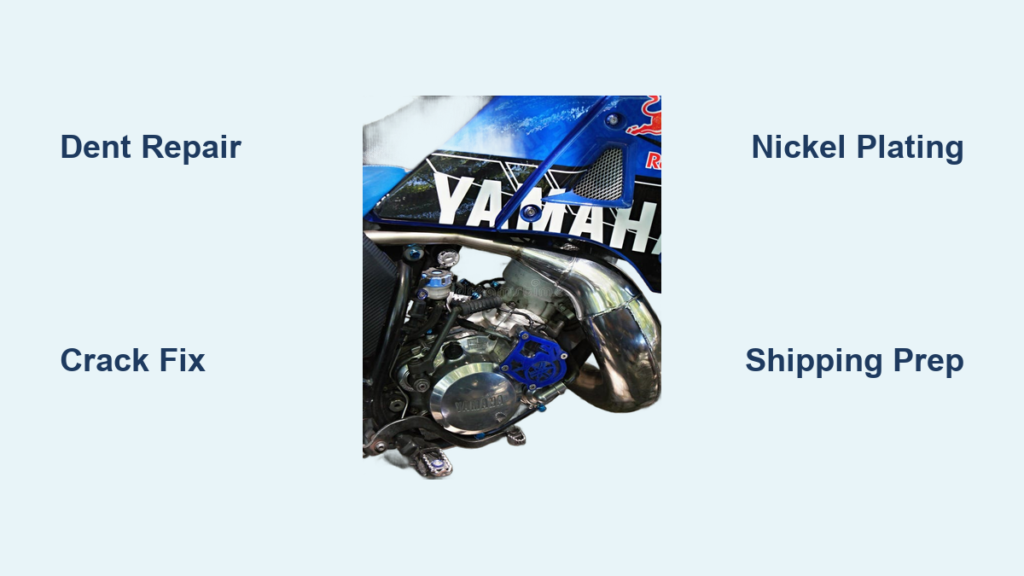
The core of professional dirt bike exhaust repair involves carefully restoring the pipe’s internal diameter without compromising structural integrity. Skilled technicians use specialized mandrels and incremental hammer techniques to gradually reshape dented sections from the inside out. This process maintains the original wall thickness while recovering optimal exhaust flow characteristics. For severe dents, specialists may employ controlled heating and cooling cycles to relax metal memory before reshaping.
Nickel Plating: Performance and Protection Combined

Beyond functional restoration, many riders opt for nickel plating as part of their repair process. This finish creates a hard, corrosion-resistant surface that withstands trail abuse better than stock finishes while adding significant aesthetic value. The KTM 150 Nickel Plated Pipe case study demonstrates how completely damaged systems can be restored to better-than-new condition. Importantly, nickel plating also provides thermal protection that helps maintain consistent exhaust gas temperatures for optimal performance.
Step-by-Step Dirt Bike Exhaust Repair Process: What to Expect
Documenting Damage for Accurate Quotes
Before shipping your pipe, capture detailed photos showing damage from multiple angles—top, bottom, sides, and close-ups of severe dents. Include your full name, motorcycle year/make/model, complete mailing address, and contact information with your inquiry. Professional repair facilities like Front Range Pipe Repair require these specifics to assess whether your damage falls within repairable parameters and provide accurate pricing.
Shipping Your Exhaust: Critical Packaging Tips
Remove your exhaust system completely from the bike, including all mounting hardware and brackets. Wrap the pipe in multiple layers of bubble wrap with extra protection at damaged areas, then place it in a rigid cardboard tube or box significantly larger than the pipe itself. Fill all empty space with packing peanuts to prevent movement during transit. For best shipping rates, use Pirateship.com to compare carrier prices—many riders save 25-30% compared to direct carrier rates.
Repair or Replace? When to Fix Your Damaged Dirt Bike Exhaust

Cost-Benefit Analysis: The $300 Threshold
As a general rule, if repair costs exceed $300, consider replacement—but this depends heavily on your specific exhaust system. High-end systems with specialized coatings or custom finishes often justify repair costs up to $500. For common OEM pipes, repair makes economic sense up to about 40% of replacement cost. Always request a detailed cost breakdown including labor, materials, and shipping before committing.
Damage Severity Assessment Guide
Minor dents (less than 25% diameter reduction) with no cracks: almost always repairable. Moderate dents (25-50% diameter reduction) with minor cracks: repairable but may require section replacement. Severe dents (over 50% diameter reduction) with multiple cracks: replacement often more cost-effective. Damage within 3 inches of cylinder head port: requires expert assessment as this critical zone affects tuning significantly.
3 Proven Ways to Protect Your Dirt Bike Exhaust from Trail Damage
Strategic Line Selection: Ride Smarter, Not Harder
Consciously choose lines that keep your exhaust higher on technical terrain—ride over rocks rather than alongside them where possible. In rocky sections, position your body weight forward to lift the rear of the bike slightly, giving your exhaust extra clearance. When navigating tight turns with obstacles, approach at angles that minimize exposure of vulnerable exhaust components.
Exhaust Guards: Worth the Weight Penalty
Install aluminum or steel exhaust guards specifically designed for your bike model—they typically add 1-2 pounds but prevent 70% of common damage scenarios. Look for guards with replaceable wear strips that absorb impacts without transferring force to the pipe itself. For serious rock riders, consider full-wrap guards that protect the entire circumference of vulnerable pipe sections.
Pre-Ride Inspection Protocol
Before every ride, spend 30 seconds inspecting your exhaust for developing issues. Run your hand along the pipe checking for new dents, loose mounting hardware, or heat discoloration patterns that indicate potential cracks. Pay special attention to areas where previous damage occurred, as these spots weaken over time. Catching minor damage early often means simpler, less expensive repairs.
Dirt Bike Exhaust Repair Checklist: Get It Fixed Right the First Time
When your exhaust takes a hit, follow this actionable checklist: First, document damage thoroughly with photos from multiple angles. Second, contact a specialist with your bike’s specific information for an accurate quote. Third, remove and ship your exhaust using proper packaging techniques. Fourth, choose appropriate repair options based on cost-benefit analysis. Finally, install protective measures after repair to prevent recurrence.
Professional dirt bike exhaust repair delivers exceptional value when handled correctly—restoring performance, appearance, and reliability for a fraction of replacement costs. By understanding the repair process, documenting damage properly, and taking preventative measures after repair, you’ll maximize your investment and keep your bike running at peak performance. The next time rocks or stumps leave their mark on your exhaust, remember that professional repair isn’t just an option—it’s often the smartest path back to full power.