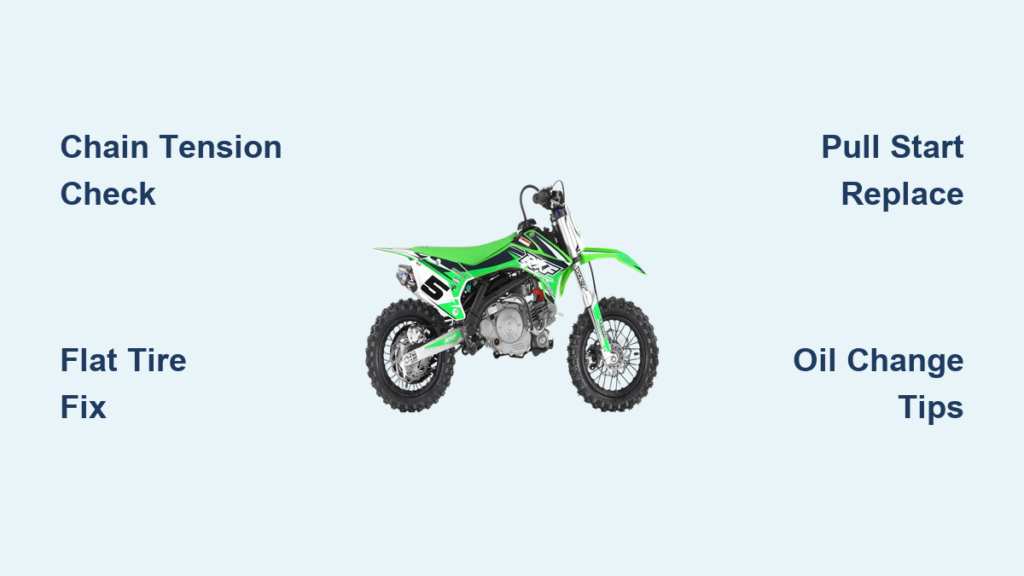
Nothing ruins a riding session faster than a mini dirt bike that won’t start or suddenly breaks down mid-ride. As a parent or guardian of a young rider, mastering basic mini dirt bike repair skills transforms you from a helpless spectator into a capable problem-solver who can get back to the trails in minutes. These compact 40CC machines require specialized maintenance that differs from full-sized motorcycles, yet most common issues can be addressed with basic tools and proper technique. This guide cuts through the confusion to deliver the exact repair procedures you need to keep your child’s dirt bike running reliably all season long.
Unlike professional mechanics who charge $75+ per hour, you can perform most mini dirt bike repairs in your garage with simple hand tools and a weekend afternoon. The key is understanding which problems you can safely tackle yourself versus when to seek professional help. With proper knowledge, you’ll extend your bike’s lifespan while teaching your child valuable mechanical skills they’ll use for life. Let’s dive into the most critical repair procedures every mini dirt bike owner should master.
Why Your Mini Dirt Bike Chain Keeps Jumping Off (And How to Fix It)

Chain derailment ranks as the #1 trail-stopping problem for mini dirt bike owners. You’ll notice your bike losing power during acceleration or hearing loud “slapping” noises as the chain jumps off the sprocket. This happens when chain tension falls outside the critical 20-30mm slack range specified by manufacturers. Ignoring proper chain tension leads to catastrophic failure—you’ll find broken chains wrapped around rear wheels or damaged engine cases after just one severe jump.
Fix chain tension in 5 precise steps:
- Position your bike securely on a stand with the rear wheel off the ground
- Locate the adjustment bolts on both sides of the rear axle (they’re usually 10mm)
- Loosen the axle nut with a socket wrench while keeping the adjustment bolts loose
- Pull the rear wheel backward until you achieve 25mm of vertical play at the chain’s midpoint
- Tighten the axle nut to 18-22 ft-lbs while maintaining equal adjustment on both sides
Pro Tip: After tightening, spin the rear wheel and check tension at multiple points—chains often have tight spots that require minor adjustments. Recheck tension after your first 5 minutes of riding as the chain settles into position.
Fixing a Flat Tire on Your Child’s Dirt Bike in 20 Minutes
Flat tires happen frequently when kids ride aggressively on rough terrain, but replacing the inner tube takes far less time than you think. The critical mistake most owners make? Forcing tire irons between the tire bead and rim, which damages the fragile aluminum rim on youth models. Instead, follow these safe removal steps:
- Deflate the tire completely by pressing the valve stem core
- Apply soapy water around the tire bead to reduce friction
- Insert two tire irons 6 inches apart at the 6 o’clock position
- Gently pry the bead over the rim edge without twisting
When installing the new tube:
- Inflate the tube slightly to give it shape (just enough to hold form)
- Insert the valve stem through the rim hole first
- Work the tube evenly inside the tire, ensuring no twists
- Starting at the valve stem, push the tire bead onto the rim using your palms (not tools)
- Inflate to 8-12 PSI (never exceed 15 PSI on youth tires)
Warning: Overinflating mini dirt bike tires causes bead separation at high speeds—a dangerous situation for young riders. Always use a quality pressure gauge rather than guessing.
Replacing a Broken Pull Start Mechanism: Step-by-Step Guide
When your mini dirt bike’s pull start fails—rope won’t retract or engine won’t turn over—you’re facing one of the most frustrating breakdowns. The good news? Complete replacement takes less than 30 minutes with basic tools. Never attempt to repair a broken recoil spring—the stored energy can cause serious injury when released.
Follow this safe replacement process:
- Remove the 4-6 bolts securing the pull start housing (typically 8mm or 10mm)
- Carefully separate the housing while supporting the internal spring mechanism
- Note the exact orientation of the rope attachment point on the spool
- Thread the new rope through the housing hole before reinstalling the assembly
- Wind the spool 3-4 complete turns against spring tension before securing the rope
Expert Note: After installation, pull the rope slowly 5 times to seat the mechanism properly before attempting to start the engine. Rushing this step causes premature rope failure.
Critical Oil Change Mistakes Mini Dirt Bike Owners Make

Most mini dirt bike engine failures stem from improper oil changes—not doing them frequently enough or using the wrong oil type. 4-stroke youth bikes need oil changes every 10-15 hours (not the 50+ hours some owners assume). Using automotive oil instead of motorcycle-specific 10W-30 or 10W-40 causes clutch slippage and accelerated wear.
Perfect your oil change with these often-missed steps:
- Warm the engine for exactly 3 minutes (longer risks oil burns)
- Place the drain pan directly under the plug—mini bikes have tight clearances
- Replace the drain plug washer with every oil change (a $0.25 part preventing leaks)
- Fill oil slowly through the dipstick tube, checking level every 2 ounces
- Run the engine for 30 seconds, then recheck oil level after 5 minutes
Pro Tip: Keep a log of operating hours—mini dirt bikes don’t have hour meters, so track usage with a simple notebook to stay on schedule.
Throttle Problems? How to Replace Your Mini Dirt Bike Throttle Assembly
Sticking or unresponsive throttles create dangerous situations for young riders. Before replacing the entire assembly, check if simple cable adjustment solves the issue. If you see frayed cables or corrosion inside the housing, immediate replacement is critical—these often fail completely during rides.
Complete throttle replacement in 4 key steps:
- Disconnect both cables from the carburetor by loosening the barrel adjusters
- Remove the throttle tube from handlebars (note orientation marks for reinstallation)
- Thread new cables through handlebar controls with soapy water lubrication
- Adjust cable tension so throttle snaps shut instantly when released
Warning: Always test throttle response with the engine OFF first—ensure it returns to closed position within 1 second. Improper adjustment causes runaway engines.
Essential Tools for DIY Mini Dirt Bike Repair
You don’t need a full professional toolkit to handle mini dirt bike repairs. Focus on these 7 critical tools that cover 90% of common repairs:
- 6-17mm metric socket set with 3/8″ drive
- Quality chain breaker tool (not the cheap $10 versions)
- Tire levers designed for small rims (standard motorcycle tools are too large)
- Torque wrench capable of 5-25 ft-lbs
- Spark plug socket with rubber insert
- Digital pressure gauge (analog gauges lack precision for small tires)
- Pull start rope replacement kit
Pro Tip: Keep a dedicated toolbox in your garage with only mini dirt bike tools—this prevents using incorrect sizes that strip fragile fasteners on youth models.
Safety First: Must-Know Precautions Before Any Repair
Mini dirt bikes may be small, but they present serious hazards during repairs. Never skip these critical safety steps:
- Secure the bike on proper stands—cinder blocks or unstable supports cause accidents
- Allow 20 minutes cooling time after riding before touching exhaust or engine parts
- Disconnect spark plug wire before any engine work to prevent accidental starts
- Wear eye protection when working near springs or tensioned components
- Keep children away from repair areas—small parts are choking hazards
Expert Note: Most mini dirt bike injuries occur during “simple” repairs because owners underestimate the mechanical forces involved. If a procedure feels beyond your skill level, stop and consult a professional.
When to Call a Professional Instead of DIY Repair
While many repairs are DIY-friendly, certain issues demand professional expertise. Seek professional help immediately if you notice:
- Metal shavings in drained oil (indicates internal engine damage)
- Bent rear axle or warped wheel rims
- Hydraulic brake system leaks
- Persistent starting issues after checking fuel, spark, and compression
- Unusual knocking sounds from the engine
Attempting advanced repairs without proper tools often turns minor issues into major expenses. Your local mini dirt bike shop can often diagnose problems for free—consider it an investment that prevents costly mistakes.
Mastering these essential mini dirt bike repair procedures gives you confidence to handle most trailside emergencies and routine maintenance. Start with chain adjustments and oil changes before progressing to more complex repairs. Remember that safety always comes first—never rush repairs or use improper techniques to save time. With these skills, you’ll maximize riding time while teaching your child valuable mechanical lessons that build confidence and responsibility. Keep this guide handy in your garage, and you’ll spend less time troubleshooting and more time creating memories on the trails.