There’s nothing quite like the adrenaline rush of powering through thick mud on your dirt bike, but that excitement vanishes when your machine becomes a heavy, caked-on mess. Mud accumulation doesn’t just make your bike sluggish—it can cause overheating engines, corroded fasteners, and accelerated wear on critical components. The good news is that experienced riders have developed proven techniques to minimize mud adhesion and dramatically simplify cleanup. This guide reveals exactly how to keep mud from sticking to dirt bike components so you spend less time cleaning and more time riding.
Why Mud Buildup Destroys Your Bike’s Performance
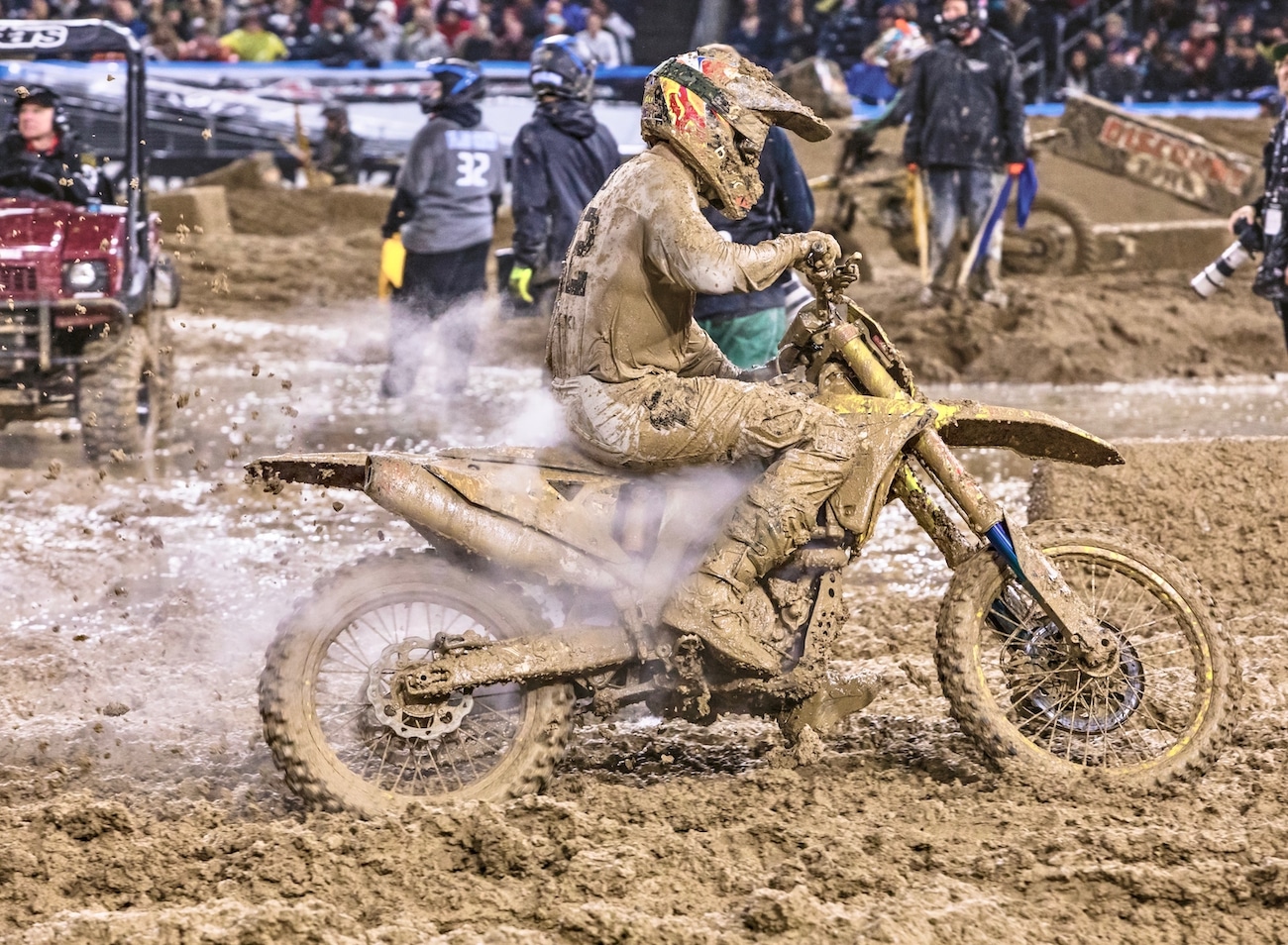
Mud on your dirt bike isn’t just unsightly—it fundamentally changes how your machine handles and performs. When mud accumulates during a ride, the added weight becomes immediately noticeable, making jumps harder to clear and cornering less precise. The extra mass alters your bike’s handling characteristics, potentially affecting your confidence and performance when you need it most.
Thick mud layers act like insulation on your engine, trapping heat and interfering with the cooling process. This overheating can lead to costly repairs or complete engine failure—far more expensive than the time invested in prevention. Additionally, the moisture trapped in mud promotes corrosion on metal components, causing fasteners to seize and plastic parts to degrade prematurely. Mud doesn’t just make your ride harder; it actively damages your investment with every lap.
Critical Components Most Affected by Mud
Your bike’s engine cooling system suffers significantly when mud cakes onto cylinders and radiators. The rear suspension becomes less responsive as mud packs into linkage points, while your chain and sprockets wear faster when grit mixes with lubrication. Even your brakes can lose effectiveness when mud contaminates brake pads and rotors.
Pre-Ride Mud Repellent Sprays That Actually Work
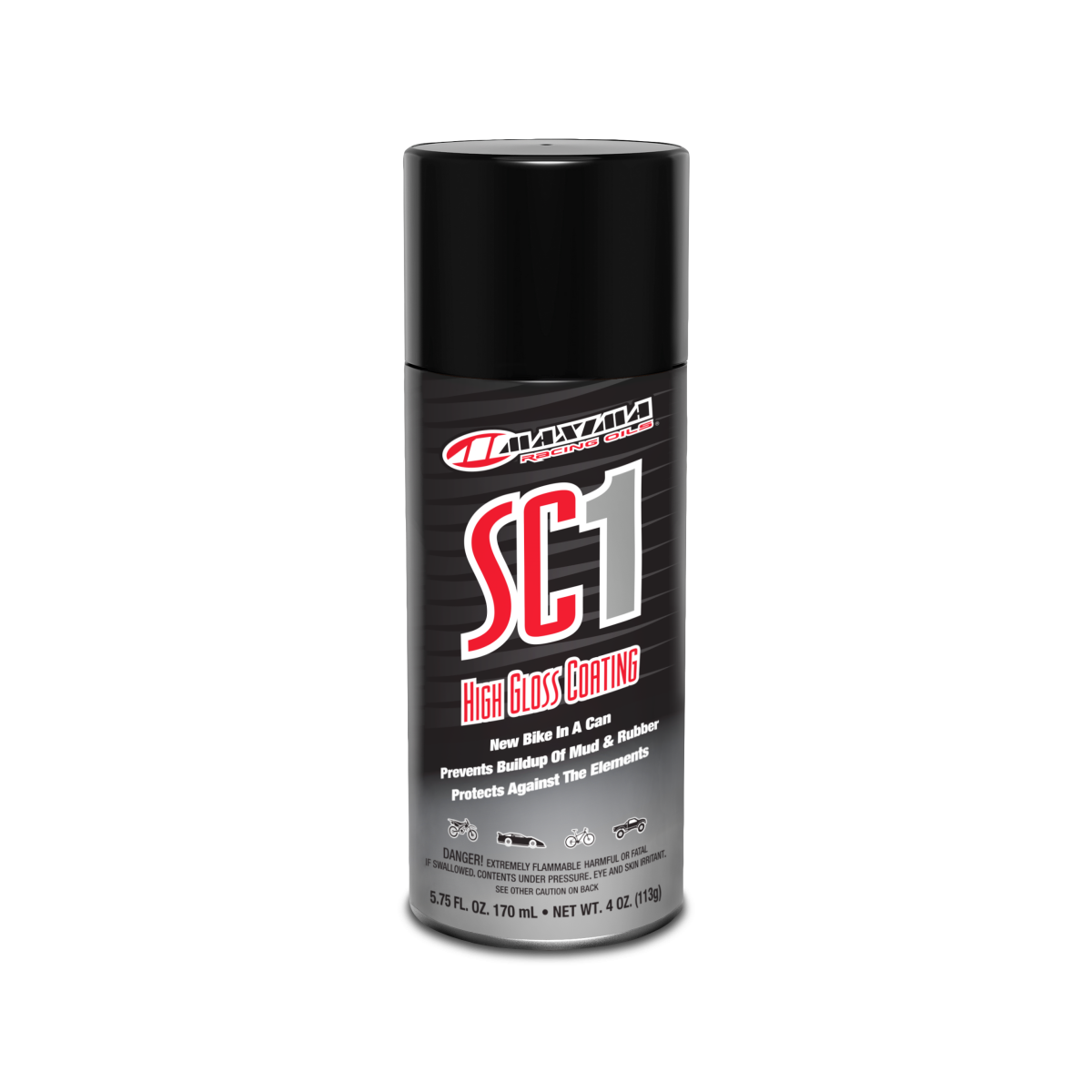
Applying protective coatings before riding creates a hydrophobic barrier that causes mud to slide off rather than cake onto surfaces. This proactive approach remains the most effective strategy for keeping your bike clean during muddy rides.
SC1 by Maxima Racing Oils: The Proven Solution
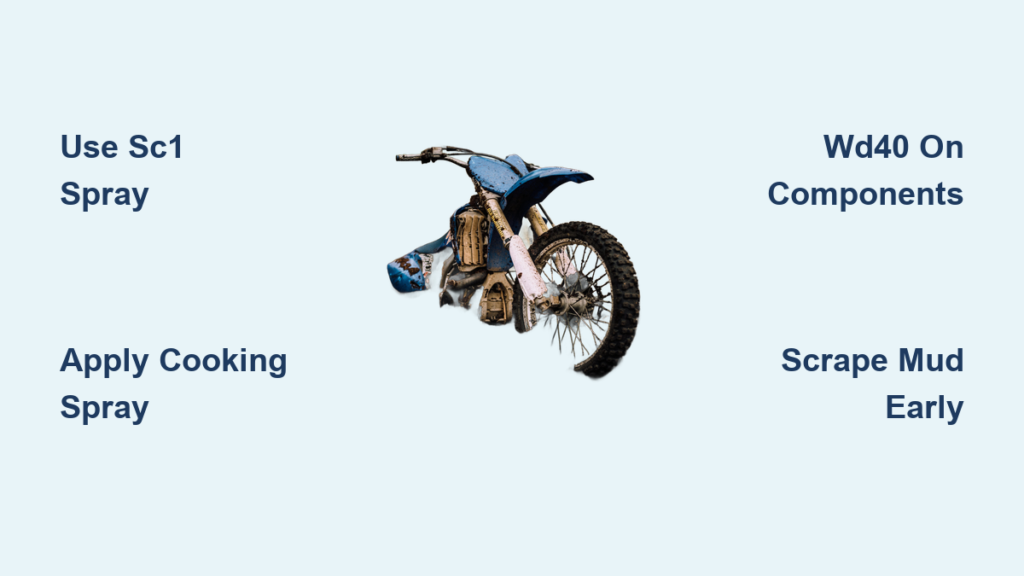
SC1 has earned a devoted following among serious riders for good reason. This silicone-based spray forms a water-resistant barrier that allows most mud to shed during riding itself. When you return home, any remaining mud typically rinses off with minimal scrubbing. Beyond its mud-releasing properties, SC1 prevents rust and leaves plastics looking glossy. Focus application on the frame, fenders, and plastics while avoiding the seat and grips, which need their traction characteristics intact.
Cooking Spray: The Unexpected Game-Changer
An unconventional but surprisingly effective alternative is standard cooking spray like Pam. This household product creates an extremely slippery surface that mud simply cannot grip. The spray stays on hot components like pipes and engines better than many specialty products, though it does leave a noticeable cooking oil smell. Apply thoroughly before riding, concentrating on areas where mud typically accumulates—particularly under fenders and around the engine.
WD40 and Specialty Products for Extreme Conditions
WD40 serves dual purposes in mud prevention and bike protection. Before riding, coating your bike with WD40 helps gumbo-style mud fall off before it accumulates into heavy clods. In salt marsh conditions, WD40’s protective properties prevent highly corrosive salt from attacking metal components. After washing, WD40 excels at displacing water from hard-to-reach areas and provides temporary rust protection for pivots and moving parts.
Slipcoat IRC and Slick Products Shine & Protectant
Specialized products like Slipcoat IRC have gained popularity among serious riders. This USDA Bio Approved spray works better than many alternatives according to users, though you should avoid applying it to engine components exceeding 200 degrees Fahrenheit. Slick Products Shine & Protectant creates a similar barrier while giving plastics a deep glossy finish. INOX offers versatility for multiple applications around your bike and garage.
Some riders tape UHMW plastic to high-wear areas, creating a slick surface that mud struggles to adhere to. Professional mud racers use a technique involving high-density foam taped to fender undersides, though this requires more preparation than simple spray application.
Proper Application Methods for Maximum Protection
How you apply protective products significantly impacts their effectiveness. Always start with a clean, dry surface—contaminants interfere with adhesion, and moisture prevents proper bonding. Many riders apply sprays immediately after washing while the bike is still slightly damp, which helps the product spread more evenly.
Target Problem Areas Without Compromising Safety
Concentrate coatings on problem areas where mud accumulates most heavily: the underside of front fenders, side panels near foot pegs, and the area around the engine where rear wheel spray lands. Avoid critical safety surfaces at all costs—never apply slippery coatings to brake rotors, chains, clutch levers, foot pegs, or tire treads. The seat should also remain uncoated to prevent sliding during aggressive riding. Take particular care around airboxes—getting any coating inside can damage your engine.
Post-Ride Cleaning Steps That Save Hours of Work
Despite your best prevention efforts, mud will accumulate during rides. Establishing an effective cleaning routine minimizes time and effort while protecting your bike from long-term damage.
Immediate Mud Removal Techniques
Remove mud as soon as possible after your ride—fresh mud responds far better to removal than dried, caked material. Before introducing water, scrape off bulk mud using a purpose-built tool like the Mud Axe from Risk Racing. Its curved head works well under fenders while the smaller end reaches tight spaces around engines and pedals.
Washing Without Damaging Bearings
Once bulk mud is removed, washing can begin. A pressure washer removes 80-90% of remaining dirt effectively, but keep the spray tip away from bearings and seals. Never direct high-pressure water into wheel bearings, swingarm pivots, or the chain. For gentler cleaning, warm soapy water with soft brushes works well—Simple Green works for degreasing but can corrode aluminum if left to dry.
Complete Drying Process for Longevity
Dry the bike thoroughly using a leaf blower for large surfaces and an air compressor for tight spaces. Starting the engine after cleaning brings everything to operating temperature, driving out moisture from engine-related areas. Apply WD40 or protectants throughout the bike to displace remaining water and provide temporary rust protection.
Essential Cleaning Tools Every Rider Needs
Having the right equipment makes mud management significantly easier. The Mud Axe features a rubber handle that provides secure grip even when wet, and its durable construction withstands repeated use. Stiff plastic scrapers remove dried mud without scratching surfaces, while soft-bristle brushes in various sizes agitate stubborn material.
A quality pressure washer dramatically reduces cleaning time. Nozzle selection matters—wider spray patterns distribute force safely over large areas, while narrow patterns tackle heavily soiled spots. Many riders find that lower-cost pressure washers last two to three years with regular use, which suits most recreational riders.
Microfiber towels have become essential for drying and applying protective products. They absorb water effectively without scratching and work for both drying and buffing protectants. A leaf blower speeds drying significantly, while an air compressor removes water from bearing housings and other tight spaces.
Protect Your Vision During Muddy Rides
Mud on goggles creates a safety hazard that goes beyond inconvenience. When your vision is obscured, accident risk increases dramatically. Quality goggles designed for off-road conditions provide the foundation—look for wide field of vision, scratch resistance, and anti-fog properties.
For serious mud conditions, roll-off systems provide instantaneous vision clearing without stopping. The Ripper automatic roll-off attaches to existing goggles with a handlebar-mounted button. Pushing the button advances clean film over the lens in under a second, allowing you to maintain focus on riding without removing hands from the bars.
Critical Safety Warnings You Must Know
Several precautions ensure your prevention efforts don’t create new problems. Never apply any coating to hot engine components—products can bake onto surfaces, creating hard-to-remove residue and potential fire hazards near exhaust parts. Check product temperature ratings before application.
Simple Green and similar degreasers can corrode aluminum components including engine cases and radiators if left in contact too long or allowed to dry. Rinse thoroughly and never let these products dry on the bike.
When using pressure washers, always avoid bearings and seals. Water intrusion into wheel bearings, swingarm pivots, head bearings, and shock linkages accelerates wear or causes immediate damage. After any wet cleaning, apply WD40 to bearing areas to help displace water, though remember this provides temporary protection only.
Complete Mud Management Strategy for Serious Riders
The most effective approach combines pre-ride protection, post-ride cleaning, and proper tool selection into one cohesive routine. Before each ride, assess conditions and apply appropriate protection—light sprays for moderate conditions, heavier coatings like cooking spray for extreme mud.
After every ride, remove bulk mud promptly, wash thoroughly using appropriate techniques, dry completely, and apply protective coatings for your next ride. This routine becomes second nature with practice and takes less time than struggling with dried mud later.
By following these strategies, you will significantly reduce cleaning time while protecting your bike from mud’s damaging effects. The result is a bike that performs better, lasts longer, and provides more reliable enjoyment on every ride. How to keep mud from sticking to dirt bike components isn’t just about convenience—it’s about preserving your machine’s performance and longevity through every muddy adventure.