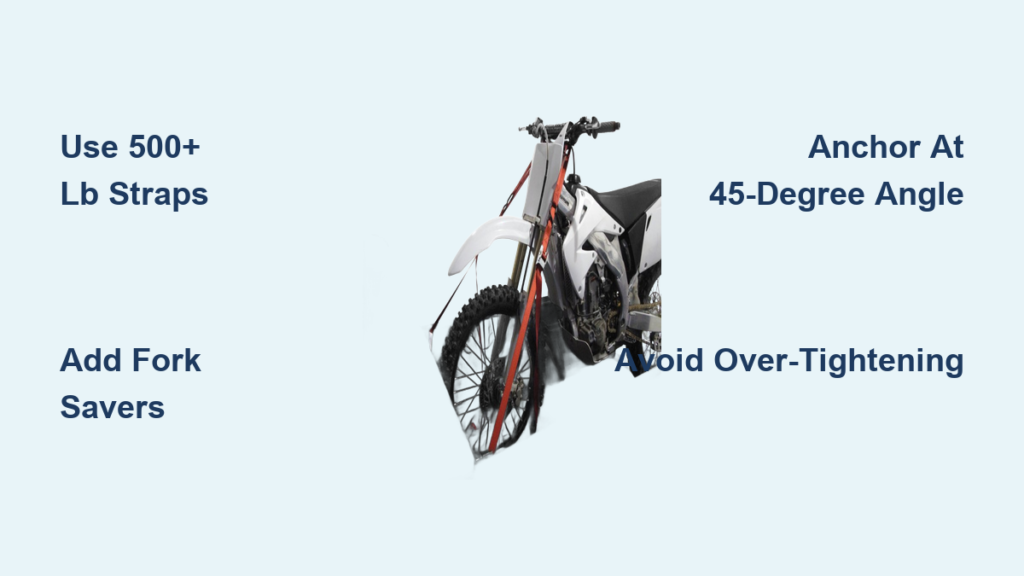
Nothing ruins your weekend plans faster than arriving at the trailhead to find your dirt bike damaged from shifting during transport. A motorcycle that tips over in a truck bed or trailer can suffer catastrophic damage to suspension components, cracked fairings, and bent rotors—repairs that cost hundreds or even thousands of dollars. Understanding how to tie down a dirt bike with ratchet straps properly isn’t just convenient; it’s essential for protecting your investment and ensuring safe transport. This guide reveals the exact techniques experienced riders use to secure their motorcycles for any journey, with step-by-step instructions that prevent damage while keeping your bike stable through every bump and turn.
Why Your Dirt Bike Falls Over During Transport
When your dirt bike shifts or tips during transit, the problem almost always stems from improper strap placement or tension. Most riders make the critical mistake of over-tightening front straps, which compresses the front forks completely and destabilizes the entire motorcycle. Without proper fork savers, this excessive pressure damages fork seals and internal components while actually making your bike more likely to tip over. The mechanical advantage of ratchet straps means you can easily apply 5-10 times more force than necessary—force that your suspension wasn’t designed to handle during transport.
Fork Damage from Incorrect Strapping
Bottomed-out forks represent the most common and expensive consequence of poor tie-down technique. When you over-tighten front straps without a fork saver, the combined weight of your motorcycle and strap tension forces the front suspension to its absolute limit. This constant pressure degrades fork seals, allowing oil to leak and compromising your suspension’s performance. You might not notice the damage immediately, but within weeks, you’ll experience reduced damping control, increased maintenance needs, and potentially complete suspension failure during your next ride.
Frame Scratches from Direct Strap Contact
Strapping directly to handlebars without soft-tye protection guarantees cosmetic damage over time. The metal hooks of ratchet straps rub against painted surfaces during transit, creating scratches that diminish your bike’s appearance and resale value. These seemingly minor abrasions accumulate with each transport, eventually requiring expensive repainting. The solution is simple but often overlooked—always use soft-tye straps as a protective barrier between hardware and your motorcycle’s finish.
Essential Tools for Securing Your Dirt Bike

Gathering the right equipment before loading saves time and prevents damage. Never attempt to secure your motorcycle with inadequate or worn-out gear—the few minutes spent preparing properly prevent costly repairs later.
Select 500+ Pound Ratchet Straps with Swivel Hooks
Choose straps rated for at least 500 pounds working load capacity per strap—this provides ample margin for your motorcycle’s weight plus road vibration forces. Always inspect straps before use for frayed edges, damaged stitching, or bent hardware, replacing any compromised equipment immediately. Swivel latch hooks prevent binding during ratcheting and maintain proper hook orientation to avoid accidental release.
Soft-Tye Straps: Your Bike’s First Line of Defense
Never strap directly to handlebars—soft-tye straps create a protective buffer between ratchet hardware and your motorcycle’s painted surfaces. These reinforced loops wrap around handlebars or triple clamps without scratching finishes or damaging anodized components. Quality soft-tyes distribute pressure evenly across contact points, preventing localized stress that cracks plastic or damages sensitive components. For less than $20, they protect thousands in bike value.
Fork Savers Prevent Suspension Damage
Fork savers (or suspension blocks) are non-negotiable for proper dirt bike transport. These simple devices create a physical barrier between your front tire and fender, allowing slight suspension compression for stability while preventing bottoming out. Without them, strap tension combined with your bike’s weight over-compresses front forks, damaging seals and internal components. Many riders use commercial fork savers, while others fabricate suitable blocks from wood or composite materials—just ensure they won’t compress under load.
Load Your Dirt Bike Centered for Maximum Stability
Position your motorcycle precisely before applying any straps—this foundational step prevents constant adjustment later. Center your bike in the truck bed or trailer with wheels perfectly aligned parallel to the direction of travel. A bike that starts off-center requires constant correction during strapping, potentially disturbing your carefully positioned anchors.
Retract the kickstand completely before beginning the strapping process. Kickstands aren’t designed to support transport forces and will inevitably cause your bike to tip when tension is applied. If transporting multiple motorcycles, allow at least two feet between bikes to prevent contact during transit. Take the extra minute to position your bike perfectly—you’ll save time and frustration during the strapping process.
Attach Soft-Tye Straps to Handlebars or Triple Clamps

Loop soft-tye straps around each side of your handlebars or lower triple clamp, avoiding brake lines, throttle cables, and clutch levers. The triple clamp location offers superior structural integrity away from sensitive controls, making it the preferred attachment point for most experienced riders. Handlebar attachment works well for bikes with sturdy bars but requires extra attention to avoid interference with controls.
Connect ratchet strap hooks to these soft-tye loops, ensuring free movement without binding or twisting. Never strap directly to grips—this common mistake damages grip material and creates dangerous control issues for your next ride. The soft-tye extension protects both your grips and your hands, maintaining optimal control when you’re ready to ride again.
Anchor Front Straps at 45-Degree Angle for Optimal Hold

Route front straps to tie-down points positioned in front of your bike at approximately a 45-degree angle relative to horizontal. This critical angle provides maximum holding force while minimizing upward lift during transport. Straps anchored too steeply create excessive vertical force that destabilizes your motorcycle, while overly shallow angles significantly reduce holding capacity.
Ensure each strap connects to a structurally sound anchor point rated for transport loads. Check that hooks are properly latched with swivel mechanisms oriented correctly to prevent accidental release. Many experienced haulers position their front anchor points slightly wider than handlebar width to create a stable triangular configuration that resists lateral movement.
Apply Even Tension: Stop Before Bottoming Out Forks
Tighten front straps evenly, alternating sides to maintain balance—this prevents uneven pressure that destabilizes your bike. The goal is slight compression of front forks, enough to hold the motorcycle stable while retaining some suspension travel for road shock absorption. You should feel firm resistance when manually compressing the forks, but they must not bottom out completely.
Exercise extreme caution against over-tightening—ratchet mechanisms generate tremendous force that easily exceeds suspension capacity. Stop tightening when you achieve stable positioning; additional tension provides no benefit while potentially causing damage. When in doubt, err on the side of less tension—you can always add more during your first 15-mile check.
Add Rear Straps for Long Trips or Rough Roads
For journeys exceeding 50 miles, rough roads, or valuable motorcycles, install two additional straps at the rear. Loop these around the subframe, rear frame rails, or rear foot pegs, carefully avoiding hot exhaust components. Anchor rear straps to points angled backward and downward at approximately 45 degrees.
Rear straps provide critical backup security in case front straps fail and add overall stability during transport. They’re particularly valuable when carrying additional gear that might shift during transit. Many professional haulers use rear straps as standard practice regardless of trip length—the minimal extra time provides significant peace of mind.
Perform Critical Safety Check Before Departing
Complete a thorough walkaround inspection before leaving, verifying these critical points:
– Straps aren’t rubbing against sharp edges or exhaust components
– All hooks are properly latched and oriented to prevent accidental release
– Suspension has slight compression but isn’t bottomed out
– No cables or controls are pinched by strap pressure
Test stability by gently pushing on handlebars—you should feel firm resistance without excessive play. Photograph your setup as a reference for future loads. Re-check strap tension after first 10-15 miles—loads settle during initial transport, and straps that felt tight at departure often loosen slightly.
Avoid These 3 Costly Tie-Down Mistakes
Over-Tightening Front Straps
The number one mistake riders make is over-compressing front forks through excessive tension. Ratchet mechanisms allow tremendous force application that easily exceeds suspension capacity. Stop tightening when you achieve stable positioning—you don’t need maximum tension to secure your bike properly.
Using Worn-Out or Damaged Straps
Compromised straps represent a ticking time bomb—inspect all equipment before each use. Replace straps showing frayed edges, damaged stitching, bent hardware, or UV degradation. The minimal cost of replacement straps pales compared to potential damage from strap failure during transport.
Hooking to Weak Points on Your Bike
Never attach straps to suspension components, engine cases, or exhaust systems—these parts aren’t designed to handle transport loads. Frame rails, triple clamps, and subframes provide appropriate attachment points that distribute force safely through your motorcycle’s strongest structural elements.
Maintain Your Tie-Down Equipment for Longevity
Store straps in a clean, dry location away from direct sunlight and extreme temperatures—UV exposure degrades webbing material over time. Clean straps periodically with mild soap solution to remove dirt and debris that accelerate wear. Replace equipment immediately upon discovering cuts, fraying, or deformation—don’t risk catastrophic failure during transport.
Quality ratchet straps and soft-tye protectors represent a minimal investment compared to potential repair costs from improper transport. Taking just five extra minutes to secure your dirt bike properly ensures it arrives trail-ready, protecting your investment and keeping you safe on the road. Ride hard, haul safe, and enjoy complete confidence that your motorcycle will be ready for action when you reach your destination.