Riding through Michigan’s scenic trails and city streets raises one crucial question: do you legally need a helmet? While many assume bike helmet requirements are universal, the reality might surprise you. Michigan’s helmet laws create a patchwork of requirements that vary dramatically by vehicle type and age, leaving many cyclists confused about their legal obligations.
Whether you’re a parent strapping your child into a bike seat, a college student cruising campus on an electric skateboard, or a weekend warrior hitting the local trails, understanding Michigan’s helmet regulations could save you from fines—or more importantly, serious injury. This guide breaks down exactly what’s required, what’s optional, and what local rules might catch you off guard. You’ll learn why your child needs a helmet on a moped but not a bicycle, how 21-year-olds can legally ride motorcycles without helmets, and why checking your city’s website could prevent unexpected tickets.
Zero Statewide Bicycle Helmet Requirements for Any Age
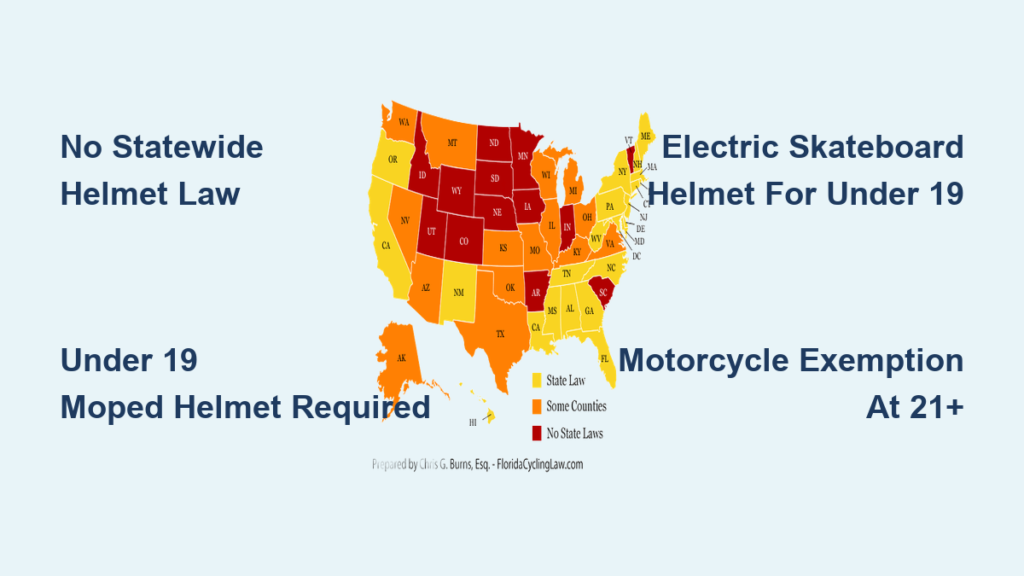
Michigan stands among 21 states with no mandatory bicycle helmet law for riders of any age. The Michigan Vehicle Code explicitly excludes traditional pedal bicycles from helmet requirements, meaning you won’t face fines for riding without head protection on conventional bikes—regardless of whether you’re 8 or 80. This freedom applies equally to road bikes, mountain bikes, adult tricycles, tandem bicycles, and electric-assist models under 750 watts.
Local Ordinances That Override State Law
While the state sets no bicycle helmet rules, your city or township likely does. Kalamazoo mandates helmets for riders under 18 on all city property, East Grand Rapids requires helmets on specific trails regardless of age, and Ann Arbor enforces helmet use for bike-share program users. These local rules often target high-traffic areas like parks, downtown districts, and university campuses where collision risks increase. Always check your municipality’s parks and recreation page before riding—many communities post helmet requirements right alongside trail maps. When in doubt, ask local bike shops; they track these shifting ordinances and often display “helmet required” signage from compliant cities.
Moped Helmet Mandate for Riders Under 19
If your two-wheeled vehicle has an engine, Michigan’s rules change dramatically. Anyone under 19 operating a moped must wear a DOT-approved helmet on public roads. This requirement applies whether you’re the operator or a passenger—young riders can’t legally hitch a ride without head protection.
What Michigan Defines as a Moped
The law targets vehicles meeting all these criteria:
– Engine capacity of 100cc or less
– Maximum speed of 30 mph on level ground
– Automatic transmission without manual clutch
Critical distinction: Many electric bikes blur the line between bicycles and mopeds. If your e-bike exceeds 750 watts or 28 mph, it likely qualifies as a moped—triggering the under-19 helmet mandate. Law enforcement checks vehicle classification during stops, so verify your model’s specs before riding. Carry ID if you’re near 19; officers may request age verification, though the requirement lifts automatically at age 19 with no paperwork needed.
Electric Skateboard Helmet Rules for Under-19 Riders
Michigan treats electric skateboards like mopeds for helmet purposes. Riders under 19 must wear crash helmets when operating these devices on public streets or highways. But there’s an additional layer: children under 12 cannot legally ride electric skateboards on public roads at all—period.
Age-Based Riding Restrictions Explained
You face three distinct scenarios:
– Under 12: Banned from public road use (private property with permission only)
– 12-18: Permitted with DOT-approved helmet
– 19+: No helmet requirement
Private property exception: On your driveway, private trails, or gated communities with owner consent, all age restrictions vanish. However, property owners can impose their own helmet rules—common at skate parks and college campuses. Never assume private land means no rules; look for posted signage before riding.
Motorcycle Helmet Exemptions for Adults 21+
https://www.michigan.gov/mec/0,1607,7-157-43945_44028—,00.html
Motorcycle helmet laws operate on a two-tier system. Riders under 21 must wear helmets with no exceptions—covering all street-legal motorcycles, trikes, and motor-driven cycles. For riders 21 and older, Michigan offers a legal path to ride helmet-free, but it demands strict compliance.
Meeting the Insurance-Based Exemption
To ride without a helmet at 21+, you must satisfy all these requirements simultaneously:
– Hold a motorcycle endorsement for at least 2 years, OR complete an MSP-approved safety course
– Carry $20,000 minimum first-party medical coverage under Michigan’s No-Fault Act
– Always have physical proof of this coverage while riding
Passenger complications: If your passenger lacks separate $20,000 coverage, your policy must provide $20,000 per person. For example, with two passengers, you’d need $60,000 total coverage. Police don’t stop riders solely for helmet checks, but during routine traffic stops they’ll verify your exemption documents—riding without proof risks a $500 fine.
Helmet Standards: What Makes a Helmet Legal in Michigan
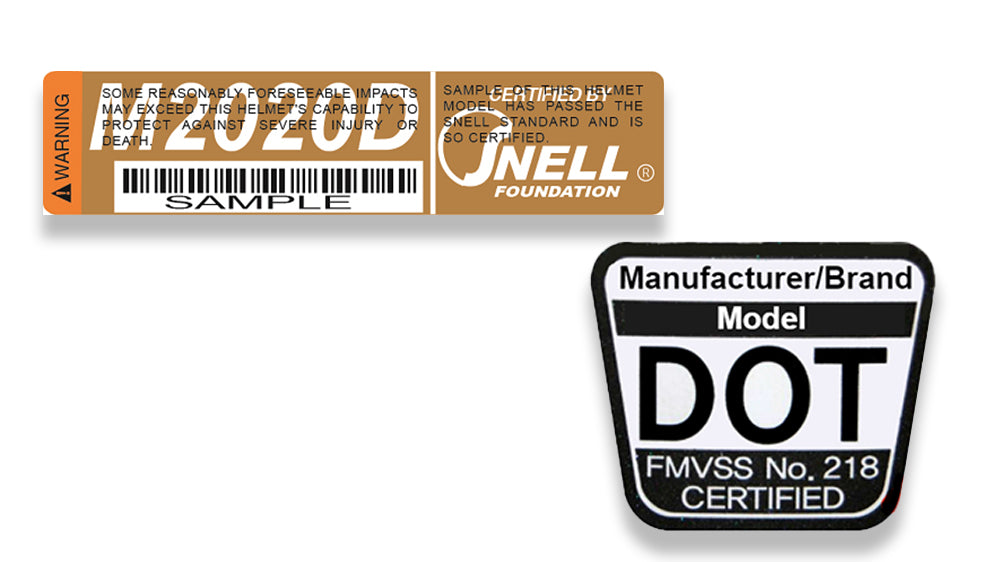
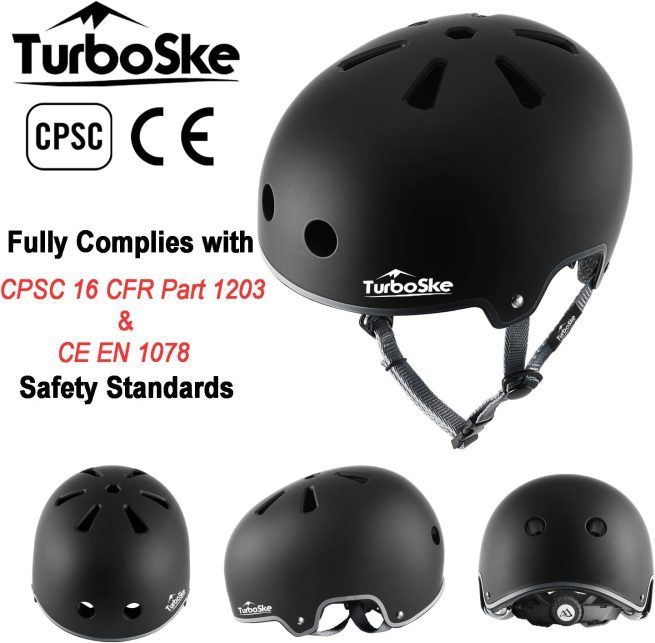
Michigan doesn’t accept just any helmet. All mandated headgear must meet Michigan State Police (MSP) approval standards based on rules effective June 1, 1970. This means your helmet must carry at least one of these certifications:
- DOT (Department of Transportation) sticker
- Snell Memorial Foundation certification
- ANSI (American National Standards Institute) approval
Critical Verification Steps
- Check inside the helmet for certification labels—counterfeit helmets often fake exterior logos
- Replace after any crash impact, even if damage isn’t visible
- Discard helmets older than 5 years—sun exposure degrades foam over time
- Ensure the helmet fits snugly without obstructing vision (MSP rules specify proper fit standards)
Autocycle Roof Exception and Seat Belt Rules
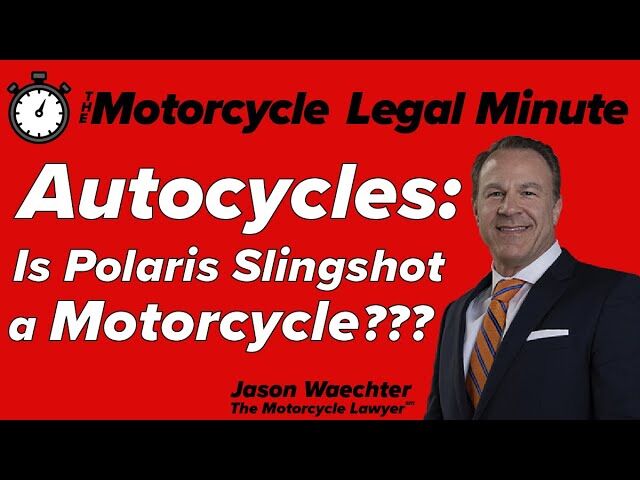
Three-wheeled autocycles get special treatment. If your autocycle has a roof meeting crash helmet standards, you skip the helmet requirement—but seat belts become mandatory. This exception applies only to vehicles with:
- Enclosed passenger compartments
- Automotive-style steering wheels (not handlebars)
- Seat belts installed at every seating position
Seat belt non-negotiable: Even with a qualifying roof, you must wear seat belts on all public highways. Autocycles without roofs require both helmets and seat belts. Verify your vehicle’s classification—many “motorcycles” marketed as trikes don’t qualify as autocycles under Michigan law.
Real-World Penalties and Insurance Consequences
While Michigan’s statute doesn’t specify fines, helmet violations typically trigger civil infractions under MCL 257.907. Expect these consequences:
- Moped/electric skateboard violations: $100-$200 fines for underage riders
- Motorcycle violations: $100-$500 fines plus potential license suspension
- No driver’s license points assessed for helmet offenses
Insurance landmines: Riding without a required helmet can void injury claims. If you crash while violating helmet laws, insurers may deny coverage for head injuries—leaving you responsible for medical bills. This applies even when local ordinances (not state law) required the helmet.
Your Michigan Helmet Compliance Checklist
Before every ride, run through this verification:
| Vehicle Type | Your Age | Helmet Required? | Critical Action |
|---|---|---|---|
| Traditional Bicycle | Any | No (statewide) | Check city ordinances—Ann Arbor requires helmets on trails |
| Moped | Under 19 | Yes | Verify DOT certification—not just “bike helmet” |
| Electric Skateboard | 12-18 | Yes | Confirm local age limits—some cities ban under 16 |
| Motorcycle | 21+ | Only if uninsured | Carry physical insurance proof—digital copies often rejected |
Must-Check Local Ordinances Before Riding
Since bicycle helmet rules depend entirely on location, always research these three areas:
– Park systems: Kent County requires helmets for all ages on paved trails
– University campuses: MSU enforces universal helmet use on campus paths
– Trail networks: The Kal-Haven Trail mandates helmets for minors
Smart verification tactics:
– Search “[Your City] + bicycle ordinance + parks department”
– Call non-emergency police line for current enforcement policies
– Note trailhead signage—many parks post rules at entry points
– When renting bikes (like in Traverse City), operators must inform you of local rules
Safety Beyond Legal Minimums
Legal compliance doesn’t equal safety. Bicycle helmets reduce head injury risk by 50%—yet Michigan leaves protection optional for most cyclists. Prioritize these evidence-based protections regardless of age:
- Urban riders: Wear MIPS-equipped helmets (reduces rotational impact injuries)
- Night riders: Choose helmets with reflective strips—required by some cities after dark
- Children: Use CPSC-certified youth helmets adjusted monthly as they grow
- Commuting: Carry a spare helmet for quick errands—many crashes happen within 3 miles of home
Final Action Plan for Michigan Riders
Your helmet obligation depends entirely on three factors: vehicle classification, your exact age, and location. Follow this sequence before every ride:
1. Identify your vehicle type—is it a bicycle, moped, or motorcycle? (Check engine specs)
2. Verify age thresholds—moped rules flip at 19, motorcycle at 21
3. Research local rules—especially for parks and trails
4. Carry proof—ID for age verification, insurance docs for motorcycles
Remember: Michigan’s legal minimums rarely match safety best practices. While state law won’t ticket you for riding a bicycle without a helmet, emergency rooms see the consequences daily. Choose head protection not because the law demands it—but because your brain deserves defense against the unexpected pothole, distracted driver, or simple loss of balance. When in doubt, strap it on: no rider ever complained that a helmet saved their life.