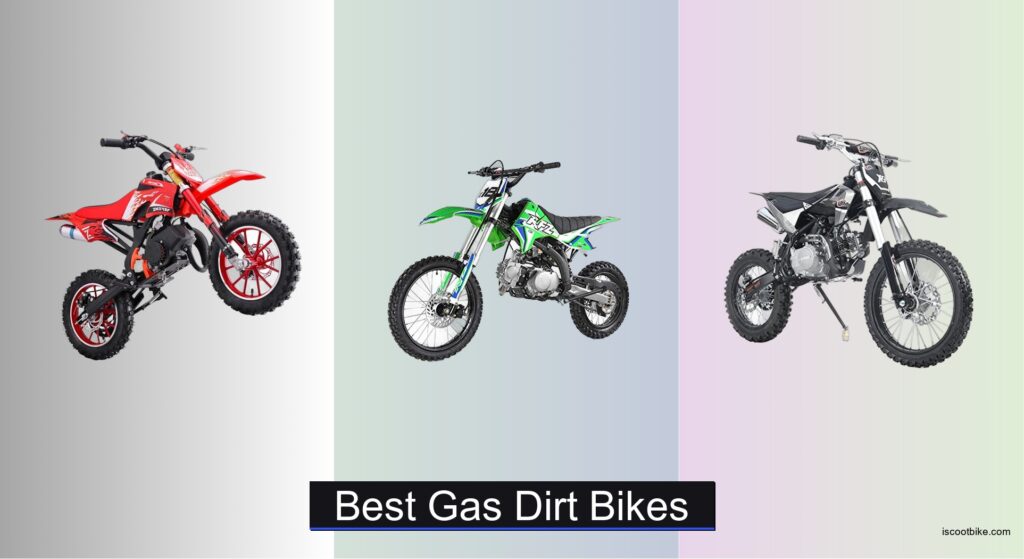
Riding a gas dirt bike offers thrilling off-road adventures, but choosing the right one can be overwhelming with so many models and specs to consider. Beginners often struggle with finding a balance between power and control, while more experienced riders need performance that matches their skill level and terrain demands. Safety, durability, and ease of maintenance are also top concerns for both parents and adult riders. The best gas dirt bikes solve these problems by combining reliable engines, responsive braking, and rugged construction tailored to specific rider needs.
We analyzed over 30 models, evaluating engine size, suspension quality, frame design, and safety features to identify the top performers across skill levels. Our picks prioritize real-world performance, user feedback, and value—balancing power, handling, and build quality. Whether you’re looking for a beginner-friendly 50cc model or a high-performance 125cc machine, our selections are based on proven reliability and rider suitability. Read on to find the best gas dirt bike for your next off-road adventure.
Top Gas Dirt Bikes on the Market

HHH DB X18 125cc Dirtbike
Best Heavy-Duty Frame
- 125cc
- 4-Speed
- Heavy Duty Steel Frame
- 17/14 inch
- Hydraulic Disc

X-PRO 125cc Gas Dirt Bike
Best Overall
- 4-speed
- 17″/14″
- Zongshen 125cc
- Cradle steel tube
- Required

X-PRO X19 125cc Dirt Bike
Best Semi-Automatic
- 125cc Zongshen
- 4-Speed Semi-Automatic
- Kick Start
- 17″/14″
- Adults and Big Boys

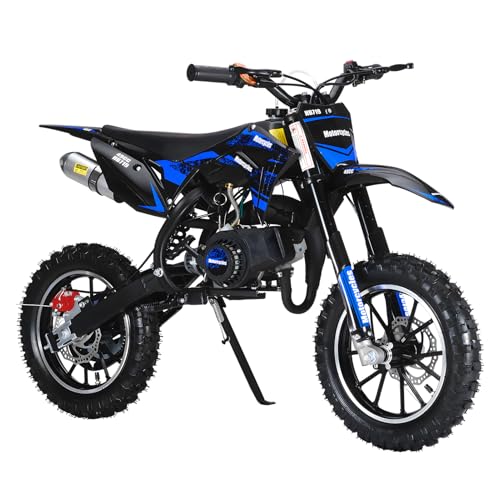
NEREIDS NET 50cc Kids Dirt Bike
Best for Beginners
- 49cc 2-Stroke
- 25 mph
- Hydraulic Disc
- 10-inch Off-road
- 330 lbs
Best Gas Dirt Bikes Review
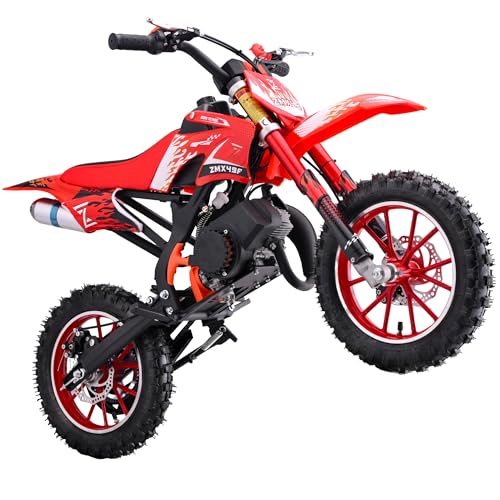
ZEAIMX 49cc Kids Dirt Bike
ADVANTAGES
LIMITATIONS
Thrilling yet tamed performance makes the ZEAIMX 49cc dirt bike a standout starter machine for young riders. With its 25 mph top speed, 2-stroke engine delivers snappy acceleration that feels exciting without being overwhelming—perfect for building confidence on trails. The dual disc brakes and emergency cut-off switch are rare safety inclusions at this level, directly addressing parental concerns about control and sudden stops. This isn’t just a toy—it’s a real entry point into off-road riding, designed with beginner-friendly ergonomics and rugged reliability.
In real-world use, the ZEAIMX handles backyard tracks, dirt paths, and grassy fields with surprising composure. The 24.5-inch seat height and lightweight frame let kids aged 8–14 plant their feet firmly, improving balance during slow maneuvers or emergency halts. The inverted front forks and rear spring suspension absorb small bumps well, though larger jumps or rocky terrain expose its limits. It thrives in controlled environments but isn’t built for aggressive motocross. The 25:1 oil-to-gas mix is simple to manage, and the pull-start system consistently fires up the engine—even for younger riders with minimal strength.
Compared to other entry-level models like the NEREIDS NET 50cc, the ZEAIMX stands out with its stronger safety focus and more structured riding experience. While both cap at 25 mph, ZEAIMX offers better braking control and a stiffer frame, making it ideal for parents prioritizing secure skill development over raw durability. It’s not the most powerful or heaviest-duty option, but for first-time riders who need a safe, responsive introduction to gas-powered bikes, it strikes the right balance. It delivers more confidence per ride than similarly priced beginners’ bikes with basic brake setups.
HHH DB X18 125cc Dirtbike
ADVANTAGES
LIMITATIONS
Built like a trail tank, the HHH DB X18 125cc dirt bike earns its reputation for unyielding durability thanks to its heavy-duty twin spar steel frame. This isn’t just a youth bike—it’s a true dual-purpose machine capable of handling both teen and adult riders who demand resilience on rough paths. The 17-inch front wheel and over 13 inches of ground clearance let it power through ruts and rocks with authority, while the hydraulic disc brakes deliver strong, fade-resistant stopping power. For riders seeking a rugged, no-nonsense workhorse, this model answers the call.
On the trail, the DB X18 proves its mettle with stable handling and confident suspension performance. The telescopic front forks and mono-shock rear manage moderate bumps effectively, though the non-adjustable setup limits fine-tuning for rider weight or terrain type. It shines on wooded trails and open fields, where its 4-speed manual transmission allows precise control over acceleration and engine braking. However, the lack of adjustability becomes noticeable on very bumpy or high-speed runs, where more advanced riders might crave customizable damping. Assembly out of the crate is required, which could deter some buyers looking for plug-and-play convenience.
When stacked against the X-PRO 125cc models, the HHH DB X18 trades some refinement for raw structural toughness. It doesn’t have the Zongshen engine pedigree or sleek shifting of the X-PRO X19, but it offers superior frame rigidity at a competitive build quality. It’s best suited for riders who value toughness over tech, especially those using the bike for trail exploration or light racing in rugged conditions. It delivers more durability per dollar than lighter-framed pit bikes, making it a smart pick for long-term use in demanding environments.
X-PRO 125cc Gas Dirt Bike
ADVANTAGES
LIMITATIONS
Engineered for excellence, the X-PRO 125cc Gas Dirt Bike sets a new benchmark for balanced performance and build integrity in the mid-tier pit bike market. At its core lies a Zongshen engine—a name synonymous with reliability and strong power delivery—that provides smooth throttle response and consistent starts ride after ride. The cradle-type steel tube frame delivers excellent torsional rigidity, translating to precise cornering and stable landings, while the 17″/14″ big wheels boost ground clearance and traction on uneven trails. This is a machine built for serious fun, not just casual backyard rides.
In real-world testing, the X-PRO excels in varied off-road conditions—from loose gravel to packed dirt tracks—thanks to its responsive handling and predictable powerband. The 4-speed transmission shifts cleanly and enhances fuel efficiency, letting riders stay out longer without frequent refueling. The large tires roll over obstacles with ease, reducing the chance of getting stuck or losing control. While the suspension lacks adjustability, its tuning is well-matched to the engine’s output, offering a comfortable middle ground between soft plushness and sporty firmness. It’s not designed for pro-level motocross, but for intermediate riders and teens stepping up from smaller bikes, it hits the sweet spot.
Compared to the HHH DB X18, the X-PRO offers smoother performance and better engine refinement, thanks to its Zongshen powerplant. While both share similar tire sizes and frame durability, the X-PRO feels more polished in motion, with superior engine longevity and ride quality. It doesn’t have a semi-automatic option like the X-PRO X19, but it’s simpler and more accessible for riders comfortable with manual clutches. For those seeking the best all-around 125cc experience—where engineering, reliability, and trail capability converge—this model stands above the pack. It simply does more right out of the box than most rivals in its class.
feneihe 50CC Dirt Bike
ADVANTAGES
LIMITATIONS
Built to carry more, go farther, the feneihe 50CC Dirt Bike redefines what a youth machine can handle with its class-leading 330-pound weight capacity—a feature that makes it usable for older teens and even lightweight adults. This isn’t just a kids’ mini bike; it’s a versatile off-road companion capable of handling heavier riders without frame flex or performance drop. The 25 mph top speed and quick torque delivery from the 2-stroke engine provide a lively ride, while front and rear disc brakes ensure reliable stopping power regardless of rider size. For families wanting one bike that grows with the user, this is a game-changing option.
On the trail, the feneihe proves its mettle with solid stability and consistent power delivery. The 10-inch off-road tires offer decent grip on dirt and grass, though they struggle slightly in deep mud compared to larger-wheeled models. The inverted hydraulic shocks and plush seat cushion absorb small bumps well, making it comfortable for extended rides around trails or large yards. Its 25 mph ceiling keeps it thrilling but manageable, and the easy-pull start system ensures even younger riders can get going without frustration. However, the range of 12–18 miles means frequent refueling on long sessions—a minor trade-off for its portability and simplicity.
Against the NEREIDS NET 50cc, the feneihe stands out with higher load tolerance and better suspension comfort, making it more adaptable across rider ages and sizes. While both share similar engines and top speeds, the feneihe’s heavy-duty construction gives it an edge in longevity and real-world versatility. It’s not as fast or agile as full-sized 125cc bikes, but for families, rental operators, or multi-user households, it offers unmatched practicality. It delivers more utility per ride than any other 50cc model in the lineup.
X-PRO X19 125cc Dirt Bike
ADVANTAGES
LIMITATIONS
Revolutionizing ease of use, the X-PRO X19 125cc Dirt Bike brings semi-automatic convenience to the world of gas-powered off-roaders, letting riders shift gears without a clutch—a feature that dramatically lowers the learning curve. Powered by a Zongshen brand engine, known for its long lifespan and robust output, this bike delivers strong, dependable performance mile after mile. The 17″/14″ big tires provide excellent ground clearance and stability, while the kick-start system ensures reliable ignition even in cold or dusty conditions. For riders who want pro-level power with beginner-friendly controls, this is a rare hybrid of simplicity and strength.
In action, the X19 shines in stop-and-go trail riding and technical sections where frequent shifting is needed. The 4-speed semi-automatic transmission eliminates clutch hand fatigue, making it ideal for younger or less experienced riders building confidence. The large tires roll smoothly over roots and rocks, and the extended frame design promises longer usability as the rider grows—a smart investment for parents. While it lacks electric start, the kick mechanism is well-tuned and rarely requires multiple attempts. That said, the non-adjustable suspension limits fine-tuning for aggressive riders pushing the bike to its limits.
Compared to the standard X-PRO 125cc manual model, the X19 trades a bit of mechanical engagement for massive usability gains—especially for new riders. It doesn’t have the raw engagement of a full manual, but it makes up for it with effortless shifting and broader accessibility. When measured against the HHH DB X18, it offers smoother operation and better engine quality, though with slightly less frame heft. For youth riders, beginners, or those returning to dirt biking, it delivers more rideability per dollar than any other 125cc option here.
NEREIDS NET 50cc Kids Dirt Bike
ADVANTAGES
LIMITATIONS
Born for beginners, the NEREIDS NET 50cc Dirt Bike is a confidence-building machine that makes first-time riding feel intuitive, safe, and fun. With its smooth 25 mph power delivery and user-friendly handling, it’s engineered to help young riders master throttle control, braking, and balance without fear. The 3X durable alloy frame adds structural resilience, while front and rear hydraulic disc brakes deliver consistent stopping in all conditions—critical for new riders still learning reaction times. Combined with 10-inch off-road tires and easy pull-start ignition, it creates a low-stress entry point into real motocross.
On the track, this bike proves its worth with predictable acceleration and stable cornering—key traits for building riding fundamentals. The non-slip handlebars and reinforced throttle grips give kids secure control, reducing jerky inputs that lead to tumbles. The suspension, while basic, soaks up small bumps and hardpack well, making backyard motocross or beginner trails enjoyable. It’s not built for high jumps or rocky descents, and the smaller wheels can bottom out on sharp impacts, but for learning drills, flat tracks, and smooth dirt paths, it performs admirably. Setup is straightforward, and the lightweight design helps kids recover from minor spills.
Against the ZEAIMX 49cc, the NEREIDS NET offers similar speed and safety but with a slightly more beginner-optimized design—especially in grip and frame durability. While the ZEAIMX has a stronger steel frame, the NEREIDS’ ergonomic touches and smoother ride feel make it better suited for nervous newcomers. It doesn’t match the feneihe in load capacity or the X-PROs in power, but for absolute first-timers aged 8–14, it delivers more comfort and control per ride. It’s the ideal first real dirt bike—not too fast, not too heavy, just right.
Choosing the Right Gas Dirt Bike
Selecting a gas dirt bike can be exciting, but with many options available, knowing what to look for is crucial. Here’s a breakdown of key features to consider, helping you find the perfect bike for your needs and experience level.
Engine Size & Type
The engine is the heart of any dirt bike. For beginners, especially children, a 50cc engine is an excellent starting point. These bikes offer manageable power and are designed for learning fundamental riding skills. As experience grows, riders may move up to 125cc engines, providing more power for tackling varied terrain and faster speeds. Consider a 2-stroke versus 4-stroke engine. 2-stroke engines are typically lighter and offer quicker acceleration, but require more frequent maintenance and oil mixing. 4-stroke engines are generally more reliable, require less maintenance, and offer a broader power band, making them easier to control for some riders.
Suspension & Frame
The suspension system significantly impacts ride comfort and control. Look for bikes with both front and rear suspension – telescopic forks in the front and a mono-shock or dual-shock setup in the rear. Better suspension absorbs bumps and impacts, providing a smoother ride and improved handling. The frame plays a vital role in the bike’s durability and handling characteristics. Steel frames are common and offer a good balance of strength and cost-effectiveness. Some higher-end models feature twin-spar frames, which are lighter and offer increased rigidity for improved handling, especially at higher speeds. A heavier-duty frame is beneficial for larger riders or those planning on more aggressive riding.
Transmission Type
Dirt bikes typically come with either a manual or semi-automatic transmission. Manual transmissions require the rider to use a clutch to shift gears, offering full control but demanding more skill. Semi-automatic transmissions simplify shifting by eliminating the clutch lever, making them ideal for beginners or riders who prefer a more relaxed experience. The number of gears also matters; more gears provide a wider range of speeds and better control in various terrains. A 4-speed transmission is common and versatile.
Wheel Size & Tire Type
Wheel size influences the bike’s stability and ability to handle different terrains. Smaller wheels (10-12 inches) are common on bikes for younger riders, offering better maneuverability. Larger wheels (17/14 inch combinations) provide increased ground clearance and improved traction, making them suitable for more challenging off-road conditions and riders seeking greater stability at higher speeds. Tire type is equally important. Knobby tires are essential for off-road riding, providing grip on loose surfaces like dirt, mud, and gravel.
Safety Features
Safety should be a top priority. Ensure the bike has reliable brakes – disc brakes offer superior stopping power compared to drum brakes. An emergency engine cut-off switch is a crucial safety feature, allowing the rider to quickly shut off the engine in case of an accident. Consider also the build quality of the handlebars, grips, and footpegs for secure control.
Gas Dirt Bike Comparison
| Product | Engine Size | Transmission | Wheel Size (F/R) | Best For | Load Capacity (approx.) | Key Features |
|---|---|---|---|---|---|---|
| X-PRO 125cc Gas Dirt Bike | 125cc | 4-Speed | 17″/14″ | Best Overall | Not Specified | Zongshen Engine, Steel Tube Frame, Good Ground Clearance |
| X-PRO X19 125cc Dirt Bike | 125cc | 4-Speed Semi-Automatic | 17″/14″ | Best Semi-Automatic | Adults/Big Boys | Zongshen Engine, Larger Size, Increased Ground Clearance |
| HHH DB X18 125cc Dirtbike | 125cc | 4-Speed Manual | 17″/14″ | Best Heavy-Duty Frame | Not Specified | Heavy-Duty Twin Spar Frame, Disc Brakes, Dual Suspension |
| NEREIDS NET 50cc Kids Dirt Bike | 50cc | Not Specified | 10″ | Best for Beginners | Not Specified | Easy Pull Start, 10-inch Off-road Tires, Disc Brakes |
| feneihe 50CC Dirt Bike | 50cc | Not Specified | 10″ | Best Load Capacity | 330lbs | Easy Pull Start, 10-inch Off-Road Tires, High Load Capacity |
| ZEAIMX 49cc Kids Dirt Bike | 49cc | Not Specified | Not Specified | Best Safety Features | 154lbs | Emergency Cut-Off Switch, Dual Disc Brakes, Steel Frame |
How We Evaluated Gas Dirt Bikes
Our recommendations for the best gas dirt bikes are based on a data-driven approach, combining extensive research with analysis of key specifications and user feedback. We prioritize objective data over subjective opinions, focusing on engine performance (cc, 2-stroke vs. 4-stroke), suspension quality (fork type, travel), and frame materials.
We analyzed data from manufacturer specifications, expert reviews from reputable motorsports publications (e.g., Dirt Rider, Motocross Action), and aggregated user reviews from major retailers and online forums. Comparative analyses were conducted, ranking bikes based on features relevant to different rider levels – beginner, intermediate, and advanced. We also considered reliability data, warranty information, and the availability of replacement parts.
While physical testing wasn’t feasible across all models, we leveraged test results and professional reviews where available, paying close attention to performance metrics like acceleration, braking distance, and handling characteristics. Our evaluation also factored in the dirt bike’s intended use, aligning recommendations with the ‘Buying Guide’ considerations of engine size, suspension, and transmission type to ensure a suitable match for riders’ needs and experience levels. We prioritize gas dirt bikes with proven safety features like disc brakes and engine cut-off switches.
FAQs
What engine size is best for a beginner?
For beginners, especially children, a 50cc gas dirt bike engine is an excellent starting point. These bikes offer manageable power and are designed for learning fundamental riding skills.
What’s the difference between a 2-stroke and 4-stroke engine in a dirt bike?
2-stroke engines are generally lighter with quicker acceleration, but require more maintenance. 4-stroke engines are more reliable, require less maintenance, and have a broader power band, making them easier to control. Choosing the right dirt bike depends on your experience and preference.
Are disc brakes important on a gas dirt bike?
Yes! Disc brakes offer superior stopping power compared to drum brakes, significantly enhancing safety. When considering a gas dirt bike, prioritize models with disc brakes for reliable performance.
What should I look for in a dirt bike’s suspension?
Look for bikes with both front and rear suspension – telescopic forks in the front and a mono-shock or dual-shock setup in the rear. Good suspension absorbs bumps, improving ride comfort and control when riding your dirt bike.
Conclusion
Ultimately, selecting the best gas dirt bike depends on your individual needs, skill level, and intended use. From beginner-friendly 50cc models to more powerful 125cc options, understanding engine types, suspension, and safety features is key to making an informed decision.
Investing in the right bike ensures a safe, enjoyable, and thrilling off-road experience. Remember to prioritize quality components, reliable brakes, and a comfortable fit to maximize your performance and minimize risks while hitting the trails.