Your bike rack shouldn’t turn a weekend adventure into a roadside disaster. Yet 68% of cyclists report at least one rack failure during transport—bikes scraping paint, wobbling dangerously, or worse, detaching entirely. Choosing the right car bike rack types solves this by matching your vehicle, bike specs, and riding habits. Whether you’re hauling a single road bike or three e-bikes over mountain passes, this guide cuts through marketing fluff to reveal exactly which rack types deliver real-world reliability. You’ll learn critical compatibility checks most buyers miss, avoid $300+ mistakes with budget traps, and discover why zero frame contact systems are non-negotiable for carbon bikes. Let’s get your wheels rolling safely.
Hitch-Mounted Platform Car Bike Racks: Zero Frame Contact Safety

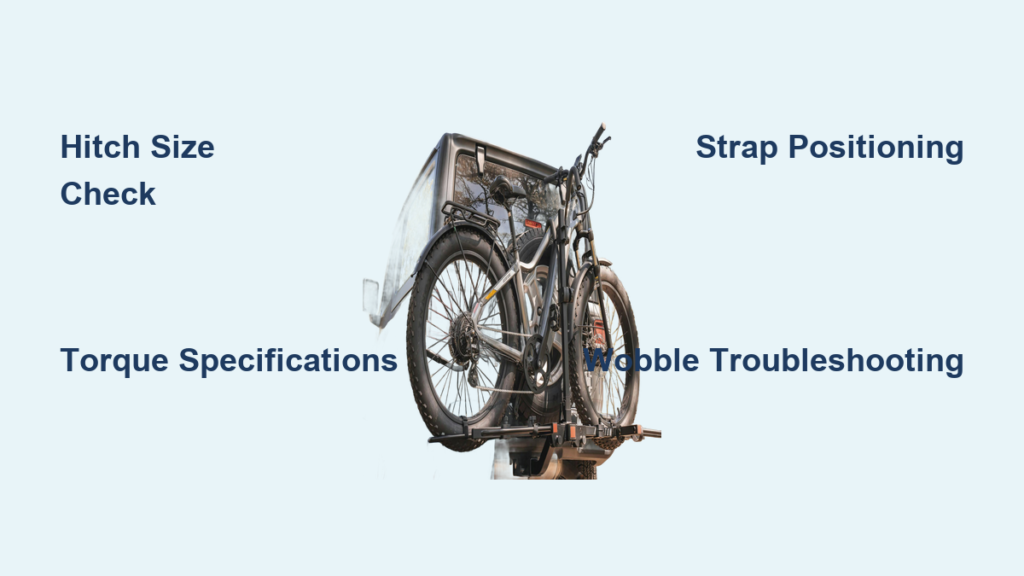
Platform hitch racks cradle bikes by the wheels alone—never touching frames—making them ideal for expensive carbon or full-suspension builds. These systems lock tires into adjustable trays with spring-loaded arms that auto-adjust to 16-29″ wheels and tires up to 5″ wide. Unlike hanging racks, they eliminate frame stress that cracks carbon forks or snags brake lines during turbulence.
Why Platform Racks Dominate for E-Bikes
Electric bikes demand serious capacity: most weigh 50-80 lbs, crushing standard 35-lb rack limits. The Saris Edge (80 lbs/bike) and Küat Piston Pro X (67 lbs/bike) handle e-bikes in a 2″ hitch receiver, while budget models like the Swagman XTC2 max out at 35 lbs—guaranteeing overload risks. Key visual cue: look for integrated ramps on premium models. Without them, lifting a 60-lb e-bike onto a 4-foot-high rack strains your back and risks frame damage.
Critical Compatibility Checks You Must Do
Never assume hitch size compatibility. Verify your receiver is 1¼” or 2″ using a tape measure before buying. The Saris SuperClamp G4 works with both sizes, but the Saris Edge requires a 2″ receiver exclusively—common in trucks but rare in sedans. Also calculate total weight: rack weight + all bikes + accessories. A VelociRAX 5X (95 lbs) loaded with five 30-lb bikes hits 245 lbs total, exceeding many compact cars’ 200-lb hitch limits. Test fit by loading empty racks first—some SUVs need hitch extenders to clear rear bumpers.
Hanging Hitch Car Bike Racks: Budget-Friendly but Frame-Risky
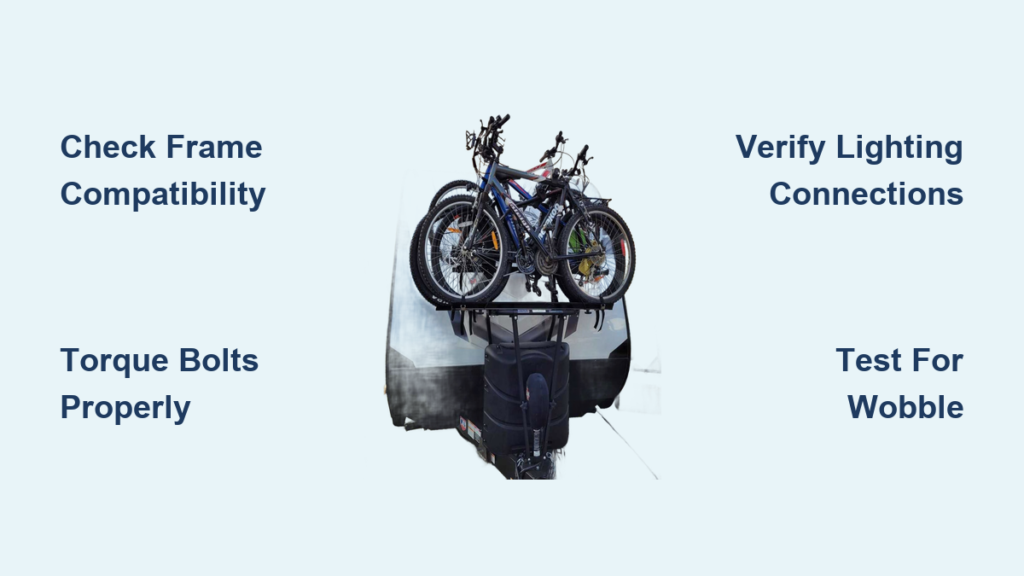
Hanging hitch racks suspend bikes vertically by the top tube for lower cost and weight (15-20 lbs vs. 40+ lbs for platforms). They’re viable for standard aluminum or steel road/mountain bikes under 35 lbs each. However, non-traditional frames—step-through city bikes, full-suspension models, or women’s geometries—often lack top tubes, requiring unstable adapter bars that shift mid-drive.
Why Families Choose Vertical Hanging Systems
The VelociRAX 5X stacks five bikes upright with 15″ spacing, minimizing rear overhang on large SUVs. Hydraulic dampers let you lower the fully loaded rack with one hand—critical when your arms are full of trail gear. But verify wheelbase compatibility: exceeding 60″ (like long-tail cargo bikes) causes handlebar collisions. Red flag: bikes sway visibly at highway speeds. If straps don’t hold frames rock-solid, upgrade immediately—loose bikes can twist off during sharp turns.
Trunk-Mounted Car Bike Racks: Hitchless Vehicle Solutions
Trunk racks strap directly to your hatch or bumper, ideal for rentals, convertibles, or cars lacking hitches. They’re ultra-portable (the Saris Solo weighs 2 lbs) and budget-friendly ($69.99-$259.99), but require meticulous fitting. Spoilers, curved trunk lids, or small hatches often block attachment points, making 90% “universal fit” claims misleading.
Avoid These Trunk Rack Dealbreakers
Never skip the spoiler test. Press the rack’s rubber pads against your trunk while loading a bike. If gaps appear near spoilers, straps will slip during acceleration—causing bikes to swing into traffic. The Saris Bones EX solves this with rotating arms that conform to 90% of vehicles, but cheap alternatives like the Saris Guardian often lack this flexibility. Also check trunk access: most trunk racks block hatch opening when loaded. If you regularly carry gear, this rack type becomes unusable for practical trips.
Truck Bed Car Bike Racks: Tailgate and Interior Track Options

Pickup owners unlock unique solutions like Saris Tailgate Pads, which secure bikes vertically against the tailgate using G-hooks and 10-foot straps. Small pads fit 51″ beds (5 bikes), large handle 59″ beds (6 bikes), with 50 lbs capacity per bike. For enclosed transport, Saris Traps Track Systems mount inside beds or SUV cargo areas—single tracks hold 2 bikes, triples handle 4 bikes in 35″ or 47″ lengths.
Why Interior Tracks Beat Tailgate Pads for E-Bikes
Tailgate pads struggle with heavy e-bikes: straps stretch under 50+ lb loads, risking detachment on bumpy roads. Interior tracks solve this by anchoring bikes directly to truck bed rails. Mount the Saris Triple Track (47″ version) to your bed floor, then secure bikes via seatposts or wheel mounts. Bonus: full weather theft protection. Pro tip: add foam padding under bike frames to prevent metal-on-metal scratching during off-road drives.
E-Bike Car Rack Requirements: Heavy-Duty Transport Essentials
Standard racks fail e-bikes. Their 50-80 lb weight exceeds 35 lb limits, stressing frames and overloading hitches. Always confirm e-bike compatibility—look for 60+ lb capacity per bike and integrated ramps. The Saris Edge (80 lbs) and Küat Piston Pro X (67 lbs) are top performers, while the motorized Saris Door County ($1,299.99) uses electric lift assistance for effortless loading.
The Hidden E-Bike Killer: Tire Width
Fat-tire e-bikes (4″+ tires) won’t fit racks with narrow tire clamps. Verify maximum tire width: the RockyMounts MonoRail accommodates 5″ tires, but the Yakima StageTwo maxes out at standard widths. Visual test: place your bike’s fattest tire against the rack’s clamp. If it doesn’t sit flush, the tire will slip during turns. Never force-fit—this causes catastrophic detachment.
How to Match Car Bike Rack Types to Your Vehicle
Skip this step and you’ll return racks repeatedly. For hitch racks, use U-Haul’s fit guide to confirm receiver size and weight rating. For trunk racks, measure spoiler clearance: if less than 2″, the Saris Bones EX is your only viable option. RV owners note: only the Saris Edge and SuperClamp HD are Class A/B/C RV-compatible.
The 60-Second Compatibility Test
- Hitch racks: Insert your receiver pin—does it slide in smoothly? Wobbly connections = dangerous instability.
- Trunk racks: Load an empty rack, then shake your trunk lid vigorously. If straps slip, it’s unsafe.
- All racks: Calculate total weight (rack + bikes + gear). Must stay under hitch/trunk rating—never exceed 80% capacity for safety margin.
Car Bike Rack Price Tiers: Budget to Premium Compared

Budget Traps Under $230
The Saris Guardian ($89.99) seems ideal for occasional riders but fails on disc brakes—the clamps lack hose clearance, causing brake rub. The Saris Solo ($69.99) works for single road bikes but bends under mountain bike weight. Only choose budget if: you ride <10x/year, bikes weigh <30 lbs, and your vehicle has no spoilers.
Premium Value ($700-$1,200)
The Saris SuperClamp G4 ($799.99) justifies cost with zero frame contact, integrated cable locks, and 60 lb capacity. Unlike cheaper platforms, its spring-loaded arms auto-adjust to any wheel size—no manual tweaking needed during roadside stops. For families, the Saris MHS ($999.99) starts as a 2-bike system and expands to 4 bikes, growing with your cycling needs.
Making Your Final Car Bike Rack Decision
Choose platform hitch racks if: You own e-bikes, carbon frames, or haul bikes weekly. The security and frame protection prevent costly damage.
Choose trunk racks if: Your car lacks a hitch, you ride <20x/year, and bikes weigh <35 lbs. Prioritize the Saris Bones EX for spoiler compatibility.
Avoid hanging racks if: You have non-standard frames—they waste money on adapter bars that rarely work reliably.
The best car bike rack types disappear into your routine: loading takes under 2 minutes, bikes arrive unscathed, and you access your trunk without removing the rack. Start with your heaviest bike’s weight and your vehicle’s hitch size—then filter options using our compatibility checklist. For most riders, a platform hitch rack pays for itself in avoided repairs and stress-free adventures. Ready to dive deeper? Compare exact model specs using Saris’ and Thule’s fit guides before clicking “buy.” Your bikes deserve nothing less.