That moment when your rear wheel breaks loose and the bike starts sliding sideways through a turn—done right, it’s pure magic. A dirt bike power slide transforms your cornering ability on loose surfaces, letting you maintain higher speeds where others would lose control. This controlled drift technique separates novice riders from those who truly command their machines on dirt, gravel, and mud. When you master the delicate balance between throttle control, body position, and visual focus, you’ll discover entirely new possibilities on the trail. This guide breaks down the exact process for executing consistent, controlled power slides regardless of your bike or skill level.
The Physics Behind Your Dirt Bike Power Slide
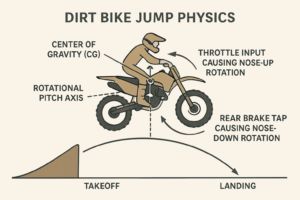
Understanding why your rear tire breaks traction while your front maintains grip is the first step to controlling the slide. When you initiate a dirt bike power slide, you’re deliberately overwhelming the rear tire’s grip capacity while preserving front wheel traction. As you counter-steer by pushing the inside handlebar, the bike pitches sideways and the rear tire begins sliding outward. At this critical moment, you need to gently lift the throttle until you feel the rear tire start to reconnect with the ground—the bike will feel like it’s trying to stand up—then roll back on the throttle to maintain the slide.
Why Rear Tire Traction Breaks During a Slide
Your dirt bike creates what professionals call a “differentially skidded turn” where the rear wheel slides out faster than the front. This happens because you’re applying enough power to exceed the rear tire’s grip limit while the front wheel still has sufficient traction to steer the bike through the turn. The slide becomes a continuous series of micro-corrections—you’re not just sliding, you’re constantly making tiny recoveries to keep the bike on its arc. Any time you lift the throttle during the slide, you must immediately prepare for the next recovery movement to put the bike back into controlled drift.
How Front Wheel Grip Maintains Steering Control
The key to avoiding a catastrophic crash lies in maintaining front wheel traction. If your front tire loses grip, you’ll go wide and likely lowside. To prevent this, you must keep your weight forward enough to load the front tire while still weighting the outside peg. This delicate balance allows the front wheel to continue tracking through the turn even as the rear slides out. Many riders make the mistake of leaning too far back, which unweights the front tire and causes it to wash out when they need it most.
Mastering Throttle Control for Power Slides
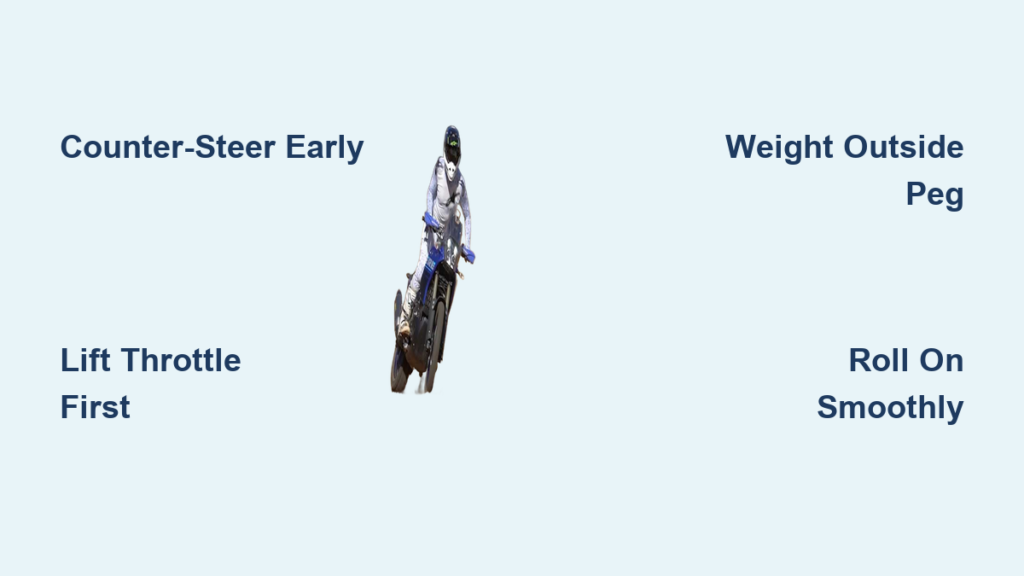
Throttle control is the single most critical element of successful power sliding—get this wrong and you’ll either lowside or highside. The process actually begins before you enter the turn: as you initiate the lean, you should already be lifting the throttle so that the moment the rear tire breaks loose, your hand is positioned to control the slide immediately.
The Critical Throttle Lift-and-Roll Sequence
Follow this precise sequence: counter-steer to lean the bike, gently lift the throttle as the rear breaks traction, feel for the moment the rear starts to hook up (when the bike feels like it’s standing up), then gently roll back on the throttle. This creates a rhythmic modulation that keeps the rear wheel in a controlled slip state. Never grab a handful of throttle abruptly or chop it completely during a slide—slow, subtle movements at the throttle allow the rear to swing slowly, giving you time to react deliberately to the bike’s movements.
Avoiding Highsides: Why Pinning Throttle Beats Chopping It
If a crash becomes unavoidable during practice, it’s far safer to pin the throttle and go down lowside than to chop the throttle and risk a highside. Cutting power suddenly causes the rear wheel to hook up violently, often flipping the bike over you—the much more dangerous highside crash. Maintaining throttle during loss of control typically results in a less severe lowside crash. This safety principle could prevent serious injury when learning the dirt bike power slide technique.
Weight Positioning Secrets for Controlled Drifting

Your body position fundamentally affects how the bike responds to throttle inputs during a power slide. The critical technique most street riders struggle with is counterintuitive: you must weight the outside peg, bar, and seat while letting the inside bar fall into the turn.
Why Outside Peg Weighting is Non-Negotiable
If you’re too far back on the seat, you add mass to the rear of the bike. This creates inertia that makes recovery impossible when the rear breaks loose. The correct position is forward and outside on the seat with your weight firmly on the outside peg. When executed properly, the bike slides like magic—but forget one element and you’ll lowside immediately. Practice figure eights in a parking lot without throttle first to train this counterintuitive body separation from the bike.
Street Rider Mistake: The Inside Weight Trap
Street riders face a particular challenge because their ingrained techniques work against dirt power sliding. On pavement, you weight the inside pegs and sit square on the bike as a single unit. For dirt riding, you must do nearly the opposite: weight the outside peg while letting the inside bar fall into the turn. This separation of rider from bike is essential—without it, you cannot control the dirt bike power slide effectively.
Progressive Power Slide Practice Drills
Developing power slide skills requires structured practice that builds confidence gradually. Start with these proven drills before attempting higher speeds.
The Oval Track Drill for Gradual Skill Development
Lay out an oval track in an open field where you can comfortably ride corners at 20-25 mph with straights long enough to reach 35 mph. Start with 25-foot radius turns, then shorten the radius by half a foot each lap while maintaining the same entry speed. This creates the “just a bit hot” feeling that naturally initiates slides. As you tighten the turns, the slide point moves earlier in the turn until you’re sliding through the entire arc. Keep speeds low—master first-gear slides before progressing to higher gears.
Cone/U-Turn Drill for First-Gear Precision
Place a cone on flat, level ground and ride tight U-turns around it in first gear. Focus on smooth throttle application as you exit the turn, gradually increasing power with each lap. The slicker the surface (grass or mud works well), the slower you can go while still breaking traction—making crashes less painful. Pay attention to engine sound; smooth throttle application creates consistent rear wheel slip without overwhelming grip.
Bike-Specific Power Slide Techniques
Different bikes require adjusted techniques based on their power-to-weight ratios. Understanding your machine’s characteristics makes learning the dirt bike power slide significantly easier.
Light Dirt Bikes: Aggressive Inputs for Low-Power Slides
On smaller displacement bikes like the XR250, you need to toss the bike into the slide more aggressively because the engine lacks power to break traction easily. Counter-steer hard to initiate the lean, then apply throttle while weighting the outside peg. Instructors often observe XR250 riders struggling in tight turns—the front wheel slides out because they can’t break the rear loose quickly enough. The solution? Roll on throttle to break the rear loose, then steer with throttle through the turn.
Dual-Sports: Balancing Power and Control on DR650s
Medium displacement dual-sports like the DR650 have enough power to break traction while remaining manageable. Move forward and outside on the seat, weight the outside peg, and apply smooth throttle. When done correctly, the bike slides “like magic.” The XR650R takes this further—you can sit, stand, or point-and-shoot into a power slide almost anywhere. Simply dip the inside bar, apply controlled throttle (avoid wheelies), and let the bike come around.
Essential Safety Gear for Power Slide Practice
You will crash during practice—dress accordingly. Full protective gear including helmet, goggles, chest protector, knee braces, and proper boots is non-negotiable. Practice in a big empty field with soft dirt, avoiding rocks, roots, or other obstacles. Monitor your crash ratio; a 50:3 ratio of successful turns to lowsides represents appropriate learning progression. Dry lake beds provide ideal practice surfaces with consistent dirt and minimal hazards.
The Complete Dirt Bike Power Slide Sequence
Executing a perfect dirt bike power slide follows this precise sequence:
Pre-Turn Setup for Slide Readiness
Approach with weight forward on the tank, inside foot up, and outside foot firmly planted. Select the right gear beforehand—first gear is ideal for learning—and pick your line. Hit the turn apex ready to initiate the slide as you begin your lean.
Traction Break and Slide Maintenance Techniques
Counter-steer by pushing the inside bar to pitch the bike sideways. As the rear breaks loose, gently lift the throttle until you feel the bike start to stand up, then roll back on. Keep elbows high for steering control. Feel the bike’s movement through the steering head—this feedback tells you exactly what the rear wheel is doing. Shift weight slightly between pegs to help control the slide angle.
Smooth Recovery and Corner Exit Strategies
As you complete the turn arc, gradually reduce the slide angle by modulating throttle and counter-steering. Maintain enough power to prevent the rear from hooking up abruptly. Once upright, power out of the turn to maintain momentum. The entire process should feel fluid—a series of connected movements rather than discrete steps.
Mastering the dirt bike power slide takes consistent practice, but the technique transforms your riding on loose surfaces. Start slow, focus on fundamentals, and progress gradually. The bike will tell you through its handling exactly what it needs—you just need to learn to listen. With proper technique and practice, that moment when the rear breaks loose will become your favorite part of trail riding rather than something to fear.