You’re bouncing through the woods on your dirt bike when suddenly the front wheel slips out—before you know it, you’re eating dirt. This frustrating scenario happens to nearly every rider who hasn’t mastered the essential dirt bike riding tips and tricks that separate casual riders from those who flow effortlessly through challenging terrain. The difference between constant crashes and smooth trail navigation comes down to understanding specific body positioning, throttle control, and mental approach that most beginners overlook. By implementing these proven techniques, you’ll gain confidence on the trail, reduce fatigue, and dramatically improve your riding experience from your very next ride.
Most new riders focus exclusively on power and speed while neglecting the fundamental skills that make advanced riding possible. The truth is, 90% of your trail performance depends on mastering four core techniques: proper body positioning, throttle management, brake application, and mental focus. When these elements work together, your bike responds predictably even in challenging conditions. This guide delivers actionable dirt bike riding tips and tricks that address the specific problems holding back your progression, whether you’re a complete beginner or an intermediate rider looking to break through plateaus.
Choose Your First Dirt Bike Wisely to Accelerate Skill Development
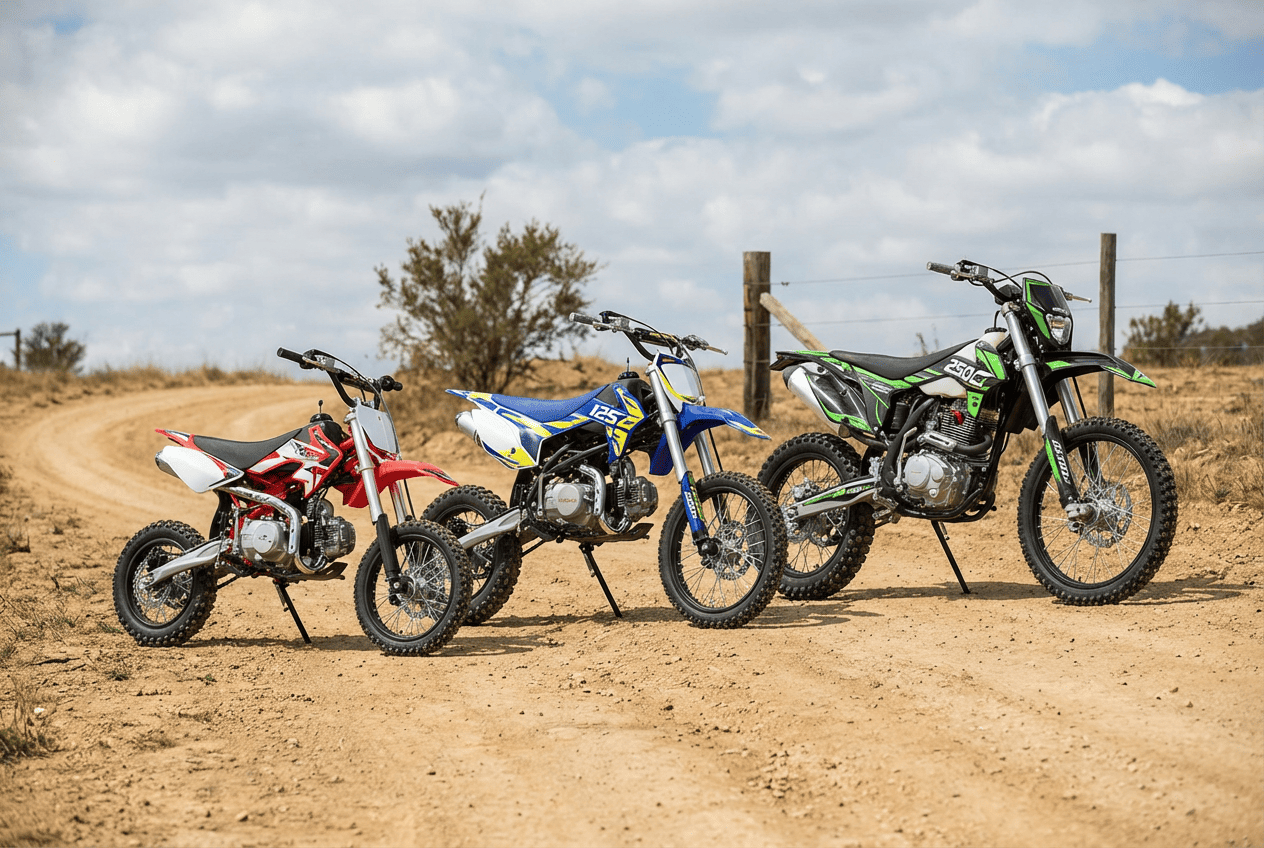
Starting with a bike that matches your current ability level is the single most impactful decision you’ll make in your dirt biking journey. Resist the temptation to begin with powerful 450cc machines that overwhelm developing skills—instead, select a 125cc to 250cc model that lets you focus entirely on technique without managing excessive power. A 250 four-stroke provides the ideal learning platform: powerful enough to be engaging but forgiving enough to make mistakes safely.
The right beginner bike allows you to “play around” without fear, experimenting with throttle control, braking, and body positioning in ways that would be reckless on more powerful machines. Riders who start appropriately sized develop cleaner techniques faster than those struggling with bikes beyond their skill level. Even if you have street motorcycle experience, approach dirt biking with a beginner’s mindset—fundamental control techniques differ substantially from pavement riding.
Essential Safety Gear You Must Wear Every Ride
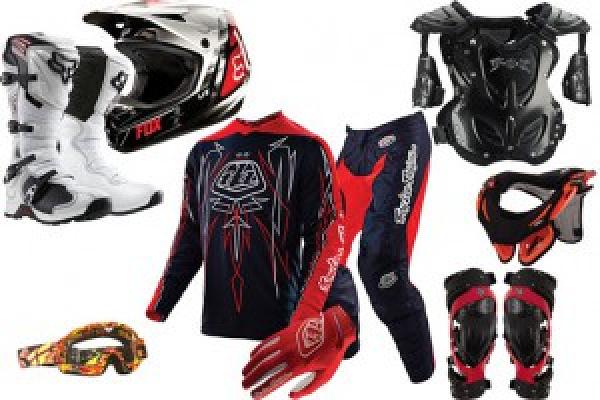
Your protective equipment represents your primary defense against injury in off-road environments, and no riding session should begin without proper gear regardless of ride duration. Invest in a certified off-road helmet designed specifically for dirt biking that provides ventilation and visibility for trail conditions. Goggles protect your eyes from flying debris while maintaining clear vision through dust clouds and branches.
Never compromise on these critical safety items:
– Dirt-specific boots that provide ankle support and protection
– Gloves that maintain grip control while protecting hands from abrasion
– Body armor with chest, back, and elbow/knee protection
– Riding pants and jersey designed for off-road movement
Quality gear isn’t an area to cut costs—your protective equipment directly impacts your safety when things go wrong. Even experienced riders emphasize that proper safety gear enables more confident riding because you’re not subconsciously holding back for fear of injury.
Execute This 10-Point Pre-Ride Inspection Checklist
Developing a habit of thorough pre-ride inspections prevents mechanical failures that could leave you stranded or create dangerous situations mid-ride. Make this checklist automatic before every riding session:
Tires: Check inflation pressure against manufacturer specs and examine tread wear for your terrain. Remove debris embedded in treads that could cause flats.
Chain and sprockets: Verify proper tension (not too loose or tight) and inspect for wear, damage, or rust indicating potential failure.
Brakes: Test lever and pedal responsiveness while checking pad and rotor wear levels.
Fluids: Confirm proper levels of engine oil, coolant, and brake fluid per your owner’s manual.
Critical components: Inspect handlebars, forks, suspension seals, exhaust system, and electrical connections for damage or looseness.
Carry essential tools and spares including a basic tool kit, spare tube, and pump to handle roadside repairs. This brief inspection could prevent a dangerous situation when you’re miles from your truck.
Master the Standing Attack Position for Rough Terrain
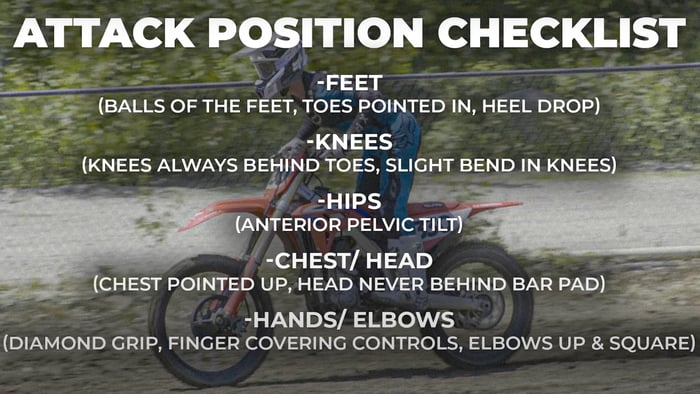
The attack position represents your default stance when riding faster than 15 mph and is critical for maintaining control through rough sections. This counterintuitive position requires specific execution to work effectively—most self-taught riders get it wrong initially.
Key elements of proper attack position:
– Keep knees behind your toes (never let knees move forward toward handlebars)
– Push your butt back toward the rear fender while bending at the waist first
– Maintain loose upper body with arms bent to absorb impacts
– Keep head and shoulders pointed in your direction of travel
This positioning keeps your hips “unlocked,” allowing your lower body to move independently of your upper body. As the bike moves beneath you through bumps, your head stays stable while your legs absorb the terrain. Proper attack position dramatically reduces fatigue and prevents arm pump during extended rides.
Transition Smoothly Between Standing and Sitting Positions
Mastering efficient transitions between standing and sitting ranks among the most important skills for progressing beyond beginner status. Standing allows your legs to absorb impacts from bumps rather than transmitting force through your seat and spine—critical for maintaining control on rough terrain.
The transition should occur as one quick, fluid movement without intermediate readjustments that waste time and compromise control. When sitting for tight cornering, position yourself forward on the tank—some riders describe this as having “your balls on the tank” for aggressive turns. This forward placement enables better weight distribution during acceleration and provides leverage for precise control.
Practice these transitions at slow speeds first until they become instinctive. Proper positioning prevents the common mistake of locking your hips during acceleration, which causes dropped elbows, upper body tension, and disrupted suspension function.
Control Your Clutch Like a Pro in Technical Terrain
Clutch control represents one of the most important technical skills for dirt bike riders, but requires nuanced understanding of when to use it. Forget about the clutch for upshifts during aggressive riding—there’s typically no time to reach for it when accelerating between challenging sections.
However, the clutch serves crucial functions in technical terrain:
– Slip the clutch to stay in taller gears and avoid excessive shifting
– Control drive precisely without constant throttle adjustments
– Maintain momentum through tricky sections without stalling
Keep one or two fingers on the clutch lever at all times with a light, relaxed grip. This readiness allows quick adjustments while maintaining fine control over your bike’s power delivery in challenging situations.
Apply Brakes Strategically Based on Terrain Conditions
Braking technique varies significantly based on terrain conditions and requires developing different approaches for different situations. On muddy terrain, rely heavily on the rear brake—skidding the rear tire rarely causes serious consequences while skidding the front will pitch you over the handlebars.
When descending hills with good traction, use both front and rear brakes together for maximum slowing power. The front brake provides most stopping power, but aggressive application in low-traction situations invites disaster. Practice careful front brake modulation in controlled environments before attempting challenging terrain.
Terrain-specific braking tips:
– Mud: Rear brake only, gentle application
– Dry trails: Both brakes with progressive front brake pressure
– Steep descents: Weight back, both brakes with emphasis on rear
– Loose rocks: Light, pulsing brake application to avoid locking
Execute Tight Corners Without Front Tire Washout
Developing tight, smooth turns requires understanding that dirt bikes respond differently than street bikes. A slight throttle opening helps maintain turning stability through corners—never close the throttle completely while turning.
Lean over the bars and sit forward on the seat, turning the bike in your intended direction before applying throttle. This counterintuitive counter-lean technique keeps weight pressing vertically while the bike leans to turn. If you lean with the bike or get low and inside during a turn, the bike will slip out from beneath you.
Practice looking through your turns rather than down at the front wheel—your bike goes where your eyes look. This technique prevents the common mistake of front tire washout that sends riders crashing when they instinctively close the throttle mid-corner.
Navigate Muddy Terrain Without Getting Stuck
Mud requires adapted techniques that differ substantially from dry trail riding. Speed management becomes critical—attempting normal speeds typically ends in loss of control. The slippery nature of mud drastically reduces available traction, requiring you to slow well before challenging sections.
Mud-specific strategies:
– Look ahead to identify the best line through muddy sections
– Maintain momentum through sticky patches (stopping often means getting stuck)
– Use rear brake almost exclusively for slowing
– Keep throttle steady with slight openings to maintain forward motion
– Shift weight back slightly to prevent front wheel washout
Braking in mud requires emphasis on the rear brake, as front brake application in low-traction conditions quickly causes the front wheel to lock and slide sideways. Skidding the rear tire is generally acceptable and even useful for controlling slide angles.
Build Mental Confidence to Conquer Challenging Terrain
The mental aspect of dirt bike riding significantly impacts both performance and safety. Hesitation when facing challenging terrain typically results in failure—a rider who doesn’t commit to a steep incline will likely not make it through.
However, confidence must balance with wisdom; avoiding terrain that exceeds your current skill level is smart rather than cowardly. Fight the natural instinct to look down when scared—this immediately prevents you from processing terrain under your front wheel. Keeping your eyes up and scanning ahead breaks this negative feedback loop and keeps you connected to the trail.
Practice difficult sections repeatedly at slow speeds until they become comfortable. This builds the mental confidence needed to tackle more challenging terrain as your skills develop.
Accelerate Your Skill Development Through Targeted Training
Developing dirt bike skills benefits enormously from structured instruction rather than purely self-taught experimentation. Taking beginner riding courses from experienced instructors provides proper technique development from the start, preventing bad habits that become difficult to correct.
Video study from accomplished riders provides valuable visual learning that complements practical instruction. Watching videos about hip positioning creates transformative improvement—everything changes once you understand how to properly engage your hips during riding.
Experienced riders consistently recommend spending money on instruction rather than motorcycle modifications. Until advanced technique becomes your limiting factor, skill development through instruction provides far greater returns than mechanical improvements. The four fundamental techniques covering body positioning, attack stance, transitions, and acceleration adjustments represent approximately 90% of the core skill set that should become habitual.