Nothing ruins an off-road adventure faster than an electric dirt bike that suddenly loses power or develops strange electrical issues. Unlike traditional gas-powered models, electric dirt bikes combine high-voltage electrical systems with rugged mechanical components, creating unique repair challenges that demand specific knowledge. When your bike cuts out mid-ride or fails to start, understanding how to diagnose and address these problems saves costly service calls and gets you back on the trail faster. This guide delivers actionable repair strategies for the most frequent electric dirt bike issues, from battery failures to controller malfunctions, helping you troubleshoot like a pro whether you’re working in your garage or stranded on the trail.
Electric dirt bikes present a special repair challenge because they merge high-performance off-road capabilities with sophisticated electrical engineering. A single bike contains multiple complex systems working in concert: the battery pack storing energy, the controller managing power delivery, the motor converting electricity to motion, and all the supporting wiring and sensors. When something goes wrong, the symptoms might point to one component while the actual problem lies elsewhere. This guide breaks down each system’s common failure points with specific diagnostic steps that eliminate guesswork and prevent unnecessary part replacements. You’ll learn to identify warning signs before they become major issues and discover which repairs you can safely tackle yourself versus when to seek professional help.
Diagnose Electrical Failures Before Replacing Parts
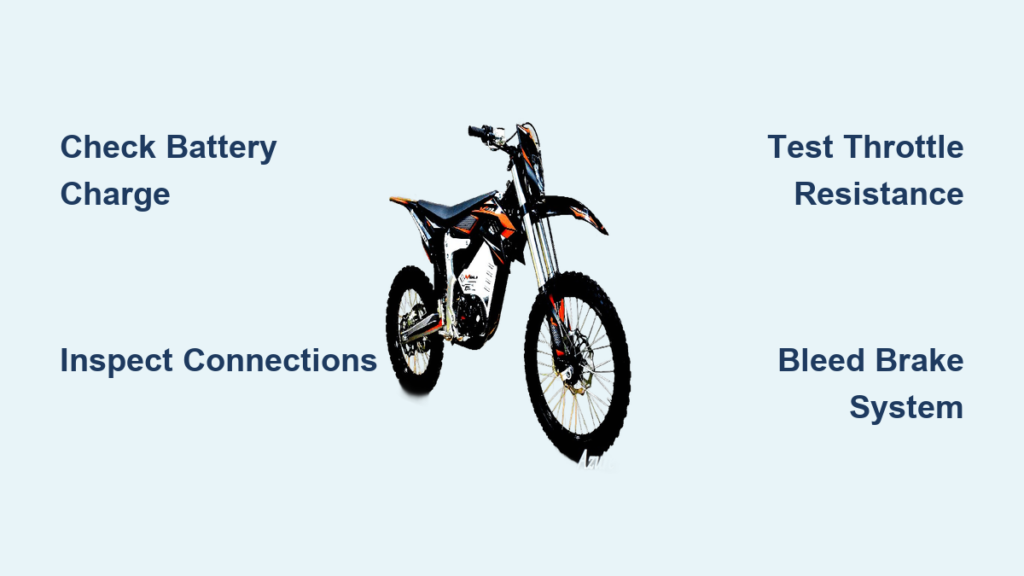
Electrical gremlins cause the most frustration for electric dirt bike owners, but systematic testing prevents wasted money on unnecessary component replacements. When your bike won’t power on, start with the simplest possible explanations rather than assuming catastrophic failure. First, verify your battery actually has charge—many “dead” bikes simply need recharging after being stored too long. Check all visible connections for looseness, corrosion, or physical damage, especially near high-vibration areas like the motor mount. A loose connector at the battery terminal often causes complete power loss that mimics battery failure.
The battery management system (BMS) frequently triggers unexpected shutdowns when it detects unsafe conditions. If your bike powers on but immediately cuts out or displays error codes, the BMS may have detected cell imbalance or overheating. Check for these specific symptoms:
– Bike powers on but won’t move when throttle is applied
– Intermittent power loss during acceleration
– Error codes flashing on display unit
– Unusual battery temperature during operation
Before condemning the BMS, test battery voltage with a multimeter while the bike is off. Compare readings against manufacturer specifications—significant deviation indicates battery issues rather than controller problems. Inspect throttle wiring for fraying or pinched cables, and test throttle resistance values through its full range using your multimeter. Hall sensor failures in brushless motors often mimic controller problems, so check motor phase connections for proper seating and absence of burn marks before replacing expensive components.
Repair Battery Issues Without Breaking the Bank

Battery problems represent the most expensive repair category for electric dirt bikes, but not every issue requires complete replacement. Identify your specific battery problem before deciding on a repair path:
– Gradual range reduction suggests normal capacity degradation
– Complete power loss with no indicator lights points to BMS failure
– One cell swelling indicates immediate replacement necessity
– Intermittent connection issues often stem from loose terminals
Professional battery repair services can often rebuild packs at 30-50% of replacement cost when only specific cells fail. Cell replacement requires specialized equipment including a spot welder and matching replacement cells, making this a job for professionals rather than DIY attempts. When evaluating repair versus replacement, consider your battery’s age—packs older than 3 years with significant degradation typically justify full replacement rather than repair investment.
Prevent premature battery failure with these critical maintenance practices:
– Store batteries at 40-60% charge during extended storage periods
– Clean and inspect charge port contacts monthly for corrosion
– Never leave batteries charging unattended or overnight
– Avoid exposing batteries to extreme temperatures (above 110°F or below 32°F)
– Use only manufacturer-approved chargers to prevent dangerous overcharging
Fix Motor and Controller Problems Safely
Motor failures often present as reduced power, strange noises, or complete loss of propulsion, but many “motor problems” actually stem from simpler issues. Before assuming motor replacement, verify throttle functionality by testing resistance values with a multimeter while operating the throttle through its full range. Check all motor phase connections for proper seating and absence of burn marks—loose connections cause symptoms identical to motor failure. Inspect hall sensors for proper operation, as these small components frequently fail before the motor itself.
Hub motor bearing replacement requires specialized tools that most home mechanics lack, including precision bearing presses and pullers. Attempting this repair without proper equipment often damages the motor housing beyond repair. Mid-drive motor bearings typically use standard bicycle components that home mechanics can replace with common tools. When bearings fail, you’ll notice grinding noises, excessive wheel play, or resistance when spinning the wheel by hand.
Controller issues manifest as erratic power delivery, complete power loss despite functional battery, or inability to regulate speed. Never work on controllers while the battery remains connected—this simple safety step prevents dangerous electrical shorts. Inspect the controller housing for physical damage, water intrusion evidence, or burned circuit board traces. Test all input connections including throttle, brake sensors, and display unit before condemning the controller itself.
Service Brakes for Reliable Stopping Power

Electric dirt bikes place extraordinary demands on brake systems due to their additional weight and instant torque capabilities. Hydraulic disc brakes require these critical maintenance steps:
– Bleed the system annually or when lever feel becomes spongy
– Replace brake fluid every 12-18 months to prevent moisture absorption
– Inspect brake lines monthly for cracking, bulging, or leaks
– Check rotor alignment and replace when thickness falls below 1.5mm
Brake pad replacement follows similar procedures to conventional bikes but requires more frequent attention due to increased stopping demands. When installing new pads, bed them properly by performing multiple moderate-speed stops from 10-15 mph without locking the wheels. This process transfers pad material evenly to the rotor surface, maximizing braking performance. Sintered metallic pads provide superior performance for aggressive riding but accelerate rotor wear compared to organic compounds.
Prevent Costly Repairs with Proactive Maintenance

Following a structured maintenance schedule prevents most major electric dirt bike failures and extends component life significantly. Implement these essential maintenance practices:
– Check tire pressure before every ride (typically 15-25 PSI depending on terrain)
– Clean and lubricate the chain after muddy rides
– Inspect spoke tension monthly, especially on the drive side
– Verify all bolt torques after the first 10 hours of riding
– Test battery voltage monthly when in storage
Suspension systems require special attention due to the additional weight of electric components. Adjust fork air pressure or spring preload to account for the extra 20-40 pounds of battery weight. Service fork oil annually or after 50 hours of aggressive riding. Check rear shock linkage bearings monthly for play or binding that affects handling. Properly maintained suspension prevents frame damage from bottoming out and improves overall ride quality.
Know When to Call a Professional Repair Service
Some repairs require specialized knowledge and tools that make professional service the smarter choice. Seek professional help for these critical situations:
– Battery pack disassembly or cell replacement
– Motor winding repairs or internal component replacement
– Controller programming or firmware updates
– Complex electrical diagnostics requiring specialized equipment
– Any repair involving high-voltage components (above 36V)
When selecting a repair shop, verify their specific experience with electric dirt bikes rather than general e-bikes. Specialty electric motorsports shops typically possess the proper diagnostic equipment and manufacturer relationships to access replacement parts faster than general bicycle shops. Request detailed quotes that break down labor versus parts costs, and ask about warranty coverage on both parts and labor. Most reputable shops offer diagnostic services for $50-$100 that apply toward repair costs if you proceed with the work.
Understanding your electric dirt bike’s repair needs transforms you from a frustrated owner into an informed consumer who can make smart decisions about maintenance and repairs. By learning to diagnose common issues and perform basic maintenance, you’ll extend your bike’s lifespan while avoiding unnecessary service costs. When professional help becomes necessary, you’ll communicate more effectively with technicians and verify that recommended repairs actually address your specific problem. The investment in proper maintenance pays dividends through reliable trail performance, reduced repair frequency, and maximum enjoyment of your electric dirt bike adventures. Keep this guide handy for your next maintenance session, and consider printing the critical safety warnings for your workshop wall—your future self will thank you when electrical issues strike at the worst possible moment.