Your mountain biking buddy just pulled up with a sleek new rack that cradles his carbon frame like it’s made of glass. Meanwhile, you’re still wrestling bikes onto your old trunk-mounted carrier, praying you won’t scratch the paint—or drop a bike. The difference? He’s using the right hitch bike rack type for his needs. Whether you’re hauling e-bikes to the trails or shuttling the family’s beach cruisers, choosing between tray-style, hanging, or swing-away racks makes or breaks your cycling adventures.
This guide breaks down every hitch bike rack type available today, complete with real-world specs, weight limits, and pricing. You’ll discover which style protects your $5,000 gravel bike, which handles 70-pound e-bikes, and which gives you trunk access without unloading. Let’s find your perfect match before your next trail day.
Tray-Style Hitch Racks: Premium Bike Protection

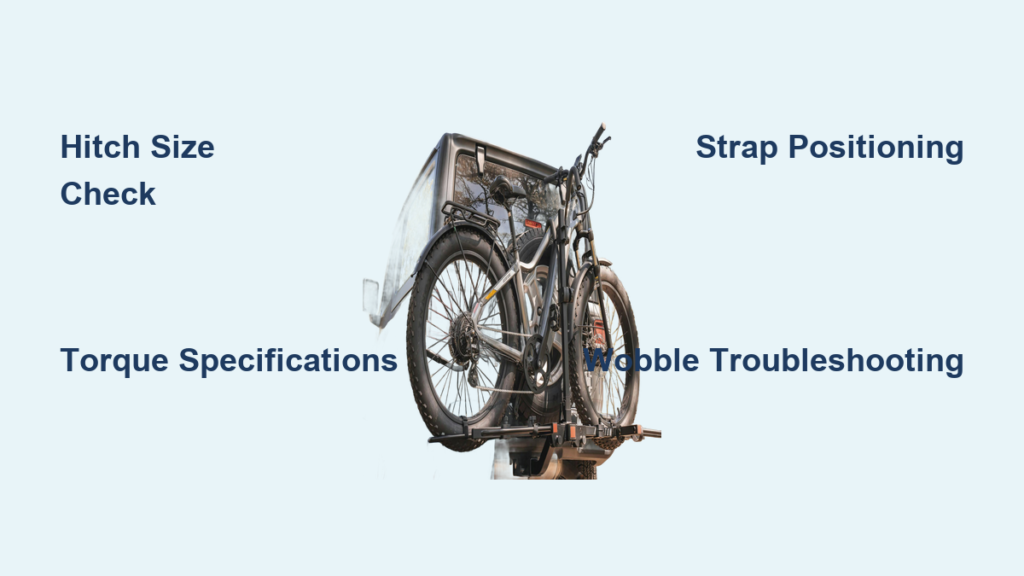
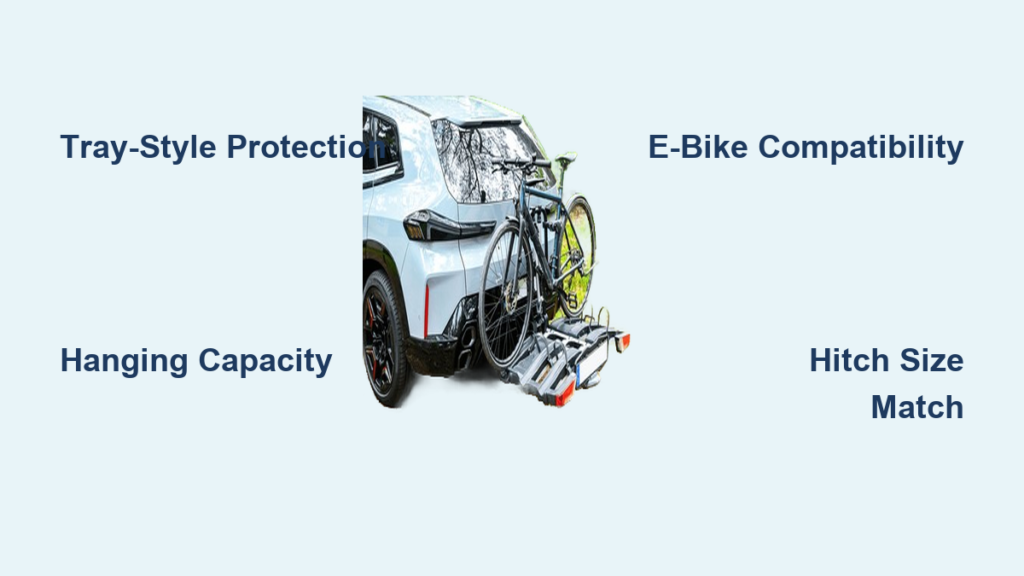
Tray-style hitch bike racks support bikes by their wheels rather than frames, eliminating contact points that can damage expensive carbon frames or delicate paint jobs. These platforms provide superior stability during highway travel and accommodate virtually any bike geometry without modification. If you’re transporting high-value bikes or e-bikes, this hitch bike rack type delivers the security you need.
StageTwo: Heavy-Duty Workhorse (2021-2024)
The StageTwo sets the standard for premium tray racks with its impressive 120-pound total capacity (60 pounds per bike). Constructed from durable steel with folding wheel cups, this hitch bike rack type accommodates 20-29″ wheels and tires up to 3″ wide. Its dual hitch compatibility (1.25″ or 2″) with a threaded hitch pin ensures a secure fit on most vehicles.
Why choose it:
– Ideal for e-bikes and downhill mountain bikes
– Steel construction withstands heavy use
– Folding design saves garage space
– Available during sales for $559 (regularly $799-$979)
HoldUp vs HoldUp EVO: Evolution Comparison
While the standard HoldUp matches the StageTwo’s 60-pound per-bike capacity for $399 on sale, the HoldUp EVO sacrifices some weight capacity (50 pounds per bike) for dramatically increased tire clearance. The EVO handles tires up to 4.8″ wide—perfect for fat bikes—while adding a convenient locking SpeedKnob for tool-free installation.
Critical difference: The HoldUp EVO’s wider tire compatibility makes it the better choice for riders with plus-sized or fat tires, even though it carries slightly less weight per bike.
Dr.Tray: Lightweight Aluminum Champion
For road cyclists and weekend warriors who prioritize portability, the Dr.Tray 1.25″ offers aluminum construction that reduces overall weight while supporting 40 pounds per bike. Its QuickChange levers enable rapid setup, and the $299 sale price (regularly $599-$849) makes it one of the most value-conscious premium options.
Pro tip: If you regularly transport carbon road bikes or lightweight trail rigs under 40 pounds, this hitch bike rack type provides excellent protection without the premium price tag of steel alternatives.
Hanging-Style Racks: Capacity Kings
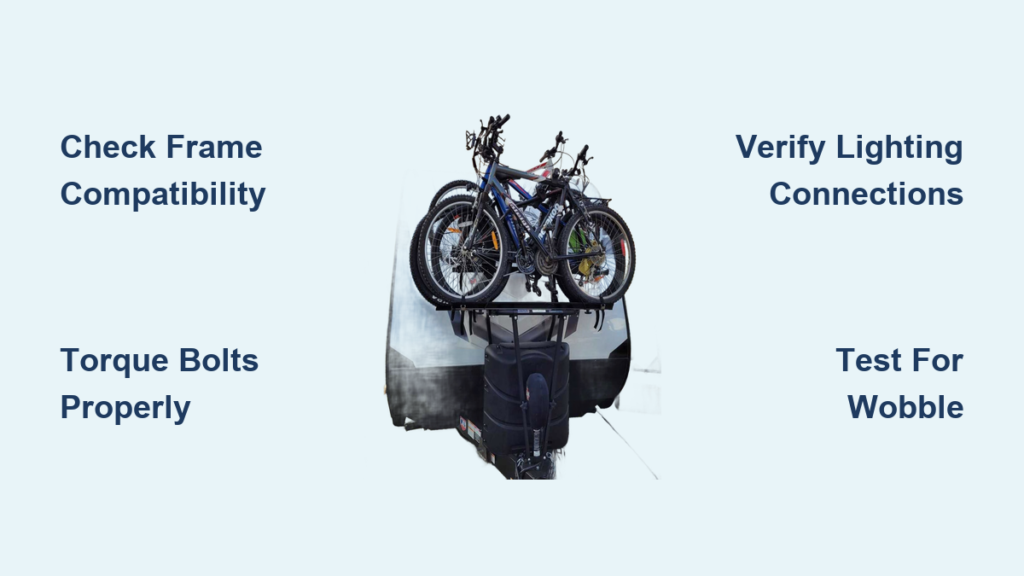
When you need to move multiple bikes without breaking the bank, hanging-style hitch bike racks deliver maximum capacity at lower price points. These racks suspend bikes by their frames using padded arms, typically handling 4-5 bikes where tray racks max out at two.
RidgeBack: Tilt-Away Convenience
The RidgeBack carries up to 5 bikes at 40 pounds each (200 pounds total) with its folding arms and ZipStrip cradles. Its tilt-away design lets you access your trunk without removing bikes—a game-changer for road trips. At $479 on sale ($509 regular), it delivers exceptional value for family-sized hauling.
Important limitation: Tires must stay under 5″ wide, making it incompatible with most fat bikes.
FullSwing: Maximum Access
Need complete rear vehicle access? The FullSwing swings 180 degrees away from your vehicle while loaded with 4 bikes at 40 pounds each. Fully padded arms protect carbon frames, and universal wheel compatibility handles any tire size. At $699 on sale ($816 regular), it’s the premium hanging option for SUVs and trucks with 2″ hitches.
Expert note: This hitch bike rack type is worth the investment if you regularly need to access your trunk with bikes loaded—no more unloading everything for a quick grocery run.
Allen Deluxe Series: Budget-Friendly Options
Allen dominates the entry-level segment with Deluxe series racks starting at just $170. These racks handle 2-5 bikes but with a strict 35-pound per-bike limit. While ideal for occasional use with lighter bikes, they lack the durability and features of premium options.
Warning: Don’t exceed the 35-pound limit—these racks work best for kids’ bikes and basic cruisers, not performance or e-bikes.
E-Bike Specialized Racks: Heavy-Duty Solutions
Electric bikes present unique challenges with their weight and unconventional frame designs. E-bike hitch racks solve both problems with beefed-up capacities and versatile mounting systems.
OnRamp: E-Bike Specialist
Built specifically for e-bikes, the OnRamp handles 66 pounds per bike (132 total) with its tray-style design. The adjustable frame attachment accommodates step-through e-bike frames, while tire compatibility up to 3.25″ covers most e-bike tires. At $489 on sale ($699-$1,029 regular), it’s positioned between budget and premium options.
Must-know: Standard racks often fail with e-bikes—always verify your hitch bike rack type specifically lists e-bike compatibility with appropriate weight limits.
Allen Electric Bike Solutions
Allen offers e-bike compatibility across multiple models, all rated for 70 pounds per bike. These provide budget-conscious e-bike owners an alternative to premium brands, though you’ll sacrifice some features and refinement.
Pro tip: When transporting e-bikes, remove the battery if possible to reduce weight and prevent potential electrical issues during transport.
Hitch Size Compatibility: 1.25″ vs 2″ Receivers

Your vehicle’s hitch size directly impacts your rack options and stability. Don’t assume all hitch bike rack types will work with your vehicle.
1.25″ hitches:
– Available on most tray and hanging racks
– Limited to 2-3 bikes maximum
– May experience more wobble with heavy loads
– Common on smaller vehicles and sedans
2″ hitches:
– Required for swing-away mechanisms
– Supports 4-5 bike configurations
– Provides maximum stability
– Standard on trucks and SUVs
Smart move: If you’re shopping for a new vehicle and plan to haul bikes regularly, opt for the 2″ hitch receiver—it keeps your options open for future rack upgrades.
Weight Capacity Breakdown

Understanding weight limits prevents expensive mistakes and dangerous highway situations. Always calculate both per-bike and total system weight.
Per-bike limits by category:
– Premium tray racks: 50-66 lbs each
– Standard tray racks: 40-45 lbs each
– Hanging racks: 35-40 lbs each
– E-bike racks: 66-70 lbs each
Total system weight: Remember to include the rack’s weight in your calculations. A 200-pound total capacity with a 50-pound rack leaves 150 pounds for bikes. Always check both per-bike and total limits before loading.
Final Selection Guide
Choose tray racks when:
– Protecting expensive carbon or specialty bikes
– Carrying e-bikes or downhill rigs
– Wanting maximum stability at highway speeds
– Budget allows $400+
Choose hanging racks when:
– Needing 4-5 bike capacity
– Bikes are lighter (under 40 lbs)
– Budget is primary concern
– Occasional use is expected
Critical upgrades to consider:
– Hitch lock for security ($30-$50)
– Cable locks to secure bikes to rack
– Swing adapter for trunk access without unloading
– Extension for growing family needs
Your bikes represent a significant investment—don’t let the wrong hitch bike rack type damage them or limit your adventures. Match your rack to your bikes, vehicle, and usage patterns, and you’ll wonder how you ever lived without it. Before purchasing, measure your bike weights, tire widths, and hitch size to ensure perfect compatibility with your chosen rack system.