Your dirt bike’s chain is the critical link between the engine’s power and the rear wheel, translating every revolution into forward motion. Yet it’s also the most neglected component on many bikes. A dirty, poorly lubricated chain doesn’t just make your bike look bad—it accelerates wear on sprockets, reduces power delivery, and can leave you stranded mid-ride. Learning how to clean and lube dirt bike chain properly is one of the most valuable skills any rider can develop, and it takes less than thirty minutes once you know the process.
Dirt bike chains operate in brutal conditions. They endure mud, sand, water, and debris while handling tremendous stress during acceleration and jumps. Without regular maintenance, the O-rings dry out, rollers seize, and the chain stretches beyond specification. This guide walks you through every step of proper chain maintenance, from initial inspection through lubrication, helping you extend component life and maintain peak performance.
Gather Your Chain Maintenance Tools

Before tackling how to clean and lube dirt bike chain, assemble the right equipment. You’ll need a specialized chain degreaser—products like Motul Chain Clean or Maxima Premium Chain Cleaner work effectively without damaging O-rings. Mineral spirits can substitute in emergencies, but avoid brake cleaner, which strips essential lubricants from O-rings and accelerates wear.
Invest in a quality chain brush with stiff nylon or brass bristles that won’t scratch chain plates. A dedicated chain cleaning tool, which cradles the chain and brushes all sides simultaneously, dramatically speeds up the process. These cost $15-$30 but pay for themselves in time saved during maintenance sessions. Pair this with microfiber cloths for drying—never use paper towels that leave fibers behind.
Select a lubricant specifically designed for motorcycle chains. Wet lubes like Motul Chain Lube Wet provide excellent protection in muddy conditions but attract more dirt. Dry lubes like Maxima Chain Guard work better in dusty environments but require more frequent application. Never use motor oil or WD-40—these lack proper additives, fling off during operation, and offer minimal protection against chain wear.
Prepare Your Bike for Cleaning
Park your dirt bike on a level surface with the rear wheel elevated using a paddock stand or by placing a block under the engine. This gives you room to rotate the wheel freely throughout the cleaning process. Ensure the bike is in neutral with the ignition off, though leaving it in gear prevents the wheel from spinning while you work.
Perform an initial inspection before applying any cleaners. Rotate the rear wheel slowly, noting grime buildup, dry or cracked O-rings, and any tight spots or stiff links. This baseline helps identify problems early and tracks how quickly debris accumulates between maintenance sessions. Pay attention to the chain’s movement—smooth rotation indicates healthy components, while resistance suggests internal damage.
Loosen your chain tensioner adjustment slightly if your bike uses mechanical adjusters. Most dirt bikes have eccentric rear hubs or swingarm adjusters that let you move the wheel back, creating slack in the chain. This makes cleaning both sides thorough and ensures your cleaner penetrates between rollers and pins. Don’t remove the chain entirely—keeping it attached maintains proper tension references for re-lubrication.
Deep Clean Your Chain Thoroughly
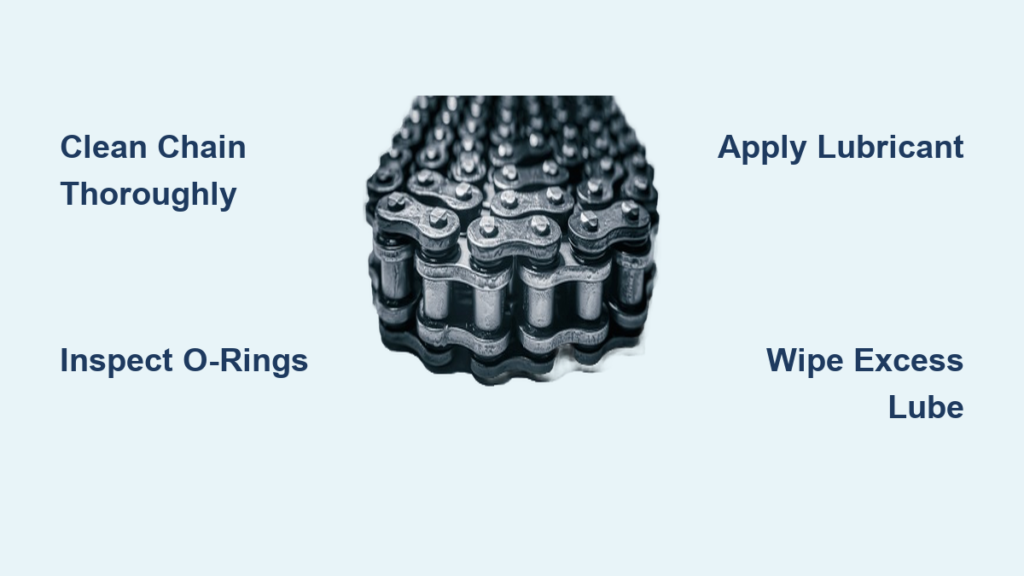
Apply degreaser liberally to the entire chain while rotating the rear wheel slowly. Focus on the rollers where dirt and old lubricant accumulate most heavily. The degreaser will turn dark as it dissolves grime, so continue applying until the cleaner runs relatively clear. For stubborn buildup, let the degreaser sit for 2-3 minutes before proceeding.
Switch to your stiff-bristled brush and scrub each link systematically. Work the brush between rollers and side plates, removing debris that the degreaser alone couldn’t shift. Pay extra attention to the inner surfaces where the chain contacts the sprockets—this area collects the most contamination. For heavily soiled chains, a second application of degreaser after initial scrubbing helps lift remaining dirt.
Rinse the chain thoroughly with clean water if using water-based degreaser, or wipe it down with a clean cloth for solvent-based products. Ensure all cleaning residue is removed, as any remaining degreaser will strip away new lubricant. Dry the chain completely with microfiber towels, then let it air dry for 5-10 minutes. Moisture left on the chain causes rust and accelerates wear, so this drying step is essential before lubrication.
Inspect for Wear and Damage

With your chain clean, perform a thorough inspection. Check each O-ring for cracks, tears, or flat spots—damaged O-rings allow dirt inside and let lubricant escape, dramatically shortening chain life. The O-rings should feel supple and bounce back when pressed; hard or brittle O-rings indicate replacement time regardless of mileage.
Examine the rollers for scoring, pitting, or discoloration that signals internal wear. Rollers should spin freely without resistance or play. Push sideways on each roller with your thumb—excessive movement suggests worn bushings. Similarly, check the pins by holding adjacent links and trying to pull them apart; any visible movement indicates the chain has stretched beyond service limits.
Measure your chain’s wear using a chain wear indicator tool. Insert the tool’s pins between three links on the straightest section. If the tool shows greater than 1% wear or slides past the pins entirely, start shopping for a replacement. Riding a severely worn chain damages sprockets and risks catastrophic failure mid-ride.
Apply Lubricant Correctly
With your chain clean and dry, apply fresh lubricant to the inner side—the surface that contacts the sprockets. Position the nozzle to flow directly into each roller and between side plates. Apply sparingly at first; you can always add more, but excess lubricant flings onto your tire and rim, creating a dirt-attracting mess.
Rotate the wheel through several full revolutions, applying lubricant to each section. Aim for a thin, even film on all surfaces. Pay extra attention to the rollers, as these critical wear surfaces need lubrication to operate smoothly. The chain should look evenly coated but not dripping wet.
Allow the lubricant to penetrate for 5-10 minutes before wiping off excess. Using a clean cloth, gently wipe along the chain’s length to remove pooled lubricant. This step is crucial—too much lubricant attracts dirt and accelerates grime accumulation, while the thin remaining film provides adequate protection. Your chain should feel slightly tacky but not wet.
Avoid Common Chain Maintenance Mistakes
Many riders inadvertently damage chains through incorrect maintenance practices. Over-lubrication seems protective but actually harms your chain. Excess lubricant collects dirt, sand, and debris, creating an abrasive paste that accelerates wear. When in doubt, apply less rather than more—quality chain lube goes a long way.
Using the wrong lubricant causes problems that aren’t immediately obvious. Motor oil lacks proper additives for O-rings and tends to run off at high speeds. General-purpose greases are too thick and don’t penetrate where needed. WD-40 and similar products provide temporary lubrication but evaporate quickly, leaving your chain unprotected. Invest in quality chain-specific lubricant—it’s a small expense compared to premature chain and sprocket replacement.
Cleaning with high-pressure water forces contaminants past damaged O-rings and drives moisture into inaccessible areas. While rinsing off heavy mud is fine, avoid aiming pressure washers directly at your chain. Similarly, never clean a hot chain immediately after riding—thermal shock can crack O-rings and weaken metal components. Let your bike cool for at least fifteen minutes before starting maintenance.
Establish an Effective Maintenance Schedule
How often you clean and lube your dirt bike chain depends heavily on riding conditions. For general trail riding in moderate conditions, thorough cleaning and lubrication every 200-300 miles keeps your chain in good shape. Racing or aggressive riding requires more frequent attention—every 100-150 miles, or after every race. Extremely dusty or muddy conditions may demand maintenance after every single ride.
Between deep cleanings, quick inspections during pre-ride checks extend chain life significantly. Look for visible dirt accumulation, listen for changes in chain noise, and feel for tight spots as you rotate the wheel. If your chain sounds dry or shows visible grime, a light application of lubricant bridges the gap until your next thorough maintenance session.
Keep a maintenance log or use phone reminders to track your chain care intervals. Many riders neglect chain maintenance simply because they lose track of time and mileage. Setting calendar reminders ensures you never miss a scheduled session, and a log helps identify patterns—some riders find chains need attention more frequently in certain conditions.
Final Thoughts on Chain Care
Learning how to clean and lube dirt bike chain properly transforms a neglected maintenance task into a quick, satisfying routine. Beyond mechanical benefits—smoother power delivery, extended component life, and reduced failure risk—regular chain care makes you a more engaged rider. You develop a feel for your bike’s condition and notice problems before they become serious issues.
The thirty minutes invested in chain maintenance every few rides pays dividends in reliability and performance. Your chain and sprockets last longer, your bike runs more efficiently, and you eliminate the embarrassment and danger of chain failure on the trail. Make chain care a non-negotiable part of your riding routine, and your bike will repay you with countless trouble-free adventures. Consistent chain maintenance isn’t just about preserving components—it’s about ensuring your safety and maximizing every ride.