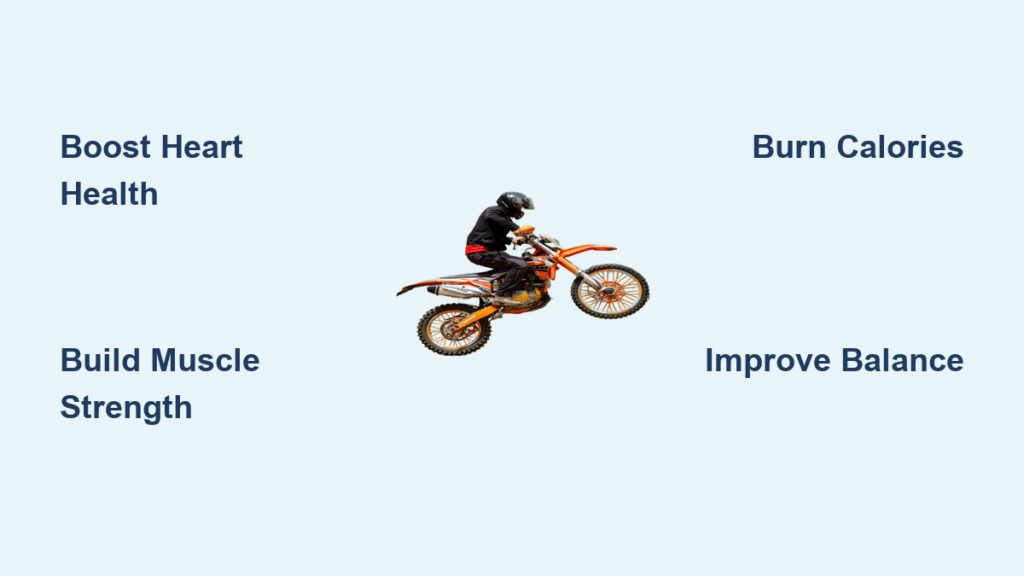
Landing a jump smoothly separates beginner riders from confident motocross athletes, and how to control a dirt bike in the air directly impacts your safety, jump consistency, and overall track experience. When both wheels leave the ground, your ability to manipulate the bike’s position determines whether you’ll land smoothly or face a dangerous crash. The gyroscopic effects from your spinning wheels combined with your inputs give you remarkable control even while suspended—mastering this skill transforms you from a passenger into the active controller of your machine.
Most riders instinctively reach for the throttle when they feel themselves nose-diving, but true air control requires understanding how throttle, brakes, body position, and handlebar movements work together to adjust pitch. Whether you’re navigating tabletop jumps, tackling triples, or simply trying to survive whoops, this guide breaks down every technique you need to know. You’ll learn why certain inputs work, when to apply them, and how to combine techniques for maximum effect in critical situations.
Throttle Techniques to Lift the Front Wheel

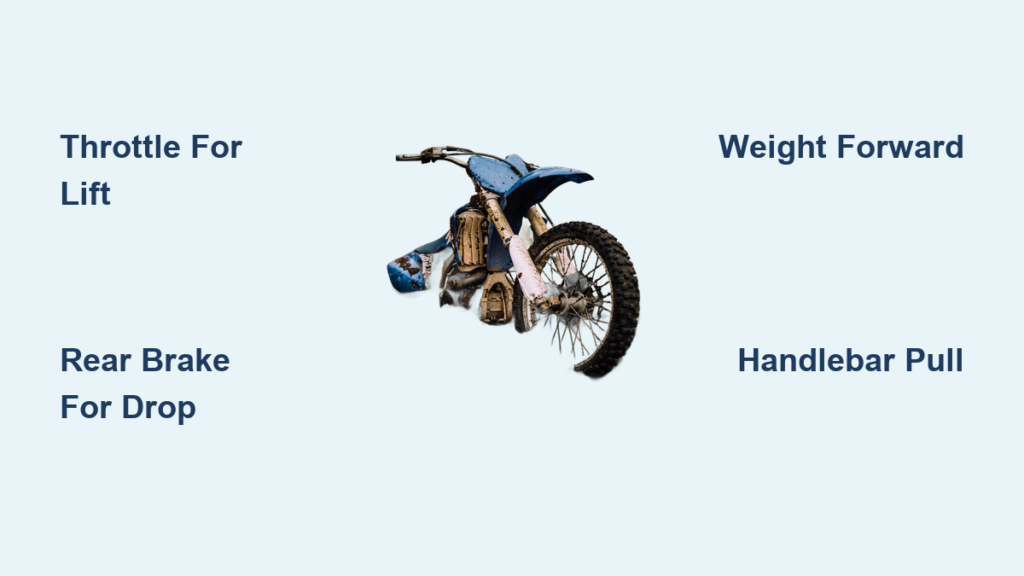
When your front wheel drops too low mid-jump, your throttle becomes your first line of defense for bringing the nose back up. Applying throttle accelerates the rear wheel’s rotation, increasing its gyroscopic effect and naturally lifting the front end. This relationship between wheel speed and pitch forms the foundation of airborne control—understanding it helps you make precise adjustments rather than relying on panic revving.
For minor corrections where the front end sits slightly low, a smooth, progressive throttle application often suffices to level your bike. Never slam the throttle wide open—this aggressive input typically overcorrects, sending your front end too high and creating a new problem. The key is applying just enough throttle to correct your angle without overshooting. Most experienced riders describe this as “feathering” the throttle, using subtle inputs that match the severity of your problem.
However, repeated throttle applications in the same gear eventually hit diminishing returns. Once you’ve bounced off your rev limiter or moved past your engine’s power band, additional throttle produces minimal effect. This limitation becomes especially noticeable on four-stroke motorcycles with narrower power bands. When you’ve maxed out in your current gear, it’s time to consider a more advanced technique.
Gear Shifting for Dramatic Front-End Lift
The most powerful technique for raising a dangerously low front end involves shifting up one or two gears while pinning the throttle. This works because shifting to a higher gear while maintaining momentum effectively increases rear wheel rotational speed beyond what’s possible in your current gear. The additional wheel speed translates to significantly greater gyroscopic effect, producing a dramatic lift of your front wheel.
This technique proves invaluable on larger jumps where you have sufficient airtime for corrections. When you recognize early in takeoff that your bike will travel further than intended while pointing nose-down, quickly shifting up two gears and applying full throttle can generate a much larger angle correction than repeated panic revving. Riders describe the effect as “revving a 450 in the air,” delivering corrective force that single-gear techniques simply cannot match.
Several critical factors determine whether this technique will work:
– You must recognize the problem early enough to have time for the gear change
– On smaller displacement bikes or shorter jumps, there may not be enough airtime
– Knowing your available gears is crucial—you need at least one gear above your takeoff gear
Brake Control for Mid-Air Adjustments
While throttle raises your front end, your rear brake provides the complementary capability to bring an elevated front wheel back down. Applying the rear brake slows your rear wheel’s rotation, reducing its gyroscopic effect and allowing the front of your bike to drop. This bidirectional control gives you complete pitch management throughout your flight.
For minor corrections where your front end sits slightly elevated, a brief tap of the rear brake often suffices to bring your bike back to level. The sensitivity of this technique means even light applications produce noticeable results—many riders configure their controls for easy access, ensuring they can make quick corrections without fumbling. This subtle input prevents overcorrection that could send you into a nose-dive.
The effectiveness of rear brake application multiplies dramatically when combined with body movements. By throwing your chest over the front number plate while simultaneously tapping the rear brake, you achieve significantly larger angle corrections than either input alone. This synergistic effect creates a compound force that rapidly brings your front end down to a safe landing position.
Front Brake Considerations During Flight
Although your front brake exists as a control input, using it mid-air is generally discouraged for critical reasons. The front brake affects only your front wheel, and applying it while airborne can create unpredictable handling when you contact the ground. Additionally, operating the front brake requires significant hand strength, which becomes difficult to maintain while managing other aspects of jump technique. Most experienced riders rely exclusively on rear brake applications for air control, reserving front brake use for post-landing situations.
Body Positioning for Jump Control

Proper body positioning begins before your wheels leave the ground and continues throughout your entire jump. When preparing to jump, stand up on the pegs rather than sitting, avoiding excessive weight on the front of your seat. The ideal position places your weight at the middle or back of the seat, which naturally prevents aggressive front-end diving on takeoff and prepares you for necessary mid-air corrections.
Standing on the pegs accomplishes three critical objectives simultaneously:
– Lowers your center of gravity relative to the bike’s mass
– Positions your body for forward and backward weight transfers
– Prepares you to absorb landing impact through your legs
Forward Weight to Lower the Front End
When your front end rises too high during a jump, shifting your body weight forward helps bring it back down. Move your chest over the front number plate or lean your upper body forward while maintaining a light grip on the handlebars. Your body weight, positioned ahead of the bike’s center of mass, creates mechanical force that pushes the front wheel downward.
This technique becomes exceptionally powerful when combined with rear brake application. Your chest moving forward while simultaneously tapping the rear brake creates a compound effect that produces larger corrections than either technique alone. Experienced riders describe this as “throwing” their weight forward—making it an essential tool for managing high front-end situations.
Backward Weight to Lift the Front End
Conversely, when your front end drops too low, shifting your weight backward helps lift the nose. Lean back on your bike, positioning your body mass behind the center of mass to create leverage that raises your front wheel. Combining this backward weight shift with throttle application produces maximum possible front-end lift through natural rider inputs.
This backward position also prepares you for landing impact, positioning your body to absorb force through your legs rather than your spine. Many riders naturally adopt this stance when nose-diving, but refining it through practice produces controlled, predictable corrections rather than desperate reactions.
Handlebar Techniques for Pitch Control
Beyond throttle, brake, and weight inputs, accomplished riders incorporate direct handlebar manipulation for pitch control. This involves actively pulling or pushing on the handlebars to influence your bike’s attitude, often combined with other control inputs. The technique essentially uses your arm strength as an additional leverage point for making precise pitch corrections.
When your front end is dangerously high, pull back on the bars while applying rear brake and shifting weight forward. This triple combination—pull, brake, and weight shift—produces the most dramatic front-end reduction available without sacrificing stability. Conversely, pushing forward on the bars while applying throttle and shifting weight back can rescue a nose-diving bike when other techniques prove insufficient.
Maintaining a Relaxed Grip
Regardless of handlebar manipulation, maintaining a relaxed grip proves essential for effective air control. A death grip on the handlebars transmits every vibration to your arms, causing fatigue and reducing your ability to make subtle adjustments. Additionally, a rigid upper body prevents the natural weight shifts that complement your other inputs.
The ideal grip allows you to feel your bike’s position while remaining flexible enough to shift weight without resistance. Instructors call this “light hands”—your hands should guide rather than grip. This relaxed approach prepares you for quick corrections, as a relaxed rider can react faster than one tensed from gripping too tightly.
Combine Inputs for Maximum Effect
The most effective air control combines multiple inputs to achieve dramatic corrections. Understanding how different controls interact allows you to make larger adjustments more quickly than any single technique would permit. The key insight is that throttle, brake, weight position, and handlebar inputs each contribute to your bike’s overall pitch, and combining them produces effects greater than the sum of their individual contributions.
For dangerously high front ends, experienced riders combine rear brake application, forward weight shift, and pulling on the handlebars. This three-way approach addresses the problem from mechanical, gyroscopic, and physical leverage perspectives simultaneously. The result is a rapid correction that can save potentially dangerous situations even when your bike is significantly out of position.
Similarly, correcting a dangerously low front end responds best to full throttle application, backward weight shift, pushing forward on the bars, and potentially shifting up one or two gears. This comprehensive approach draws on every available method for generating front-end lift, making it effective even in extreme situations.
Recognizing Which Technique to Apply
Developing judgment about which corrective combination to apply comes through experience and deliberate practice. You must learn to recognize early in a jump’s trajectory whether your bike will be high, low, or on target, allowing time for appropriate corrections before the situation becomes critical.
For minor adjustments, simple inputs like a light brake tap often suffice. For moderate corrections, combine brake with weight shifts. For major corrections involving significantly out-of-position situations, employ the full combination of techniques. Practice sessions focused specifically on jump corrections develop this judgment and the muscle memory needed to execute techniques quickly under pressure.
Avoid Common Air Control Mistakes
One frequent problem riders face is overcorrecting—where a correction for a slightly high front end sends the bike into a nose-dive. This oscillation often produces worse outcomes than accepting a slightly imperfect landing. Learning to apply just enough correction comes through experience and developing a feel for your bike’s responses.
The solution involves developing sensitivity to your bike’s responses and applying inputs proportional to the needed correction. Minor deviations require minor inputs; dramatic corrections should be reserved for dramatic situations. Riders who practice consistently develop this calibration naturally, learning exactly how much brake or throttle produces the desired result without overshooting.
Waiting Too Long to React
Another common error involves recognizing a problem but waiting too long to apply corrections. By the time you decide to act, there may not be enough time or altitude remaining for an effective correction. This delay often results from indecision or hoping the situation will correct itself.
The solution involves developing the habit of early recognition and immediate response. Cultivate awareness of your bike’s attitude throughout every jump, allowing you to identify potential problems within milliseconds of takeoff. This rapid recognition enables smaller, more effective corrections and reduces the frequency of critical situations.
Safety Considerations for Jump Riding
Every rider has limits based on skill level, experience, and motorcycle capabilities. Understanding these limits helps you make good decisions about which jumps to attempt and when to rely on your air control techniques versus choosing a more conservative approach. Attempting jumps that significantly exceed your ability level puts you at risk of serious injury.
Part of knowing your limits involves understanding how much correction you can execute reliably. A rider who has practiced gear-shifting corrections extensively might confidently handle situations that would overwhelm others. Building capabilities gradually through progressively more challenging jumps provides a safer path to advanced skills than jumping directly into situations beyond your current ability.
Protective Equipment Matters
Even with perfect technique, crashes remain possible in motocross. Proper protective equipment—including helmet, goggles, body armor, and appropriate riding gear—can mean the difference between a minor incident and serious injury. The investment in quality protective gear pays dividends throughout your riding career, providing confidence to push your limits while maintaining a reasonable safety margin. Those who feel protected tend to ride more aggressively and develop skills more quickly.