
That sputtering sound as your dirt bike struggles up a hill? It might be screaming for the right fuel mixture. Unlike four-stroke engines with separate oil reservoirs, two-stroke dirt bikes rely entirely on properly mixed gas and oil to keep internal components lubricated during those intense combustion cycles. Get the ratio wrong, and you’re looking at anything from fouled spark plugs to catastrophic engine failure that could cost thousands to repair. Get it right, and your bike delivers that crisp, responsive power two-stroke enthusiasts love. This guide shows you exactly how to mix gas and oil for dirt bike engines correctly—every single time you refuel.
The consequences of improper mixing linger far longer than the few minutes it takes to do it right. A precise 40:1 ratio—25ml of oil per liter of gasoline—ensures your engine receives just enough lubrication without creating excessive smoke or carbon buildup. Too little oil means metal grinds against metal, producing that unmistakable death rattle of a seizing engine. Too much oil leads to poor combustion, fouled spark plugs, and sluggish performance that ruins your riding experience. Master this fundamental skill, and you’ll extend your engine’s life while maximizing trail performance.
Locate Your Exact Dirt Bike Oil-to-Gas Ratio
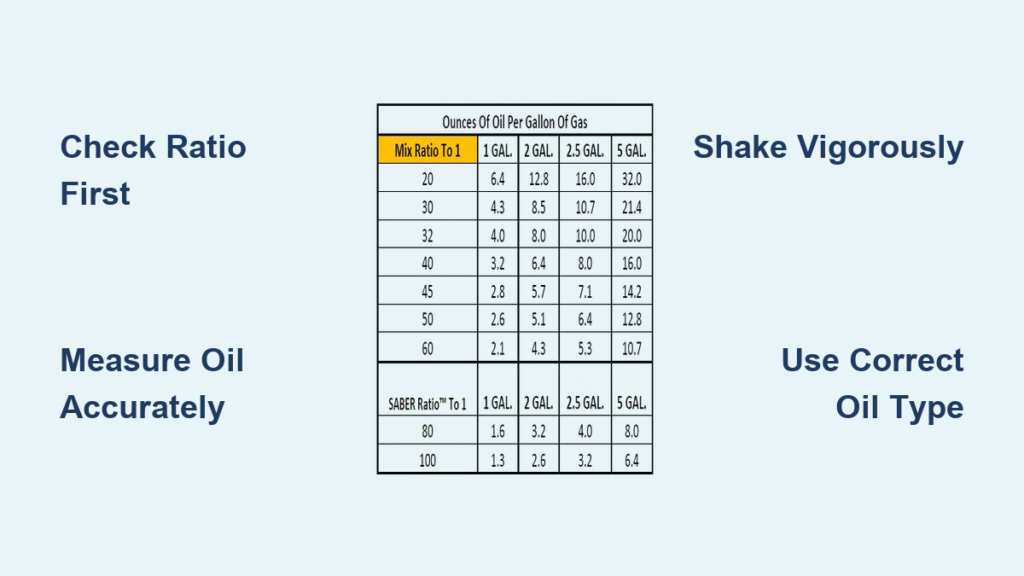
Before measuring a single drop, you must know your specific engine’s requirements—never assume based on what works for another bike. Your owner’s manual contains the definitive ratio for your exact model year, and ignoring this specification risks voiding warranties and causing preventable engine damage. Modern two-strokes typically require ratios between 40:1 and 50:1, while older models or high-performance engines often need richer 25:1 or 32:1 mixtures for adequate lubrication under extreme conditions.
If your manual has vanished into the trail dust, 40:1 serves as a safe temporary starting point (25ml oil per liter of gas), but treat this as an emergency solution until you confirm the correct ratio. Contact your dealer with your bike’s VIN or visit the manufacturer’s website—this verification takes minutes but prevents costly mistakes. Remember that engine specifications vary significantly even between models from the same manufacturer sharing similar displacement.
Quick Ratio Reference Guide
| Gasoline Amount | 32:1 Oil Needed | 40:1 Oil Needed | 50:1 Oil Needed |
|—————-|—————-|—————-|—————-|
| 1 gallon (128 oz) | 4 oz | 3.2 oz | 2.6 oz |
| 5 liters | 156 ml | 125 ml | 100 ml |
| 1 liter | 31.25 ml | 25 ml | 20 ml |
Gather Precision Mixing Equipment

Accurate measurements make or break your fuel mixture, so invest in proper tools rather than guessing with kitchen spoons or eye-balling quantities. Dedicated fuel-mixing containers designed specifically for two-stroke applications feature ratio-specific markings that eliminate mental math at the gas pump. These containers cost less than repairing a fouled carburetor after an inaccurate mixture, making them essential gear for any serious rider.
Most quality two-stroke oil manufacturers include precision measuring bottles with pour spouts that minimize spills and dual measurements showing both milliliters and ounces. If yours didn’t, auto parts stores and online retailers offer affordable options ranging from simple graduated containers to sophisticated systems with multiple ratio settings. Pair your measuring bottle with these essentials:
- A clean, dedicated fuel container rated for gasoline storage
- Funnels sized for both your mixing container and bike’s fuel tank
- Nitrile gloves to protect hands from fuel and oil
- Shop towels for immediate spill cleanup
Organize everything in a single toolbox so you’re always ready to mix without scrambling for tools when you need fuel. Consistent organization prevents the interruptions that lead to measurement errors.
Select Premium Fuel and Proper 2-Stroke Oil
Your mixture’s foundation starts with quality fuel—never compromise here. Choose unleaded gasoline containing at most 10% ethanol, as higher ethanol content attracts moisture that degrades mixture stability over time. Establish a relationship with a reliable gas station where you consistently purchase fuel, as inconsistent fuel quality creates unnecessary variables in engine performance.
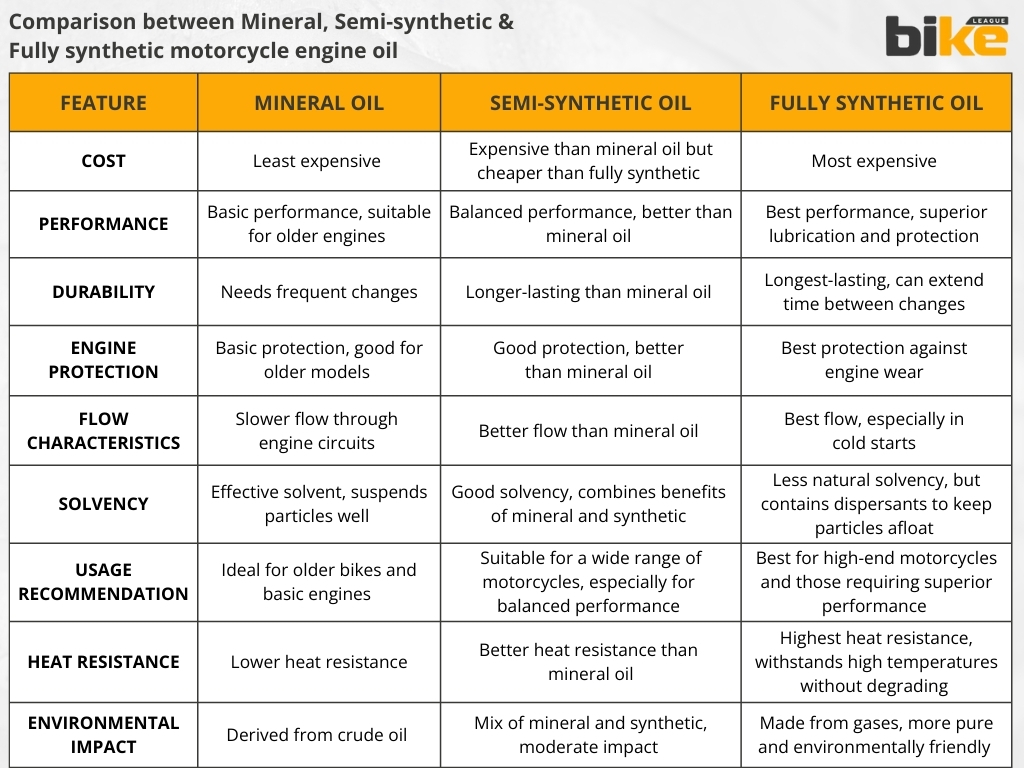
Two-stroke oils come in three formulations, each with distinct advantages:
- Fully synthetic oils: Deliver superior lubrication, burn cleanly to minimize carbon deposits, produce less smoke, and extend engine life. Ideal for regular riders despite higher upfront cost.
- Semi-synthetic oils: Offer a middle ground with better protection than mineral oils at more accessible prices.
- Mineral oils: The most economical option but leave more carbon buildup over time, making them better suited for occasional use.
For most riders, quality synthetic two-stroke oil meeting or exceeding your manufacturer’s specifications provides the best value. The minimal cost difference becomes negligible when you consider potential engine repair expenses from inadequate lubrication.
Execute Perfect Mixing in Four Critical Steps
Measure Oil First Into Clean Container
Pour the exact amount of two-stroke oil into your dedicated fuel container before adding gasoline. Adding oil first prevents splashing during the fuel addition phase and ensures thorough mixing. Use your ratio-specific measuring bottle for precision—never estimate quantities.
Add Correct Gasoline Volume
Pour the appropriate amount of gasoline into the same container based on your ratio calculations. Maintain the order you’ve established (oil first, then gas) consistently to build reliable habits. Leave some headspace in the container to allow for vigorous shaking without spillage.
Shake Vigorously for Complete Blending
Securely cap your container and shake it vigorously for 30-60 seconds. Properly mixed fuel appears slightly hazy with no visible separation between components. If you see oil streaks floating or settling at the bottom, continue shaking until uniform. This thorough blending ensures consistent lubrication throughout the entire fuel volume.
Transfer Carefully to Fuel Tank
Remove your bike’s fuel cap and slowly pour the mixed fuel into the tank, preferably through a clean funnel. Avoid overfilling, as two-stroke engines require space for fuel expansion. If mixing directly in the tank (see alternative methods below), close the petcock first to prevent fuel from entering the carburetor during mixing.
Pro Tip: For frequent riders, prepare 5-gallon batches stored in proper gas cans with clear labels showing ratio and mixing date. Consume pre-mixed fuel within 2-3 months for optimal performance.
Master Tank-Mixing Technique for Trail Emergencies
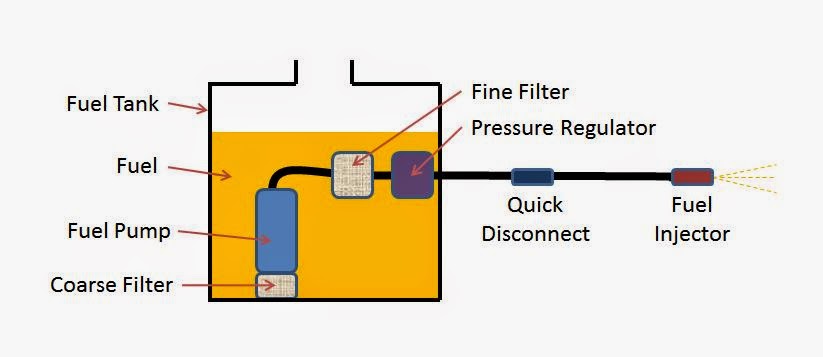
When carrying pre-mixed fuel isn’t practical, you can mix directly in your fuel tank with precision:
- Fill your tank one-third full with gasoline
- Add the precisely measured amount of oil
- Close the petcock to prevent fuel flow into the carburetor
- Shake the bike vigorously for 30 seconds
- Fill the tank completely with additional gasoline
- Shake again thoroughly before riding
This method works well for trail emergencies but demands extreme accuracy in measurements since you cannot verify the mixture visually. Always measure the oil first into a separate container before adding it to the tank—never pour directly from the oil bottle.
Avoid Catastrophic Oil Injection Mistakes
Some modern two-strokes feature oil injection systems that eliminate pre-mixing requirements. These systems automatically meter oil based on throttle position and engine speed through a separate reservoir. Never add pre-mixed fuel to an oil-injection bike—this doubles the oil content, causing immediate spark plug fouling, excessive smoke, and potential stalling within minutes.
If your bike has oil injection:
– Monitor oil levels regularly
– Refill the reservoir before it runs dry (running out causes instant engine damage)
– Understand your consumption rate to anticipate refills
– Always carry spare oil for extended rides
Confusing injection systems with pre-mix requirements is one of the costliest mistakes dirt bike owners make—verify your bike’s system before adding any oil.
Prevent Four Costly Mixing Errors
Mistake #1: Using wrong oil type
Standard motor oil or four-stroke oil lacks necessary additives and leaves harmful deposits. Always use oil specifically labeled for two-stroke applications.
Mistake #2: Ignoring ethanol content
Gasoline with more than 10% ethanol attracts moisture that degrades mixture stability. Stick with reliable fuel sources and avoid gas stations known for ethanol issues.
Mistake #3: Storing mixed fuel too long
Oil separates from gasoline over time, creating inconsistent mixtures. Consume pre-mixed fuel within 2-3 months for optimal performance.
Mistake #4: Inconsistent measurement practices
Using different containers or measurement methods creates variability. Establish a consistent routine with dedicated equipment.
Maximize Engine Longevity With Consistent Practices
Proper fuel mixing represents just one component of comprehensive two-stroke maintenance, but it’s among the most critical. Consistent attention to mixture accuracy keeps internal components lubricated during those intense combustion cycles, reducing wear that accumulates with every ride. Track your mixing batches with dates, quantities, and performance observations to identify patterns before they become problems.
Pair proper mixing with these maintenance essentials:
– Regular air filter cleaning to ensure proper fuel-air mixture
– Periodic carburetor adjustments for changing elevation and humidity
– Exhaust system inspections for carbon buildup indicating mixture issues
– Spark plug checks to verify proper combustion
The minimal effort required for proper fuel mixing pays substantial returns in reliable performance and extended engine life. Whether you ride recreationally or competitively, mastering this fundamental skill sets you up for thousands of miles of trouble-free two-stroke enjoyment—without the heartbreak of preventable engine damage.