You’re flying down a trail, adrenaline pumping, when suddenly a sharp turn appears ahead—your ability to stop a dirt bike properly in this moment could mean the difference between a controlled maneuver and a painful crash. Learning how to stop a dirt bike effectively isn’t just about pulling levers; it’s the foundational skill that transforms nervous beginners into confident riders who can tackle any terrain. Most new riders focus exclusively on throttle control while neglecting braking technique, but professional motocross racers know that exceptional stopping power directly translates to faster lap times and greater trail confidence. This guide reveals the exact braking methods that will help you stop your dirt bike safely and precisely in any situation, whether you’re navigating tight single-track trails or charging through technical terrain.
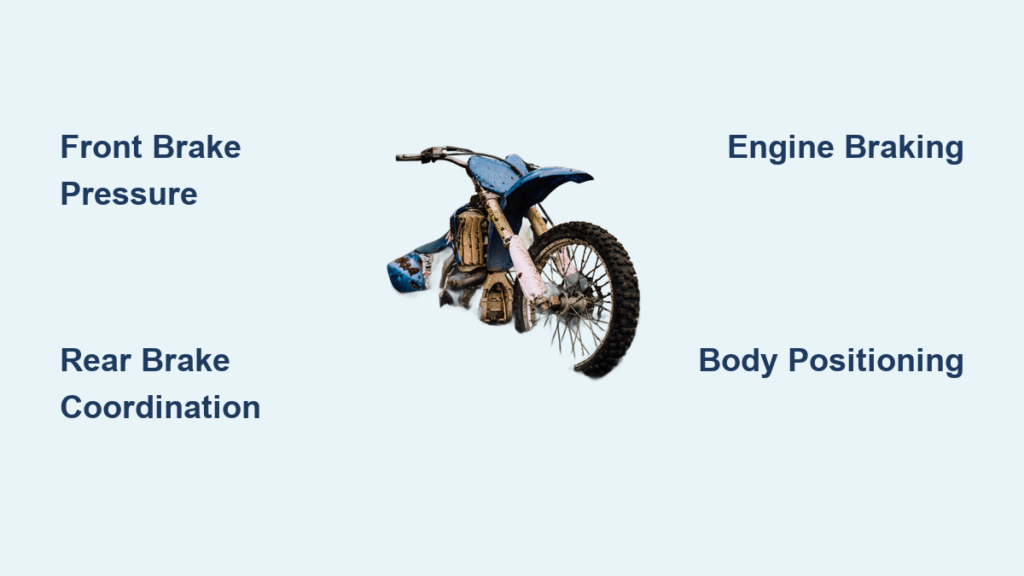
Mastering how to stop a dirt bike requires understanding three distinct braking forces working together, coordinating your body position with your motorcycle’s dynamics, and developing muscle memory for automatic responses. Unlike street bikes, dirt bikes operate on unpredictable surfaces where traction constantly changes, making braking technique even more critical. The techniques you’ll learn here will immediately improve your control, prevent common accidents, and help you ride faster with greater safety margins. Let’s break down exactly what you need to know to stop your dirt bike effectively in any riding condition.
Front Brake Mastery: Your Primary Stopping Power
Your front brake delivers approximately 70% of your total stopping power, making it the most critical component when learning how to stop a dirt bike. This disproportionate power exists because weight transfer during deceleration loads the front wheel, increasing its traction capacity. However, many beginners instinctively avoid the front brake because it feels intimidating, relying too heavily on the rear brake instead—a mistake that severely limits stopping capability.
Apply the front brake with progressive pressure rather than sudden grabs. Start with light pressure and gradually increase as you feel the suspension compress and deceleration build. This technique, called threshold braking, allows you to approach the maximum stopping force without locking the wheel. Practice finding this sweet spot on consistent surfaces before attempting it on loose terrain. Your goal is to develop the sensitivity to recognize when you’re applying optimal braking force through feedback from the handlebars and your body position.
Pro Tip: Adjust your front brake lever position before riding. Set it slightly downward from horizontal to match your natural hand position in the attack stance. The lever should be close enough for comfortable reach but far enough to prevent accidental engagement during normal riding.
Rear Brake Coordination: Stability and Control
While the front brake provides raw stopping power, your rear brake contributes about 25% of total braking force and serves as the essential stabilizing element when you stop a dirt bike. When applied correctly, the rear brake creates what experienced riders call “wheel chatter”—a subtle vibration indicating maximum traction as the tire anchors the bike firmly to the ground.
Use your rear brake to stabilize the motorcycle before adding significant front brake pressure. Slide your foot slightly forward on the peg while keeping your knee locked for stability, and apply pressure smoothly with the ball of your foot. Avoid “ninja kicking”—jerking your foot backward abruptly—as this disrupts balance. On loose surfaces like gravel or sand, intentionally skimming the rear brake just below lockup provides incredible control during descents, with the wheel carving a slight furrow that acts like an anchor.
Critical Mistake to Avoid: Never apply heavy rear brake pressure without properly coordinating the clutch. This combination causes rear-wheel lockup that destabilizes your bike and can lead to dangerous slides or complete loss of control.
Engine Braking: The Hidden Deceleration Tool
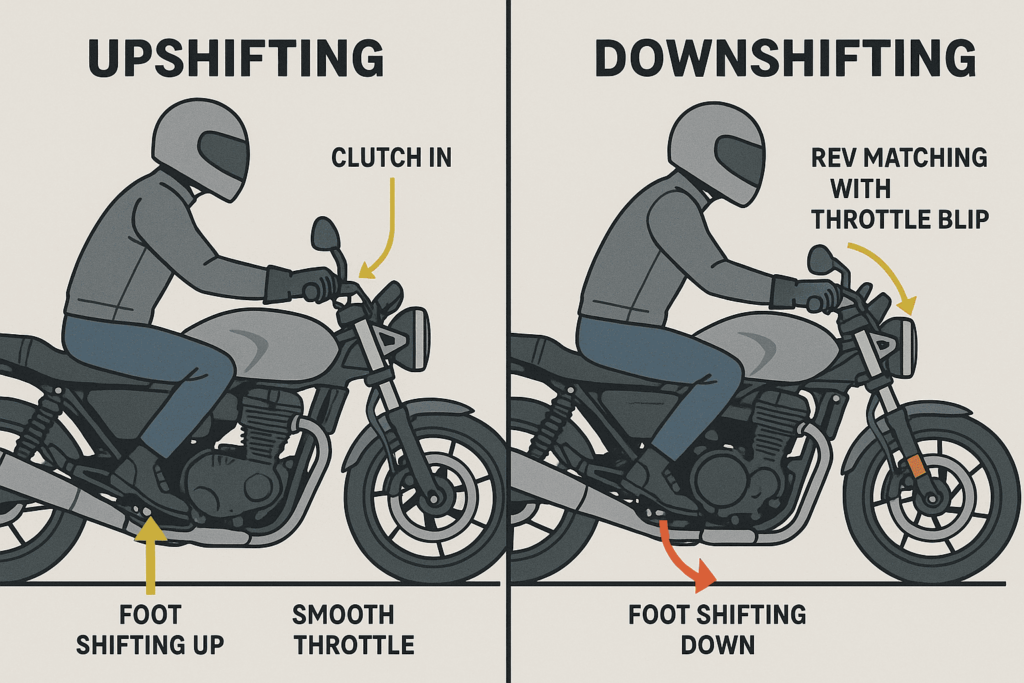
Many riders completely overlook engine braking, which accounts for about 5% of total stopping force but provides crucial benefits when learning how to stop a dirt bike. Engine braking occurs when you release the throttle while keeping the clutch engaged, allowing engine resistance to naturally slow your motorcycle. This technique reduces wear on hydraulic components while giving you valuable feedback about speed and traction conditions.
Master downshifting before applying brakes—this sequence maximizes engine braking effects and prepares your bike for the appropriate gear ratio when you stop. As you approach a corner or obstacle, begin downshifting one gear at a time while coordinating brake applications. When shifting, “blip” the throttle—briefly revving the engine—to match engine speed with wheel speed. This prevents rear-wheel skidding and maintains stability throughout the deceleration process.
Practice Drill: In an open field, practice the “squeeze and release” method: apply front brake pressure progressively, release slightly while downshifting, then reapply. This maintains constant deceleration while smoothly transitioning through gears.
Body Positioning for Maximum Braking Effectiveness

Your body position dramatically affects how effectively you can stop a dirt bike. When preparing for hard braking, shift your weight toward the rear of the motorcycle to prevent excessive front-end dive and maintain rear wheel traction. Your legs should serve as primary shock absorbers, actively bending and extending to manage forces transmitted through the chassis.
Maintain the attack position as your baseline stance: knees gripping the bike firmly, elbows slightly bent, head positioned directly over handlebars. When braking heavily, consciously push your hips back on the seat while keeping arms relaxed. This creates a stable triangle between your legs, arms, and torso that absorbs deceleration forces without disrupting bike geometry.
Visual Cue: Watch experienced riders braking hard—they appear to “float” over the bike rather than being thrown forward. This happens because they’ve mastered weight distribution during deceleration.
Scenario-Specific Stopping Techniques
Corner Entry Braking Without Washing Out
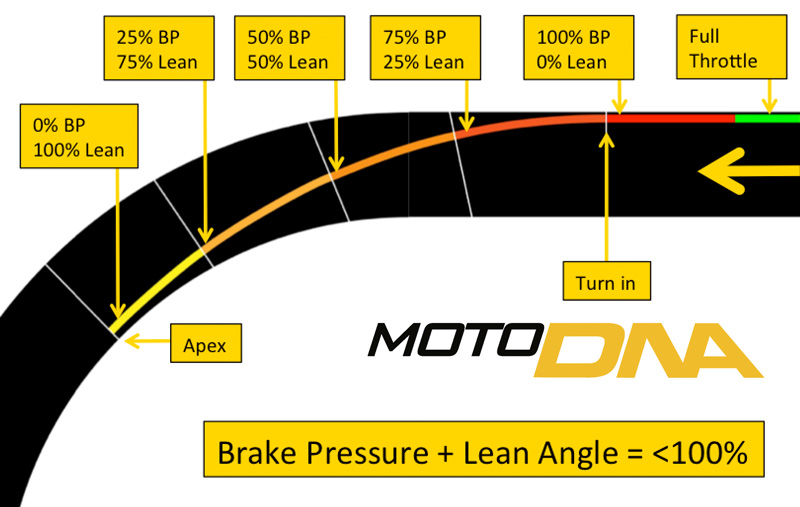
The cardinal rule for corner braking states you must complete all braking while upright before initiating the turn. Once leaned over, your front wheel operates with significantly reduced traction, and any additional braking risks front-end washout. Identify your braking completion point well before the turn and commit to your line once you’ve achieved target speed.
Practice gradually moving your braking point closer to corners as your confidence grows. Use a timer to compare lap times while experimenting with different braking initiation points. This helps quantify improvements and builds trust in your ability to stop your dirt bike precisely when needed.
Descending Steep Terrain Safely
Descending requires specialized braking techniques that differ from flat-ground stopping. Practice descending using only the rear brake to develop precision control and learn traction limits. Keep the clutch engaged to maintain engine braking as an additional deceleration force, which reduces hydraulic brake workload.
On steep descents with loose surfaces, intentionally skimming the rear brake just below lockup provides exceptional control as the wheel digs into soft terrain. However, this technique won’t work on hard-packed surfaces where a locked wheel would simply slide uncontrollably.
Emergency Braking: When Every Millisecond Counts
In emergency situations requiring maximum deceleration, apply both brakes simultaneously with aggressive force while shifting your weight dramatically toward the rear. Never slam brakes on suddenly—apply pressure progressively, allowing suspension to compress before adding more force.
Practice threshold braking on consistent surfaces until you develop sensitivity to recognize when you’re approaching lockup. Wear full protective gear during these drills, as pushing your limits is essential for building the automatic responses needed in real emergencies. Remember: you can only ride as fast as you can stop, so developing emergency braking skills directly impacts your overall riding capability.
Essential Maintenance for Reliable Stopping
Your braking system requires regular maintenance to ensure consistent performance when you need to stop a dirt bike. Inspect brake pads monthly for wear and replace them before reaching minimum thickness specifications. Check brake fluid levels regularly and replace according to manufacturer guidelines—contaminated fluid reduces braking efficiency significantly.
Examine brake lines for cracks, bulges, or leaks before every ride. Test brake lever feel; if it becomes spongy or requires excessive travel, address the issue immediately. Properly maintained brakes respond predictably, giving you the confidence to apply maximum stopping power when necessary.
Final Principles for Confident Braking
The fundamental truth underlying all dirt bike braking technique is simple: you can only go as fast as you can stop. This principle applies equally to recreational trail riding, competitive motocross, and technical enduro riding. Developing confident, precise braking skills enhances every other aspect of your riding—from cornering speed to obstacle clearance to overall safety margins.
Approach braking practice with the same dedication you apply to throttle control. Start in controlled environments, gradually increasing complexity as skills develop. The ability to stop your dirt bike effectively transforms nervous riding into confident control, opening up new possibilities on any terrain. With consistent practice of these techniques, you’ll discover that improved braking capability directly translates to faster lap times, greater trail confidence, and enhanced enjoyment of your dirt bike experience.