That sinking feeling when your helmet slips over your eyes during a hard brake? It’s not just annoying—it’s dangerous. An ill-fitting helmet leaves critical gaps where protection should be, turning a minor curb hop into a concussion risk. Most riders grab a “medium” off the shelf, but head shapes vary wildly. A European study found 68% of cyclists wear incorrectly sized helmets, compromising safety in crashes. This isn’t about vanity; it’s about ensuring your helmet anchors securely to absorb impact forces where it matters most. Follow this precise sizing protocol to eliminate wobble, pressure points, and guesswork—so your helmet becomes invisible until you need it.
Measure Your Head Like a Pro Fitter

Position the Tape Exactly Where Your Helmet Sits
Forget measuring across your crown. Place the tape 25mm (two finger-widths) above your eyebrows—this matches where the helmet’s front rim rests. If you measure too high, you’ll get a false “small” reading. Hold the tape parallel to the floor, ensuring it doesn’t dip below your ears. You’ll feel subtle resistance against your scalp; this isn’t a hat measurement.
Maintain Consistent Tension: The “No Gap, No Dent” Rule
Wrap the tape 15mm above your ears with firm, even pressure. When tightened correctly:
– You cannot slip a finger underneath (indicates looseness)
– The tape leaves no red mark (indicates over-tightening)
– Your hair lies flat (no trapped strands distorting measurement)
Measure twice. If readings differ (e.g., 56cm and 57cm), always choose the larger number. A helmet that’s slightly big can be adjusted; one that’s too small cracks under pressure.
Crack the Size Chart Code: Western vs. Asian Fit
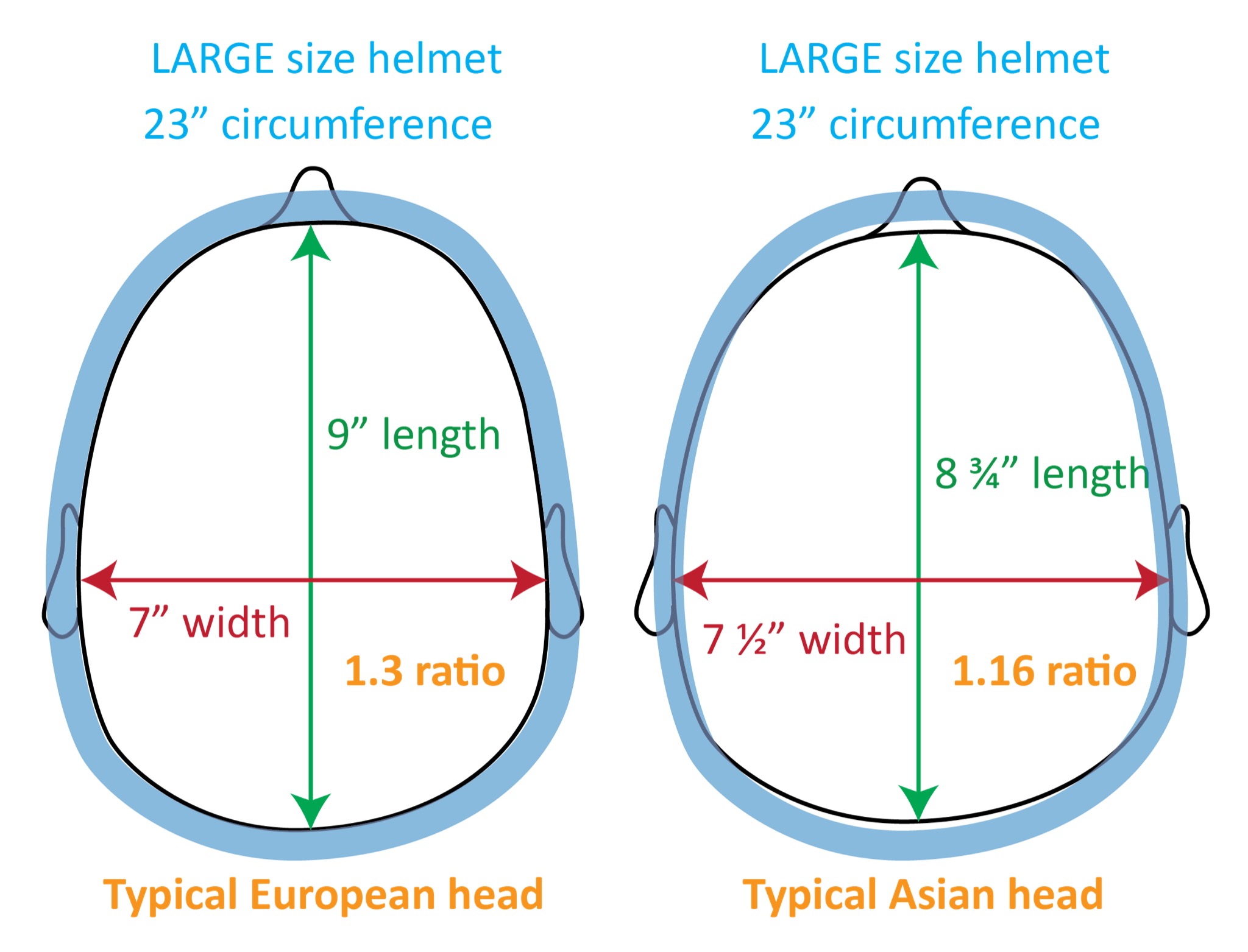
Why Standard Charts Fail 40% of Riders
Western and Asian helmets share size labels (S/M/L), but temple width and crown height differ drastically. This isn’t marketing—it’s anatomy. If Western Mediums pinch your temples or feel “high” on your head, Asian fit solves the problem:
| Fit Standard | Small Range | Medium Range | Large Range | Critical Difference |
|---|---|---|---|---|
| Western | 51-55 cm | 55-59 cm | 59-63 cm | Oval head shape; narrower temples |
| Asian | 51-57 cm | 55-61 cm | 59-65 cm | Rounder shape; 4-6mm more temple space |
Real-world fix: Stand facing a mirror. Put on a Western Medium that feels tight. Now try an Asian Medium. If pressure vanishes at your temples without excess wobble, you’ve found your true size. Never size up hoping padding will compress—it won’t.
Level Placement: The Two-Finger Forehead Test
Why Your Helmet Must Sit Low (Not Back)
A helmet riding too high exposes your forehead—the most common impact zone in 60% of bike crashes. Here’s the non-negotiable positioning check:
1. Place the helmet fully forward on your head
2. Rest your thumb and forefinger horizontally above your eyebrows
3. The front rim must touch the top of your fingers
If you see more than 1cm of forehead above the helmet, it’s too far back. Adjust retention dials before strapping. A properly positioned helmet covers your brow without obstructing vision—even when leaning forward on drops.
Shake Test: Verify Security in 10 Seconds
Loosen the rear dial completely before putting on the helmet. Once positioned:
1. Tighten the dial until you feel even pressure all around (no hot spots)
2. Shake head vigorously side-to-side—like avoiding potholes
3. Nod rapidly up-and-down—as if sprinting uphill
Pass: Helmet moves with your skull. Zero slippage.
Fail: If it shifts >1cm or rocks front-to-back, tighten dials or drop a size. Never compensate with chin straps—this strains your jaw and defeats safety mechanics.
Chin Strap Precision: The Two-Finger Gap Rule
Straps aren’t just for show—they lock the helmet down during impacts. Misaligned straps cause 30% of fit failures:
– Side straps: Must form a sharp “V” directly below your earlobes. Slide adjusters until straps lie flat against your head—no twisting or slack.
– Chin strap: Buckle snugly, then slide two fingers vertically between strap and chin. If three fingers fit, it’s dangerously loose. If you can’t insert two, it restricts blood flow.
Pro tip: Open your mouth wide. The helmet should press down slightly on your crown. If not, tighten straps—this simulates crash forces.
Youth Helmets: Why “One Size Fits Most” Fails Adults
OSFM (One Size Fits Most) helmets are traps for adult riders. Their adjustment ranges hide critical compromises:
– Western OSFM (49-57 cm): Only fits heads under 59cm (true Mediums need 55-59cm)
– Asian OSFM (51-59 cm): Leaves gaps for heads under 57cm
Red flag: If the rear cradle sits below your occipital bone (the bump at your skull’s base), the helmet floats. Adult-specific sizes eliminate this gap. Never size up for “growth room”—your adult head won’t expand.
MIPS Integration: Fit Adjustments You Must Know

MIPS (Multi-directional Impact Protection System) adds a slip-plane layer that reduces rotational brain injury by 10-40% in angled crashes. But it affects fit:
– MIPS helmets sit 3-5mm lower due to internal padding
– Retention dials require 1-2 extra clicks to achieve snugness
– Check for MIPS logo inside (yellow sticker)—don’t pay $50 extra for fake “MIPS-like” tech
If your MIPS helmet feels loose after tightening, the slip-plane may need repositioning. Rotate the inner shell slightly until pressure feels uniform.
When to Replace: The Hidden Degradation Timeline
Replace immediately after any crash—even without visible damage. EPS foam crushes microscopically, losing 70% of impact absorption. But silent threats are deadlier:
– UV damage: Check for faded logos or brittle foam (replace after 2 years of daily sun exposure)
– Sweat corrosion: Smell straps for sour odor—salts degrade webbing strength
– Age limit: All helmets expire after 3 years of regular use (5 years max, even if unused)
Never “test” old helmets by dropping them. Real-world crashes involve complex forces no home test replicates.
Final Fit Checklist Before Every Ride
Skip this 60-second ritual, and you’re gambling with protection:
1. Position: Two fingers above eyebrows, front rim visible in peripheral vision
2. Security: No movement during head shakes (verify before strapping)
3. Straps: Sharp “V” below ears, two fingers under chin, presses down when mouth opens
4. Comfort: Zero pressure points after 10 minutes of wear
5. Age: Less than 3 years old with no impact history
Your helmet is the only gear that can save your life. Investing 10 minutes to measure accurately and adjust precisely means riding with confidence—not compromise. Stop guessing your size. Measure in centimeters, verify with physics, and ride knowing your helmet will perform when it counts most. Your brain is worth the precision.