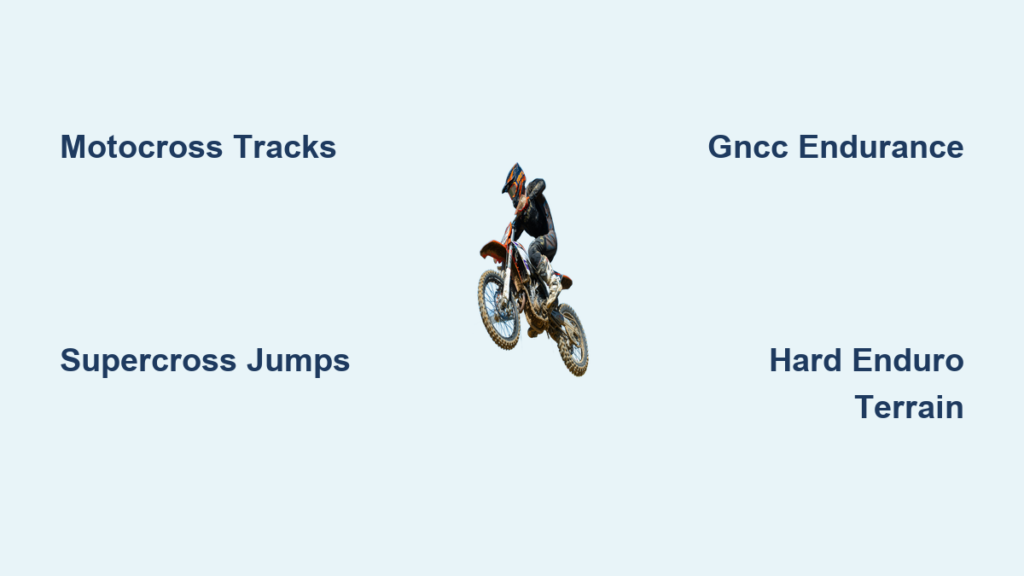
When your dirt bike sits idle while others tear up tracks across the country, you’re missing out on the adrenaline rush of organized competition. The world of racing dirt bikes spans an incredible spectrum—from the high-speed intensity of stadium supercross to the grueling endurance tests of hard enduro events across remote wilderness terrain. Understanding these different types of racing dirt bikes is essential for selecting the right machine and discipline that matches your skills and interests. This guide cuts through the confusion to show you exactly which racing dirt bikes dominate each competitive format, what makes them unique, and how to choose your competitive path.
Most riders start with recreational off-road riding but quickly discover that racing demands specialized machines built for specific challenges. Whether you’re eyeing weekend motocross events or dreaming of GNCC championship runs, the right racing dirt bike makes all the difference between frustration and victory. You’ll learn precisely what separates each category of competition-ready machine and how to match your riding style with the perfect racing platform.
How Motocross Dirt Bikes Dominate Outdoor Tracks

Motocross dirt bikes rule purpose-built outdoor tracks spanning one to three miles of man-made terrain. These machines tackle sharp turns, banked curves, straightaways, jumps, and elevation changes that test both rider skill and machine capability. Unlike circular circuits, motocross courses wind strategically so the start and finish converge at the same point, creating dynamic racing conditions that change dramatically with weather—from dusty and dry to wet and muddy surfaces.
Why 250cc and 450cc Classes Define Professional Motocross
Professional motocross features two primary displacement classes that create clear progression pathways. The 250cc class serves as the proving ground for up-and-coming riders developing their competitive skills, while the 450cc class represents the premier competition level with the most experienced professionals. Each class competes in two motos lasting 12 to 30 minutes plus one additional lap. Riders earn points based on finishing position (first place receives one point), with the lowest combined score after both motos determining the winner.
What Makes Motocross Tracks Change with Weather Conditions
Track conditions dramatically influence dirt bike performance and rider strategy. Dry conditions create dusty surfaces that reduce traction and visibility, while rain transforms courses into slippery mud baths requiring different riding techniques. Motocross dirt bikes feature specialized suspension systems and aggressive knobby tires designed to handle these changing conditions. Pro tip: Study track conditions during practice sessions to adjust your riding line and machine setup before race time.
Supercross Dirt Bikes: Stadium Machines Built for Big Air
Supercross dirt bikes transform stadiums into high-flying arenas where riders launch off massive jumps reaching nearly 35 feet high and traveling 70 feet through the air. Unlike outdoor motocross tracks that use natural terrain, supercross requires tons of dirt to be transported into venues and sculpted into elaborate courses featuring jumps, whoops sections, over-under bridges, and sand traps. The confined indoor spaces create tighter turns and more technical challenges than outdoor tracks.
Why Supercross Jumps Reach 35 Feet High in Stadium Racing
Supercross dirt bikes feature reinforced frames and specialized suspension systems that absorb the massive impacts from stadium-sized jumps. These machines run lighter components to enhance aerial maneuverability while maintaining structural integrity for repeated hard landings. The extreme nature of supercross jumps demands exceptional physical conditioning from riders who must control 200+ pound machines in mid-air before absorbing punishing impacts upon landing.
How 250SX and 450SX Classes Structure Main Event Competition
Supercross events follow a multi-stage format beginning with qualifying rounds, then heat races, culminating in main events. The 250SX class races for 15 minutes plus one lap, while the premier 450SX class competes for 20 minutes plus one lap. Unlike motocross with its two-moto format, supercross awards victory to the first rider crossing the finish line in the main event. The confined racing space creates frequent rider contact and thrilling passing opportunities that define supercross entertainment.
Cross Country Dirt Bikes: Conquering Natural Terrain Challenges

Cross country dirt bikes tackle courses spanning 3 to 8 miles across natural terrain without the high jumps and acrobatic maneuvers of motocross. Instead, these machines face rocks, mud, water crossings, roots, and steep climbs that create formidable technical challenges. Cross country dirt bikes feature enhanced durability, increased ground clearance, and specialized tires designed for varied natural surfaces rather than man-made tracks.
Why Hare Scrambles Tracks Span 3-8 Miles of Natural Obstacles
Hare scrambles require dirt bikes that balance speed with technical capability across extended natural terrain. These machines typically feature more comfortable seating positions and improved fuel capacity compared to pure motocross bikes. The objective is simple: complete as many laps as possible within the one to two-hour time window, with the rider accumulating the most completed laps declared the winner.
How Timed Release Systems Prevent Dangerous Trail Passes
To manage safety on narrow trails, organizers release riders in classes with 30-second intervals starting with the most advanced competitors. This system reduces dangerous passing situations while maintaining competitive integrity. Cross country dirt bikes must handle sustained high-speed sections while remaining nimble enough for technical trail sections—requiring versatile suspension setups and reliable power delivery across all engine ranges.
GNCC Dirt Bikes: Hybrid Machines for 12-Mile Cross Country Courses
GNCC dirt bikes tackle extreme courses reaching up to 12 miles that combine cross country endurance with motocross-style technical sections. These specialized machines feature enhanced durability for long-distance racing while maintaining the agility needed for technical obstacles. Unlike pure motocross bikes, GNCC machines include lighting systems, odometers, and reinforced components to withstand the rigors of extended competition.
Why GNCC Events Combine Motocross Skills with Endurance Riding
The unique demands of GNCC racing require dirt bikes that excel at both high-speed sections and technical terrain. Riders must transition seamlessly from wide-open straights to tight, root-filled trails within the same lap. GNCC dirt bikes typically feature six-speed transmissions for better gear range and clutch systems designed for repeated heavy use during long races.
How ATVs and E-Bikes Expand GNCC Racing Opportunities
GNCC’s inclusive approach welcomes not only traditional dirt bikes but also ATVs and electric mountain bikes, creating diverse competition fields. This variety means GNCC dirt bikes must compete against different vehicle types, requiring strategic riding approaches when sharing the course. The extended track lengths demand exceptional fuel capacity and mechanical reliability that standard motocross bikes lack.
Enduro Dirt Bikes: Mastering 100+ Mile Distance Challenges
Enduro dirt bikes conquer events covering 100 miles or more through wilderness terrain, demanding machines built for extreme endurance. These specialized bikes feature enhanced fuel capacity, reinforced frames, and lighting systems for navigation through remote areas. Unlike track-focused machines, enduro dirt bikes prioritize reliability and self-sufficiency since external support is often unavailable during competition.
Traditional Timekeeper Enduros: Why Precision Timing Beats Pure Speed
Traditional timekeeper enduros require racers to maintain specific speeds throughout the event, with penalties for arriving early or late at checkpoints. This format emphasizes consistent pace management over outright speed. Enduro dirt bikes for timekeeper events feature precise odometers and reliable engines that maintain consistent performance across varied terrain without frequent mechanical intervention.
Sprint Enduros: How Timed Sections Test Versatility on Mixed Terrain
Sprint enduros challenge riders with multiple timed sections across different terrain types, requiring dirt bikes that excel in diverse conditions. These machines must transition quickly from cross country-style trails to motocross-inspired technical sections within the same event. Sprint enduro dirt bikes typically feature responsive engines with strong low-to-midrange power for technical terrain while maintaining enough top-end for faster sections.
Hard Enduro Dirt Bikes: Machines Built for Extreme Terrain
Hard enduro dirt bikes represent the pinnacle of off-road capability, engineered to conquer the most extreme terrain imaginable. These specialized machines feature reinforced frames, enhanced ground clearance, and specialized suspension systems designed for near-vertical climbs and technical descents. The AMA National Hard Enduro Championship showcases the ultimate test of both rider skill and machine capability across remote wilderness courses.
Why AMA National Hard Enduro Tests Rider and Machine Limits
Hard enduro events push dirt bikes beyond standard off-road capabilities with terrain that includes near-vertical rock faces, deep water crossings, and technical descents requiring precise control. These machines feature lightweight construction for maneuverability while maintaining structural integrity for repeated hard impacts. Critical note: Hard enduro dirt bikes require extensive customization beyond stock configurations to handle the extreme demands of championship-level competition.
Vintage Dirt Bikes: Affordable Entry into Competitive Racing
Vintage racing dirt bikes offer accessible competition for machines predating 1999 through the American Historic Racing Motorcycle Association. These older models provide genuine racing thrills at a fraction of the cost of modern competition machines. Vintage dirt bikes typically require less maintenance and feature simpler mechanical systems that make them ideal for riders seeking competitive experiences without significant financial investment.
How Pre-1999 Models Offer Budget-Friendly Racing Options
Vintage dirt bikes eliminate the financial barrier that prevents many riders from entering organized competition. Older two-stroke models often cost less than $2,000 to purchase and maintain compared to $10,000+ for new competition machines. These classic bikes develop rider skills through mechanical simplicity while providing authentic racing experiences that build confidence before moving to more advanced disciplines.
Flat Track Dirt Bikes: Specialized Machines for Oval Racing
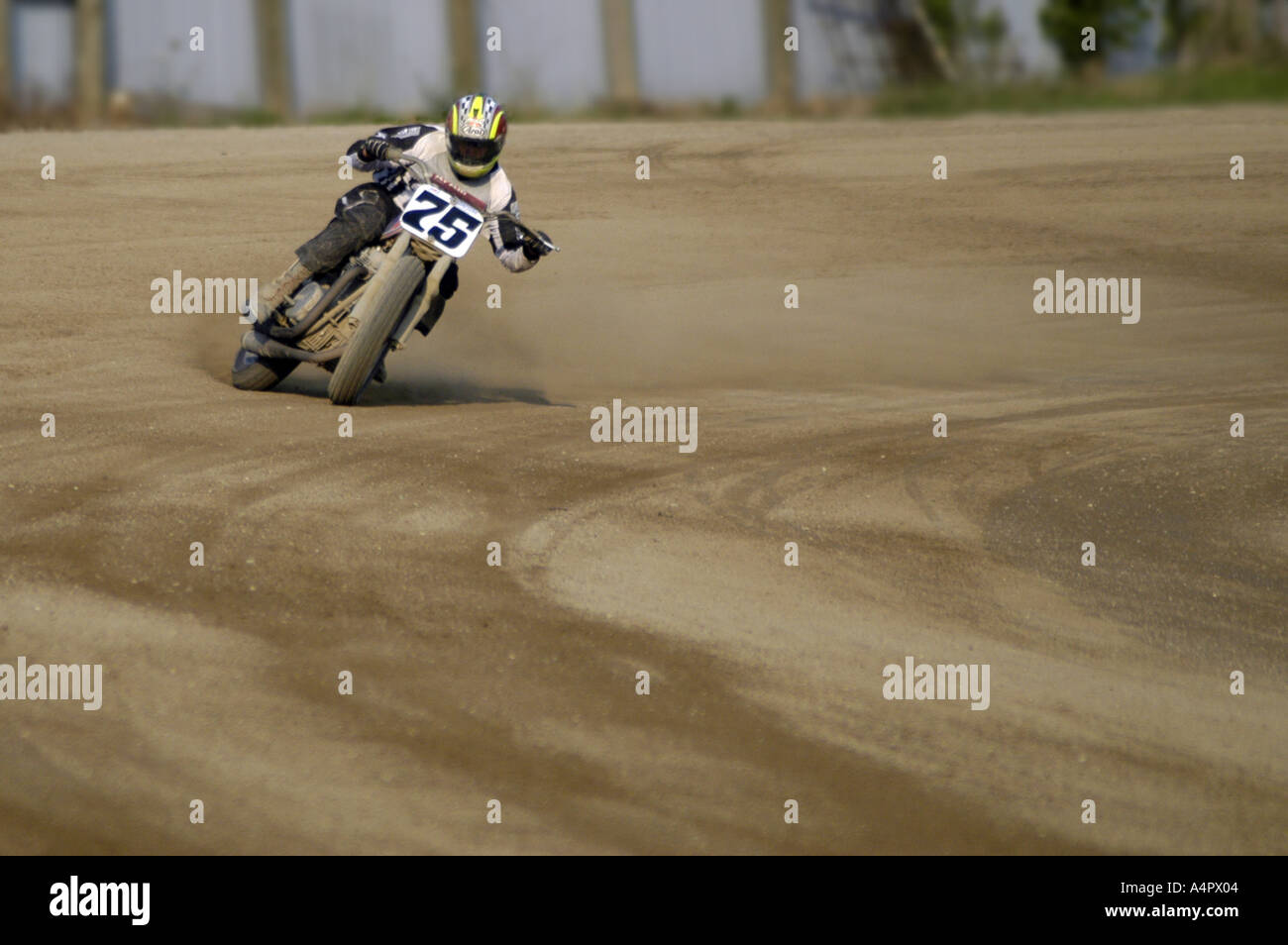
Flat track dirt bikes dominate oval-shaped dirt tracks with minimal elevation changes, featuring specialized frames and engines optimized for sliding through corners at high speed. These machines feature minimal bodywork, lightweight construction, and powerful engines designed for quick acceleration out of corners. The distinctive slide technique required in flat track racing demands specialized tires with specific tread patterns for optimal dirt traction.
What Makes Flat Track Bikes Slide Through Dirt Corners
Flat track dirt bikes feature hard-compound tires that allow controlled sliding through corners while maintaining forward momentum. The frame geometry positions the rider farther forward for better weight distribution during slides, while the engine delivers immediate power for quick corner exits. Pro tip: Mastering the slide technique on a flat track dirt bike develops fundamental cornering skills that benefit riders across all dirt bike disciplines.
Understanding these different types of racing dirt bikes helps you select the right machine for your competitive goals. Each discipline demands specialized equipment that matches the unique challenges of its racing environment. Whether you’re drawn to the high-flying action of supercross or the endurance demands of hard enduro, the perfect racing dirt bike awaits to transform your riding experience. Start by testing different disciplines at local events before investing in specialized equipment—many riders discover their true competitive passion through hands-on experience rather than theoretical knowledge alone.