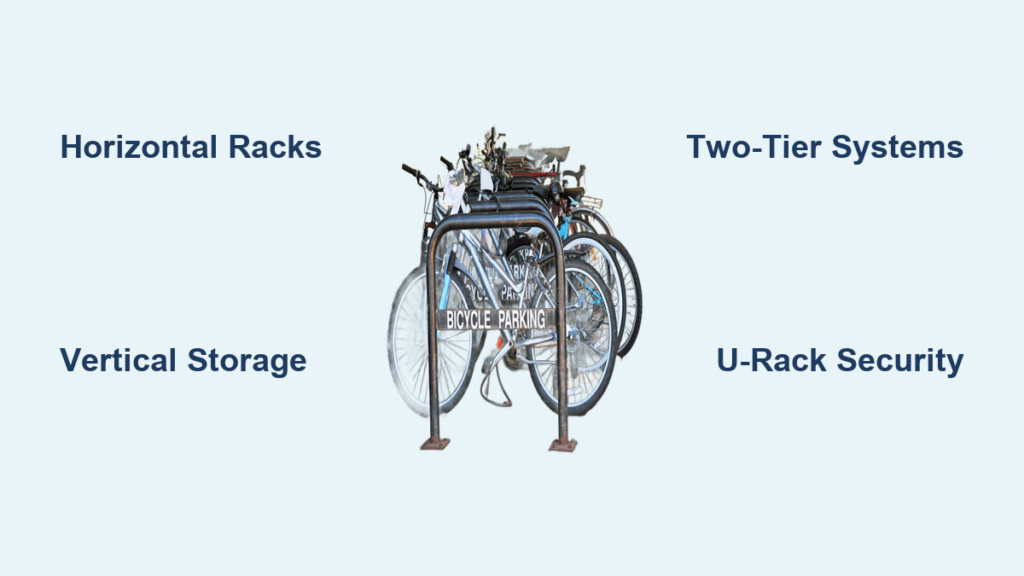
You’ve probably stared at a confusing array of bike racks outside your office or local coffee shop, wondering which design actually keeps bicycles safe. With bike theft rates averaging 15-20% annually in urban areas, choosing the right bike parking rack type makes the difference between secure storage and expensive losses. Whether you’re managing a corporate campus with hundreds of bikes or just need space for two bicycles at home, understanding the specific strengths of each rack type saves money and frustration.
This guide cuts through the confusion by analyzing every major bike parking rack type based on real-world performance metrics. You’ll discover which designs maximize security without compromising accessibility, how material choices impact longevity, and exactly what to look for when evaluating options for your specific space constraints. No more guessing—just actionable insights to help you select the perfect bike parking solution.
Horizontal Bike Racks: The Workhorse Solution for Most Applications
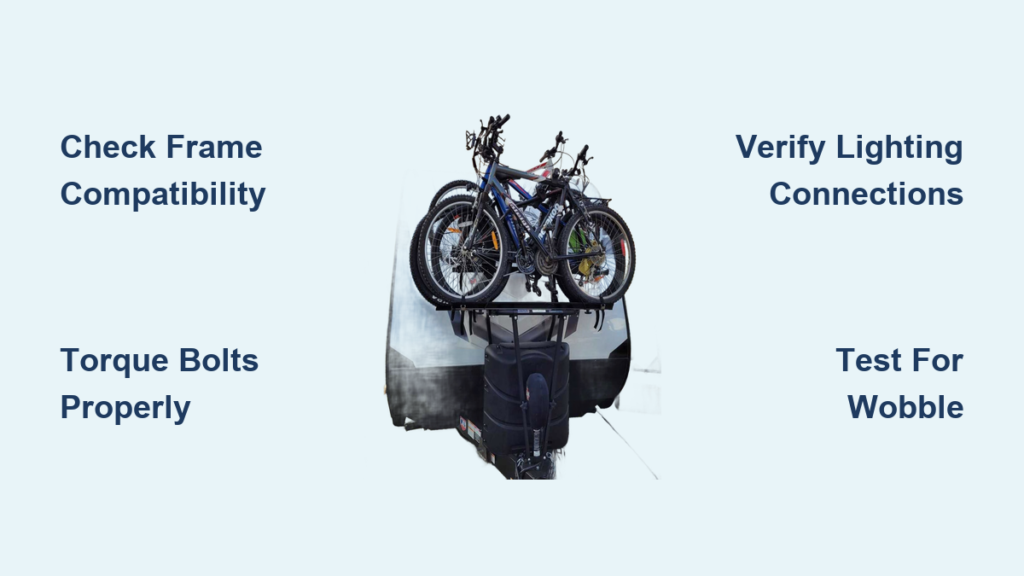
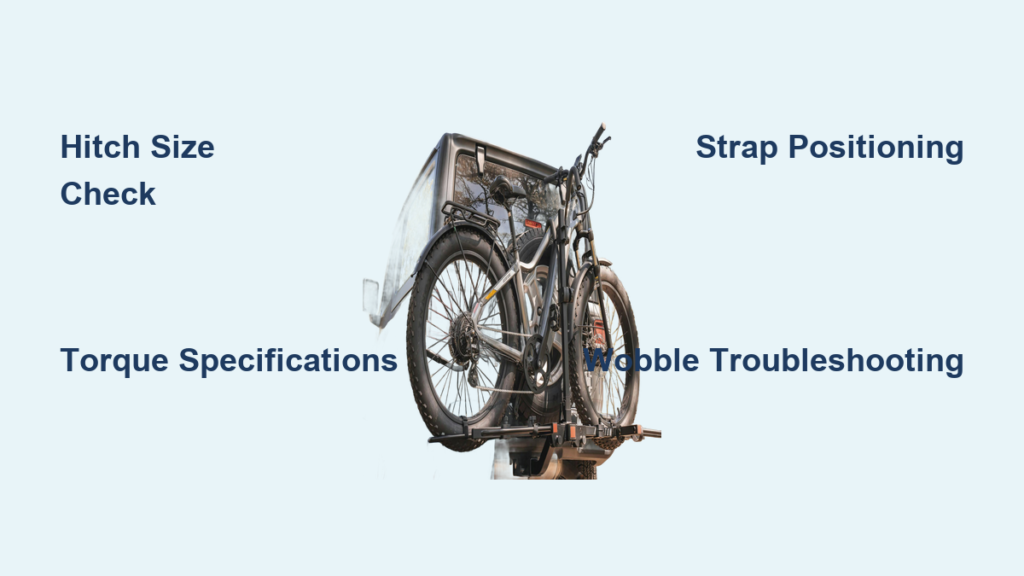
Horizontal bike parking racks keep bicycles parallel to the ground in their natural riding position. These straightforward systems work exceptionally well for high-traffic areas where users need quick, intuitive access without special techniques. Most facility managers choose horizontal racks for general-purpose installations because they accommodate virtually all bicycle types—from sleek road bikes to bulky e-bikes—without forcing users to lift heavy frames.
Why Standard Horizontal Systems Dominate Urban Installations
The widespread popularity of standard horizontal racks comes down to three key factors: simplicity, compatibility, and durability. Users simply roll up, loop their lock through the frame and wheel, and walk away—no learning curve required. Properly spaced at 600-750mm between units, these racks prevent handlebar collisions while maximizing capacity per linear foot. Most installations use galvanized steel tubing (38-50mm diameter) with powder coating that withstands 10-15 years of outdoor exposure before requiring maintenance.
Multi-Level Horizontal Storage: When Floor Space Disappears
When your parking area shrinks but demand grows, multi-level horizontal systems become essential. These advanced configurations use gas-assisted mechanisms that reduce lifting effort by 70-80%, making even 20kg e-bikes manageable for most users. Critical safety note: You’ll need minimum 2400mm ceiling height to avoid head injuries during operation. The lower tier maintains standard 350-400mm ground clearance for easy access, while upper-tier positions feature individual locking points that prevent accidental lowering. For facilities managing 50+ bikes in tight spaces, these systems deliver 6-8 bicycles per square meter—nearly triple standard horizontal density.
Vertical Bike Parking Racks: Space-Saving Solutions for Tight Areas
Vertical storage systems position bicycles perpendicular to the ground with front wheels elevated. This orientation cuts required floor space by roughly 50% compared to horizontal alternatives, making vertical racks ideal for narrow corridors or building facades where every centimeter counts. Users lift the front wheel into a cradle while the rear wheel rests on the ground—a technique most cyclists master within 2-3 uses.
Wall-Mounted Vertical Systems: The Space Efficiency Champion
When floor space comes at a premium, wall-mounted vertical racks transform unused vertical surfaces into valuable parking real estate. These units require solid structural anchoring—each mounting point must withstand 200kg dynamic loads during use. Properly installed, they accommodate 10-12 bicycles per linear meter of wall space while maintaining ADA-compliant 915mm aisle widths. Pro tip: Look for models with rubberized contact points that prevent frame scratches during loading. The installation process demands precision—measure twice, drill once—since improper mounting creates dangerous failure points.
Freestanding Vertical Options: Flexibility Without Permanent Installation
Floor-standing vertical racks eliminate wall-mounting requirements while delivering similar space savings. These portable units use weighted bases or surface anchors for stability, allowing you to reconfigure layouts without new drilling. Adjustable wheel cradles accommodate everything from 20″ BMX bikes to 29″ mountain bikes with ease. However, they protrude 300-400mm into walkways, making them better suited for wide corridors than narrow passages. For temporary events or seasonal needs, these racks offer unmatched flexibility—simply unanchor and reposition as demand shifts.
Two-Tier Rack Systems: High-Density Parking for Maximum Capacity

Two-tier bike parking rack types represent the gold standard for facilities needing to maximize capacity within limited footprints. These systems deliver twice the parking spots in the same floor area while maintaining user-friendly access—critical for transit stations, universities, and corporate campuses where demand consistently outpaces space.
Gas-Assisted Upper Tier Access: Effortless Operation for Heavy Bikes
Modern two-tier systems use gas struts that reduce lifting force by 70-80%, allowing users to raise even 20kg e-bikes with minimal effort. A gentle pull on the handle smoothly elevates your bicycle to the upper level without Olympic-level strength. Critical specification: Verify ground clearance between tiers measures at least 350-400mm—anything less creates dangerous tripping hazards when accessing lower bikes. Individual locking points secure each position at both tiers, while master key systems simplify management for facility staff. These systems typically achieve 6-8 bicycles per square meter—ideal for high-traffic locations where every square foot generates revenue.
Mechanical Two-Tier Designs: Longevity Over Convenience
For facilities prioritizing durability over user convenience, mechanical two-tier systems replace gas struts with geared mechanisms or counterweight systems. Though requiring slightly more user effort, these configurations eliminate maintenance-intensive gas components that typically need replacement every 5-7 years. Sliding rails or pivot mechanisms let users load bikes without overhead lifting, reducing strain during daily use. The mechanical simplicity translates to 25+ year lifespans in properly maintained installations—making them cost-effective for budget-conscious municipalities and educational institutions.
Specialized Bike Rack Configurations for Unique Challenges
When standard solutions won’t fit your space constraints or security requirements, specialized bike parking rack types offer targeted solutions. These designs address specific challenges like awkward corners, ultra-high density needs, or temporary installations where flexibility matters most.
U-Rack Fundamentals: The Security Standard
The ubiquitous U-rack remains popular for good reason—it provides dual contact points for securing both frame and wheels simultaneously. With 750mm height and 600mm spacing between tubes, these simple designs enable 270-degree locking capability so users can secure bikes from multiple angles. Security advantage: Unlike single-point systems, U-racks allow cyclists to thread locks through both frame and wheel simultaneously—a significant theft deterrent. Most municipal installations use hot-dip galvanized steel (50-75 micron coating) that withstands 15-20 years of outdoor exposure with minimal maintenance.
Wave and Spiral Designs: Architecture Meets Functionality
Wave racks use continuous serpentine tubing to support multiple bikes along curved sections—typically 2 bikes per linear meter of rack length. Their aesthetic appeal works well for architectural integration while maintaining solid security. Spiral racks take density further, fitting 6-12 bikes within compact 2-3 square meter footprints. The circular design shines in awkward corners where traditional racks won’t fit, though individual access points prevent the frustrating domino effect when removing bikes.
Material Choices That Impact Longevity and Cost

Steel Construction Standards: The Budget-Friendly Workhorse
Most standard bike parking rack types use carbon steel tubing (38-50mm diameter, 2-3mm wall thickness) with hot-dip galvanization. This combination delivers 15-20 year outdoor lifespans at $50-75 per bicycle capacity—making it the go-to choice for municipal installations. Powder coating in standard RAL colors adds visual appeal while providing 10-15 years of color retention. Warning: Avoid racks with thin coatings (<50 microns)—they show rust within 2-3 years in harsh climates.
Stainless Steel Advantages: Premium Protection
Grade 304 or 316 stainless steel eliminates corrosion concerns entirely, justifying its 2.5-3x cost premium for marine environments or high-humidity locations. With enhanced 3-4mm wall thickness compensating for reduced material strength, stainless racks deliver 25+ year lifespans with virtually no maintenance. The brushed or polished finishes maintain appearance without repainting—a significant advantage for high-visibility installations where first impressions matter.
Choosing Your Perfect Bike Parking Rack Type
Your ideal solution balances four critical factors: security requirements, available space, user convenience, and budget constraints. High-traffic transit stations benefit from two-tier systems despite higher upfront costs ($200-400 per bike capacity), while small offices often find vertical wall-mounted solutions perfectly adequate. Residential complexes typically mix horizontal and vertical systems based on available space.
Proven selection strategy: Measure your space, count your users, then prioritize security needs. For most applications, U-racks or standard horizontal systems deliver the best balance of security, capacity, and user-friendliness. When space shrinks but demand grows, invest in two-tier systems that maximize capacity without sacrificing accessibility. Your bikes—and their owners—will thank you for making the right choice the first time.