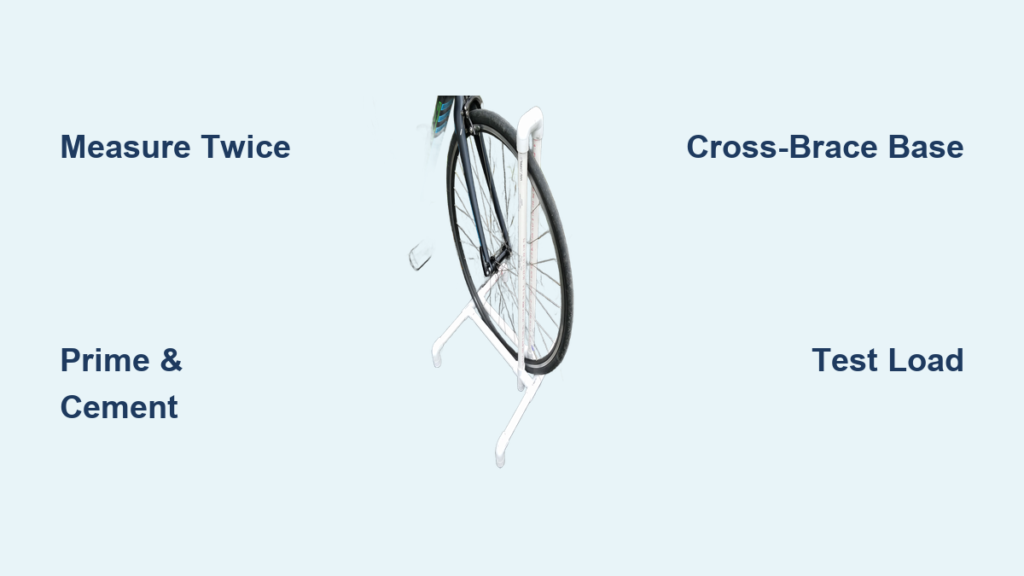
Your garage floor cluttered with leaning bikes? Stop paying $200+ for flimsy metal racks when you can build a rock-solid PVC bike storage solution for under $60. This guide reveals exactly how to build a pvc bike rack that holds 2-3 bicycles securely—no welding or advanced skills needed. You’ll create a weather-resistant structure that survives outdoor elements while customizing dimensions for your specific bike sizes and space constraints. By the end, you’ll have a professional-grade rack that prevents scratches, saves floor space, and pays for itself after storing just two bikes.
Essential PVC Materials and Tools Checklist
Exact Pipe and Fitting Requirements
Grab Schedule 40 PVC to avoid dangerous flexing under weight—Schedule 20 fails at 30 lbs. For a 2-bike rack:
– 1.5-inch pipe: 50 feet (main frame)
– 1-inch pipe: 10 feet (wheel cradles)
– Critical fittings: 10× 90° elbows, 8× T-joints, 4× 45° elbows, 6× end caps
Skip pre-cut pieces—buy 10-foot sections and save 40% on materials.
Must-Have Tools for Precision
A $10 PVC cutter prevents jagged edges that damage tires during assembly. Never skip these:
– Measuring tape with 1/8-inch increments
– 220-grit sandpaper (smooth cuts in 15 seconds)
– Purple PVC primer (creates chemical weld)
– PVC cement (sets in 2 minutes—work fast!)
– Level (critical for preventing wobble)
Pro Tip: Wear safety glasses when cutting—flying PVC shards cause eye injuries. Work outdoors; cement fumes trigger headaches indoors.
Cut PVC Pipes to Bike-Specific Dimensions

Create Your Custom Cut List
Measure your largest bike’s wheelbase first—this prevents handlebar clashes. Standard cuts for road/mountain bikes:
– Vertical posts: 4× 32-inch pieces (36″ for e-bikes)
– Base frame: 2× 48-inch pieces (72″ for 3-bike capacity)
– Wheel cradles: 6× 12-inch pieces (14″ for fat tires)
– Cross-braces: 2× 24-inch pieces
Avoid Costly Cutting Mistakes
Mark each pipe segment with its purpose (e.g., “VR-1” for vertical right) using painter’s tape. Cut on a flat surface with steady pressure—hacksaw blades must move perpendicular to pipe. Immediately sand all edges; rough cuts scrape bike tires during storage.
Warning: Cut 2 extra cradle pieces. You’ll need them when adjusting for kids’ bikes or tandem wheels.
Dry Fit Assembly Before Permanent Bonding
Layout Critical Test Points
Assemble all pieces without cement on concrete. Check three failure points:
– Handlebar clearance (minimum 14″ between bikes)
– Pedal swing space (no contact with frame)
– Cradle grip (tires shouldn’t slip out but avoid pinching)
Verify Weight Distribution
Place bikes in the dry-fit rack. If the structure tips when you push the top, widen the base immediately—your rack’s base should be 75% of its height. This step catches 90% of stability errors before cementing.
Critical: Never skip dry fitting. Once cemented, PVC joints can’t be adjusted—measurements errors become permanent hazards.
Cement Connections for Lifetime Durability

Prime-and-Cement Technique That Works
Apply purple primer to both pipe end and fitting socket—this softens PVC for molecular bonding. Work in 90-second bursts; primer dries too fast for large sections.
Avoid Joint Failure Traps
After priming, apply cement with a quarter-turn motion to coat evenly. Insert pipe with a 15-degree twist, then hold firmly for 30 seconds. Rushing causes “weak socket syndrome” where joints separate under bike weight.
Pro Tip: Build the base first, then add vertical posts. Complete one section before moving to the next—cement sets in 3 minutes.
Install Stability Upgrades That Prevent Collapse

Cross-Bracing for Wobble Elimination
Attach 45-degree elbows between vertical posts using 24-inch braces. This triangulation prevents side-to-side sway when loading bikes. Place braces 12 inches above the base—higher placements offer less stability.
Weighted Base Secret
Drill 1/4-inch holes in bottom pipes, fill with dry sand, and seal with end caps. This adds 15-20 lbs of hidden ballast without altering aesthetics. For outdoor racks, use concrete for permanent installations.
Warning: Skip wall anchors for 1-2 bikes? Fine. But 3+ bikes require wall mounting—use PVC brackets secured to studs every 16 inches.
Weatherproof Your Outdoor PVC Rack
UV Protection Protocol
Spray two coats of light-colored outdoor plastic paint—dark hues absorb UV rays and crack PVC in 2 years. Let dry 24 hours between coats. Reapply annually; peeling paint signals UV damage.
Drainage Hole Placement
Drill 1/4-inch holes every 12 inches in horizontal pipes. Standing water breeds algae and weakens joints through freeze-thaw cycles. Place holes on the bottom—never sides—to maintain structural integrity.
Money Saver: Replace standard screws with stainless steel versions on any metal components. Rust stains ruin bike frames within months.
Test Load Capacity Before Storing Bikes
24-Hour Stress Test
Place 50-lb weights (sandbags work) on each bike position. Check for:
– Joint separation (indicates rushed cementing)
– Pipe bowing (requires thicker Schedule 80 PVC)
– Base shifting (add sand fill immediately)
Dynamic Stability Check
Gently rock loaded positions side-to-side. Any wobble means missing cross-braces or inadequate wall anchoring—fix before daily use.
Critical: Never exceed 50 lbs per bike slot. E-bikes need Schedule 80 PVC or steel reinforcement.
Maintenance Routine for 5+ Year Lifespan
Weekly Quick Checks
Push firmly on each bike position. Loose joints need replacement within 48 hours—small wobbles escalate to catastrophic failure under load.
Annual Refresh Cycle
Sand and repaint outdoor racks every spring. Inspect for hairline cracks near joints; these spread rapidly in temperature swings. Replace damaged sections using coupler fittings.
Pro Tip: Store indoors over winter. PVC becomes brittle below 20°F—outdoor racks last 2x longer with seasonal storage.
Cost Breakdown: DIY vs. Store-Bought
| Capacity | DIY PVC Cost | Store-Bought Cost | Savings |
|---|---|---|---|
| 2 bikes | $50 | $180 | $130 |
| 3 bikes | $70 | $260 | $190 |
Sourcing Hack: Buy fittings in bulk online—PVC Fittings Direct offers 15% discounts on 50+ piece orders. Skip pre-cut pipes; cutting 10-foot sections yourself saves $20.
Critical Mistakes That Cause Rack Failure
Stability Killers
- Narrow base: Causes tip-overs (base width < 75% of height)
- Missing cross-braces: Vertical posts wobble under load
- Rushed cementing: Weak joints fail within 3 months
Fit Failures
- Cradles too wide: Tires slip out (keep internal width 2.5-3″)
- Low ground clearance: Pedals scrape floor (maintain 2-4″ clearance)
- Poor bike spacing: Handlebars collide (minimum 14″ between bikes)
Warning: Schedule 20 PVC flexes dangerously—always use Schedule 40 for bike racks.
Safety Upgrades for Heavy-Duty Use
Weight Limit Enforcement
Standard PVC holds 50 lbs per bike. For e-bikes or heavy cargo bikes:
– Insert 1/2-inch rebar inside vertical posts
– Upgrade to Schedule 80 PVC (30% thicker walls)
– Anchor directly to concrete with ground stakes
Child Safety Protocol
Test stability by pulling firmly from the top—if it tips, secure it immediately. Position racks away from play areas; PVC structures attract climbing children.
Non-Negotiable: Allow 24 hours curing time before loading bikes. Premature use causes joint separation.
Build your pvc bike rack this weekend using these proven steps—your garage will transform from chaotic to organized in under 4 hours. Start with a 2-bike model to master the techniques before expanding. Remember: precise measurements, proper cementing, and stability upgrades separate wobbly failures from racks that last 7+ years. When you complete your build, share photos of your custom creation—most DIYers end up building a second rack for the shed or workshop!