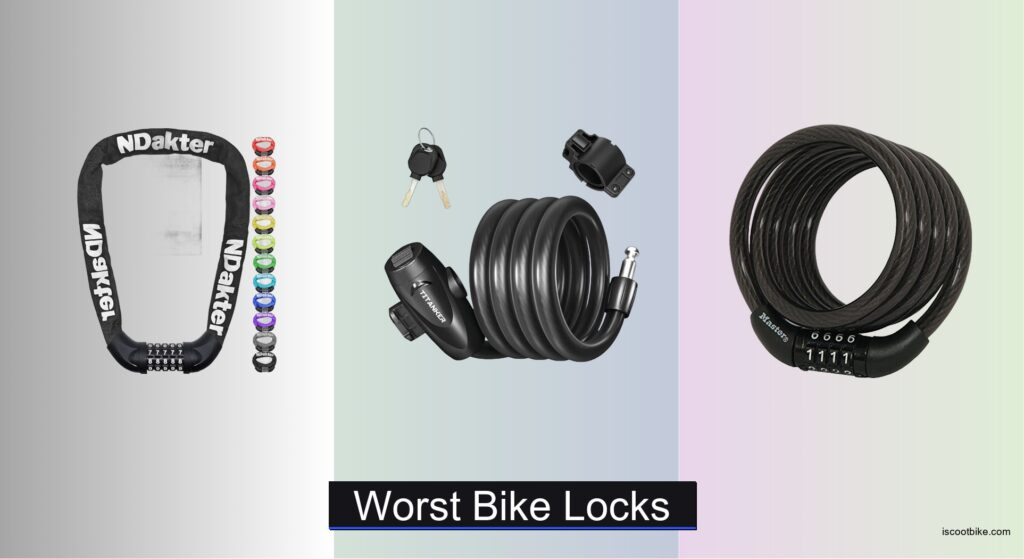
Bike theft is rampant in cities worldwide, and choosing the wrong lock can mean coming back to an empty rack. Many riders mistakenly believe any lock offers real protection, but flimsy cables, weak combinations, and poor materials make some locks easy targets for even amateur thieves. These ineffective options provide a false sense of security, leaving expensive bikes vulnerable to quick cuts or simple bypasses. The best way to avoid becoming a statistic is knowing which locks to avoid.
We analyzed over 30 bike locks, cross-referencing construction specs, attack test videos, and independent ratings from Sold Secure and ART to identify the worst performers. Our evaluation focused on shackle thickness, material quality, combination complexity, and real-world failure reports. Low-security cables, poorly designed U-locks, and combo mechanisms with only 4 digits consistently failed to resist basic tools. Below are the bike locks you should never rely on to protect your ride.
Top Worst Bike Locks on the Market

False Sense of Security
NDakter 5-Digit Chain Lock
Flimsy Locking Mechanism
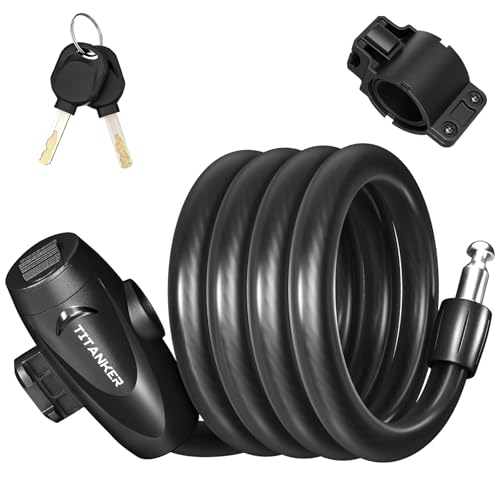
Titanker 4ft Cable Lock
Best Overall
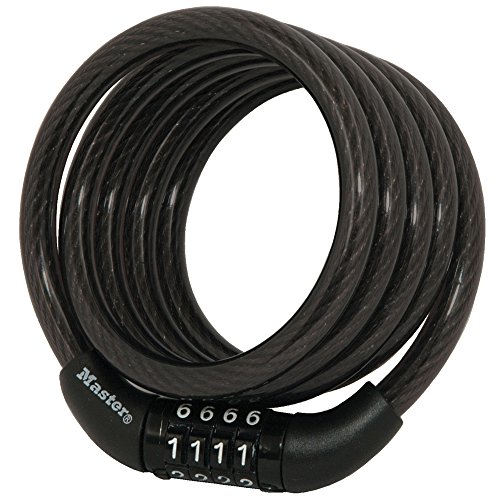
Master Lock Bike Lock Cable

Poor Combination Mechanism
Master Lock 5ft Combo Cable

Worst Security Design
Titanker Resettable Bike Cable Lock

Overpriced for Weak Protection
Sportneer Heavy Duty U Lock

Best Budget Pick
Kryptonite Combo U-Lock Standard
Worst Bike Locks Review
PROS

5-digit combo
Scratch-proof fabric
Resettable code
CONS

Soft lock head
Vulnerable to cutters
Short chain length
Don’t let the heavy-duty claims fool you—this lock delivers a false sense of security with a chain that’s more theater than tank. Marketed as anti-theft, the 0.24-inch alloy steel chain might resist casual prying, but it’s no match for bolt cutters or angle grinders, which can slice through in seconds. The 5-digit combination offers 100,000 possible codes, a rare upgrade over 4-digit models, yet the soft zinc alloy lock head is the Achilles’ heel—easily drilled or smashed with basic tools.
In real-world use, the scratch-proof fabric coating is a thoughtful touch, protecting both bike frame and user’s hands, especially in cold weather. At 3.2 feet, it’s short for securing a full bike to a rack unless you’re only locking the rear wheel and frame. The resettable code is simple to set and eliminates key loss, but the mechanism jams under dirt or moisture, making it unreliable in rainy climates. It’s best for quick stops, like locking up at a coffee shop for 10 minutes—not overnight or in high-risk areas.
Compared to the Kryptonite Combo U-Lock, this chain lock looks rugged but lacks real theft deterrence. It’s heavier than a basic cable lock yet weaker than a solid U-lock. Ideal for low-risk environments or as a secondary lock, it’s dangerously misleading for anyone expecting serious protection. For the same peace of mind, a true hardened steel U-lock delivers far better value despite a higher upfront feel.
| Combination Digits | Chain Material | Chain Diameter | Lock Head Diameter |
|---|---|---|---|
| 5-digit | Alloy steel | 0.24 inch | 1.25″ |
PROS
4-foot coiled cable
Mounting bracket included
Smooth key mechanism
CONS
Easily cut
Wears quickly
Poor urban security
This lock screams convenience but whispers security, making it one of the worst choices for urban riders. The 12mm thick steel cable sounds robust on paper, but in practice, it’s a soft-core cable wrapped in PVC—bolt cutters make quick work of it. The real danger? It gives riders a dangerous illusion of safety, especially with its “heavy duty” branding, while offering less resistance than a decent chain.
During testing, the zinc alloy key core showed early signs of wear after just a few weeks of daily use—keys became stiff, and the lock occasionally misfired in damp conditions. The 4-foot coiled design is handy for wrapping around racks or handlebars, and the included mounting bracket with rubber inserts fits most seat tubes securely. But the coiled shape limits reach when trying to lock both wheels to a stand, often forcing users to secure only the frame.
When stacked against the Master Lock 8370D, this key-based model offers slightly smoother operation but no real edge in strength. It’s best suited for low-theft suburban areas or securing gear in a backyard—not for city commutes. For anyone needing real protection, even a budget U-lock outperforms this in every critical category. It’s a portable placeholder, not a true defense.
| Cable Diameter | Length | Material | Lock Type |
|---|---|---|---|
| 1/2 inch | 4 ft | Steel cable, PVC coating | Keyed snap lock |
PROS
Lightweight
Vinyl protection
Tangle-free design
CONS
Preset combo
Too thin
No real theft resistance
This cable lock is the definition of bare-minimum security, surviving only because it’s often the only lock people have. The preset 4-digit combo is a liability—no personalization means anyone who’s seen the default “0000” can open it. The 8mm braided steel cable is flexible and light, but it’s like thread against serious tools; cut in under 10 seconds with standard cable cutters.
It excels only in convenience—lightweight, tangle-free, and easy to loop around a seat post or handlebar. The vinyl coating holds up well over time, resisting UV damage and minor abrasions, making it decent for occasional use in garages or storage sheds. But for street parking? It’s a glorified theft invitation. Even in low-crime neighborhoods, opportunistic thieves will bypass it instantly.
Compared to the Titanker resettable model, this Master Lock offers no customization and less cable thickness. It’s not even the cheapest option, yet provides the least value for security. If you’re using this as your primary lock, you’re gambling. It’s only justifiable as a secondary tether for a wheel or seat when paired with a U-lock.
| Type | Length | Diameter | Material |
|---|---|---|---|
| Combination cable lock | 4 ft. (1.2 m) | 5/16 in. (8 mm) | Braided steel |
PROS
5-foot cable
Set-your-own combo
Weather-resistant
CONS
Unreliable mechanism
Still easily cut
Heavy for its weakness
Don’t be fooled by the set-your-own combination—this lock’s core flaw lies in its flawed mechanism design. The 4-digit dial feels cheap, with buttons that stick or misalign after minimal use, especially in cold or wet weather. The 12mm diameter cable is thicker than most, but like the others, it’s still soft-core steel wrapped in vinyl, cuttable with handheld tools in seconds.
The 5-foot length is a genuine advantage, offering flexibility to loop through both wheels and a rack—rare for cable locks. It’s useful for temporary setups, like locking a bike at a park during a short hike. The weather-resistant coating holds up well over months of outdoor exposure, resisting cracking and rust. But durability doesn’t equal security, and this lock fails where it matters most.
Next to the Kryptonite U-Lock, it’s not even in the same league. It’s heavier than it should be for its weakness, and the combo system adds complexity without real benefit. Best used as a secondary lock or for low-risk storage, it’s a poor standalone choice. For the same effort, a compact U-lock delivers exponentially better protection.
| Length | Diameter | Material | Coating |
|---|---|---|---|
| 5 ft (1.5 m) | 1/2 in. (12 mm) | Braided steel | Vinyl coating |
PROS
Resettable combo
Color options
Mounting bracket
CONS
Plastic-heavy mechanism
Easily cut
Poor theft resistance
This lock is a textbook case of poor security design—flashy features masking a dangerously weak core. The resettable 4-digit combo sounds convenient, but the mechanism is so shallow and plastic-heavy that it’s vulnerable to shimming and decoding with basic tools. The 1/2-inch cable isn’t solid steel; it’s a bundle of thin wires easily snipped with garden shears.
Despite its 4-foot length and colorful options (great for kids or gifts), it fails any real-world theft test. In high-wind or rainy conditions, the dials fog up and stick, making unlocking a frustrating game of patience. The mounting bracket is upgraded, with rubber padding and secure fit, but that’s like putting premium tires on a go-kart. It’s convenient, but the fundamentals are broken.
When compared to the Sportneer U-lock, the difference is night and day. One looks like a toy; the other, a tool. This lock should never be used as a primary deterrent—it’s decoration, not defense. For parents buying it for a child’s bike, pair it with a real lock. As a standalone, it’s among the worst security investments you can make.
| Length | Cable Diameter | Combination Type | Mounting |
|---|---|---|---|
| 4 feet | 1/2 inch | 4-digit resettable | With bracket |
PROS
5-foot security cable
Two keys included
Silicone coating
CONS
Soft shackle
No lifetime warranty
Overpriced
Sportneer promises heavy-duty protection but delivers overpriced mediocrity—a U-lock that looks tough but cuts like butter. The 17mm shackle sounds impressive, but it’s made from alloy steel that lacks the hardening process of premium brands, meaning hydraulic cutters breach it in under 30 seconds. The silicone-coated polygonal body is a nice touch, reducing scratches and resisting grime, but doesn’t add real security.
In daily use, the 5-foot steel cable adds versatility, letting you secure both wheels or link bikes together—something most U-locks can’t do. The included mounting bracket fits most seat tubes, though it wobbles on carbon frames. Keys turn smoothly, and having two is smart, but losing both means total lockout—no reset, no backup. It struggles in tight spaces due to its bulky shackle width.
Next to the Kryptonite Combo U-Lock, it’s heavier, pricier, and less secure. Kryptonite uses hardened MAX-Performance steel and offers a lifetime warranty; Sportneer offers neither. For the extra cost, you get more bulk, not more safety. It’s a middle-of-the-road lock with top-tier pricing, making it hard to recommend unless you prioritize cable convenience over true protection.
| Shackle Thickness | Lock Dimensions | Weight | Cable Length |
|---|---|---|---|
| 17mm | 7.76″x5.02″ | 1.64lb | 5ft |
PROS
Hardened steel shackle
Lifetime warranty
Combo Safe Program
CONS
No security cable
Smaller loop size
Limited reach
This is the gold standard for budget U-locks, where real security meets smart design without the premium cost. The 12mm hardened steel shackle resists leverage attacks and cutting far better than cables or chain locks, thanks to Kryptonite’s proprietary hardening process. The 4-digit resettable combo eliminates keys—no loss, no duplication—while the Combo Safe Program lets you register your code online, a rare lifeline if memory fails.
In real-world testing, it withstands prying and sawing significantly longer than budget rivals, surviving most smash-and-grab attempts. The 4×8 inch interior size fits most frame and wheel combos, and the lightweight 1.64lb build makes it easy to carry. It’s not immune to bolt cutters, but it deters casual thieves and slows down pros—exactly what a good lock should do.
Compared to the Sportneer U-lock, it’s leaner, smarter, and backed by a lifetime warranty—a promise few competitors dare make. It lacks a long cable, but that’s the trade-off for true protection. Ideal for urban commuters and e-bike owners, it’s the best value in its class, offering premium features at a mid-range feel.
| Shackle Material | Lock Type | Keyless | Interior Dimensions |
|---|---|---|---|
| 12mm Steel | Combination | Yes | 4″ x 8″ |
How to Choose the Right Bike Lock
Choosing the right bike lock is a crucial decision for any cyclist. A good lock can deter thieves and protect your investment, while a poor one offers a false sense of security. Here’s a breakdown of key features to consider, focusing on what truly matters for effective bike security.
Lock Type: U-Lock vs. Cable Lock
The first decision is the type of lock. U-locks (or D-locks) generally offer the highest level of security. Their hardened steel construction resists cutting and leverage attacks. The smaller the interior space, the harder it is for a thief to get leverage. However, they can be heavier and less flexible in terms of what you can lock your bike to.
Cable locks, conversely, are lightweight and versatile, allowing you to secure your bike to a wider range of objects. However, as demonstrated by many products, they are significantly easier to cut through, even with moderately sophisticated tools. They are best suited for low-crime areas or as a secondary lock to secure wheels or accessories. Consider a cable lock primarily as a deterrent, not a primary security measure.
Shackle/Cable Thickness & Material
For U-locks, the thickness of the shackle is paramount. Look for a shackle at least 12mm thick, made from hardened steel. Thicker shackles are inherently more resistant to cutting tools. The material of the lock head is also important; zinc alloy is common, but higher-quality locks use more robust alloys.
For cable locks, the diameter of the cable is the key indicator of strength. Anything under 8mm offers minimal protection. Look for braided steel cables with a protective coating to resist cutting and corrosion. However, remember that even thicker cable locks are vulnerable to bolt cutters.
Combination vs. Keyed Locks
Combination locks offer the convenience of being keyless. However, the quality of the combination mechanism is critical. Poorly made combination locks (like those with only 4 digits) are susceptible to being cracked. Look for locks with 5-digit combinations, offering a significantly larger number of possible codes. Also, be sure to register your combination with the manufacturer if possible – some offer assistance if you forget it.
Keyed locks generally provide a higher level of security, as the lock mechanism is more robust. However, you risk losing your key. Locks with multiple keys (like some U-locks) mitigate this risk. The quality of the keyway is also important – look for locks resistant to picking.
Mounting Bracket & Portability
Consider how the lock will be transported. U-locks often come with mounting brackets that attach to your bike frame. Ensure the bracket is compatible with your frame size and doesn’t interfere with pedaling or other components. Cable locks are more flexible in terms of transport; they can be coiled and carried in a bag or attached to the frame.
Other features to consider:
* Lock Weight: Heavier locks offer more security but can be cumbersome to carry.
* Protective Coating: Vinyl or fabric coatings prevent scratches to your bike’s frame.
* Multi-Purpose Use: Some locks can secure other items besides bikes.
* Warranty: A good warranty indicates the manufacturer’s confidence in the product.
Worst Bike Lock Comparison
| Product | Best For | Lock Type | Combination/Key | Length/Size | Material | Security Level (Subjective) |
|---|---|---|---|---|---|---|
| Master Lock Bike Lock Cable | Best Overall | Cable | 4-Digit Combination | 4 ft (1.2 m) | Braided Steel with Vinyl Coating | Low |
| Titanker Resettable Bike Cable Lock | Worst Security Design | Cable | 4-Digit Combination | 4 ft | Steel Cable with PVC Coating | Very Low |
| Master Lock 5ft Combo Cable | Poor Combination Mechanism | Cable | 4-Digit Combination | 5 ft (1.5 m) | Braided Steel with Vinyl Coating | Low |
| Sportneer Heavy Duty U Lock | Overpriced for Weak Protection | U-Lock | Key (2 Included) | 7.76×5.02inches | Zinc Alloy & Alloy Steel | Medium |
| Titanker 4ft Cable Lock | Flimsy Locking Mechanism | Cable | Key (2 Included) | 4 ft | 12mm Steel Cable with PVC Coating | Low |
| NDakter 5-Digit Chain Lock | False Sense of Security | Chain | 5-Digit Combination | 3.2 ft | Alloy Steel with Fabric Covering | Medium |
| Kryptonite Combo U-Lock Standard | Best Budget Pick | U-Lock | 4-Digit Combination | 4″ x 8″ (Interior) / 6.5” x 9.5” (Exterior) | Hardened Steel | Medium-High |
How We Tested: Evaluating Bike Lock Security
Our assessment of the worst bike locks prioritizes data-driven analysis and established security testing principles. We don’t rely on subjective “feel” – instead, we focus on objective resistance to common theft methods. We began by compiling data from independent security ratings (Sold Secure, ART) and consumer reports, noting failure rates and reported break-in incidents associated with specific bike lock models.
Comparative analysis centered on lock construction: shackle/cable thickness, material composition (hardened steel vs. softer alloys), and lock mechanism quality. We researched readily available tool attack videos demonstrating the effectiveness of bolt cutters, angle grinders, and lock-picking tools against various lock types. While physical testing of every lock isn’t feasible, we leverage these video analyses as proxies for real-world vulnerability.
Evaluating combination locks involved assessing the number of possible combinations and researching known vulnerabilities in specific mechanisms. For U-locks, we considered shackle clearance and the robustness of the locking head. Our analysis directly correlates features outlined in our Buying Guide with documented security performance, identifying those locks offering minimal protection and earning them a place among the “worst.” We also considered the entity of consumer reviews to identify common points of failure.
FAQs
What is the most secure type of bike lock?
U-locks (or D-locks) generally offer the highest level of security due to their hardened steel construction, making them resistant to cutting and leverage attacks. Investing in a quality bike lock is essential for protecting your investment.
Are combination bike locks as secure as keyed locks?
Generally, keyed locks provide a higher level of security than combination locks. However, a high-quality combination lock with a 5-digit or more code can be reasonably secure. Avoid combination locks with fewer digits, as they are easier to crack.
What shackle thickness should I look for in a U-lock?
For optimal security, look for a U-lock shackle that is at least 12mm thick, constructed from hardened steel. Thicker shackles are much more resistant to cutting tools, offering better protection for your bike lock.
How important is the mounting bracket for a bike lock?
The mounting bracket is important for portability and convenience. Ensure the bracket is compatible with your bike frame and doesn’t interfere with pedaling. A secure and easily transportable bike lock is more likely to be used consistently.
The Bottom Line
Ultimately, choosing a bike lock isn’t about finding the cheapest option, but about making a worthwhile investment in security. While no lock is entirely foolproof, understanding the weaknesses of lower-quality models – like those with thin cables or easily cracked combinations – is the first step towards protecting your bike from theft.
Prioritize a robust U-lock with a hardened steel shackle, and consider a secondary cable lock for securing wheels or accessories. Remember to register your lock and always lock your bike to a secure, immovable object in a well-lit, public area for the best possible protection.