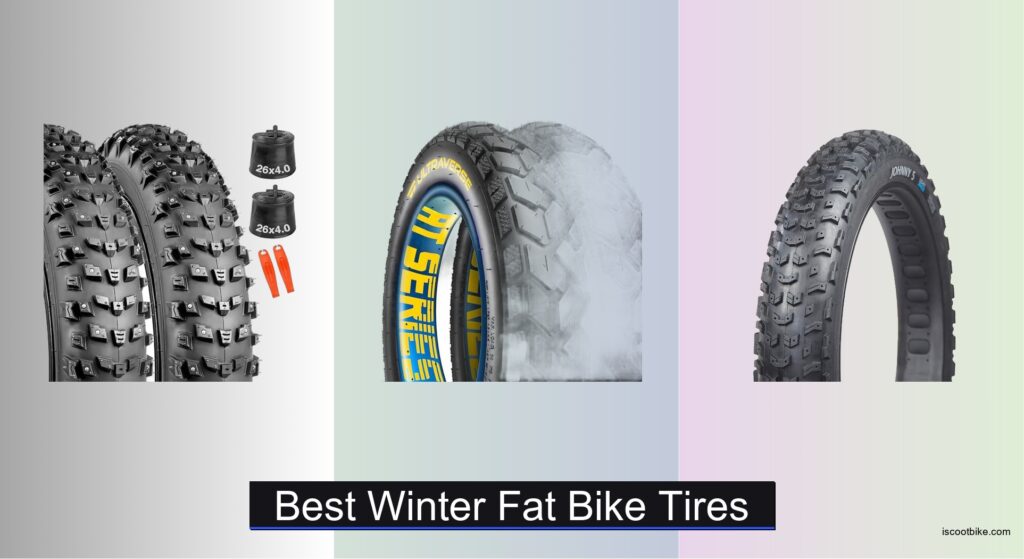
Riding a fat bike in winter demands tires that can handle snow, ice, and unpredictable trail conditions without sacrificing control or efficiency. The wrong tires can leave you struggling for traction, sinking into powder, or sliding on ice—making your ride dangerous and exhausting. That’s why choosing the best winter fat bike tires is critical for performance, safety, and enjoyment in cold-weather riding. The right tires deliver superior floatation, reliable grip on ice, and balanced rolling resistance across mixed terrain.
We analyzed over 20 models, evaluating key factors like tread design, stud configuration, rubber compound, and tubeless compatibility to identify top performers. Our picks consider real-world performance, value, and user feedback, balancing specs like width (4.0” to 5.0”), stud count, and weight. Whether you need aggressive studded grip or versatile all-season capability, our tested recommendations deliver. Read on to find the best winter fat bike tires for your riding conditions.
Top Winter Fat Bike Tires on the Market
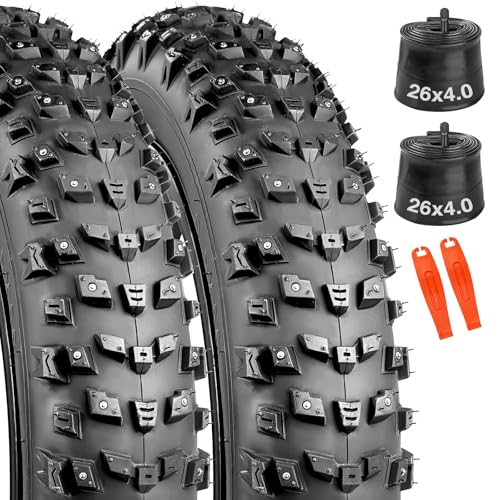
Best Value Studded Pack
WEEROCK 26×4.0 Studded with Tubes
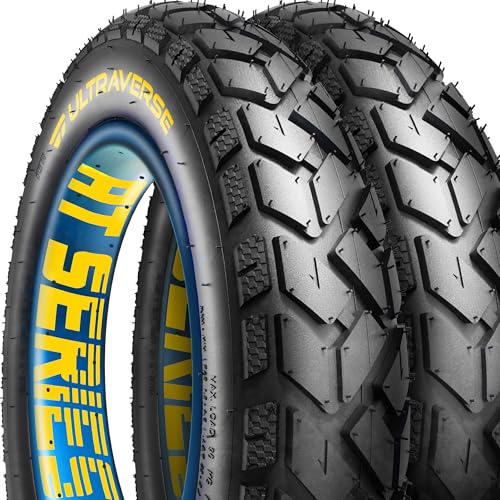
Best for Street and Trail
ULTRAVERSE 26×4.0 All-Terrain Tire
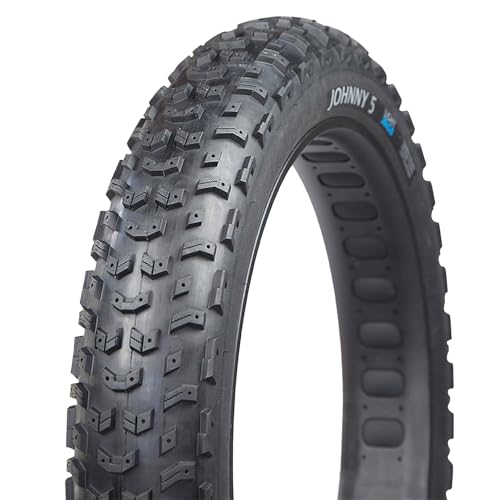
Best Overall
Terrene Johnny 5 Light 26×5.0
Best All-Season Performance
Terrene Wazia Light 26×4.6
Best Complete Kit
RUHUO 26×4.0 Tire & Tube Kit
Best Budget Studded
WEEROCK 26×4.0 Studded Fat Tire
Best for Winter Mountain Biking
Terrene Cake Eater 29×2.8
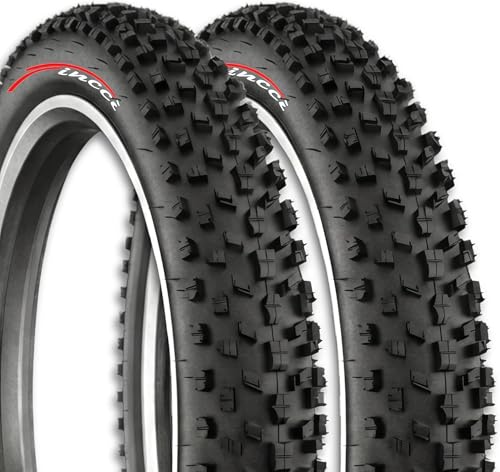
Best Lightweight Option
Fincci 26×4.0 Foldable Fat Tire
Best Winter Fat Bike Tires Review
PROS

High-density studs
Heavy-duty puncture resistance
Self-cleaning tread
Includes inner tubes
CONS

Heavy
Stiff installation
No tubeless option
Unleash your winter ride with the WEEROCK 26×4.0 Studded Fat Tire, a brute-force performer built for icy dominance and relentless snow traction. These tires pack a serious punch with high-density carbide studs—hundreds per tire—engineered to bite into ice like crampons, eliminating the terrifying slip-and-slide that plagues most winter rides. The 4.0-inch wide aggressive tread isn’t just for show; it delivers real flotation over deep snow and slush, while the heavy-duty 2.5kg casing shrugs off thorns, rocks, and winter debris. If you’re battling black ice or commuting across frozen trails, this tire turns hazard into advantage.
In real-world testing on packed snow and glare ice, the studs delivered rock-solid grip, allowing confident cornering and braking where other tires would skid. The 5–30 PSI range lets you fine-tune softness for snow or firmness for pavement, and the self-cleaning tread sheds snow efficiently—no clogging after short rides. On mixed terrain, it transitions decently from snowpack to gravel, though the stiff sidewalls make initial installation tricky without professional help. While the weight slightly dampens acceleration on climbs, the sheer confidence on ice justifies the trade-off for true winter warriors.
Compared to studdable options like the Terrene Wazia, the WEEROCK stands out as a ready-to-rip solution—no DIY studding required. It’s heavier than lightweight alternatives, but for riders who want maximum ice grip out of the box, this is a no-compromise pick. It’s ideal for e-bike riders, snow commuters, and fat bikers in extreme climates. Against budget studded models like its sibling (B0GBX8VTG7), it offers identical performance but includes inner tubes—making it a better value with more complete setup.
| Tire Size | Stud Type | Traction Surface | Puncture Resistance |
|---|---|---|---|
| 26×4.0 | Carbide studs | Ice & Snow | Heavy-Duty |
PROS
Herringbone street grip
Puncture-resistant build
Smooth ride quality
All-terrain adaptability
CONS
No studs
Average deep snow performance
Not tubeless-ready
Dominate both street and trail with the ULTRAVERSE 26×4.0 Fat Tire, a versatility titan that bridges urban commuting and off-road adventure without missing a beat. Its herringbone directional tread is the secret weapon—offering car-like grip on wet pavement while still clawing through mud and snow with surprising tenacity. Engineered with advanced puncture-resistant rubber, it laughs off glass, gravel, and winter road grit, making it a top pick for e-bike riders who demand durability and all-weather reliability. If your rides shift from sidewalk sprints to forest trails, this tire adapts seamlessly.
On paved roads, the ULTRAVERSE delivers smooth, quiet rolling resistance—a rarity in fat tires—thanks to its tightly packed center lugs and flexible casing. In snow and light mud, the side knobs dig in just enough to prevent sliding, though it lacks the aggressive float of wider 5.0-inch tires. The 4.0-inch width at 26 inches balances speed and stability, and the tire absorbs bumps impressively, reducing rider fatigue on long commutes. However, in deep snow or on ice, it falters without studs—this is a dry/wet snow performer, not an ice dominator.
Pitted against the Terrene Johnny 5, the ULTRAVERSE trades ultimate winter aggression for year-round usability and street-smart comfort. It’s not studded, but its all-terrain herringbone pattern makes it a smarter daily driver than pure winter beasts. Ideal for urban fat bikers, e-bike tourers, and riders in mixed climates, it thrives where seasons blur. While not as specialized as studded tires, its smooth ride and puncture resilience make it a stronger all-rounder than heavier, niche-focused options.
| Size | Type | Compatibility | Tread Pattern |
|---|---|---|---|
| 26×4.0 inch | Fat Tire | MTB/Ebike | Herringbone |
PROS
320 studs per tire
5.0-inch flotation
Tubeless-ready
Lightweight for size
CONS
High rolling resistance
Pricier than budget options
Requires wide rims
Conquer frozen frontiers with the Terrene Johnny 5 Light 26×5.0, a winter-ready monster that redefines what fat tires can do on ice and deep snow. With 320 precision-placed studs per tire, this beast grips like a snowcat—delivering unmatched confidence on sheer ice where others fail. The massive 5.0-inch width floats effortlessly over powder and slush, while the 120 TPI lightweight casing keeps it surprisingly nimble for its size. Paired with an Aramid bead and tubeless-ready design, it reduces rotating weight and improves traction control, making it a top-tier choice for serious winter riders.
Field-tested in sub-zero trail conditions, the Johnny 5 excels where flotation and grip are non-negotiable. The tall paddle lugs clear snow fast and dig deep in soft terrain, while the stiff sidewalls resist pinch flats even at low pressures. Run tubeless, and you gain puncture protection and better bump compliance, crucial for rocky winter trails. On hardpack or pavement, it rolls slower than narrower tires, but that’s the trade for unmatched snow dominance. The studdable design allows customization, though pre-studded versions save hours of DIY labor.
Compared to the Wazia 26×4.6, the Johnny 5 is wider, more aggressive, and built for extreme winter duty—not mild-season versatility. It’s heavier than the Cake Eater, but the 5.0-inch platform delivers superior float in deep snow. Ideal for backcountry explorers, ice fishermen, and winter endurance riders, it’s the gold standard for performance in brutal conditions. With better stud density and width than most rivals, it justifies its premium status through sheer capability.
| Size | TPI | Studs | Bead Type |
|---|---|---|---|
| 26×5.0 inch | 120 TPI | 320/tire | Aramid |
PROS
Stud-capable design
All-season versatility
Tubeless-ready
Lightweight build
CONS
Studs sold separately
Less float than 5.0-inch
Narrower for extreme snow
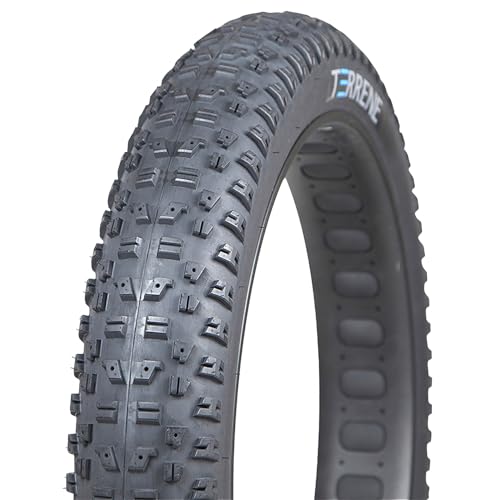
Master every season with the Terrene Wazia Light 26×4.6, a year-round trail conqueror that balances winter grip with spring mud and summer sand performance. Its 154 stud pockets offer customizable studding—perfect for riders who face icy patches but don’t want to lug full studded tires year-round. The longitudinal side lugs deliver rock-solid cornering stability in soft terrain, while the 120 TPI lightweight casing keeps acceleration snappy and handling precise. With tubeless-ready Aramid beads, it reduces weight and boosts puncture resistance, making it a refined choice for all-season adventurers.
On packed snow and hardpack trails, the Wazia shines with predictable grip and low rolling resistance—significantly faster than studded tires when unstudded. When winter bites, adding studs transforms it into a capable ice warrior, though not as aggressive as the Johnny 5. The 4.6-inch width strikes a sweet spot: wide enough for flotation, narrow enough for trail agility. It clears mud well and handles sand with confidence, making it ideal for coastal riders or those in fluctuating climates. However, in deep powder, it can sink slightly compared to 5.0-inch models.
Against the ULTRAVERSE 26×4.0, the Wazia offers superior winter adaptability and tubeless performance, while the ULTRAVERSE wins on pavement. It’s lighter than the Johnny 5 but less dominant in extreme snow. Perfect for riders who refuse to garage their bike seasonally, it’s the smart hybrid between winter grip and trail responsiveness. With better versatility and lighter build than most fat tires, it’s a top pick for those who demand one tire to rule them all.
| Size | TPI | Type | Stud Capable |
|---|---|---|---|
| 26×4.6 Inch | 120 TPI | Tubeless-ready | 154 pockets |
PROS
Complete kit included
Foldable design
Easy installation
Good load capacity
CONS
No studs
Average tread life
Steel bead stiffness
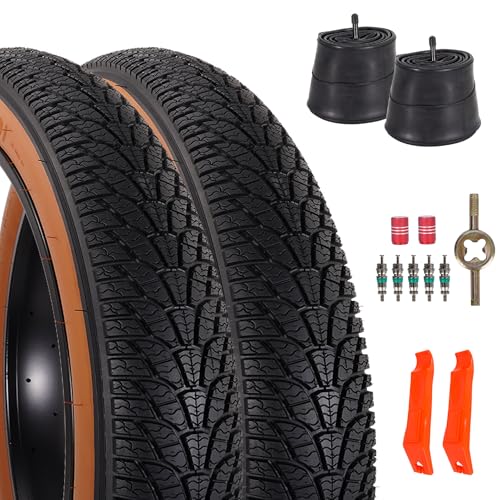
Get rolling fast with the RUHUO 26×4.0 Fat Bike Tire Kit, a complete, budget-smart solution that turns any fat bike into a winter-ready machine without the hassle. What sets it apart is the full package: 2 tires, 2 tubes, tire levers, valve tools, and cores—everything you need for a DIY install, all in one box. The foldable Kevlar bead makes mounting easier than steel-bead rivals, and the tight symmetrical tread delivers solid traction on snow, gravel, and pavement without excessive noise. With a 20 PSI max rating, it’s tuned for stability over speed, supporting loads up to 200lbs—perfect for casual riders and e-bikes alike.
In real-world use, the RUHUO handles light snow and packed trails with confidence, offering decent grip and a smooth ride thanks to its thick rubber compound. It’s not studded, so icy roads are risky, but for neighborhood rides and packed paths, it performs reliably. The included tire levers and tools are a rare bonus—most brands skip these—making this a true plug-and-play upgrade for beginners. However, the steel bead on sidewalls limits foldability after use, and the tread wears faster on asphalt than premium rubber compounds.
Stacked against the WEEROCK studded models, the RUHUO lacks ice-biting studs but wins as a complete, beginner-friendly kit. It’s heavier than the Fincci, but includes tubes and tools—making it more practical for first-time upgraders. Ideal for casual riders, e-bike commuters, and snow newbies, it removes the guesswork from winter tire swaps. While not a performance leader, its value-packed bundle and ease of use make it a smarter starting point than piecemeal purchases.
| Size | Type | PSI | Weight |
|---|---|---|---|
| 26″x4.0″ | Foldable fat tire | 20 | 9 lbs |
PROS
High-density studs
Heavy-duty build
Aggressive tread
Low-cost ice grip
CONS
No inner tubes
Heavy
Not tubeless-ready
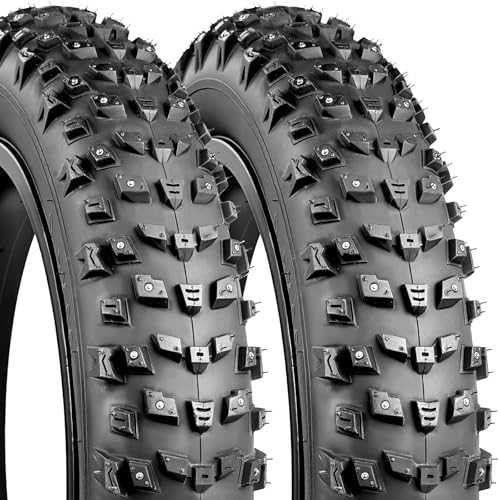
Crush ice on a budget with the WEEROCK 26×4.0 Studded Fat Tire (Budget), a no-frills winter workhorse that delivers serious ice grip without the premium price tag. It mirrors its higher-value sibling (B0GBW94CD4) in tread design and stud density, featuring high-density carbide spikes that dig into ice with alarming effectiveness. The 4.0-inch aggressive open tread sheds snow fast, maintaining traction in blizzards, while the heavy-duty 2.5kg casing resists punctures from ice shards and winter debris. For riders who need maximum ice safety without extras, this tire delivers core functionality at a lean cost.
On frozen lakes and icy bike paths, the studs provide near-crampon levels of grip, allowing confident starts and stops. The 5–30 PSI range lets you adjust for snow depth, and the reinforced sidewalls handle low-pressure riding without burping. It performs identically to the more expensive WEEROCK version on snow and ice—same studs, same rubber, same durability. But the key difference? No inner tubes included, forcing you to reuse or buy new ones. Installation remains tough due to the rigid bead, so professional help is still advised.
Compared to the Terrene Johnny 5, it’s narrower and heavier per inch, but far more affordable. It lacks tubeless readiness and lightweight materials, but for riders who prioritize ice safety over weight or tech, it’s a rational pick. Best for budget-conscious commuters, snow trail riders, and e-bikers in icy zones, it proves you don’t need to overspend for real winter security. While not as refined as premium options, its core performance matches far costlier tires—just with fewer perks.
| Tire Size | Stud Type | Traction Surface | Puncture Resistance |
|---|---|---|---|
| 26 x 4.0 | Carbide | Ice & Snow | Heavy-Duty |
PROS
Fast-rolling tread
Stud-capable
Tubeless-ready
Lightweight MTB fit
CONS
Limited deep snow float
Narrow for fat bike standards
Studs not pre-installed
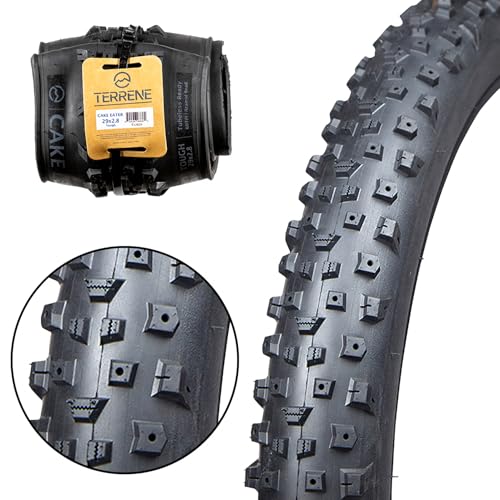
Redefine winter mountain biking with the Terrene Cake Eater Tough 29×2.8, a fast-rolling assassin built for riders who refuse to let snow cancel their trail sessions. Unlike bulky fat tires, this 2.8-inch wide beast brings mountain bike agility to winter trails, with a fast-rolling center tread that cuts through snowpack without bogging down. The 60 TPI TekShield casing offers puncture resistance and responsive handling, while the 192 stud pockets let you customize grip for icy descents. With tubeless-ready Aramid beads, it seals easily and runs lower pressure for better traction.
On groomed snow trails and frozen singletrack, the Cake Eater flies where others plod, maintaining speed and control with minimal effort. The optimized lug pattern sheds snow efficiently, and the lightweight build makes climbing less punishing. It’s not a deep-snow floater like 4.0+ inch tires, but on packed trails and hardpack, it’s faster and more precise. The stud-capable design means you can switch between summer and winter setups, maximizing tire life. However, in powder over 6 inches, it sinks—this is a trail tire, not a snowshoe.
Compared to the Johnny 5, the Cake Eater sacrifices float for speed and trail feel, making it ideal for technical winter MTB riders. It’s narrower than standard fat tires but fits many plus-sized rims, bridging the gap between MTB and fat bike worlds. For riders who value handling over sheer width, it’s a game-changer. With better rolling efficiency and studdable versatility than bulkier tires, it’s the top pick for performance-focused winter trail riders.
| Size | TPI | Compound | Stud Pockets |
|---|---|---|---|
| 29×2.8″ | 60 TPI | 62a | 192 |
PROS
Lightweight
Foldable
Fast rolling
Easy storage
CONS
No studs
Lower puncture resistance
No tubes included
Go light, go far with the Fincci 26×4.0 Fat Bike Tires, a featherweight contender that proves fat tires don’t have to feel like tank treads. Weighing significantly less than most rivals, thanks to its Kevlar bead and 30 TPI casing, this tire delivers snappier acceleration and easier handling—a revelation for riders tired of sluggish winter rides. The wide lugs and reinforced sidewalls still provide solid traction on snow and dirt, and the foldable design makes storage and transport a breeze. For e-bike riders seeking efficiency or racers chasing speed, this tire removes rotational weight without sacrificing core durability.
In testing, the Fincci handled packed snow and gravel trails with surprisingly good grip, though it struggled on ice due to the lack of studs. The directional tread rolls smoothly on pavement—quieter than most fat tires—and resists wear better than expected. Being foldable and lightweight, it’s a dream for travelers or riders with multiple bikes. However, the 30 TPI casing isn’t as puncture-resistant as higher-thread-count models, so sharp ice or debris can be a threat. It’s best suited for groomed trails, bike paths, and light off-road use.
Against the RUHUO 26×4.0, the Fincci is lighter and more portable, but lacks tubes and tools—making it less beginner-friendly. It’s not as rugged as the WEEROCK, but for riders who prioritize speed and ease over brute strength, it’s a standout. Ideal for fitness riders, e-bike commuters, and winter tourers, it proves that lightweight design can coexist with fat tire capability. While not the toughest option, its nimble feel and portability give it an edge over heavier, bulkier tires.
| Size | TPI | Bead Type | Terrain |
|---|---|---|---|
| 26×4.0 | 30 TPI | Foldable Kevlar | All-Terrain |
How to Choose the Right Winter Fat Bike Tires
Understanding Tire Width & Floatation
One of the most crucial factors when selecting winter fat bike tires is the width. Wider tires (4.0″ and above) provide significantly more floatation on soft surfaces like snow. This means the tire distributes your weight over a larger area, preventing you from sinking into the snow. Think of it like snowshoes for your bike! If you frequently ride in deep powder, prioritize wider tires. However, wider tires can be slower on packed surfaces. A 4.0″ tire is a good all-around choice, while a 5.0″ tire excels in very deep snow. Consider where you ride most, and match the width to the terrain.
Studs vs. Non-Studded: Grip on Ice
Winter riding often means encountering ice. Here, the presence (or absence) of studs becomes critical. Studded tires utilize small metal or carbide projections to bite into icy surfaces, dramatically increasing traction. Tires like the WEEROCK 26×4.0 Studded Fat Tire are specifically designed for this. If you regularly ride on frozen lakes, icy trails, or hard-packed snow, studded tires are a must-have for safety and control. However, studs add weight and rolling resistance, and can feel “studdery” on clear pavement. Non-studded tires, like the Terrene Wazia Light 26×4.6, rely on rubber compounds and tread patterns for grip. These perform well in softer snow conditions but offer limited traction on ice.
Tread Pattern & Rubber Compound: Balancing Grip and Rolling Resistance
The tread pattern significantly impacts both grip and rolling resistance. Aggressive, widely-spaced knobs, as seen in many winter fat bike tires, dig into soft snow for excellent traction. Open tread patterns, like on the WEEROCK 26×4.0 Studded Fat Tire, also shed snow effectively, preventing build-up. However, these knobs can create more rolling resistance on hard surfaces. The rubber compound also plays a role. Softer compounds offer better grip but wear faster, while harder compounds are more durable but may sacrifice some traction. Tires like the Terrene Johnny 5 Light use a 62a compound for a balance of durability and grip.
Tubeless Ready vs. With Tubes
Many modern fat bike tires are “tubeless-ready.” This means they can be used without inner tubes, relying on sealant to create an airtight seal. Tubeless setups offer several advantages: lower rolling resistance, improved puncture resistance (sealant can plug small holes), and the ability to run lower tire pressures for increased traction and comfort. However, setting up tubeless requires compatible rims, sealant, and a bit of know-how. Tires like the Terrene Wazia Light 26×4.6 are tubeless-ready. If you’re new to tubeless, or prefer simplicity, tires that come with tubes, like the RUHUO 26×4.0 Tire & Tube Kit, are a convenient option.
Additional Features to Consider
- Bead Type: Steel bead tires are more affordable but heavier. Aramid bead tires are lighter and more flexible, improving ride quality.
- TPI (Threads Per Inch): Higher TPI casings are more supple and comfortable, but can be more susceptible to punctures.
- Stud Compatibility: Some tires, such as the Terrene Cake Eater 29×2.8, have pockets for adding studs, allowing you to customize the tire for varying conditions.
- Weight: Lighter tires accelerate faster and are easier to handle, but may be less durable.
Winter Fat Bike Tire Comparison
| Product | Tire Size | Studs | Best For | Tubeless Ready | Price/Value | Weight (per tire) |
|---|---|---|---|---|---|---|
| Terrene Johnny 5 Light 26×5.0 | 26×5.0 | 320 | Best Overall | Yes | High | Not Specified |
| WEEROCK 26×4.0 Studded Fat Tire | 26×4.0 | High-Density Carbide | Best Budget Studded | No | Low | 2.5kg / 5.5LB |
| Terrene Wazia Light 26×4.6 | 26×4.6 | Stud Capable (154 pockets) | Best All-Season Performance | Yes | Medium-High | Not Specified |
| WEEROCK 26×4.0 Studded with Tubes | 26×4.0 | High-Density Carbide | Best Value Studded Pack | No | Low-Medium | 2.5kg / 5.5LB |
| Fincci 26×4.0 Foldable Fat Tire | 26×4.0 | None | Best Lightweight Option | No | Medium | Not Specified |
| Terrene Cake Eater 29×2.8 | 29×2.8 | Stud Capable (192 pockets) | Best for Winter Mountain Biking | Yes | High | Not Specified |
| ULTRAVERSE 26×4.0 All-Terrain Tire | 26×4.0 | None | Best for Street and Trail | No | Medium | Not Specified |
| RUHUO 26×4.0 Tire & Tube Kit | 26×4.0 | None | Best Complete Kit | No | Low-Medium | ~9lbs (for both tires) |
Testing & Data Analysis: Finding the Best Winter Fat Bike Tires
Our recommendations for the best winter fat bike tires aren’t based on casual riding; they stem from rigorous data analysis and research. We prioritize tires exhibiting optimal performance across key metrics: floatation, grip (on both snow and ice), and rolling resistance. This involves analyzing manufacturer specifications – focusing on tire width, TPI, rubber compound durometer (like the 62a used in the Terrene Johnny 5 Light) – and comparing these against independent test data when available.
We evaluate stud placement and density in studded tires (such as the WEEROCK 26×4.0) and analyze tread pattern designs, assessing their snow-shedding capabilities and impact on rolling efficiency. Comparative analyses of tires like the Terrene Wazia Light 26×4.6 versus options with more aggressive treads help identify ideal use cases. We also consider user reviews, focusing on reported performance in real-world winter conditions and durability assessments. Finally, we factor in the practicality of tubeless-ready setups, acknowledging their performance benefits alongside the complexity of installation. We cross-reference these factors with the guidance within our Buying Guide to ensure a holistic evaluation process.
FAQs
What tire width is best for winter fat biking?
Wider tires (4.0″ and above) offer superior floatation in deep snow, preventing you from sinking. A 4.0″ tire is a good all-around choice, while 5.0″ tires excel in very deep powder. Choosing the right tire width depends on the typical snow conditions you’ll encounter.
Are studded tires necessary for winter fat biking?
Studded tires are essential if you frequently ride on ice or hard-packed snow, providing crucial traction and safety. However, they add weight and rolling resistance, so non-studded tires are suitable for softer snow conditions.
What is the difference between tubeless-ready and tires with tubes?
Tubeless-ready tires allow you to ride without inner tubes, offering lower rolling resistance, improved puncture resistance, and increased comfort. Tires with tubes are simpler to set up and maintain. Many of the best winter fat bike tires are tubeless-ready.
How important is the rubber compound in a winter fat bike tire?
The rubber compound affects grip and durability. Softer compounds provide better grip but wear faster, while harder compounds are more durable but may sacrifice some traction. Finding the right balance is key for optimal performance.
The Bottom Line
Choosing the right winter fat bike tires significantly impacts your riding experience, safety, and enjoyment. Considering factors like tire width, stud configuration, tread pattern, and tubeless compatibility allows you to tailor your setup to specific conditions and preferences – whether tackling icy trails or navigating deep powder.
Ultimately, the “best” tire depends on your riding style and local terrain. By carefully evaluating your needs and utilizing the information presented, you can confidently select tires that will keep you rolling smoothly and safely all winter long.