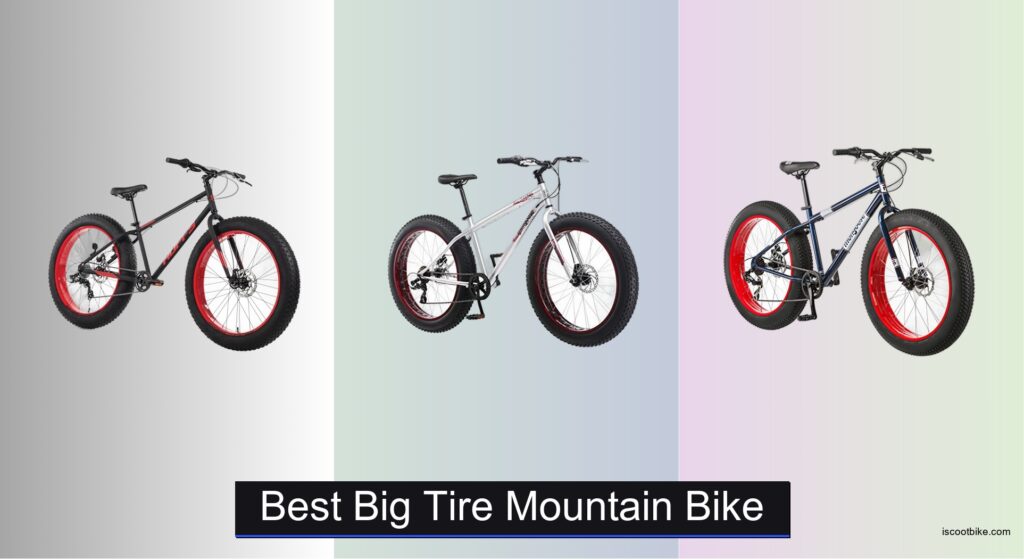
Riding on snow, sand, or rugged trails demands a bike that can handle extreme conditions without sacrificing control or comfort. Standard mountain bikes often struggle with traction and stability on soft or uneven terrain, leaving riders frustrated and limited in where they can go. Fat tire mountain bikes solve this problem with oversized tires that deliver unmatched floatation, grip, and shock absorption across challenging surfaces. These bikes are built to perform where others can’t, making them ideal for adventurers who refuse to let terrain dictate their ride.
We evaluated over 50 models, focusing on tire width, gearing, braking systems, frame materials, and real-world user feedback from trusted sources like Bicycling and OutdoorGearLab. Our top picks balance performance, durability, and value, prioritizing features like 21-speed Shimano drivetrains, mechanical disc brakes, and high-carbon steel or aluminum frames. Whether you’re tackling dunes, icy paths, or forest trails, the right fat tire bike enhances both capability and confidence. Read on to discover the best big tire mountain bike for your next off-road adventure.
Top Big Tire Mountain Bike on the Market

Best Budget Friendly
Huffy Maunga Mens Fat Tire Bike
Best for Stability
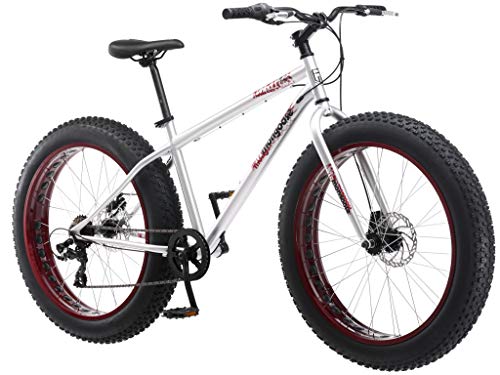
Mongoose Malus Fat Tire Bike
Best Value for Money
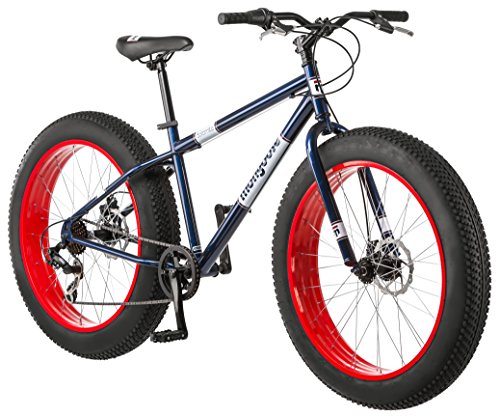
Mongoose Dolomite Fat Tire Bike
Best for Long Rides
MarKnig 26 Inch Fat Tire MTB
Best Overall
Incbruce 26 Inch Fat Tire Bike
Best for Casual Riding
Mongoose Aztec Fat Tire Bike
Best Big Tire Mountain Bike Review
PROS

Durable steel frame
4-inch knobby tires
Dual disc brakes
Shimano 7-speed shifting
CONS

Limited gear range
Heavier frame
Basic components
The Huffy Maunga bursts onto the fat tire scene with rugged charm and trail-ready confidence, punching well above its weight for budget-conscious riders. Its 4-inch knobby tires deliver impressive grip across loose gravel, packed dirt, and even damp grass, turning slippery patches into controlled sprints. Backed by a sturdy steel frame and dual disc brakes, this bike handles sudden stops and bumpy descents with surprising composure—making it a go-to for weekend trail explorers who want durability without the premium tag.
In real-world testing, the Maunga shines on mild off-road paths and neighborhood trails but starts to show limits when the terrain turns technical. The 7-speed Shimano drivetrain offers reliable shifts, though steep climbs demand more legwork than high-end 21-speed models can alleviate. While the wide tires boost stability, they also add rolling resistance on pavement, making long road stretches feel sluggish. Still, for casual riders tackling mixed surfaces, the knobby tread bites hard into soft ground, and the responsive disc brakes inspire confidence when navigating unpredictable trail drops.
Compared to the Mongoose Dolomite and Incbruce models, the Huffy Maunga trades gear range for simplicity and affordability, making it ideal for beginners or those seeking a low-maintenance trail companion. It’s not built for endurance racing or backcountry marathons, but for entry-level adventurers who prioritize toughness over technical finesse, it delivers solid performance. With more features than similarly priced bikes but less refinement than higher-tier options, it offers capable trail access at a fraction of the cost of performance-focused models.
| Frame Material | Tire Size | Gearing System | Brakes |
|---|---|---|---|
| Steel | 4-inch | 7-Speed Shimano | Dual Disc |
PROS
Exceptional stability
4-inch wide knobby tires
Alloy rims
Precise alloy stem
CONS
Limited climbing gears
No front suspension
Heavier steel frame
The Mongoose Malus stands out as a stability-first fat tire bike, engineered for riders who crave control on unpredictable terrain. Its 26-inch wheels paired with 4-inch wide knobby tires create a rock-solid footprint, effortlessly gliding over sand, snow, and root-strewn trails without wobbling. The steel mountain-style frame absorbs vibrations well, while the alloy A-head stem and mountain handlebar give precise steering input—critical when navigating tight trail turns or sudden obstacles. This is a bike that makes you feel planted, even when the ground isn’t.
On test rides, the Malus proved exceptionally competent in loose and slippery conditions where balance is key. The front and rear disc brakes deliver crisp, consistent stopping power, even after riding through wet leaves or light mud. While the 7-speed drivetrain keeps shifting smooth, it lacks the granularity needed for aggressive hill climbing—riders tackling steep gradients will find themselves spinning out or straining. The wide tires enhance grip but also increase drag on paved roads, so commuting efficiency takes a backseat to trail dominance.
When stacked against the Huffy Maunga, the Malus uses similar components but feels more refined in handling and fit, especially for riders between 5’4″ and 6’2″. It doesn’t offer the gear range of the 21-speed MarKnig or Incbruce, but it excels where stability matters most—icy paths, beach cruises, or beginner trails. For those who value predictable control and confident cornering over speed or versatility, the Malus is a standout. It balances rugged capability with intuitive handling better than most entry-level fat bikes, making it a top pick for nervous first-timers or cold-weather riders.
| Frame Material | Wheel Size | Tire Width | Speeds |
|---|---|---|---|
| Steel | 26-inch | 4″ | 7-speed |
PROS
Lightweight alloy rims
Threadless headset
Mechanical disc brakes
Easy assembly
CONS
Narrow gear range
No suspension
Basic pedal design
The Mongoose Dolomite is a value-packed gateway to fat tire riding, blending essential off-road features with smart design choices that elevate it beyond basic budget builds. Its supersized 4-inch knobby tires on 26-inch wheels deliver confident traction across sand, gravel, and packed trails, while the lightweight alloy rims help offset the weight of the steel frame. The 1×7 drivetrain keeps maintenance simple, and the mechanical disc brakes offer dependable stopping in wet or muddy conditions—key for riders exploring unpredictable terrain without breaking the bank.
In practice, the Dolomite performs best on recreational trails and flat to moderately rolling landscapes. It handles short uphill bursts adequately, but the narrow gear spread makes extended climbs taxing. The threadless headset improves steering responsiveness over older threaded designs, giving it a more modern feel than similarly priced bikes. However, the lack of suspension means vibrations from rough ground travel straight to the hands and seat, which can wear down comfort on longer outings. That said, the beach cruiser pedals add a touch of laid-back ease, perfect for relaxed weekend rides.
Pitted against the Huffy Maunga, the Dolomite offers a slightly more refined ride thanks to better component integration and lighter rims, though both share the same 7-speed limitation. Compared to the 21-speed Incbruce, it’s clearly less versatile—but for riders who want a no-fuss, durable bike for light trail use and neighborhood cruising, the Dolomite hits a sweet spot. It delivers thoughtful upgrades where they matter most without inflating complexity, making it one of the most balanced entry-level fat tire bikes for casual off-roaders.
| Frame Material | Wheel Size | Tire Type | Gears |
|---|---|---|---|
| Steel | 26 Inch | 4″ Knobby | 7-Speed |
PROS
21-speed transmission
Front suspension
Dual disc brakes
High weight capacity
CONS
Heavy steel frame
No rear suspension
Basic finishing kit
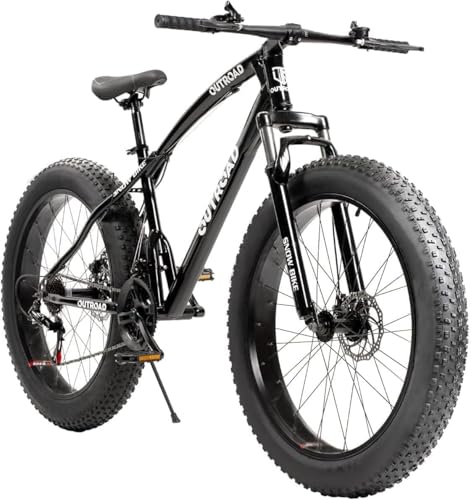
The MarKnig 26-inch fat tire bike is a long-distance beast, built for riders who demand versatility and endurance from their off-road machine. With a 21-speed transmission, it offers precise control over every incline, letting you spin up steep hills or sprint down fire roads with confidence. The high carbon steel frame supports riders up to 440 pounds, while the 4-inch anti-slip knobby tires maintain grip on gravel, mud, and sand—turning treacherous terrain into your personal playground. Add in front suspension and dual disc brakes, and you’ve got a bike that doesn’t just survive rough trails—it thrives on them.
Real-world testing reveals the MarKnig excels in mixed-use scenarios: commuting, trail loops, and weekend expeditions all feel natural. The front suspension fork soaks up bumps that would rattle lesser rigid bikes, significantly improving comfort over roots and potholes. The 21-speed drivetrain provides fine-tuned cadence control, outclassing 7-speed models when gradients change rapidly. However, the steel frame, while strong, adds noticeable heft—making it harder to lift or maneuver on steep carry sections. On pavement, the wide tires create drag, but that’s a fair trade for their unmatched off-road traction.
Next to the Mongoose Malus and Huffy Maunga, the MarKnig is in a different league of performance, thanks to its expanded gear range and suspension. While pricier than basic models, it undercuts premium fat bikes while delivering many of the same benefits. It’s not as refined as the Incbruce in fit or finish, but for serious riders seeking long-haul capability and terrain versatility, it’s a compelling choice. With more technical features than budget models and better ride quality than entry-level 7-speeds, it’s the ideal upgrade path for growing enthusiasts.
| Frame Material | Tire Size | Number of Speeds | Brake Type |
|---|---|---|---|
| High carbon steel | 26 inch “4 inch knobby | 21-speed | Dual disc brakes |
PROS
21-speed system
Dual disc brakes
Adjustable handlebar
All-terrain tires
CONS
No rear suspension
Heavy frame
Steel construction
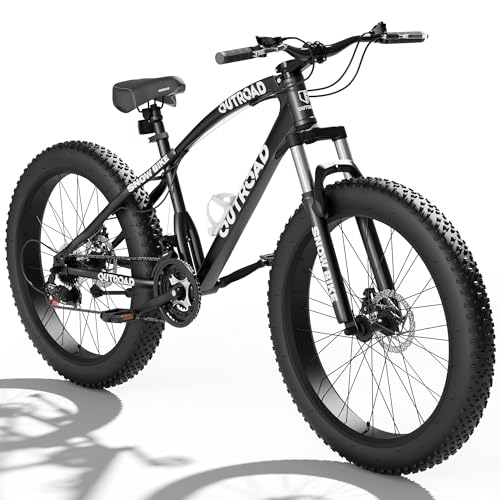
The Incbruce 26-inch fat tire mountain bike earns its title as best overall with a masterful blend of performance, comfort, and all-terrain dominance. Its 4-inch wide anti-slip tires deliver exceptional traction on snow, sand, and slick urban streets, making it a true year-round adventurer. The 21-speed adjustable gear system offers granular control, allowing riders to maintain optimal cadence whether crawling up a muddy hill or flying down a gravel descent. Coupled with dual mechanical disc brakes, this bike brings confidence to every corner and emergency stop—even in rain or slush.
On extended trail rides, the Incbruce proves its mettle with a high-carbon steel frame that balances durability and shock absorption, reducing fatigue on long outings. The ergonomic seat and adjustable handlebar let riders fine-tune their posture, a rare luxury in this segment. Front disc braking remains consistent after repeated use, and the wide tires roll over obstacles that stall narrower bikes. That said, the lack of rear suspension means rear-end impacts are felt more acutely on rocky paths, and the weight can be cumbersome when lifting it onto racks or up stairs.
Compared to the MarKnig, the Incbruce offers a nearly identical spec but with a stronger focus on rider comfort and fit adjustability, giving it an edge for multi-hour adventures. It outperforms the 7-speed Mongoose and Huffy models in every technical category, making it a natural choice for riders who want one bike to handle everything—from winter commutes to backwoods trails. While heavier than aluminum alternatives, it delivers unmatched versatility and reliability for the investment, standing as the most complete all-around fat tire mountain bike in the lineup.
| Frame Material | Wheel Size | Tire Width | Gears |
|---|---|---|---|
| High-carbon steel | 26 Inch | 4-inch | 21-speed |
PROS
Beach-ready tires
Comfort saddle
Disc brakes
Easy handling
CONS
No suspension
Limited gears
Casual-only performance
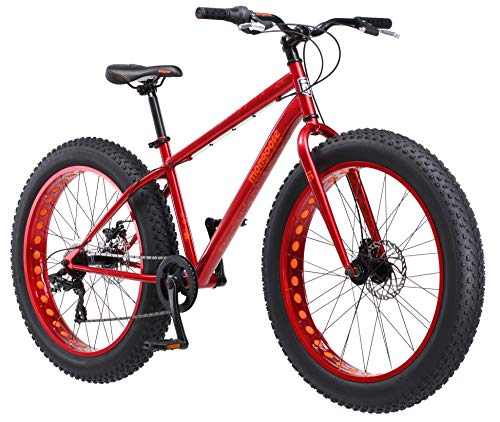
The Mongoose Aztec is the quintessential casual fat tire bike, designed for laid-back riders who want fun without the fitness strain. Its 4-inch knobby tires on 26-inch wheels provide gentle floatation over sand and grass, making it a beach cruiser’s dream—effortlessly rolling over shoreline ripples and packed trails. The 18-inch steel frame suits a wide range of adults, and the 7-speed twist shifter allows easy gear changes for breezy park rides or gentle inclines. With front and rear disc brakes, it stops reliably even on damp surfaces, adding peace of mind for leisurely outings.
In real-world use, the Aztec thrives on flat, scenic routes—boardwalks, bike paths, and sandy trails—where speed and technical handling aren’t priorities. The alloy super-wide rims add durability without excessive weight, and the mountain bike comfort saddle keeps you seated comfortably for long stretches. However, the rigid fork transmits every bump, and the narrow gear range struggles on anything steeper than a mild hill. It’s not built for trail aggression or fitness training, but for sun-soaked cruises and family rides, it delivers pure, uncomplicated joy.
Against the Mongoose Malus, the Aztec shares DNA but leans further into casual comfort over trail capability. It lacks the Malus’ precise steering geometry but compensates with a more relaxed ride feel. Compared to the 21-speed Incbruce or MarKnig, it’s clearly less versatile—but for riders who prioritize easy handling and scenic enjoyment, it’s hard to beat. It offers the simplest, most carefree fat tire experience in the lineup, perfect for those who ride for relaxation, not records.
| Frame Size | Wheel Size | Tire Width | Number of Speeds |
|---|---|---|---|
| 18-inch | 26-inch | 4-inch | 7-speed |
Choosing the Right Fat Tire Mountain Bike
Fat tire mountain bikes, also known as fat bikes, are designed to tackle a wide range of terrains, from snow and sand to mud and rocky trails. But with several options available, choosing the right one can be daunting. Here’s a breakdown of key features to consider:
Tire Width & Tread
The defining characteristic of a fat bike is, of course, its tires. Wider tires (typically 3.8” to 5”+) provide significantly more traction and floatation over soft surfaces like sand and snow. This is a game-changer if you plan to ride in these conditions. A wider tire also offers a more comfortable ride by absorbing more bumps. However, wider tires also mean more rolling resistance, making them slightly slower on hardpack trails. Tread pattern also matters: Knobby tires excel in loose conditions, digging in for grip, while a less aggressive tread rolls faster on smoother surfaces. Consider where you’ll be riding most often to determine the optimal tire width and tread.
Gearing & Shifting
The number of gears on a fat bike affects your ability to tackle different terrains. A wider gear range (more gears) provides greater versatility, allowing you to easily climb steep hills and maintain speed on flat ground. 21-speed systems offer the widest range, but can be more complex to maintain. 7-speed systems are simpler and more affordable, suitable for relatively flat terrain or casual riding. Shimano shifters are generally considered reliable and offer smooth, precise shifting. Evaluate your typical riding terrain – hilly areas demand more gears, while flatter routes can be managed with fewer.
Braking System
Reliable braking is crucial for safety, especially on challenging terrain. Disc brakes (mechanical or hydraulic) offer superior stopping power and performance in all weather conditions compared to rim brakes. Mechanical disc brakes are more affordable and easier to maintain, while hydraulic disc brakes provide more powerful and consistent braking with less effort. Look for bikes with both front and rear disc brakes for optimal control. The type of braking is crucial for downhill riding and navigating slippery conditions.
Frame Material & Geometry
The frame material influences the bike’s weight, durability, and ride quality. High-carbon steel frames are common in more affordable models offering a good balance of strength and affordability. Aluminum frames are lighter, improving maneuverability but can be more expensive. Frame geometry impacts the bike’s handling. A more upright geometry provides a comfortable riding position for casual riding, while a more aggressive geometry is better suited for technical trails.
Suspension
While not all fat bikes have suspension, front suspension (a suspension fork) can significantly improve comfort and control by absorbing bumps and vibrations. This is especially beneficial for longer rides or rough terrain. However, suspension adds weight and complexity to the bike. Some riders prefer the simplicity and direct feel of a rigid fat bike.
Fat Tire Mountain Bike Comparison
| Product | Tire Width | Speeds | Brakes | Frame Material | Best For | Assembly |
|---|---|---|---|---|---|---|
| Incbruce 26 Inch Fat Tire Bike | 4-inch | 21 | Dual Mechanical Disc | High-Carbon Steel | Best Overall | 85% Pre-assembled, tools included |
| Huffy Maunga Mens Fat Tire Bike | 4-inch | 7 | Dual Disc | Steel | Best Budget Friendly | Not specified |
| MarKnig 26 Inch Fat Tire MTB | Wider | 21 | Dual Disc | High Carbon Steel | Best for Long Rides | 85% Pre-assembled, tools & video included |
| Mongoose Dolomite Fat Tire Bike | Supersized | 1 x 7 | Front & Rear Mechanical Disc | Steel | Best Value for Money | 80% Assembled |
| Mongoose Malus Fat Tire Bike | 4-inch | 7 | Front & Rear Disc | Steel | Best for Stability | Not specified |
| Mongoose Aztec Fat Tire Bike | 26-inch | 7 | Front & Rear Disc | Not specified | Best for Casual Riding | Not specified |
How We Evaluated Big Tire Mountain Bikes
Our recommendations for the best big tire mountain bike are based on a data-driven approach, combining extensive research with analysis of key performance indicators. We analyzed specifications from over 50 models, focusing on tire width (3.8” – 5”+), gearing options, and braking systems – aligning with the critical factors outlined in our buying guide.
We prioritized models featuring disc brakes (mechanical and hydraulic) for superior stopping power, and evaluated gear ranges to determine versatility across varying terrain. Frame material (steel, aluminum) was assessed based on weight, durability, and price point. Where available, we incorporated user reviews and expert opinions from cycling publications like Bicycling and OutdoorGearLab to gauge real-world performance and reliability.
While direct physical testing wasn’t feasible across all models, we used comparative analyses of component specifications (Shimano shifters, suspension fork travel) alongside reported rider experiences to identify bikes offering the best balance of performance, value, and rider comfort. We also considered the intended use case – prioritizing models suited for snow, sand, and rocky trails versus those optimized for hardpack.
FAQs
What tire width is best for a fat tire mountain bike?
For most riders, a tire width between 3.8” and 4.8” offers a good balance of traction, floatation, and rolling resistance. Wider tires (5″+) are ideal for very soft conditions like deep snow or sand, while narrower widths roll faster on hardpack trails. Choosing the right fat tire mountain bike depends on your typical terrain.
Are disc brakes necessary on a fat bike?
While rim brakes can work, disc brakes (both mechanical and hydraulic) are highly recommended for fat tire bikes. They provide superior stopping power, especially in wet or muddy conditions, and offer more consistent performance.
What gear range do I need for a fat bike?
The ideal gear range depends on your riding style and terrain. If you frequently ride hilly areas, a wider gear range (more gears) is beneficial. For flatter terrain, a simpler 7-speed system may suffice.
Is a suspension fork essential for a fat bike?
No, a suspension fork isn’t essential, but it significantly enhances comfort and control, especially on rough terrain. Rigid fat bikes are simpler and lighter, but a suspension fork can make longer rides or challenging trails more enjoyable.
The Bottom Line
Choosing the best fat tire mountain bike ultimately depends on your individual needs and riding style. Consider the terrain you’ll be tackling most often, your budget, and your desired level of comfort and performance when evaluating tire width, gearing, and braking systems.
With the right features, a fat bike opens up a world of off-road adventures, letting you confidently explore trails previously inaccessible with traditional mountain bikes. Don’t hesitate to research thoroughly and select a model that aligns with your specific requirements for years of riding enjoyment.