Your Cowboy electric bike’s tire pressure directly impacts every aspect of your riding experience—from battery range to handling precision. Properly inflated tires are the foundation of a smooth, efficient ride, yet many riders overlook this critical maintenance task until they notice reduced range or uncomfortable handling. Getting your cowboy bike tire pressure right transforms your daily commute, making it more comfortable, efficient, and safer. This guide reveals exactly how to optimize your Cowboy’s tire pressure based on your weight, riding conditions, and seasonal changes—helping you squeeze every possible kilometer from your battery while enjoying a ride that feels responsive and controlled.
Why Your Cowboy Bike Needs Specific Tire Pressure Settings
Unlike traditional bicycles, Cowboy electric bikes require precise tire pressure management due to their additional weight from motors, batteries, and reinforced frames. Ignoring these specific requirements leads to premature tire wear, reduced battery range, and compromised safety—issues easily preventable with proper inflation.
Standard Pressure for Daily Commuting
Inflate your Cowboy tires to 2.5 bars (36 PSI) for typical urban riding conditions. This pressure balances comfort and efficiency for riders carrying average loads without additional cargo. When you maintain this standard pressure, your bike delivers predictable handling through city streets while maximizing the contact patch for reliable traction in wet conditions.
If you regularly carry heavy backpacks or use cargo racks, increase pressure slightly toward the upper end of the recommended range. Lighter riders can safely operate at the lower end of the range for enhanced comfort without sacrificing safety margins. Always check pressure when your tires are cold (before riding) for accurate readings that match Cowboy’s specifications.
Critical Minimum and Maximum Thresholds
Never drop below 1.5 bars (21.7 PSI)—Cowboy’s absolute minimum pressure. Riding with under-inflated tires risks pinching your inner tube against the rim when hitting bumps, causing sudden flats that leave you stranded. More seriously, low pressure strains your wheel rims, potentially causing permanent damage that requires expensive repairs.
Conversely, resist the temptation to inflate to maximum pressure. While some riders mistakenly believe firmer tires improve performance, over-inflation sacrifices comfort for minimal efficiency gains. Your ride becomes harsh and fatiguing as every road imperfection transmits directly to your hands and body, reducing control when you need it most.
Performance Pressure for Maximum Range
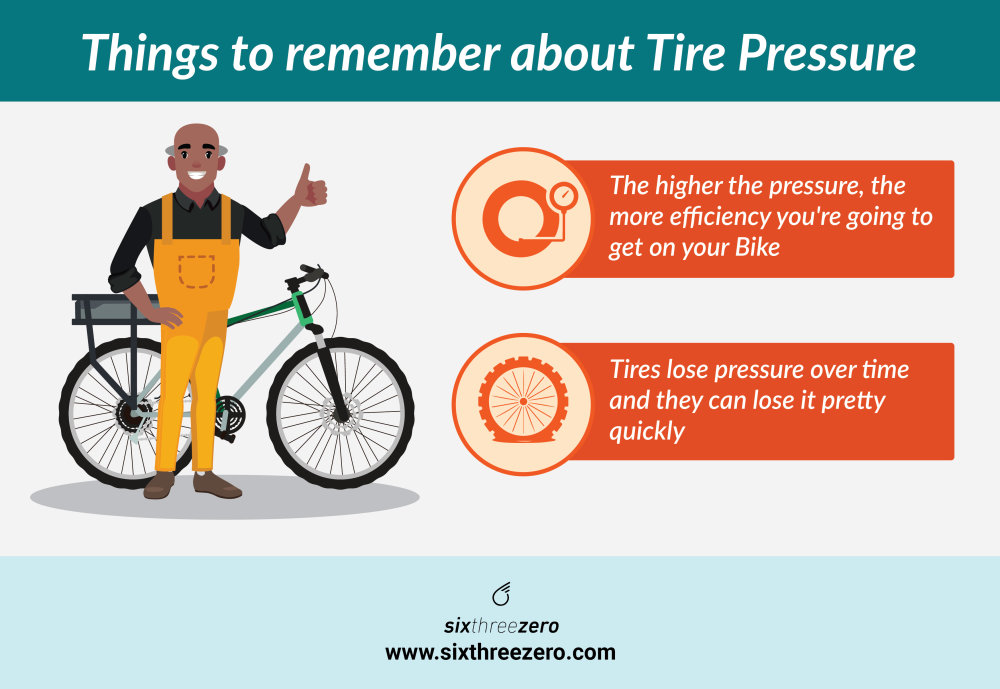
For riders seeking every possible kilometer from their battery, maintain 4 bars (58 PSI) during regular riding. This higher pressure setting minimizes rolling resistance on smooth pavement, allowing your motor to work more efficiently with less energy loss to tire deformation. Riders consistently report 10-15% improved range when maintaining this performance pressure compared to under-inflated tires.
The efficiency gains become particularly noticeable on longer rides where cumulative energy savings translate to meaningful range extensions. However, don’t sacrifice safety for range—reduce pressure slightly when riding on rough surfaces or in wet conditions where additional traction becomes more valuable than marginal efficiency improvements.
Choosing the Right Pump for Presta Valves

Cowboy bikes exclusively use Presta valves (also called French valves), which differ significantly from the Schrader valves found on car tires and many standard bicycles. These slender valves require compatible pumps that many riders don’t have in their garage, leading to frustration when attempting inflation.
Why Standard Pumps Won’t Work
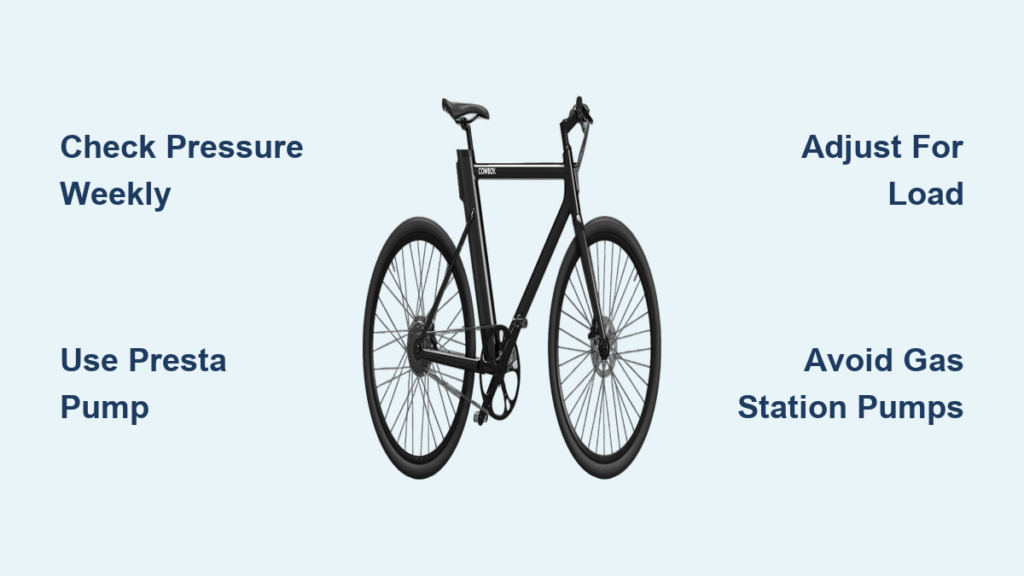
Attempting to use a standard Schrader-only pump on your Presta valves creates two problems: the pump head won’t seal properly, causing air leaks during inflation, and you risk damaging the delicate Presta valve stem. Gas station air pumps are particularly dangerous for e-bike tires—they deliver air too forcefully, often over-inflating beyond safe limits before you can react.
Always verify your pump supports Presta valves before attempting inflation. Quality bike pumps clearly indicate Presta compatibility, often with a switch that toggles between valve types. Never force a Schrader pump onto a Presta valve—this common mistake bends or breaks the valve core, requiring immediate replacement.
Recommended Pumps for Reliable Inflation
For home use, the Topeak JoeBlow Sport III delivers accurate pressure readings with reliable Presta valve engagement. Its large volume chamber inflates e-bike tires quickly, while the built-in gauge eliminates guesswork. The stable base prevents tipping during inflation, crucial when reaching higher pressure settings.
When riding away from home, carry the Xiaomi Air Pump—a compact, battery-powered solution that fits in most saddle bags. This portable pump provides accurate pressure readings without manual effort, ideal when you need to adjust pressure mid-ride or after extended storage. Its digital display shows exact PSI readings, removing the uncertainty of analog gauges.
Weekly Tire Maintenance Routine That Prevents Problems
Proper tire maintenance goes beyond occasional inflation—establishing a simple routine prevents most common tire issues before they strand you mid-ride.
Quick Pre-Ride Pressure Check
Before every ride, perform the “two-finger squeeze test” on your tires. Properly inflated tires resist compression—you shouldn’t be able to squeeze the sidewall significantly between thumb and forefinger. This quick check catches major pressure loss before you head out.
For accurate measurements, use a digital pressure gauge weekly (or before longer rides). Mechanical gauges on basic pumps often lack precision in the 20-60 PSI range appropriate for e-bikes. Investing in a quality digital gauge (under $20) ensures you’re riding at optimal pressure every time.
Visual Inspection for Hidden Damage
During your pressure check, inspect tires for embedded debris that could cause slow leaks. Run your fingers carefully along the tread surface (wear gloves for protection) feeling for small objects like glass shards, thorns, or metal fragments. Remove visible debris with needle-nose pliers to prevent progressive damage.
Pay special attention to the sidewalls where cuts or bulges indicate structural damage requiring immediate tire replacement. Even small punctures in the sidewall compromise tire integrity—don’t risk riding on damaged tires as they can fail catastrophically at speed.
Seasonal Adjustments for Year-Round Performance
Temperature changes significantly impact tire pressure, requiring seasonal adjustments to maintain optimal performance throughout the year.
Winter Riding Strategies
Cold weather causes tire pressure to drop approximately 1 PSI for every 10°F (5.5°C) temperature decrease. If you store your bike in an unheated garage, morning pressure readings may be dangerously low after cold nights. Check pressure before every winter ride—never assume yesterday’s pressure remains adequate.
When riding in freezing conditions, maintain pressure at the higher end of the recommended range (closer to 4 bars) to compensate for cold-induced pressure loss. However, avoid over-inflation during the ride itself, as friction heat temporarily increases pressure readings.
Summer Heat Management
Summer heat works in reverse—tire pressure increases as temperatures rise. Check pressure in the morning before riding, as afternoon readings may be 3-5 PSI higher due to solar heating. For extended summer rides, reduce pressure by 2-3 PSI from your standard setting to account for heat-induced expansion during your ride.
Park your bike in shaded areas whenever possible to prevent excessive heat buildup in tires. Extended exposure to direct sunlight accelerates rubber degradation and causes temporary pressure spikes that strain tire structure.
Critical Mistakes That Damage Your Tires

Avoid these common tire pressure errors that compromise safety, reduce range, and shorten tire life.
The Gas Station Pump Trap
Using gas station air pumps on your Cowboy bike risks catastrophic over-inflation. These pumps deliver air at pressures designed for car tires (30-60 PSI per second) rather than the precise control needed for bicycle tires. You can easily overshoot your target pressure before reacting.
Additionally, most gas station pumps lack Presta valve adapters, forcing riders to improvise solutions that often damage valve stems. The high-volume airflow can also blow out valve cores if not carefully controlled. Always use bike-specific pumps for accurate, safe inflation.
Ignoring Load Adjustments
Failing to adjust pressure for additional weight is a common oversight among riders who occasionally carry cargo. That weekend grocery run with heavy bags significantly increases load, requiring higher pressure to prevent sidewall damage and rim strikes.
If you regularly carry passengers or heavy cargo, establish a routine of increasing pressure by 0.2-0.5 bars for the added weight. This simple adjustment prevents excessive tire flex that accelerates wear and risks pinch flats when hitting bumps.
Quick Reference Pressure Guide
| Riding Scenario | Recommended Pressure | Why It Matters |
|---|---|---|
| Standard Daily Commuting | 2.5 bar (36 PSI) | Best balance of comfort, efficiency, and traction |
| Maximum Range Riding | 4 bar (58 PSI) | Reduces rolling resistance for 10-15% more battery range |
| Heavy Cargo/Passenger | 3.0-3.5 bar (43-51 PSI) | Prevents sidewall damage and rim strikes |
| Minimum Safe Pressure | 1.5 bar (21.7 PSI) | Below this risks pinch flats and rim damage |
Proper cowboy bike tire pressure management represents one of the simplest yet most impactful maintenance tasks you can perform. By following Cowboy’s specific recommendations, checking pressure weekly, and adjusting for seasonal conditions, you’ll enjoy maximum range from your battery, smoother handling through city streets, and significantly extended tire life. Spend just five minutes each week monitoring your tire pressure—you’ll transform your riding experience while avoiding preventable flats and costly repairs. Your Cowboy bike performs best when its tires are properly inflated, so make this essential check part of your regular riding routine.