That familiar gravel route feels completely different when you switch to a fat bike. Where your standard gravel bike needed 35-45 PSI to roll efficiently, your fat tires require a counterintuitive 8-15 PSI range that feels impossibly soft at first touch. This isn’t a mistake—it’s the secret to unlocking superior traction on loose surfaces where narrower tires struggle. Fat bike tire pressure for gravel riding operates on fundamentally different principles than conventional cycling, requiring riders to abandon everything they know about inflation and embrace a completely new approach to tire setup. The massive volume of air inside fat tires creates an entirely different relationship between pressure, traction, and comfort that transforms gravel performance when dialed correctly.
Understanding this shift in thinking unlocks the true potential of fat bikes on gravel surfaces, turning what might seem like an awkward compromise into a uniquely capable machine that floats over loose material, absorbs rough terrain, and maintains grip where standard gravel bikes spin out. This guide walks through everything needed to dial in optimal fat bike tire pressure for gravel riding, from recognizing the physics behind low-pressure performance to practical field techniques for pressure adjustments. Whether you’re transitioning from standard gravel bikes or exploring fat bike ownership for the first time, these principles will help you maximize performance across mixed gravel terrain.
Why 10-13 PSI Works Best for Mixed Gravel Surfaces
Most fat bike riders discover their ideal gravel pressure falls between 10-13 PSI for general trail riding, striking the perfect balance between rolling efficiency and traction across varied surfaces. This middle ground allows your tire to deform enough to maintain contact with irregular gravel while retaining sufficient structure to prevent excessive squirm during hard efforts. At these pressures, your fat bike handles like a true gravel machine rather than a snow bike adaptation, delivering responsive acceleration and predictable cornering on everything from hardpacked fire roads to softer decomposed granite sections.
Higher gravel pressures (12-15 PSI) excel on well-maintained surfaces that have been regularly compacted by vehicle traffic. These pressures create a more responsive feel that closely resembles running slightly below maximum pressure on mountain bike tires, making them an accessible starting point for riders transitioning from conventional bikes. You’ll notice faster acceleration and reduced rolling resistance on smooth gravel sections, with the tire maintaining its shape through fast corners without excessive vibration transmission.
Lower pressures (8-11 PSI) unlock your fat bike’s greatest gravel advantage: flotation. When conditions include loose sand, muddy patches, or freshly disturbed trail surfaces, dropping pressure increases the contact patch dramatically. This allows the tire to ride on top of loose material rather than digging in and losing momentum—a game-changer for gravel routes that traverse variable conditions within a single ride. Pressures below 8 PSI, however, begin sacrificing handling precision on firmer sections and significantly increase rim contact risk when hitting obstacles.
How to Test Your Gravel Pressure Sweet Spot
Determine your personal sweet spot with these field tests during your next gravel ride:
- The Cornering Check: Enter a medium-speed gravel corner at your current pressure. If the bike feels vague or slides out, pressure is too low. If you feel every small bump disrupting your line, pressure is too high.
- The Bump Test: Ride over a series of small rocks or roots. Proper pressure should absorb impacts without rim strikes while maintaining traction.
- The Squeeze Test: Press your thumb firmly into the tire sidewall when stopped. The tire should give slightly but not collapse completely—like pressing into a firm memory foam pillow.
How Your Weight Determines Ideal Gravel Pressure
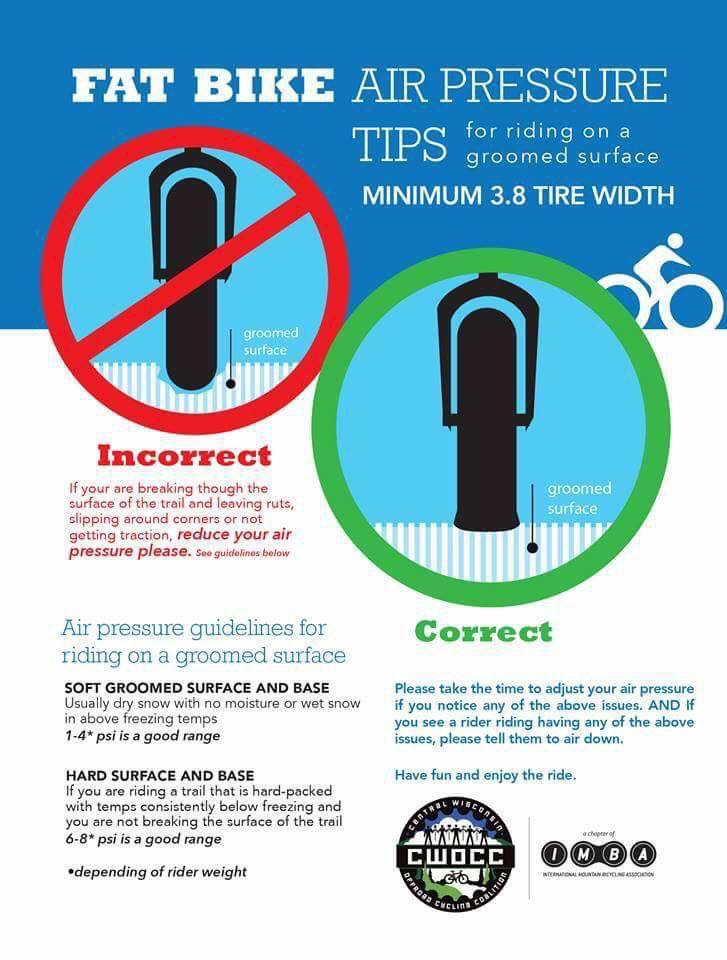
Rider weight serves as the primary variable in determining appropriate fat bike tire pressure, as the combined mass must be supported by the air volume within the tire. Heavier riders require higher pressures to prevent bottoming out—the dangerous condition where the rim contacts the ground during hard impacts—while lighter riders can successfully run lower pressures that would cause vague handling for larger individuals.
For an average-weight rider (around 170 pounds), starting points for mixed gravel riding typically begin at 10-12 PSI. Riders approaching 200 pounds or carrying heavy gear loads should add 1-2 PSI to these baseline recommendations, ensuring adequate support without sacrificing the fat bike’s characteristic comfort. Lighter riders below 140 pounds can often drop 1-2 PSI below standard recommendations, gaining even more flotation and shock absorption.
Front vs Rear Pressure Setup for Gravel Riding
The rear tire generally requires 0.5-1.0 PSI more than the front tire because it bears the majority of your weight and handles drivetrain forces during acceleration. This differential creates balanced handling where:
- The rear tire maintains propulsion efficiency without squirming under power
- The slightly softer front tire absorbs impacts and provides precise steering feedback
- Overall traction improves across technical gravel sections
Setting both tires to identical pressures often results in a rear tire that feels overworked and a front tire that’s overly sensitive to every bump, compromising your gravel handling.
Adjusting Pressure for Hardpack vs Loose Gravel Conditions

Gravel riding frequently involves traversing multiple surface types within a single ride, from hardpacked jeep trails to loose sandy washes. Successful pressure management requires understanding how different gravel conditions respond to various pressure levels and developing a baseline that performs acceptably across common conditions.
Hardpack gravel with minimal loose material performs best at higher pressures (12-15 PSI), where the tire maintains its shape and rolls efficiently while still conforming enough to maintain contact with the surface. This pressure range minimizes the “squirm” that creates vague handling in fast straight sections, providing confident cornering on packed turns. The ride quality feels responsive rather than mushy, and you’ll enjoy precise feedback from the trail surface without harsh vibration.
Loose over hard gravel—where decomposed granite or small stones sit atop a firmer base—benefits from lower pressures (8-12 PSI) that allow the tire to penetrate the loose layer and find traction on the harder surface beneath. Riders frequently describe higher pressures on this terrain as feeling like “riding on ball bearings,” where the tire floats atop the loose material without gaining purchase. Lower pressures enable the tire to push through to firmer ground, dramatically improving acceleration and control.
3 Fatal Fat Bike Pressure Errors on Gravel (And How to Fix Them)
Overinflation: The Most Common Gravel Mistake
Overinflation represents the most common error among fat bike riders transitioning from conventional bicycles. Forcing fat tires to match “normal” bike pressures (35+ PSI) eliminates their primary advantages on gravel. Symptoms include:
- Harsh ride quality with excessive vibration transmitted through the handlebars
- Reduced traction causing frequent sliding in corners
- Increased rider fatigue from constant impact feedback
- Premature tire wear from concentrated pressure points
Fix: Drop pressure 2-3 PSI at a time until the harsh vibration disappears while maintaining cornering confidence.
Underinflation: When “Softer Isn’t Better”
Underinflation creates different but equally problematic handling characteristics on gravel:
- Vague steering response with poor directional stability
- Increased rolling resistance from excessive tire deformation
- “Auto steer” phenomenon where the bike turns regardless of input
- High risk of rim damage when hitting obstacles
Fix: Increase pressure 1 PSI at a time until the sidewall feels supportive when squeezed firmly with your thumb.
Temperature-Induced Pressure Changes
Moving from warm indoor spaces to cold outdoor temperatures can reduce tire pressure by several PSI—enough to push you below safe operating limits. Conversely, setting pressure in cold conditions then riding in warm sun can lead to dangerous overinflation.
Fix: Always check pressure outdoors after your tires have acclimated to riding temperature, adjusting as needed before each ride.
Must-Have Low-Pressure Gauges for Accurate Gravel Setup

Standard bicycle pressure gauges often lack precision below 20 PSI or may not register at all, rendering them useless for fat bike verification. Dedicated low-pressure gauges like the Meiser Presta gauge provide accurate readings throughout the fat bike operating range and typically feature compact designs suitable for trail-side carry.
For inflation, wide-barrel floor pumps designed specifically for fat bikes move larger air volumes more efficiently than standard pumps. Look for models with built-in pressure gauges that read accurately down to 5 PSI. For trail-side adjustments, compact handheld pumps rated for low-pressure applications enable mid-ride tuning when conditions change unexpectedly.
Critical Pro Tip: Check your tire pressure before every gravel ride—especially after storage—since tires naturally lose 1-3 PSI per week even without riding. This consistent monitoring prevents performance degradation and helps you recognize when your tires might be developing slow leaks.
The 5-Step Process to Dial In Your Perfect Gravel Pressure
Establishing your personal baseline pressure follows this systematic approach:
- Start with baseline: Set 11 PSI front / 11.5 PSI rear for average-weight riders on mixed terrain
- Perform squeeze test: Thumb should compress sidewall slightly but not collapse it
- Ride test section: Choose a representative gravel segment with varied conditions
- Adjust based on feedback: Increase 0.5 PSI for harshness/vibration; decrease 0.5 PSI for poor traction
- Document results: Record pressure settings that worked well for specific conditions
This methodical approach prevents random guessing and builds your intuitive pressure sense over time. After three to five rides using this process, you’ll develop the ability to quickly assess and adjust pressure based on terrain conditions alone.
Why Your Fat Bike Loses 3 PSI Overnight on Gravel Rides
Temperature changes significantly affect tire pressure, with cold conditions causing measurable pressure drops. Seasonal pressure adjustments account for different terrain conditions:
- Summer gravel: Harder, compacted surfaces benefit from slightly higher pressures (11-14 PSI)
- Spring/Fall gravel: Softer, muddy conditions require lower pressures (8-11 PSI)
- Winter gravel: Frozen hard surfaces with soft snow patches need compromise pressures (9-12 PSI)
Tire wear also affects pressure requirements over time. New tires may require slightly higher initial pressure that decreases as the tire breaks in, while heavily worn tires may need pressure increases to maintain equivalent handling. Regular monitoring helps distinguish between true pressure needs and mechanical changes in the tire itself.
Fat bike tire pressure for gravel riding represents a nuanced optimization influenced by rider weight, tire width, specific conditions, and personal preferences. The 8-15 PSI operating range provides a framework for initial selection, but true mastery comes from systematic experimentation and attentive ride feedback. By embracing the low-pressure principles unique to fat bikes, you’ll unlock the flotation, traction, and comfort that make them uniquely capable on gravel surfaces where standard equipment struggles. The investment in proper low-pressure management transforms your fat bike from a compromise machine into a gravel-optimized powerhouse that excels where other bikes falter.