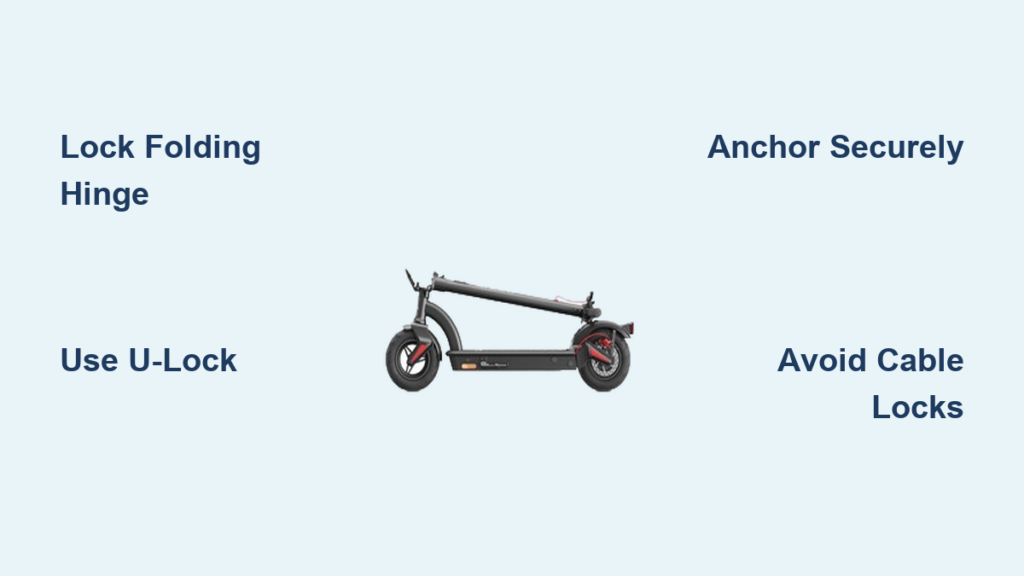
If you own an electric scooter, knowing how to lock folding mechanism scooter properly is the difference between a reliable commute and a stolen investment. With millions of e-scooters on city streets and thieves growing more sophisticated, relying on app-based locks alone is a recipe for loss. The folding mechanism creates unique vulnerabilities but also unique opportunities for securing your ride. This guide breaks down exactly how to lock your scooter, which parts to secure, what lock to use, and how to avoid the most common mistakes that leave riders unprotected.
The truth is: no electronic lock stops a thief from lifting and carrying away your scooter. GPS tracking helps recovery, alarms draw attention, and app-based immobilizers prevent ride-aways, but only a physical lock anchored to something immovable keeps your scooter in place. And when done right, locking the folding mechanism itself can be one of the strongest points on your scooter.
Secure the Folding Joint Properly

The folding joint is often the strongest structural point on your scooter, and it makes the best locking location.
Why the Folding Mechanism Is a Prime Locking Point
Many scooters like the Inokim Light 2 or Apollo Pro have a reinforced hinge with a built-in slot designed specifically for threading a lock through. This area is made of thick steel or aluminum, integrated into the main frame, and not removable without disassembling the entire scooter. By locking through this joint, you prevent both unfolding and theft.
How to Lock Through the Folding Hinge
- Fully unfold and lock the scooter into riding position.
- Locate the hinge gap between the stem and deck where the fold occurs.
- Insert your U-lock or folding lock shackle through this gap.
- Attach the other end to a fixed object like a bike rack or steel post.
Pro Tip: If your scooter does not have a dedicated slot, loop the lock around the stem just above the hinge where it meets the deck. This prevents the stem from being separated.
Choose the Right Lock for Folding Scooters

Not all locks are equal. Your choice determines how long a thief will spend trying to steal your scooter.
U-Locks: Maximum Security
U-locks are the gold standard for folding scooters. Recommended models include the Kryptonite New York Fahgettaboudit Mini with the thickest shackle for highest resistance, the Kryptonite Evolution Mini 5 which is lightweight and secure for compact scooters, and the ABUS Granit X-Plus with high anti-drill protection.
U-locks resist bolt cutters, angle grinders, and leverage attacks. Their rigid shape prevents prying, and short shackles reduce tool access. Always use the shortest shackle that fits your scooter. Extra space lets thieves insert jacks or crowbars.
Folding Locks: Best for Portability
Folding locks offer near-U-lock security in a compact form. Top picks include the ETOOK Folding Lock often bundled with Apollo scooters, the Kryptonite Evolution 790, and the ABUS Bordo Granit 6500.
These locks fold into a a 6-inch block and mount to the scooter frame with an included bracket. They weigh under 2 pounds, making them ideal for daily commuters who take scooters on trains or buses. However, the joints are weak points under hammer attacks, and the bars are thinner than top-tier U-locks.
Chain Locks: Ultimate Flexibility
Use chains when anchoring around large or irregular objects. The Kryptonite New York Fahgettaboudit Chain with 5-foot length features 14mm hardened links and provides maximum security. Chain locks are ideal for overnight parking, urban areas with limited racks, and high-theft neighborhoods. The downside is they are heavy and awkward to carry daily.
Avoid Cable and Disc Locks as Primary Security
Cable and disc brake locks are not enough on their own. Cable locks can be cut in seconds with bolt cutters and are only useful as a secondary deterrent. Disc brake locks prevent wheel spin but do not anchor the scooter. A thief can still lift and carry it away. These locks only work on scooters with disc brakes, not drum brakes. Never rely on these alone.
Anchor to Immovable Objects
A lock is only as strong as what it is attached to.
Best Anchor Points
The best anchor points include bike racks especially inverted U-shaped ones, steel signposts cemented into concrete, stair railings or transit shelter frames, and parking meters with deep foundations.
Never Lock To
Never lock to chain-link fences, wooden poles, thin metal railings, short posts where the scooter can be lifted over, or trash cans or benches. If you can move it, so can a thief.
Use the Dual-Lock Strategy for High Risk
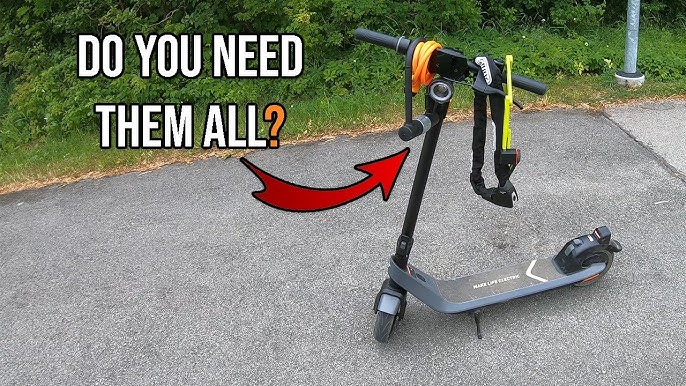
In high-theft areas or for overnight parking, use two different lock types. A good combination is a U-lock to secure the frame and front wheel to a bike rack, plus a chain lock that wraps around the rear wheel and deck attached to the same rack.
This forces the thief to carry multiple tools like an angle grinder and bolt cutters. It doubles the time required to steal. Most thieves skip targets that take over 3 minutes. Use locks from different brands. Some thieves carry specific keys or shims.
Maintain the Folding Mechanism
A loose or broken folding joint is a safety hazard and a weak point for thieves.
Perform the Wobble Test Monthly
- Stand on the deck and grab the handlebars.
- Push and pull forward and backward.
- No movement should occur at the hinge.
If you feel wobble, tighten adjustment bolts according to your manual, clean debris from the hinge with a dry brush, and apply dry lubricant to moving parts. Never over-tighten as this can strip threads or damage the lock mechanism.
Locking Techniques by Scooter Design
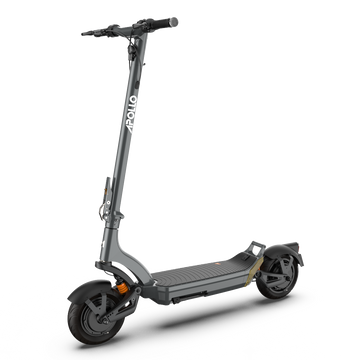
Not all scooters have the same frame. Adjust your method accordingly.
Scooters with Pass-Through Frames
For scooters like Inokim or Dualtron, thread the lock directly through the frame slot. Combine with wheel or stem for full immobilization. This ensures the lock cannot be slipped off.
Scooters with Integrated Carrying Handles
For scooters like the Apollo City Pro, the handles are welded to the frame and make ideal locking points. Loop the lock through the handle and anchor. This prevents removal of the top section.
Scooters with Removable Handlebars
Never lock only the handlebars. Target the stem base or rear deck latch instead. Lock the frame and wheel together to prevent disassembly.
Avoid Common Locking Mistakes
Even experienced riders make these errors. Do not be one of them.
Locking Only the Wheel
Wheels can be unbolted. The thief removes the wheel, leaves the lock, and walks away with the rest.
Using a Cable as Primary Lock
Cables cut in under 30 seconds. Only use a cable as a second lock.
Leaving Slack in the Lock
Extra space allows thieves to insert jacks or leverage tools. Use a snug fit only.
Parking in Dark, Isolated Areas
No amount of locking helps if no one sees a theft. Always choose well-lit, high-traffic spots.
Relying on App Locks Alone
App locks disable the motor but do nothing to stop lifting. Always pair with a physical lock.
Frequently Asked Questions About Locking Folding Scooters
What is the strongest lock type for a folding electric scooter?
U-locks provide the maximum security for folding scooters. They resist bolt cutters, angle grinders, and leverage attacks. The Kryptonite New York Fahgettaboudit Mini is widely considered the gold standard. Folding locks offer a good balance of security and portability for daily commuters.
Can I lock my scooter through the folding mechanism?
Yes, many scooters have specific slots or gaps within the folding joint designed for locks. The Inokim Light 2 has a dedicated slot perfect for threading a lock. Even if your scooter lacks a dedicated slot, locking through or above the hinge prevents the stem from being separated from the deck.
Should I use two locks on my electric scooter?
Using two different lock types is recommended for high-risk situations like overnight parking or in high-theft areas. A dual-lock strategy forces thieves to carry multiple tools and significantly increases the time required to steal. Use a U-lock for the frame and a chain lock for the wheels or deck.
What should I never lock my scooter to?
Never lock to chain-link fences, wooden poles, thin metal railings, short posts where the scooter can be lifted over, or movable objects like trash cans. Always verify the anchor is immovable by testing it yourself first.
Do app locks and GPS trackers replace physical locks?
No. App locks disable the motor but do not prevent lifting. GPS trackers help recover stolen scooters but do not prevent theft. Electronic features should supplement physical locking, never replace it.
How do I maintain the folding mechanism for security?
Perform the wobble test monthly. Stand on the deck, grab the handlebars, and push/pull forward and backward. Any movement indicates loose bolts. Clean debris from the hinge with a dry brush and apply dry lubricant. Tighten adjustment bolts gently according to your manual.
Key Takeaways for Locking Your Folding Scooter
Securing your folding mechanism scooter requires the right hardware and proper technique. Always use a high-quality U-lock or folding lock as your primary security. Never rely on cables alone or app-based locks as your only defense.
Lock through the folding joint or frame, not the wheels or handlebars. Anchor to immovable objects in well-lit, high-traffic areas. For overnight parking or high-risk situations, use the dual-lock strategy with two different lock types.
Perform monthly maintenance on your folding mechanism to ensure it remains secure. A loose hinge is both a safety hazard and a weak point for thieves. Bring your scooter indoors whenever possible, as that is the only way to eliminate theft risk entirely.
Treat your scooter like a motorcycle. Use high-security hardware, anchor it properly, and never cut corners. A $100 lock is cheap insurance for a $1,500 scooter. By mastering how to lock the folding mechanism correctly, you protect not just your investment but your daily mobility.