You’re walking back to where you parked your bike, heart sinking as you spot the empty rack. Again. Standard U-locks and cable combos just aren’t cutting it anymore—thieves have mastered quick-cut techniques that bypass traditional security in seconds. With bike thefts spiking globally and opportunistic criminals targeting poorly secured rides, your expensive commuter or e-bike needs more than basic protection. This isn’t about buying the “strongest” lock; it’s about outsmarting thieves through clever positioning, unexpected materials, and psychological tricks that buy you critical time. You’ll discover practical, field-tested strategies that transform ordinary locking routines into theft-resistant systems—no specialized tools required.
Why Standard Locking Methods Fail Within 60 Seconds
Most cyclists make the same critical errors that turn their security into a thief’s convenience. Locking only the wheel to a rack leaves your entire frame vulnerable, while positioning your lock near ground level gives cutters easy leverage. Thieves now carry angle grinders that slice through standard U-locks in under 30 seconds when given stable positioning. The real vulnerability isn’t your lock’s material strength—it’s predictable placement that lets thieves work undetected.
How Thieves Exploit Common Locking Mistakes
- Ground-level locks: Provide perfect stability for angle grinders (thieves can brace tools against pavement)
- Single-point locking: Allows frame removal even if wheel remains secured
- Visible cable slack: Enables leverage for bolt cutters on cable locks
- Rack gaps wider than 2 inches: Lets thieves lift bikes over barriers after cutting locks
The Critical Time Factor Most Cyclists Ignore
Security isn’t about making theft impossible—it’s about making it take longer than 90 seconds. Police data shows 83% of bike thieves abandon attempts after 2 minutes when working in public areas. Your goal should be creating layered obstacles that force thieves to spend precious minutes repositioning tools or cutting multiple locks.
Lock Through Your Bike’s Frame Triangle (Not Just the Wheel)
Secure your frame’s main triangle to the rack—never lock only the wheel. This prevents “quick-release” thefts where thieves remove just the front wheel and ride off with your entire bike. For maximum security, thread your lock through both the frame triangle AND rear wheel where it contacts the frame.
Ideal Frame Locking Positions
- Seat tube + rack: Most stable position (harder to lever open)
- Down tube + rack: Protects derailleur from leverage attacks
- Avoid top tube: Too thin for leverage resistance
Pro Tip: If using a cable lock as secondary security, weave it through spokes AND frame at diagonal angles—this prevents wheel removal even if primary lock is compromised.
Transform Street Furniture Into Theft Deterrents
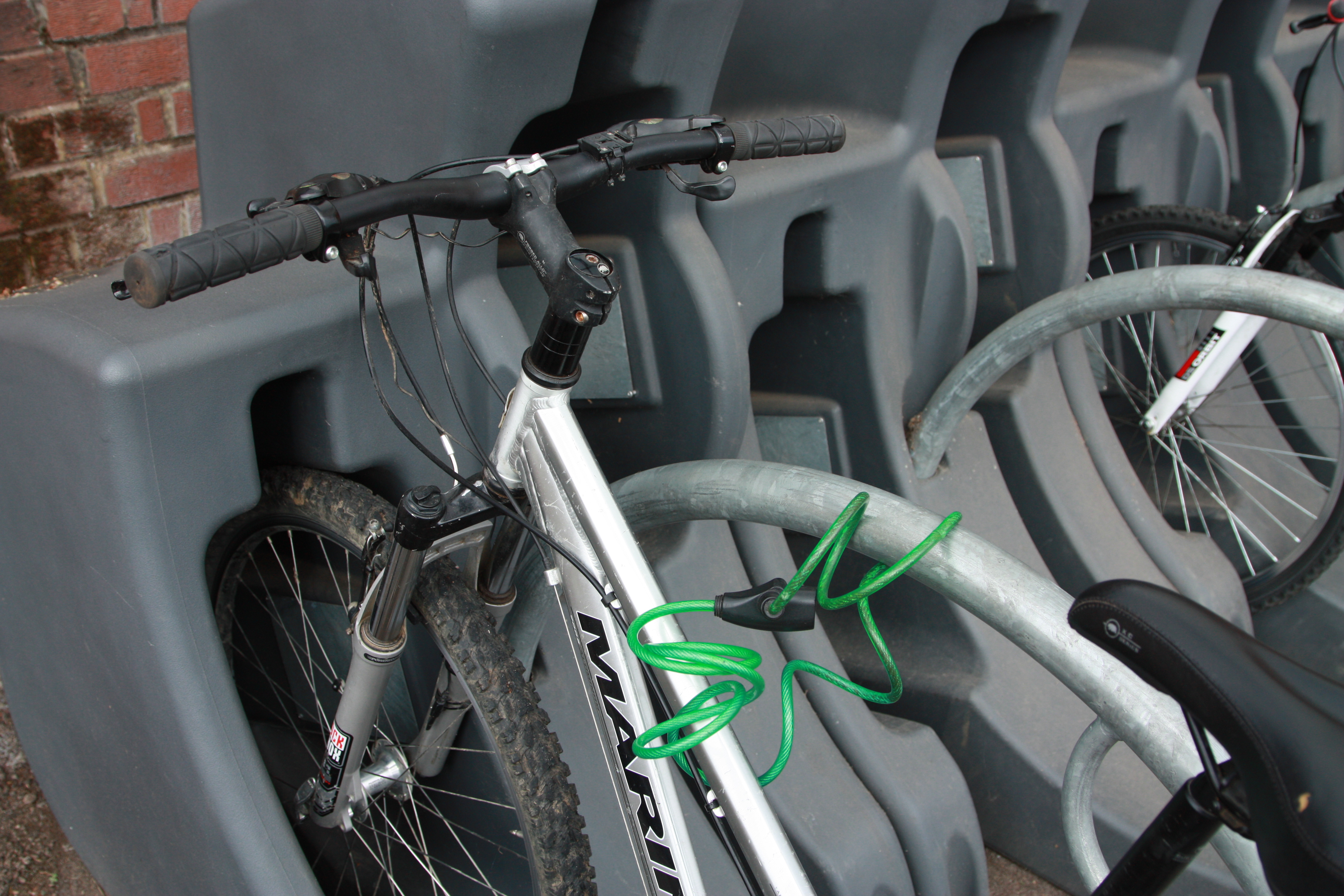
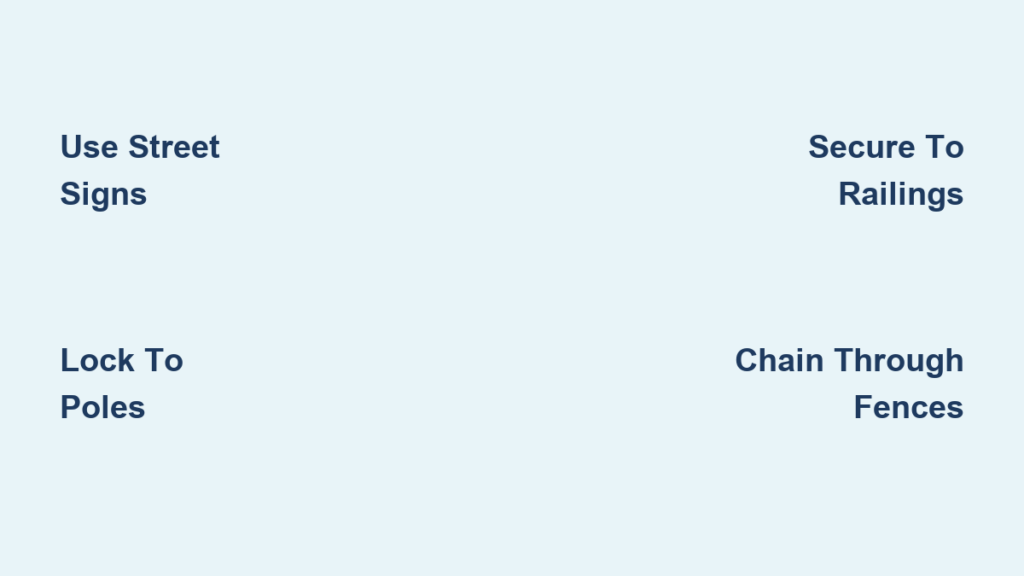
Stop searching for perfect bike racks—use existing urban infrastructure creatively. Street signs with crossbars, bench legs, and even fire hydrants become theft-resistant anchors when locked correctly. The key is selecting fixtures anchored below ground level with no separation points.
How to Evaluate Street Furniture Security
| Fixture Type | Pass Test? | Why It Works |
|---|---|---|
| Cast iron bench legs | ✅ | Solid metal, no separation points |
| Traffic sign posts | ✅ | Buried 3+ feet deep, no cut points |
| Wooden utility poles | ❌ | Can be sawed through below lock |
| Chain-link fences | ❌ | Cut sections can be lifted off |
Critical Check: Shake the fixture firmly—if it moves at all, it’s unsafe to lock to. Thieves can lever loose objects free in under a minute.
The Double-Lock Method: Two Different Lock Types Only

Never use two identical locks (like two U-locks). Thieves carry specialized cutters for specific lock types. Instead, combine fundamentally different mechanisms: a hardened steel U-lock PLUS a 10mm+ cable lock with pick-resistant cylinder. This forces thieves to carry multiple heavy tools, increasing their detection risk.
Why Material Variety Matters
- U-locks: Resist bolt cutters but vulnerable to angle grinders
- Cable locks: Flexible positioning but cuttable with aviation snips
- Chain locks: Heavy but resist leverage attacks
Time-Saver: Pre-thread your cable through frame and rack before inserting the U-lock. This creates an interdependent system—you can’t remove one lock without the other in place.
Elevate Locks Above Ground Level Using DIY Lifters
Thieves work fastest when locks sit on stable surfaces. Eliminate this advantage by suspending your lock 6+ inches off the ground. Fold a sturdy cardboard tube (like from wrapping paper) around the lock shackle before securing it. When thieves try to brace grinders against pavement, the tube collapses under pressure, making clean cuts impossible.
Improvised Elevation Tools
- Cardboard tubes: From paper towels or foil rolls (water-resistant if coated)
- Rubber yoga blocks: Cut small groove for lock shackle
- 3D-printed lifters: Free designs online for exact lock models
Warning: Avoid foam or soft materials—they compress too easily. Test by standing on your lifter; it should support 50+ lbs without collapsing.
The “Decoy Lock” Psychological Trick
Install a visibly weak secondary lock (like a thin cable) in plain sight while concealing your primary lock. Thieves often grab the most obvious target first, wasting time on the decoy while your real lock remains untouched. Place the decoy through only the front wheel—thieves will assume it’s your main security and flee when it cuts easily.
Effective Decoy Setup
- Secure primary U-lock through frame and rack (conceal in shadowed area)
- Attach thin cable lock through front wheel only (highly visible)
- Position bike so decoy faces street for maximum visibility
- Ensure primary lock requires repositioning bike to access
Expert Note: Works best in high-theft urban zones where thieves operate under time pressure. Avoid in low-traffic areas where thieves may inspect thoroughly.
Secure E-Bikes With Internal Frame Locking

E-bikes attract thieves due to expensive batteries, but standard locks leave critical components exposed. Always lock through the frame’s battery compartment area—even if it means using a smaller D-lock. Many thieves target removable batteries specifically, so prevent access to the release mechanism.
E-Bike Specific Locking Checklist
- Battery lock: Position shackle through battery release tab
- Motor protection: Secure rear hub motor to rack if possible
- Cable management: Lock charging port cover closed
- Display security: Use secondary cable through display mount
Critical Mistake: Never leave battery charging ports exposed—thieves can hot-wire e-bikes in under 90 seconds if ports are accessible.
Test Lock Strength With the “Wiggle Test” Before Leaving
Before walking away, perform this thief-revealing check: Grip your locked wheel and violently shake the bike side-to-side. If any component moves more than 1 inch, thieves can create leverage to snap locks. Pay special attention to rack stability—loose bolts let thieves rock bikes free.
What Movement Reveals
- >1 inch frame movement: Rack is improperly anchored (thieves can lever bike off)
- Cable stretching: Indicates undersized cable (cuttable with cheap tools)
- Lock shackle play: Shows worn mechanism (vulnerable to snap attacks)
Pro Tip: Carry a small rubber mallet to tap racks firmly into place before locking—this eliminates hidden movement in public fixtures.
Final Note: Bike security succeeds through unpredictability, not just hardware strength. By combining frame-focused locking, strategic elevation, and psychological tricks, you transform basic equipment into a theft-resistant system that adds critical minutes to thief timelines. Always prioritize locking through the frame triangle over secondary components, and never rely on a single lock type. For ongoing protection, inspect your locking points monthly for wear—rusted racks or damaged pavement create new vulnerabilities. Remember: the best bike lock idea is the one thieves don’t anticipate because it breaks every pattern they’ve learned. Stay unpredictable, and your ride stays yours.