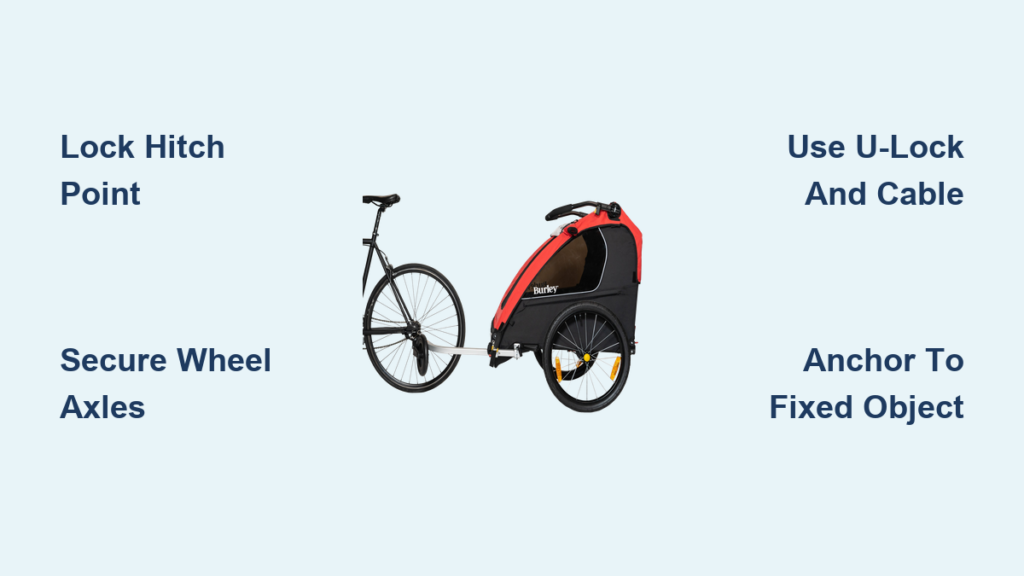
You’ve invested in a quality Burley bike trailer to safely transport your children or gear, but have you considered how vulnerable it is when parked? Without proper security measures, your Burley trailer could become a thief’s easy target in just minutes. Many parents discover this harsh reality only after their trailer has been stolen from a bike rack or outside a store. The good news is that with the right locking strategy, you can significantly reduce this risk. This guide provides actionable steps to properly secure your Burley bike trailer using methods specifically designed for these popular family transportation solutions.
Burley Trailer Security Vulnerability Points

Unlike bicycles with standard locking points, Burley trailers have unique security challenges that require specific approaches. Understanding where your trailer is most vulnerable helps you implement effective protection.
Critical Weak Points on All Burley Models
Burley trailers feature several inherent security weaknesses that thieves exploit. The most vulnerable areas include the hitch mechanism that connects to your bike, the wheel axles, and the frame itself. The hitch connection point is particularly susceptible as it’s designed for quick attachment and detachment. On models like the Burley Bee, Encore, and Solo, the quick-release hitch can be disengaged in seconds without tools. Wheel axles on most Burley trailers use simple nuts that can be removed with basic wrenches, allowing thieves to steal individual components rather than the entire trailer.
How Thieves Target Burley Trailers
Thieves typically target Burley trailers using opportunistic methods rather than sophisticated techniques. Most thefts occur when trailers are left unattended for just 2-3 minutes outside stores, cafes, or at trailheads. Common tactics include disconnecting the trailer from the bike (if attached), removing wheels, or cutting through less secure attachment points. The compact design of models like the Coho XC makes them especially attractive targets as they can be quickly loaded into a vehicle. Understanding these methods helps you implement countermeasures that address real-world theft scenarios.
Essential Locking Equipment for Burley Trailers

Using the right lock type makes the difference between effective security and false confidence. Not all bicycle locks work well with trailer-specific vulnerabilities.
Choosing the Right Lock Type
For comprehensive Burley trailer security, you need locks specifically suited to the trailer’s construction. U-locks provide the strongest protection for frame attachment points but may not reach all critical areas. Heavy-duty cable locks (10mm+ thickness) work best for securing wheels to the frame and connecting to fixed objects. Combination locks offer convenience but generally provide less security than keyed options. Consider carrying two different lock types: a sturdy U-lock for the main frame and a thick cable lock for secondary points. Always look for locks with Sold Secure ratings, with Gold rating providing the highest protection for valuable trailers.
Locking Points on Different Burley Models
Different Burley models have specific secure attachment points that work best with proper locks. On the Encore and Solo models, the rear axle bolt provides a solid locking point when secured to an immovable object. The Bee model’s frame features a reinforced section near the hitch that can accommodate a U-lock. For Coho XC and other cargo models, the steel frame rails offer multiple locking opportunities. Always position your lock through the trailer frame and around a permanent fixture rather than just securing the hitch point, which is designed to release. When locking wheels, secure both the wheel rim and the axle to prevent wheel removal.
Step-by-Step Trailer Locking Procedure
Following a systematic approach ensures you don’t miss critical security steps when parking your Burley trailer.
Securing Your Trailer to an Immovable Object
Begin by positioning your trailer next to a solid, fixed object like a bike rack post, signpost, or securely anchored fixture. For maximum security, choose objects that are cemented into the ground rather than surface-mounted racks. Thread your primary lock (U-lock recommended) through both the trailer frame and the fixed object. On most Burley models, the optimal spot is through the rear frame section near the axle. Ensure the lock shackle is fully closed and secured. For added protection, use your secondary lock (cable) to secure the wheels by threading it through the spokes and around the frame. This two-lock system dramatically increases the time and tools required for theft.
Quick-Stop Security for Brief Unattended Periods
When making quick stops where full security isn’t practical, implement these minimum protection measures. Always disconnect the trailer from your bicycle to prevent both from being stolen together. Fold the trailer’s canopy completely to make it less appealing to thieves. Secure the hitch connection point with a small cable lock through the quick-release mechanism. While this isn’t theft-proof, it adds enough inconvenience to deter opportunistic thieves. Never leave children or valuable items inside an unattended trailer, even for “just a minute” – most trailer thefts occur during these brief periods.
Common Locking Mistakes to Avoid

Many users unknowingly compromise their trailer security through preventable errors that make theft easier.
Ineffective Lock Placement Errors
The most common mistake is locking only the hitch point, which is designed for quick release and offers virtually no security. Another frequent error involves using locks that are too large, creating excess space that thieves can exploit with leverage tools. Positioning locks where they can be easily cut with bolt cutters (like against straight frame sections) also reduces effectiveness. Always choose lock positions that require thieves to maneuver around the trailer’s structure, making cutting more difficult. Avoid locking through plastic or composite parts that can be easily broken.
Security Oversights During Transport
Many trailer owners focus only on parking security while neglecting protection during transport. When transporting your Burley trailer on a vehicle rack, use dedicated trailer straps rather than repurposed cargo straps. Secure both the hitch point and the trailer frame to the vehicle. During bike rides, keep your keys accessible but secured to prevent loss if you need to make an unexpected stop. Never leave your trailer unattended while running errands, even if you can see it from inside a store – most trailer thefts happen within clear sightlines but outside building entrances.
Theft Prevention Strategies Beyond Locking
Effective trailer security involves more than just physical locks – implementing layered protection strategies significantly reduces risk.
Parking Location Selection Tactics
Where you park your trailer matters as much as how you lock it. Choose well-lit areas with high foot traffic, as thieves prefer secluded spots. Position your trailer in the middle of bike racks rather than at the ends, making it harder to maneuver away. Avoid parking near fences, walls, or landscaping that could provide cover for thieves. When possible, park near security cameras or business entrances where staff might notice suspicious activity. At trailheads, avoid leaving your trailer at the very front of the parking area where thieves can quickly load it into a vehicle.
Visible Deterrents and Identification Methods
Make your trailer less appealing to thieves through visible security measures. Engrave your driver’s license number or a unique identifier on the frame (check local laws first). Apply high-visibility tape or decals that make the trailer stand out. Consider adding a secondary alarm system designed for trailers. Register your trailer with local bicycle registries if they accept trailers. Some owners attach a “bait” item like an old bike lock that looks valuable but is actually secured to draw attention away from the trailer itself. These visible deterrents often make thieves select easier targets.
Maintenance for Ongoing Security Effectiveness
Regular maintenance ensures your locking system remains effective over time.
Lock and Trailer Hardware Checks
Inspect your locks monthly for signs of wear, corrosion, or damage that could compromise security. Check that lock mechanisms operate smoothly and keys turn without resistance. Examine your trailer’s frame at locking points for stress marks or deformation that might indicate previous tampering. Lubricate lock mechanisms with graphite powder (never oil-based lubricants) to maintain function in various weather conditions. Replace any lock that shows signs of forced entry attempts, even if it still functions. Remember that a compromised lock provides false security.
Seasonal Security Adjustments
Security needs change with seasons and usage patterns. During winter months when trailers see less use, store them in secure locations rather than leaving them outside. In summer when usage increases, consider adding secondary locks for extended unattended periods. Before storing your trailer for off-seasons, clean and lubricate all locking points to prevent corrosion. Update your security approach based on local crime trends – if trailer thefts increase in your area, upgrade to higher-security locks immediately.
When Maximum Security is Critical
For high-risk situations or valuable trailer models, implement these advanced protection methods.
Multi-Lock Systems for High-Theft Areas
In regions with high trailer theft rates, use three different lock types simultaneously: a U-lock through the frame, a cable lock securing wheels, and a chain lock through secondary frame points. Choose locks from different manufacturers that require different cutting tools. Position locks at varying angles to prevent simultaneous access. Consider investing in a heavy-duty trailer-specific security system that permanently attaches to your trailer frame. While this adds weight, it dramatically increases the time and noise required for theft, making your trailer an unattractive target.
GPS Tracking as a Security Supplement
For ultimate peace of mind, supplement physical locks with GPS tracking technology. Small, hidden GPS units can be mounted inside the trailer frame or storage compartments. Choose models with long battery life and geofencing capabilities that alert you if the trailer moves outside designated areas. While tracking doesn’t prevent theft, it significantly increases recovery chances. Look for units specifically designed for vehicle/trailer use with strong mounting options that survive attempted theft. Remember that tracking should complement, not replace, physical security measures.
Final Note: Properly securing your Burley bike trailer requires understanding its specific vulnerabilities and implementing targeted protection strategies. By using the right lock types in optimal positions, avoiding common mistakes, and adding layered security measures, you can dramatically reduce theft risk. Remember that no security method is 100% theft-proof, but making your trailer more difficult to steal than others nearby is often enough protection. Regularly review and update your security approach based on local crime trends and your specific usage patterns to keep your valuable Burley trailer safe.