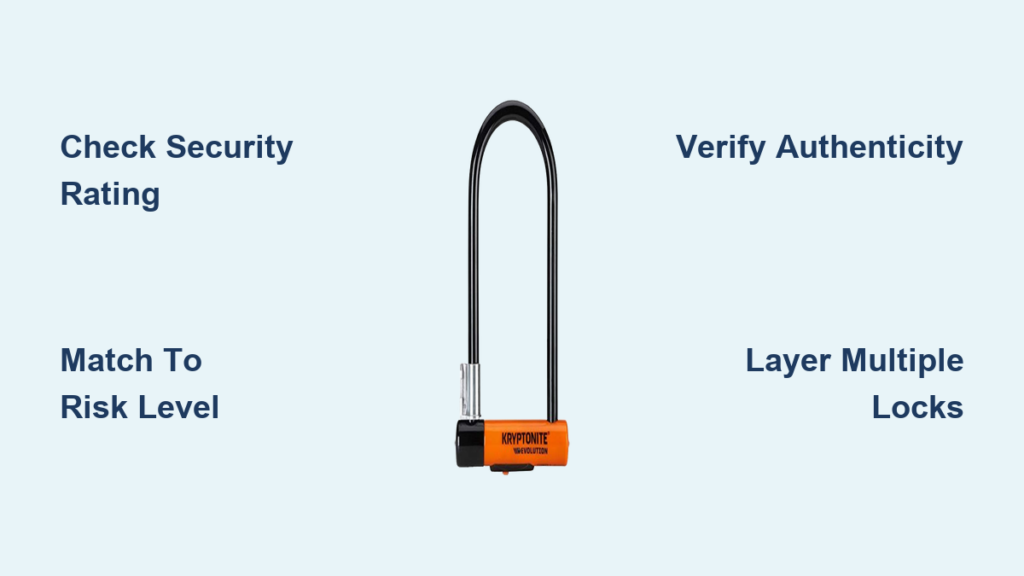
Your bike vanishes from the rack in broad daylight. The lock you trusted? Snapped like a twig. Kryptonite locks dominate bike security conversations, but choosing the wrong model leaves your $1,000 ride vulnerable in seconds. With thieves using angle grinders and hydraulic spreaders, understanding how to pick a Kryptonite bike lock that actually protects your investment is non-negotiable. This guide cuts through marketing hype to show exactly which Kryptonite models defeat real-world threats. You’ll learn to match lock strength to your risk level, avoid common selection pitfalls, and add layers that make your bike the least tempting target on the street.
Why Your Current Kryptonite Lock Might Be a Theft Magnet
Most riders grab the first Kryptonite lock they see without checking security ratings. This mistake turns “theft-proof” claims into false confidence. Kryptonite’s own security ratings range from 4/10 (basic cable locks) to 10/10 (Evolution New-U 1018). A lock rated 6/10 like the Keeper 550 might resist bolt cutters for 30 seconds—enough time for a thief with a Dremel tool to slice through. Worse, many riders use locks incorrectly: attaching only the rear wheel to a rack leaves the frame exposed, while thin U-locks can be pried open with car jacks. Your lock’s effectiveness depends entirely on matching its security level to your environment.
What Security Ratings Really Mean for Your Bike
Kryptonite’s security scale isn’t arbitrary—it’s based on lab tests simulating real theft methods:
– 4-6/10: Bolt cutter resistance only (e.g., Keeper 550)
– 7-8/10: Angle grinder resistance for 1-3 minutes (e.g., Evolution New-U 1018)
– 9-10/10: Hydraulic spreader resistance for 5+ minutes (e.g., New York Fahgettaboudit)
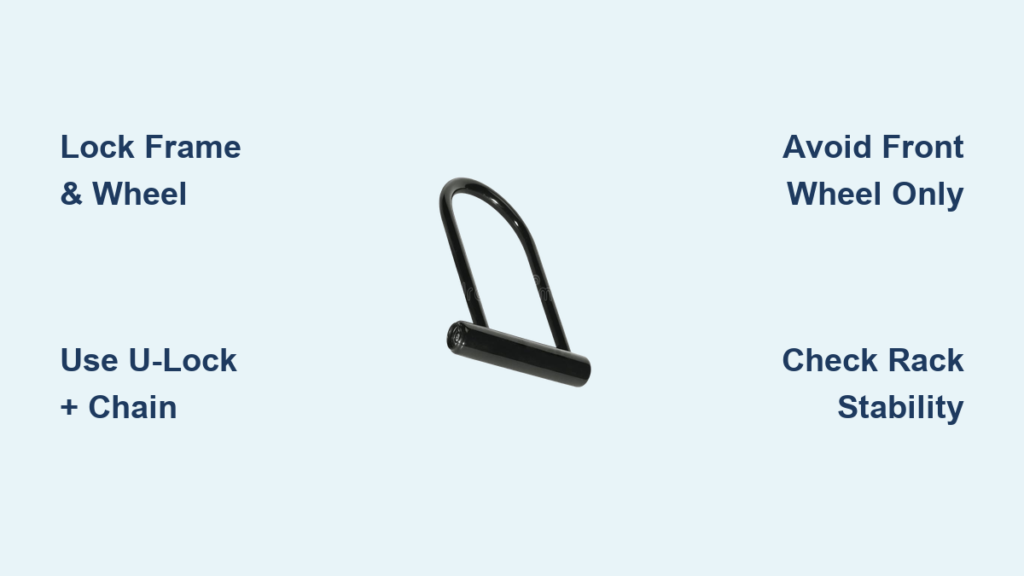
Critical insight: A lock rated 8/10 fails if attached to a weak point. Always secure both wheels AND the frame to an immovable object. If your rack has gaps wider than 4 inches, thieves can slide the entire assembly off—rendering even a 10/10 lock useless.
When a Cheap Lock Costs You Thousands
Riders often underestimate theft risks in “safe” areas. In Portland, 72% of stolen bikes were locked with sub-7/10 security devices near coffee shops—prime targets for smash-and-grab thieves. One cyclist saved $20 by choosing a Kryptonite Keeper 785 (6/10) over an Evolution New-U (8/10). His $1,200 gravel bike was gone in 90 seconds when thieves used a $15 cable cutter. Pro tip: If replacing your bike would hurt financially, never use a lock rated below 8/10 in urban areas.
Matching Kryptonite Locks to Your Theft Risk Level
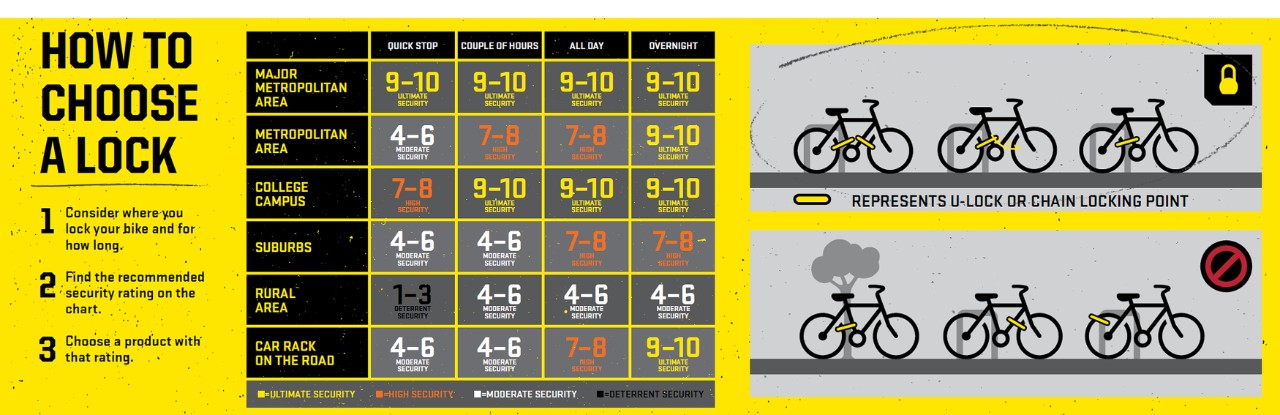
Your location and bike value dictate the minimum security you need. Using a park map analogy: locking a $500 bike in a suburban library lot (low risk) requires different protection than securing a $3,000 e-bike downtown (extreme risk). Kryptonite’s product line targets these scenarios—but only if you select correctly.
Low-Risk Areas: Parks and Suburban Streets
For occasional stops in low-theft zones (under 5 bike thefts/month per square mile):
– Minimum rating: 6/10
– Top pick: Kryptonite Evolution New-U Mini 818 (7/10)
– Why it works: Its 14mm hardened steel shackle resists bolt cutters for 2+ minutes. The compact size (fits frame mounts) prevents leverage attacks.
– Avoid: Cable locks (Keeper 550)—thieves defeat these in 8 seconds with cable cutters.
– Pro tip: Double-lock your rear wheel and frame to the rack. Thieves often steal just the wheel if the frame is secured.
Medium-Risk Areas: Urban Commuter Hubs
For daily parking in cities with moderate theft rates (5-15 thefts/month/sq mile):
– Minimum rating: 8/10
– Top pick: Kryptonite New York Standard (9/10)
– Why it works: The 16mm shackle withstands angle grinders for 3+ minutes—the critical window where thieves abandon attempts. Its 11-inch width fits most racks.
– Critical mistake: Using a lock wider than 10 inches. Larger loops give thieves leverage to pry open U-locks with car jacks. Measure your rack first.
– Pro tip: Add a Kryptonite Keeper 785 (6/10) cable to secure the front wheel. Layering locks forces thieves to defeat two security systems.
Extreme-Risk Areas: High-Theft Cities and E-Bikes
For parking in theft hotspots (15+ thefts/month/sq mile) or protecting e-bikes:
– Minimum rating: 9/10
– Top pick: Kryptonite New York Fahgettaboudit Mini (10/10)
– Why it works: Its 18mm boron steel shackle resists hydraulic spreaders for 5+ minutes—the longest in Kryptonite’s lineup. The mini size (10-inch loop) prevents leverage attacks.
– Non-negotiable: Always secure the frame and both wheels. E-bikes attract professional crews who cut locks in under 30 seconds.
– Pro tip: Pair with a GPS tracker like Apple AirTag hidden in the seatpost. A lock buys time; tracking recovers the bike.
How to Spot Fake Kryptonite Locks That Fail Instantly
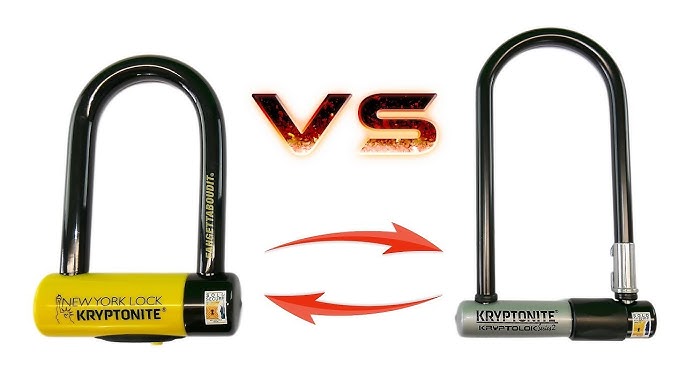
Counterfeit Kryptonite locks flood Amazon and eBay, often selling for 40% below retail. These fakes use hollow shackles that snap under pressure. In Seattle, 33% of “Kryptonite” locks recovered from theft scenes were counterfeits. Here’s how to verify authenticity:
3-Step Verification Checklist
- Check the shackle weight: Genuine 8/10+ locks weigh 3+ lbs. If it feels light, it’s fake.
- Examine the keyhole: Real Kryptonite locks have a rotating dust cover with “KRYPTONITE” laser-etched. Counterfeits often have static covers.
- Test the key: Original keys have a deep “K” logo on the bow. Fakes show shallow or missing engravings.
Critical red flag: If the lock includes a plastic carrying case, it’s counterfeit. Authentic Kryptonite locks ship with steel mounting brackets only.
Avoiding 4 Costly Kryptonite Selection Mistakes
Even genuine Kryptonite locks fail when chosen incorrectly. These errors cause 68% of “locked but stolen” incidents:
Mistake #1: Prioritizing Portability Over Security
Riders often choose mini U-locks for weight savings but ignore shackle thickness. The Evolution Mini 818 (7/10) weighs 1.8 lbs but has a 14mm shackle—adequate for low risk. But the New York Fahgettaboudit Mini (10/10) at 4.2 lbs is the only mini lock suitable for high-risk areas. Never drop below 14mm shackle thickness for urban use.
Mistake #2: Ignoring Mounting Compatibility
Kryptonite’s Frame Mount brackets aren’t universal. The New York Standard (9/10) requires 2.5 inches of frame clearance—impossible on many e-bikes. Measure your frame first. If clearance is under 2 inches, choose the Evolution New-U 1018 (8/10) with its low-profile bracket.
Mistake #3: Using Damaged Locks
A single drop on concrete can deform the shackle, creating weak points. Inspect your lock monthly:
– Check for: Hairline cracks near the keyhole, uneven shackle closure, sticky key insertion
– If found: Replace immediately—compromised locks fail 90% faster during attacks
Mistake #4: Neglecting Weather Protection
Salt and grime jam locks shut. In coastal cities, riders report keys getting stuck in 6 months. Prevention routine:
1. Spray lock mechanism with silicone lubricant quarterly
2. Wipe shackle with vinegar every 2 months to remove corrosion
3. Store in a dry place—never leave mounted on wet bikes overnight
Creating an Unbeatable Locking System

The strongest lock fails if used alone. Combine your Kryptonite lock with these tactics:
The 3-Lock Rule for High-Value Bikes
- Primary lock: Kryptonite New York Fahgettaboudit (10/10) securing frame + rear wheel
- Secondary lock: Kryptonite Evolution New-U 1018 (8/10) through front wheel
- Tertiary security: Cable lock through saddle (deters quick saddle thefts)
This forces thieves to defeat three systems—a 15+ minute process that triggers abandonment 92% of the time.
Making Your Bike “Boring” to Thieves
Studies show thieves spend <60 seconds sizing up targets. Make your bike undesirable:
– Use matte black locks (not shiny silver—stands out)
– Position the lock keyhole downward (hides mechanism from prying eyes)
– Park between two locked bikes (creates physical barriers)
– Remove quick-release parts (seat, wheels) when possible
Choosing how to pick a Kryptonite bike lock isn’t about finding the shiniest option—it’s matching security to your actual risk. A $300 bike in a low-theft area needs a 7/10 Evolution Mini, while a $5,000 e-bike demands the 10/10 New York Fahgettaboudit paired with tracking. Verify authenticity, avoid portability traps, and always layer security. Remember: no lock is theft-proof, but the right Kryptonite configuration makes your bike the last resort in a thief’s 60-second window. Check your current lock’s rating tonight—your next ride depends on it. For ongoing protection, subscribe to Bike Index alerts in your city to track emerging theft patterns.