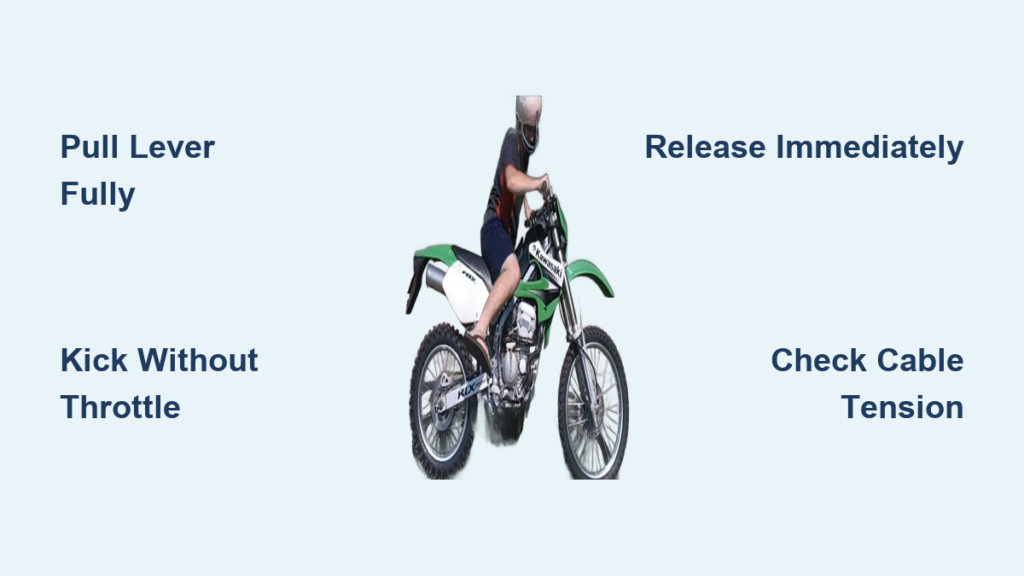
That heart-sinking moment when your engine won’t restart after a quick break on the trail—that’s the frustrating reality of improper dirt bike hot start technique. You’ve just finished an intense session, kill the engine to catch your breath, and when you try to kick it back to life, it either coughs weakly or refuses to fire completely. This common four-stroke dilemma affects riders of all skill levels, but understanding your bike’s hot start system transforms warm engine restarts from frustrating ordeals into quick 30-second procedures. Unlike the choke system many riders mistakenly confuse it with, the hot start lever serves a specific mechanical purpose designed exclusively for warm engine conditions. This guide reveals exactly when to use it, how to troubleshoot common problems, and why most riders misuse this critical component—plus practical replacement options when your system fails.
Why Your Warm Engine Refuses to Restart
The hot start lever exists for one precise reason: combating the physics of heated air inside your combustion chamber. When your dirt bike engine runs, heat causes air molecules to expand and spread apart, reducing oxygen density by up to 20% compared to cold conditions. This oxygen-poor environment creates a fuel mixture too rich for proper ignition—like trying to light a wet match. The hot start lever solves this problem by opening a dedicated air passage that bypasses your normal intake system, flooding the combustion chamber with fresh, oxygen-rich air to balance the ratio.
Most riders mistakenly believe the hot start works like a choke by adding fuel, but the opposite is true—it leans out the mixture by adding air. This critical distinction explains why twisting the throttle during warm restarts often makes the problem worse: you’re dumping additional fuel into an already-rich mixture. When your warm engine sputters and dies immediately after kicking, look for these visual cues:
– A faint “popping” sound from the exhaust
– Strong gasoline smell from the muffler
– Spark plug appearing wet or blackened when removed
Pull, Kick, Release: The 3-Step Hot Start Sequence That Works
Follow this exact procedure for reliable warm engine restarts every time:
- Pull the hot start lever fully (don’t partially engage it)
- Kick through the full stroke with consistent force—no throttle twist
- Release the lever immediately once the engine fires and runs smoothly
This sequence works because it temporarily creates the perfect air-fuel ratio for ignition in warm conditions. Many riders fail at step two by twisting the throttle—a habit carried over from two-stroke riding that floods four-strokes. If your engine still refuses to start after three kicks with the hot start engaged, check these common failure points:
- Cable tension issues: Your hot start cable may have stretched, preventing full valve opening
- Dirt in the air passage: Debris can clog the dedicated air channel
- Worn lever mechanism: Gritty or sticky movement indicates internal wear
Pro Tip: For stubborn engines, give the throttle two quick blips before pulling the hot start lever—this primes the intake with just enough extra fuel to help ignition without flooding. But stop immediately if your bike starts running poorly after ignition.
Stop Misusing Your Hot Start Lever: When NOT to Pull It

Most riders engage their hot start lever unnecessarily, actually making restarts harder. Your warm engine only needs this system when:
– The engine has reached full operating temperature (10+ minutes of riding)
– You’ve been stopped for 2-15 minutes (not immediately after shutdown)
– Normal restart attempts fail after 2-3 kicks
Critical mistake to avoid: Using hot start for cold engines or immediately after shutdown. Pulling the lever when unnecessary creates an overly lean mixture that won’t ignite, wasting precious kick attempts when you’re stranded on the trail. Instead, follow this decision flow:
- Attempt normal restart (no hot start)
- If no ignition after 2 kicks, pull hot start lever
- Kick once with lever engaged
- If successful, release immediately; if not, wait 10 seconds before trying again
Riders who consistently need the hot start for cold engines likely have jetting problems—specifically an overly rich pilot circuit that requires adjustment. This pattern serves as your diagnostic clue for deeper tuning issues.
Diagnose Cold Starting Problems That Mimic Hot Start Failure
When your dirt bike refuses to start cold, the problem rarely involves the hot start system—it’s usually valve clearance issues. As your engine heats and cools through repeated rides, valve clearances gradually drift from factory specifications. Intake valves are particularly vulnerable, and when clearance becomes too tight, the valve fails to seat properly during the intake stroke, disrupting the air-fuel mixture.
Warning: Ignoring valve clearance problems leads to catastrophic engine damage. Check clearances if you notice:
– Increasing number of kicks required for cold starts
– Engine running rough for the first minute after cold start
– Metallic clicking sounds from the valve cover area
The fix requires specialized tools and knowledge—most riders should schedule professional valve adjustments every 15-20 hours of riding. Don’t confuse this with simple starting technique; valve issues demand mechanical intervention.
Hot Start Lever Replacement Options That Won’t Break the Bank
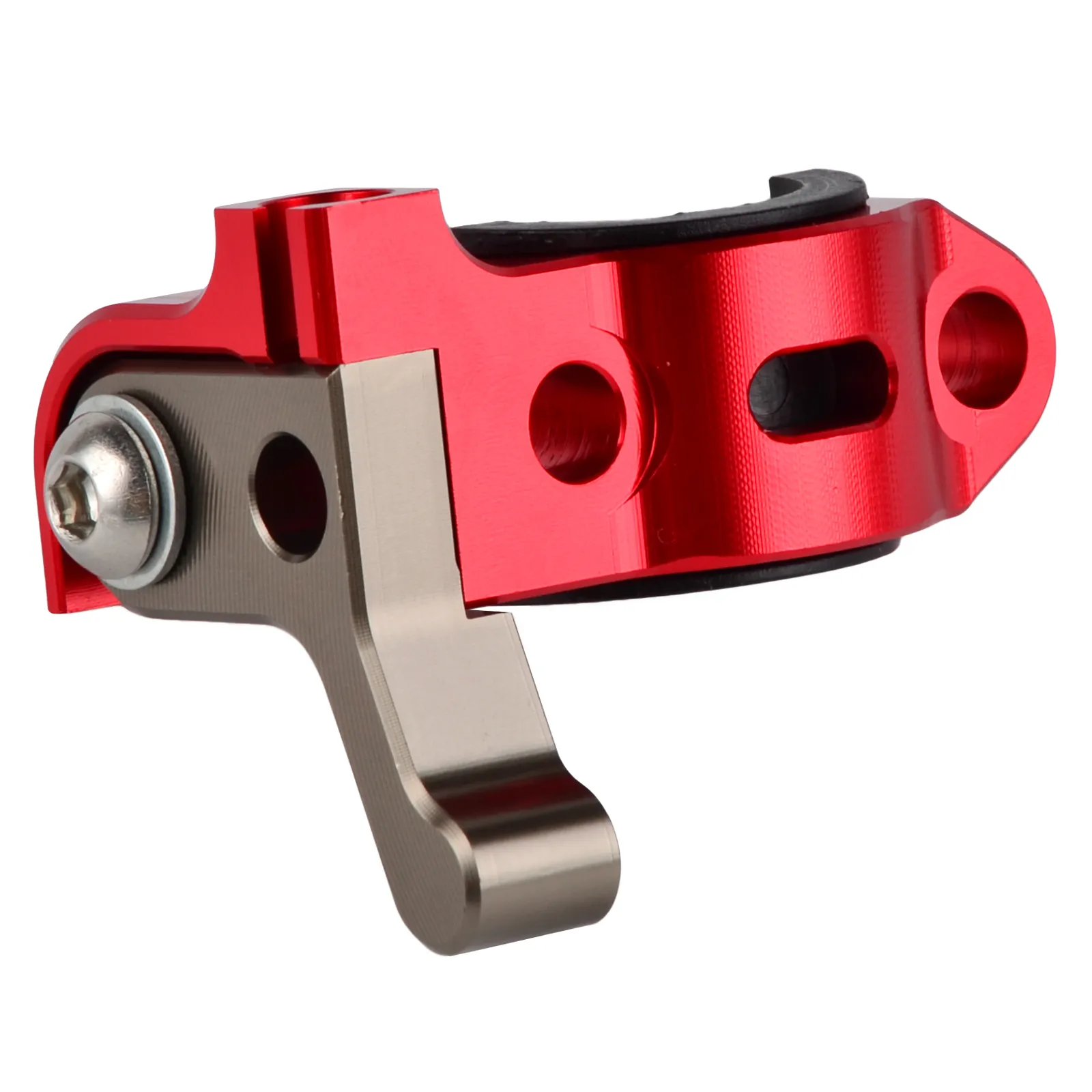
When your hot start lever fails, replacement costs vary dramatically based on your needs:
| Product Type | Price Range | Best For | Lifespan |
|---|---|---|---|
| Universal aluminum lever | $13-$15 | Budget replacements, casual riders | 1-2 seasons |
| Complete clutch perch assembly | $25-$70 | Handlebar upgrades, aesthetic matching | 2-3 seasons |
| Premium ASV Unbreakable series | $55-$200 | Competitive riders, crash-prone riders | Season+ |
| OEM model-specific | $25-$45 | Exact factory replacement | Varies |
For Honda CRF owners (2002-2019 models), the All Balls Hot Start Plunger Kit ($20-$30) often solves issues without full lever replacement. This rebuild kit targets the internal mechanism that frequently wears out before the lever itself fails.
Installation tip: When replacing cables, adjust them with exactly 1-2mm of free play at the lever—too tight causes constant enrichment, too loose prevents full activation. Test operation by watching the carburetor’s enrichment valve move through its full range as you pull the lever.
Prevent Hot Start Failures With 5-Minute Maintenance
Keep your system functioning reliably with these simple maintenance steps performed every 5 riding hours:
Weekly inspection routine:
– Pull the lever while watching the carburetor’s enrichment valve—ensure full travel
– Clean dirt from lever pivot points with degreaser and soft brush
– Apply light lubricant to cable housing entry points
– Check for frayed cables or cracked lever housings
Critical warning: Never ride with a sticky hot start lever—partial engagement creates dangerous lean conditions that can melt pistons. If your lever doesn’t return smoothly to the neutral position after release, address the issue immediately.
For riders in dusty conditions, apply a light coat of waterproof grease to the lever mechanism monthly. This prevents sand and debris from binding the moving parts—a common failure point that turns simple restarts into trailside emergencies.
Mastering your dirt bike hot start system means spending more time riding and less time fighting with a stubborn engine. Remember the golden rule: only pull the lever when warm restarts fail after 2-3 normal kicks. Proper maintenance prevents 90% of hot start failures, while understanding the actual mechanism—air enrichment rather than fuel addition—solves most user errors. When replacement becomes necessary, match your investment to your riding intensity: casual trail riders need basic $15 levers, while competitive riders benefit from premium $200 assemblies. Keep your system clean, properly adjusted, and used only when necessary, and you’ll never again waste precious ride time battling a warm engine that refuses to restart.