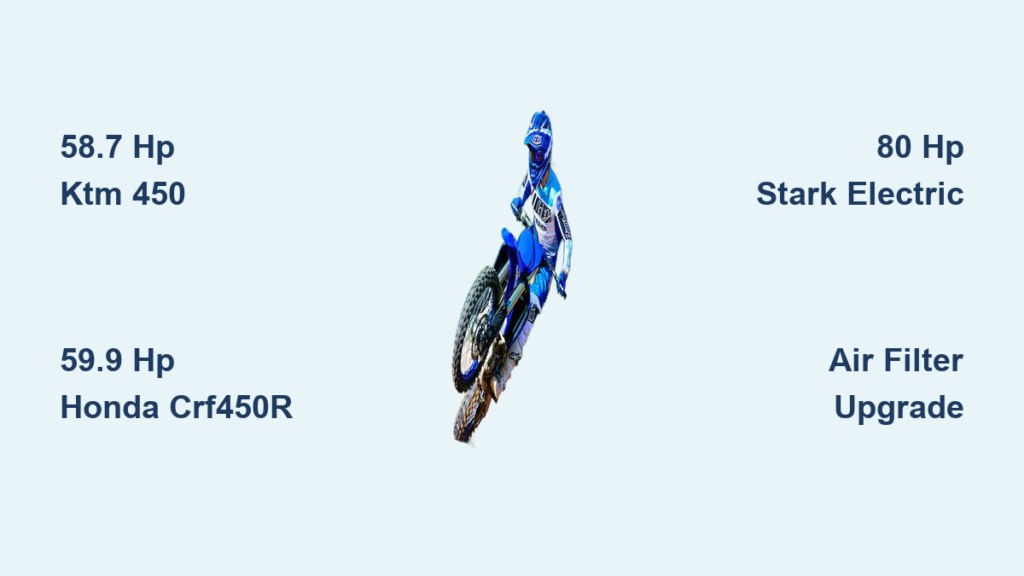
When you’re standing at the starting line with competitors revving their engines, dirt bike horsepower becomes more than just a number—it’s your weapon for victory or your ticket to early elimination. Understanding the real-world implications of those horsepower figures separates casual riders from serious competitors. Modern dirt bikes span an incredible spectrum, from beginner-friendly machines delivering under 30 horsepower to electric powerhouses exceeding 80 horsepower. This guide cuts through marketing hype to deliver the actual rear-wheel horsepower numbers that matter for your riding experience, plus crucial insights on how to match power to your skill level and maximize performance from your machine.
KTM 450 SX-F’s 58.7 HP Dominates 2026 Motocross Power Rankings
The 2026 KTM 450 SX-F sets the benchmark with 58.7 peak horsepower and 35.1 lb-ft of torque measured at the rear wheel, continuing KTM’s reign in the premium 450cc segment. This Austrian powerhouse delivers aggressive mid-range punch that translates directly to explosive acceleration out of corners and over jumps. The lightweight chassis ensures you can harness every bit of that substantial power without fighting excessive weight.
You’ll notice the difference immediately when comparing to previous models—the updated ECU mapping creates a smoother transition from low to mid-range, eliminating the abrupt power surge that could unsettle less experienced riders. For serious competitors, the 58.7 HP figure represents a sweet spot between raw power and manageable delivery that has contributed to multiple championship titles.
Yamaha YZ450F’s 57.9 HP: Why Smooth Power Beats Peak Numbers
Yamaha’s 2026 YZ450F delivers 57.9 peak horsepower and 34.8 lb-ft of torque with a power delivery that prioritizes smoothness over aggression. This engineering philosophy pays dividends on technical tracks where precise throttle control matters more than brute force. Professional riders consistently praise the YZ450F for its linear power curve that builds progressively through the rev range.
The real advantage shows when fatigue sets in during long motos—you’ll maintain control when others lose traction because Yamaha’s power delivery doesn’t punish minor throttle errors. This bike excels for riders who value consistency over peak numbers, proving that sometimes 0.8 fewer horsepower means faster lap times when the power comes exactly when you need it.
Kawasaki KX450’s 57.2 HP: Technical Track Power Delivery Analysis
Kawasaki’s 2026 KX450 produces 57.2 peak horsepower and 34.5 lb-ft of torque with significant improvements in throttle response and overall power delivery efficiency. The refined exhaust system and updated ECU mapping create a flatter torque curve that provides consistent pull across the entire rev range. On tight, technical tracks requiring constant gear changes, this power characteristic proves invaluable.
Don’t be fooled by the slightly lower peak number—the KX450’s power delivery remains remarkably consistent from low RPM all the way to redline. For intermediate riders stepping up from 250cc bikes, this predictable power makes the transition less intimidating while still delivering championship-caliber performance when properly ridden.
Honda CRF450R’s 59.9 HP: Breaking Down 2024’s Top Dyno Results
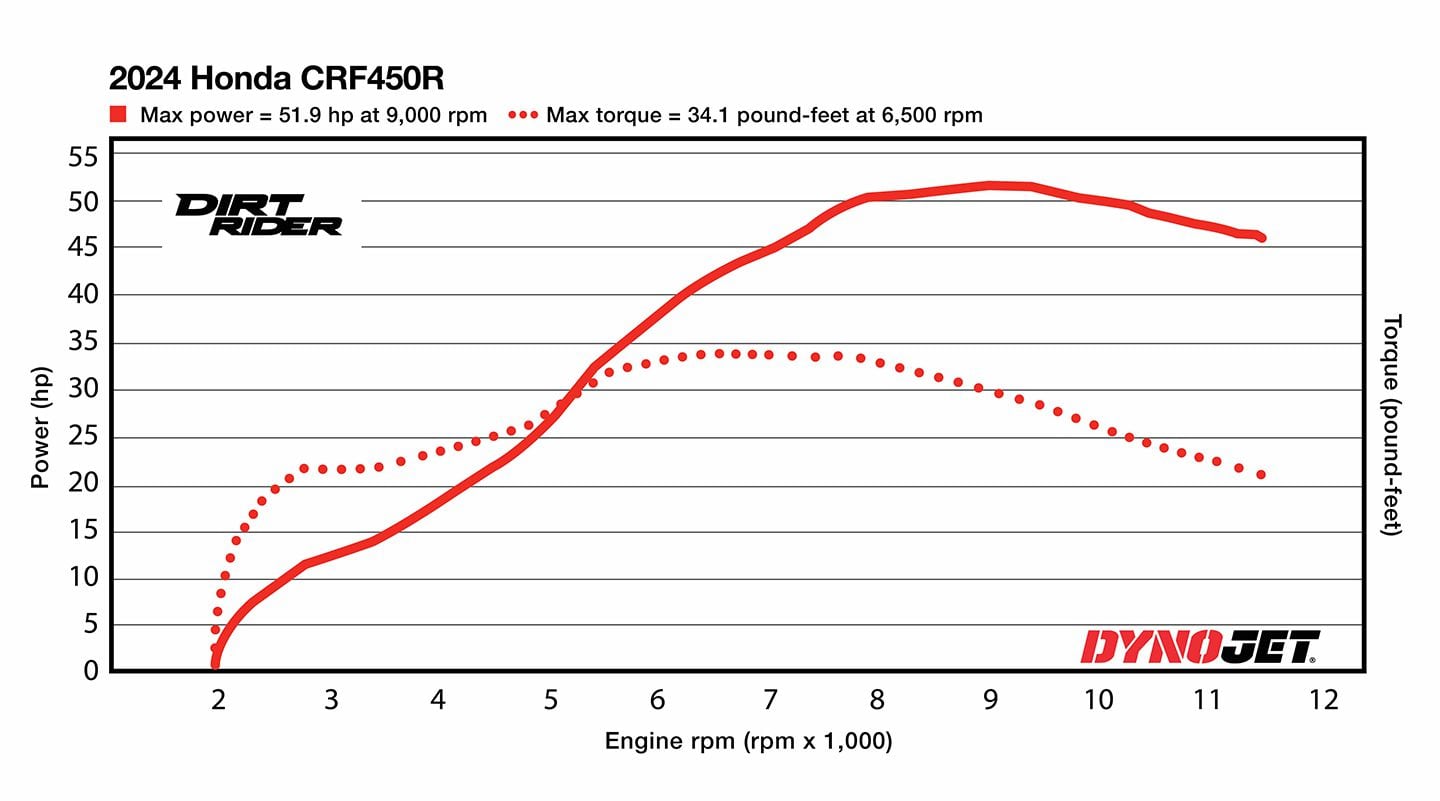
Honda’s 2024 CRF450R leads the previous model year with an impressive 59.9 peak horsepower and substantial 47.7 lb-ft of torque from its liquid-cooled 450cc Uni-cam engine. This power advantage stems from Honda’s fifty years of racing heritage combined with recent championship-winning developments. The higher compression ratio works in concert with an automatic decompression system that prevents stalling during low RPM situations.
What makes the CRF450R special is its Selectable Torque Control system, which allows you to adjust power delivery based on track conditions. Three distinct power modes let you tame that 59.9 HP on slippery tracks or unleash full power when traction permits—giving you tactical advantages competitors can’t match without physical modifications.
Husqvarna FE450’s 63 HP: Enduro Power That Exceeds Motocross Bikes
The Husqvarna FE450 tops the 2024 enduro category with a remarkable 63 peak horsepower from its 450cc engine—the highest production figure currently available. This street-legal machine incorporates Keihin EMS and electric start with a map select switch that adjusts both engine power and traction control settings on the fly.
You’ll experience the difference immediately in challenging terrain where sustained power matters more than short bursts. The standard quickshifter and advanced WP XACT suspension transform this powerhouse into an enduro weapon that devours technical trails while maintaining motocross-level acceleration. Just be prepared—this much power demands respect and advanced throttle control skills.
Stark VARG MX 1.2’s 80 HP Electric Power: Real-World Gas Comparison
The Stark VARG MX 1.2 redefines dirt bike horsepower with its 80-horsepower electric motor that significantly exceeds traditional 450cc gasoline bikes. What makes this electric powerhouse revolutionary is its staggering 973 Newton-meters (approximately 717 pound-feet) of torque at the rear wheel—more than many full-size trucks deliver.
You control the experience through adjustable power delivery from 10 horsepower for beginners up to the full 80 horsepower for experts, all accessible via the handlebar-mounted “Arkenstone” computer. This military-grade Android smartphone functions as your personal race engineer, allowing you to tweak power curves, engine braking, and track performance metrics in real-time.
Adjusting Power from 10 to 80 HP: Electric Bike Customization Advantage
Unlike gas bikes where power modifications require physical work, the Stark VARG MX 1.2 lets you transform your riding experience with the push of a button. This flexibility solves the beginner-to-expert transition problem that has plagued dirt biking for decades—you can start with manageable power and gradually increase as your skills develop, all without visiting a mechanic.
The 7.2 kWh battery promises up to 20% more range than previous models while eliminating the $5,000+ in maintenance costs (oil changes, filter cleanings, engine rebuilds) that gas bike owners face over 100 hours of riding. For serious riders, this means more track time and less wrenching.
Rear-Wheel vs Crank Horsepower: Why Your Dyno Results Lie
Understanding dirt bike horsepower requires recognizing the critical difference between crank horsepower (measured at the engine’s output shaft) and rear-wheel horsepower (measured at the driven wheel). Drivetrain losses through the transmission, chain, and bearings mean rear-wheel measurements will always be 10-15% lower than crank readings—yet manufacturers sometimes quote the higher number to make their bikes appear more powerful.
Tire type significantly affects results too—knobby dirt bike tires lose more power to scrubbing and wheel spin during dynamometer testing compared to street tires. Always verify whether specifications list crank or wheel horsepower when comparing different models, as this single factor can completely distort your perception of a bike’s true performance capabilities.
Power-to-Weight Ratio: Honda CRF450R vs KTM 450 SX-F Real-World Comparison
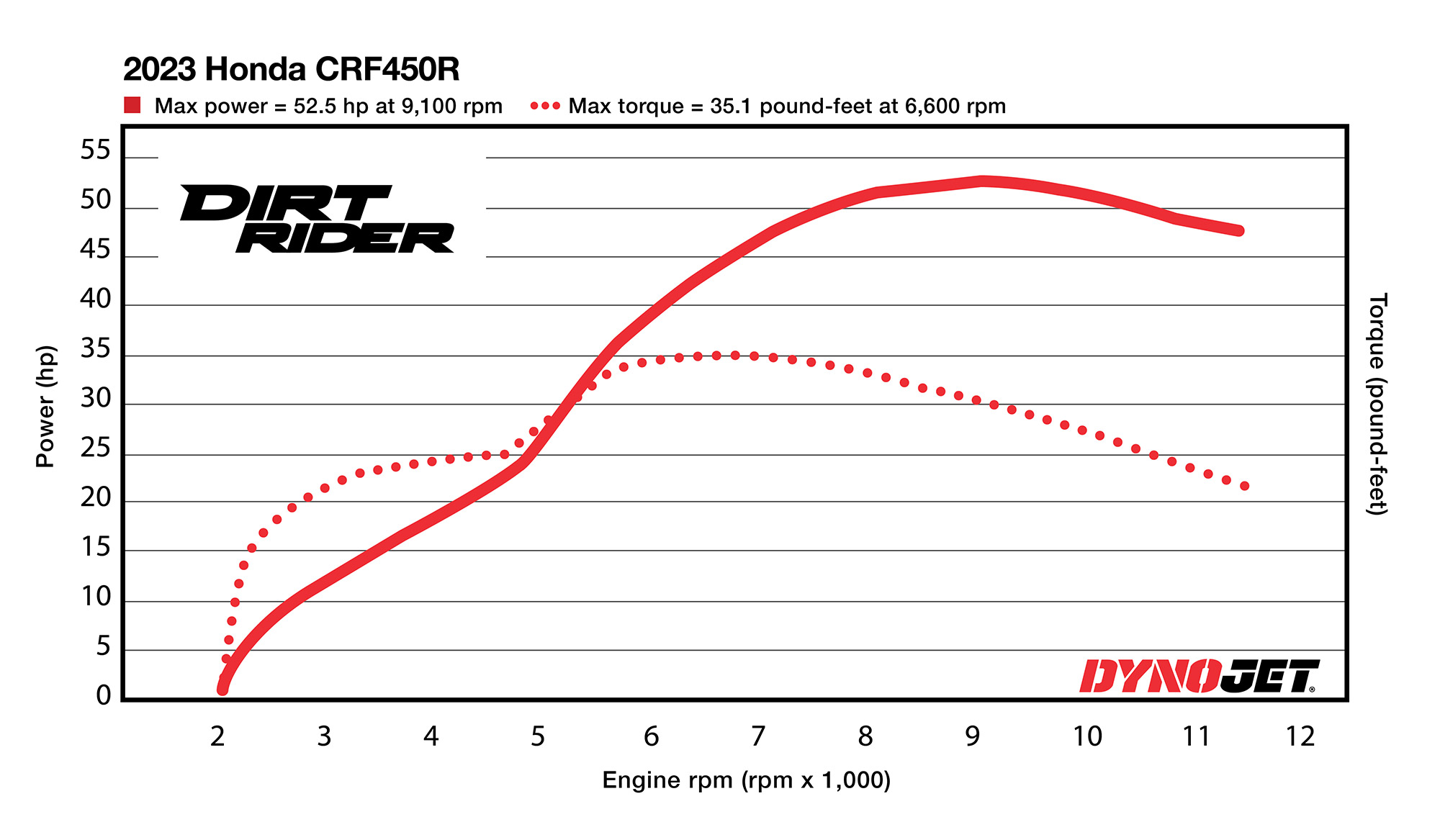
Power-to-weight ratio provides a more meaningful performance indicator than horsepower alone. The Honda CRF450R achieves 0.2445 HP/lb with its 245-pound curb weight and 59.9 peak horsepower, while the lighter KTM 450 SX-F matches this ratio at 0.2445 HP/lb despite producing only 54.8 horsepower—thanks to its significantly lower 226-pound weight.
This explains why the KTM often feels quicker despite lower peak numbers—less weight means more effective power application through corners and over jumps. For trail riders tackling technical terrain, this ratio matters more than absolute horsepower because it determines how easily you can maneuver the bike when power application needs precision.
Beginner to Expert: Matching Horsepower to Your Riding Skill Level
Selecting appropriate dirt bike horsepower means matching power output to your riding experience and physical capabilities. Choosing too much bike can range from frustrating to dangerous, while too little power prevents skill development and creates safety hazards when you can’t keep up with traffic.
- Beginners: Stick with 250cc two-strokes producing 26-30 peak rear-wheel horsepower. These manageable power levels let you focus on fundamentals without constant throttle correction.
- Intermediate riders: Step up to the 45-55 horsepower range with bikes like the 2024 KTM 450 SX-F (54.8 HP) or Suzuki RM-Z450 (54.3 HP). These offer enough power to compete while remaining controllable.
- Experts: Explore the 60+ horsepower category including the Honda CRF450R (59.9 HP) or Husqvarna FE450 (63 HP). The Stark VARG electric bike offers adjustable power up to 80 HP for those seeking maximum performance.
Air Filter Maintenance: Simple $10 Fix for 3-5 HP Gains

A dirty, restricted air filter directly impacts your dirt bike horsepower by choking engine airflow. You can lose 3-5 horsepower from a neglected filter while also reducing fuel economy and potentially damaging your engine through improper air-fuel mixture.
Perform this simple maintenance every 5-10 hours of riding:
– Remove and inspect your air filter before every ride
– Clean with appropriate filter oil after dusty conditions
– Replace according to manufacturer recommendations
– Check for proper seating to prevent unfiltered air intake
This $10 maintenance task restores lost power and protects your engine investment—making it the most cost-effective horsepower upgrade available.
Gas vs Electric: Long-Term Horsepower Maintenance Cost Breakdown
Maintaining peak dirt bike horsepower over time requires different approaches depending on your powertrain. Gasoline bike owners must prioritize regular oil changes using manufacturer-specified grades to protect high-revving engines. The KTM 450 SX-F’s championship pedigree depends on proper valve adjustments and spark plug replacement to maintain that 58.7 HP throughout ownership.
Electric bike owners like Stark VARG MX 1.2 riders should follow battery care guidelines to maintain maximum range and performance. Avoid extreme temperature storage and follow recommended charging protocols—proper battery care preserves that 80 HP output for years rather than seeing gradual degradation.
Regardless of power source, suspension maintenance directly impacts how effectively you use available horsepower. Worn suspension components reduce traction, meaning even a powerful bike becomes difficult to control. Regular inspection of fork seals and shock components ensures your bike puts power to the ground effectively.