Getting your Dahon bike tire pressure right transforms your folding bike from a frustrating daily commute into a smooth, efficient ride that makes you look forward to every journey. Unlike standard bicycles, Dahon folding bikes with their compact 16-inch, 20-inch, or 24-inch wheels demand precise attention to inflation because their smaller contact patch and reduced air volume amplify every pressure decision you make. Whether you ride a Dahon Impulse, D8, or any other model, understanding how tire pressure affects your specific wheel size is the difference between constant flats and a reliable, comfortable ride. This guide reveals the exact pressure settings that match your weight, riding style, and typical terrain—so you can stop guessing and start enjoying your folding bike to its full potential.
The physics behind Dahon bike tire pressure follows an unavoidable principle: for the same total weight, smaller diameter tires must operate at higher pressure to achieve equivalent load-bearing capacity. This happens because reduced internal air volume means each pound of pressure supports less actual weight. Major manufacturers like Schwalbe build this reality into their tire specifications, with smaller diameter tires requiring noticeably higher minimum and maximum pressures. Your Dahon’s compact wheels aren’t just for convenience—they fundamentally change how you should approach inflation.
Why Standard Bike Pressure Guidelines Don’t Work for Dahon Folding Bikes
Dahon folding bikes require different pressure approaches than standard bicycles due to their smaller wheel diameters. While typical road bikes might operate comfortably at 80-100 PSI, your Dahon’s 20-inch wheels need a more nuanced approach that balances performance with the realities of small-wheel physics. The reduced air volume means pressure changes affect ride quality more dramatically—you’ll notice a 5 PSI difference on a Dahon much more than on a standard bike.
For most Dahon models with standard 20-inch tires, the optimal range falls between 50-70 PSI, with 60 PSI as an excellent starting point for average-weight riders (60-90 kg). This range accommodates typical urban riding conditions while accounting for the various tire widths found on Dahon bicycles. Riders who regularly carry cargo or have specific weight considerations should adjust within this range, but never exceed the maximum pressure printed on your tire sidewall.
Pro Tip: When checking your Dahon bike tire pressure, always measure when tires are cold (before riding) for accurate readings. Tire pressure increases 3-5 PSI for every 10°F temperature rise during riding, which can push you dangerously close to maximum limits if you inflate to the max when cold.
Perfect Front vs Rear Pressure Balance for Stable Handling

Your optimal Dahon bike tire pressure setup must account for weight distribution to prevent dangerous handling issues. Approximately 60% of your body weight rests over the rear wheel, meaning your rear tire needs higher pressure than the front to handle this additional load. Running equal pressures in both tires underinflates the rear relative to its load, causing excessive sidewall flex, increased rolling resistance, and higher risk of pinch flats.
For standard riding without cargo, maintain a 10-15 PSI difference between rear and front tires (rear higher). When carrying touring gear in panniers, increase this differential by another 10 PSI. One experienced Dahon rider carrying four panniers reported success with 60 PSI front and 80 PSI rear on 37mm tires—a setup that prevented bottoming out while maintaining acceptable ride quality.
Critical Warning: Never drop front tire pressure below 35-40 PSI for 1.5-inch tires, regardless of rider weight. Too-low front pressure risks rim damage when hitting obstacles and creates dangerous handling characteristics that can cause sudden loss of control.
How to Calculate Your Exact Pressure Differential
- Start with baseline pressures: 60 PSI rear, 50 PSI front for 1.5-inch tires
- Add 5 PSI to rear pressure for every 10 kg above 70 kg rider weight
- Subtract 5 PSI from both pressures for every 10 kg below 70 kg
- Increase both pressures by 10 PSI when carrying significant cargo
- Always maintain at least 10 PSI difference (rear higher)
Primo Comet vs Schwalbe Big Apple: Tire-Specific Pressure Settings
Primo Comet Tires: Performance vs Comfort Trade-Offs
If your Dahon Impulse came with Primo Comet 20×1.5-inch tires (37×406), you’re working with high-performance rubber rated for 100 PSI max. These lightweight tires deliver fast rolling on smooth surfaces but create a harsh ride at recommended pressures, especially on urban streets with cracks and bumps. The minimal rubber and carcass material transmits every vibration directly to your hands and seat.
Many Dahon owners report that Primo Comets feel mismatched with folding bikes—their performance orientation doesn’t align with typical utility-focused Dahon use. For daily commuting, most riders find 60-70 PSI provides the best compromise between efficiency and comfort, despite the tires’ 100 PSI maximum rating.
Schwalbe Big Apple Tires: The Comfort Solution
Upgrading to Schwalbe Big Apple 20×2.0-inch tires (50-70mm width) transforms your Dahon’s ride quality by allowing dramatically lower pressures of 30-40 PSI. These balloon-style tires provide what riders call “soft air suspension,” absorbing road imperfections that would jar you on narrower tires. The larger air volume creates a cushioning effect impossible with narrow performance tires.
Expert Note: When switching to wider tires like the Big Apple, check frame clearances on your specific Dahon model first. Some compact folding designs can’t accommodate tires wider than 1.75 inches without rubbing when fully folded or during tight turns.
Avoiding Rim Damage: Safety Limits Every Dahon Owner Must Know
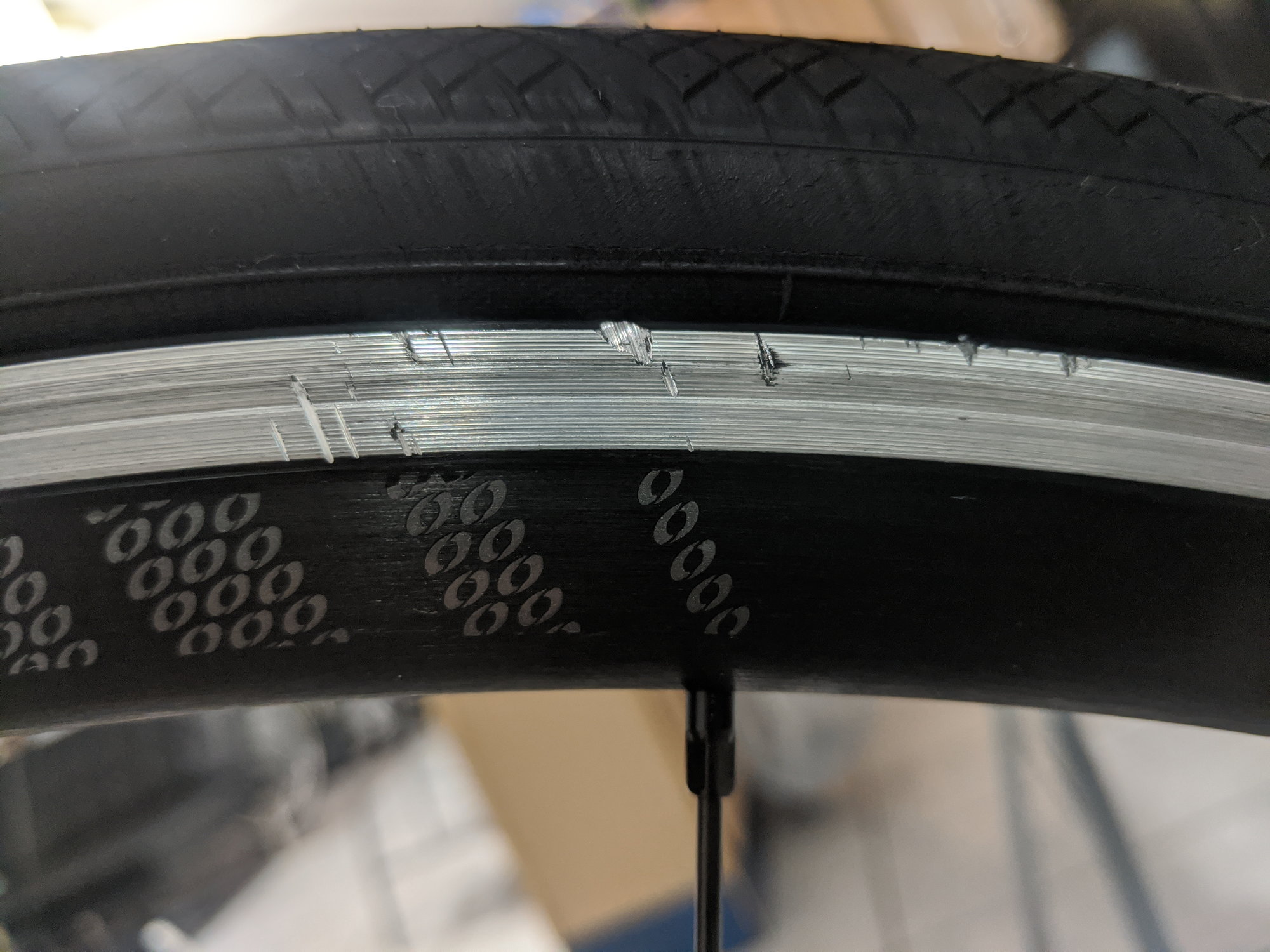
Both your tires and rims have maximum pressure ratings, and exceeding either can cause catastrophic failure. While tire sidewalls clearly display their maximum pressure (“MAX PRESSURE: 100 PSI”), rim maximums are rarely printed and often require research to determine. Many folding bike rims, especially older models, weren’t designed for the high pressures some performance tires specify.
Critical Safety Rule: When rim pressure limits are unknown (common with Dahon bikes), always err toward lower pressures. Excessive pressure creates multiple dangers:
– Gradual spoke loosening from cyclic stress
– Rim deformation or cracking over time
– Reduced traction on wet surfaces due to smaller contact patch
– Increased risk of sudden blowouts from impacts
Under-inflation presents equal dangers—pressures below 35-40 PSI for 1.5-inch tires dramatically increase pinch flat risk when hitting obstacles. The tire compresses until the inner tube pinches between rim and obstacle, causing immediate flat tires that require repair.
Terrain-Specific Pressure Adjustments for Real-World Riding
Smooth Pavement Optimization
For dedicated bike paths or recently resurfaced streets, maximize efficiency with pressures in the 60-70 PSI range for 20-inch Dahon tires. This reduces rolling resistance by minimizing tire deformation at the contact patch, translating to less effort maintaining speed. However, the efficiency gains diminish above 70 PSI while ride harshness continues to increase—most riders find 55-65 PSI the optimal comfort-efficiency balance even on perfect pavement.
Rough Urban Streets and Light Gravel
Lower pressures to 50-60 PSI when navigating cracked sidewalks, cobblestones, or light gravel. This allows tire sidewalls to flex and absorb small bumps while increasing contact patch area for better grip. The trade-off is increased pinch flat risk from sharp impacts—consider wider tires or carrying repair supplies if you regularly encounter rough terrain.
Touring with Panniers: Pressure for Heavy Loads
When carrying touring gear, increase both front and rear pressures by 10 PSI compared to unloaded riding. The rear tire typically requires proportionally more increase since touring loads concentrate weight over the rear wheel. For fully loaded setups with four panniers, 60-65 PSI front and 80 PSI rear may be necessary for 37-40mm tires to prevent bottoming out under heavy loads.
The 5-Step Pressure Testing Method for Your Perfect Setup
Rather than relying on generic charts, find your optimal Dahon bike tire pressure through systematic testing:
- Set baseline: 60 PSI rear, 50 PSI front for 1.5-inch tires
- Test ride: Take 15-minute ride on your typical route
- Evaluate: Note harshness, bounce, or pinch flat occurrences
- Adjust: Increase 5 PSI if experiencing flats; decrease 5 PSI if ride feels harsh
- Repeat: Continue testing until finding your ideal pressure
Most riders discover their optimal pressure falls between 45-65 PSI depending on weight, typical loads, and preferred riding style. Lighter riders (<60 kg) often prefer 5-10 PSI lower than averages, while heavier riders (>80 kg) may need 5-15 PSI higher.
Time-Saving Shortcut: Check pressure weekly with a reliable floor pump (not mini pumps with inaccurate gauges). Folding bike tires lose 1-3 PSI weekly due to their smaller volume—regular checks prevent the gradual under-inflation that causes most pinch flats.
Final Pressure Checklist for Dahon Bike Owners
Your perfect Dahon bike tire pressure setup balances rider weight, tire type, typical loads, and riding surfaces. For most riders on 20-inch bikes with 1.5-inch tires, start with 60 PSI rear and 50 PSI front, then adjust in 5 PSI increments. Always maintain 10-15 PSI difference between rear (higher) and front tires to account for weight distribution.
When carrying cargo, increase both pressures by approximately 10 PSI while preserving the front-rear differential. Stay within the pressure range printed on your tire sidewall, and when uncertain, lean toward lower pressures for comfort unless rim safety becomes a concern. The ultimate goal is finding the pressure that provides acceptable comfort, reliable flat resistance, and satisfactory rolling resistance for your specific riding circumstances—a personal optimization no generic chart can fully replace. Start with these recommendations, test across your regular routes, and refine until your Dahon feels perfectly tuned to your riding style.