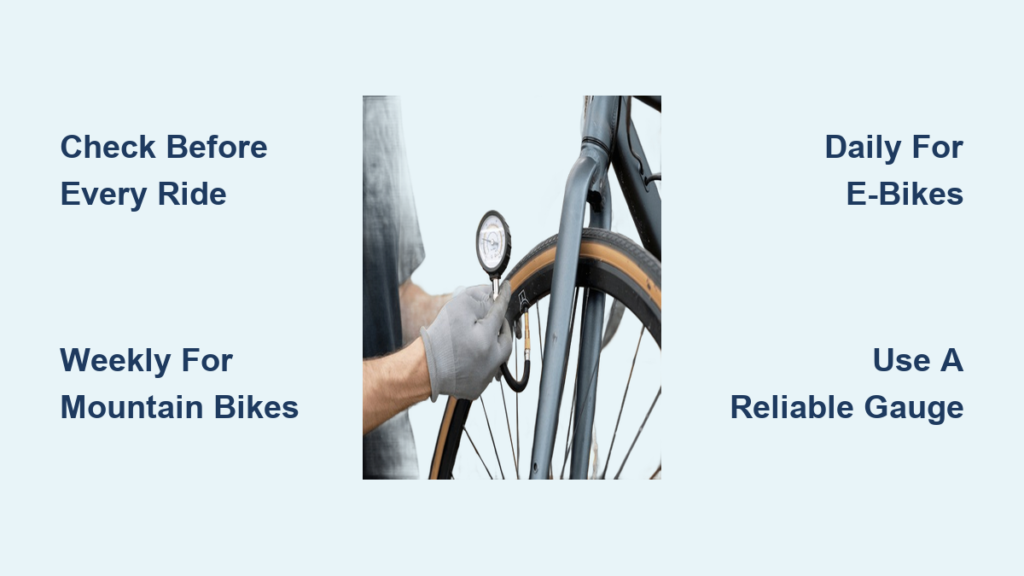
Your bike tires might seem like simple rubber rings, but their pressure profoundly impacts every ride you take. Improperly inflated tires can transform a smooth, efficient journey into a struggle against increased rolling resistance, poor handling, and frustrating flats. The question of how often to check bike tire pressure isn’t one-size-fits-all—it depends on your bike type, riding habits, and storage conditions. Most cyclists should develop a habit of checking tire pressure regularly, as even small deviations from optimal pressure can dramatically affect your safety, comfort, and riding efficiency. This guide cuts through the confusion to tell you exactly how frequently you need to check your tires based on your specific cycling needs.
Check Road Bike Pressure Before Every Ride
Road bike tires require the most frequent attention due to their high operating pressures and narrow cross-sections. These tires typically function between 80 and 130 PSI, and their minimal air volume means that even modest air losses represent significant percentage changes in total pressure. Most road bike tires can lose noticeable pressure after just four or five days of sitting idle, with some riders reporting losses of up to 10 PSI daily depending on tire quality and storage conditions.
For dedicated road cycling enthusiasts, checking tire pressure before every ride represents the gold standard of maintenance. This frequency ensures consistent performance, optimal rolling resistance, and maximum flat prevention. The minute or two spent verifying pressure before each ride pays dividends in preventing being stranded far from home with a flat tire. Riders who use their road bikes less frequently should still check at least once or twice weekly, as natural air loss occurs regardless of whether the bike sits in the garage or encounters daily use.
Why tactile checks won’t cut it for road bikes
The high pressures required for road bikes make tactile inspection unreliable for detecting subtle pressure changes. A road tire that has lost 15 PSI might feel adequately firm to an inexperienced rider while actually operating well below its optimal range. This reality makes a reliable pressure gauge an essential tool for any road cyclist committed to maintaining peak performance. Without precise measurements, you’re essentially guessing at your tire’s condition, risking compromised safety and efficiency on every ride.
Mountain Bike Pressure: Weekly Checks Suffice
Mountain bike tires operate at significantly lower pressures, typically ranging from 25 to 40 PSI for trail riding and potentially dropping to 15 to 25 PSI for technical or muddy conditions. These lower pressures provide crucial traction and shock absorption on rough terrain, but they create different maintenance considerations than their high-pressure road counterparts.
The recommended checking frequency for mountain bikes is at least weekly, with additional verification before longer trail rides or when riding conditions change dramatically. Mountain bike pressure can fluctuate with temperature changes and terrain impacts, making regular verification important for maintaining optimal performance. Riders who frequently encounter rough conditions, rocks, roots, or who engage in aggressive riding should consider checking before each ride, particularly for important outings where tire performance directly affects safety and enjoyment.
Finding your ideal trail pressure
The relationship between pressure and traction makes mountain bike pressure particularly important to verify. Running too low can result in rim damage on hard impacts, while excessive pressure reduces grip and increases harshness. Weekly checks catch natural pressure loss while remaining practical for riders who may not use their mountain bikes daily. Consider keeping a small digital gauge in your trail kit for quick verification before hitting technical sections where precise pressure matters most.
Hybrid and Commuter Bike Maintenance Schedule
Hybrid and commuter bicycles occupy a middle ground between road and mountain bike specifications, with typical pressure ranges of 50 to 70 PSI. These versatile bikes benefit from regular checking schedules that balance convenience with performance requirements.
For daily commuters, checking before every ride ensures reliable transportation and prevents mid-journey flat tire incidents that can disrupt work schedules or leave riders stranded. The consistency of commuting makes incorporating pressure checks into a pre-ride ritual particularly straightforward. Riders who use their hybrids less frequently can maintain a weekly checking schedule, though more frequent verification provides additional peace of mind for those who depend on their bikes for transportation.
Adapting to mixed-surface conditions
The versatility of hybrid tires means that pressure adjustments might be needed when switching between primarily road riding and crushed gravel or mixed-surface paths. Lower pressures improve comfort and traction on unpaved surfaces, while higher pressures maximize efficiency on smooth pavement. This versatility makes regular pressure checking even more important for hybrid owners who encounter varied riding conditions throughout the week.
E-Bike Tire Pressure: Daily Verification Recommended

Electric bikes carry additional weight from motors and batteries, placing different demands on tire pressure than conventional bicycles. This added mass increases rolling resistance and can accelerate pressure loss in underinflated tires, making proper inflation particularly important for maintaining reported range figures and ride quality.
The recommended checking frequency for electric bikes is before every ride, matching the standard for road bikes. Proper inflation improves range, comfort, and flat prevention, all of which are particularly important for e-bike riders who depend on their machines for reliable transportation or recreational riding. The weight of e-bikes also means that underinflation causes more severe consequences, potentially leading to tire damage or dangerous handling characteristics that wouldn’t affect lighter conventional bikes as severely.
Fat Bike Pressure: Weekly Checks With Pre-Ride Verification

Fat bikes, equipped with tires often 4 to 5 inches wide, operate at exceptionally low pressures typically ranging from 5 to 30 PSI. These massive tire volumes create unique pressure dynamics where even small changes of just a few PSI produce noticeable riding differences.
Fat bike owners should check tire pressure weekly as a minimum standard, with additional checks before rides on soft terrain such as snow, sand, or loose gravel. The low operating pressures mean that temperature fluctuations and sitting time can affect ride characteristics significantly, making regular verification particularly important for maintaining intended handling properties. A fat bike that feels perfectly balanced might become harsh and slippery if pressure increases unexpectedly in warm conditions or drops substantially during cold storage.
Natural Air Loss and Permeability Explained
All bicycle tires naturally lose air over time, regardless of whether they use inner tubes or operate tubeless. Neither system is perfectly airtight, and the permeability of rubber compounds means that pressure decreases gradually even without any punctures or visible damage. This phenomenon occurs because air molecules gradually diffuse through the tire material, with higher-pressure tires experiencing faster relative loss due to the greater pressure differential driving the diffusion process.
Road bike tires, with their extremely high operating pressures, lose air more quickly than wider, lower-pressure mountain bike or hybrid tires. The smaller air volume in narrow road tires also means that even small absolute losses represent larger percentage changes, making pressure drops more noticeable and potentially more impactful on ride quality.
Temperature Effects on Tire Pressure
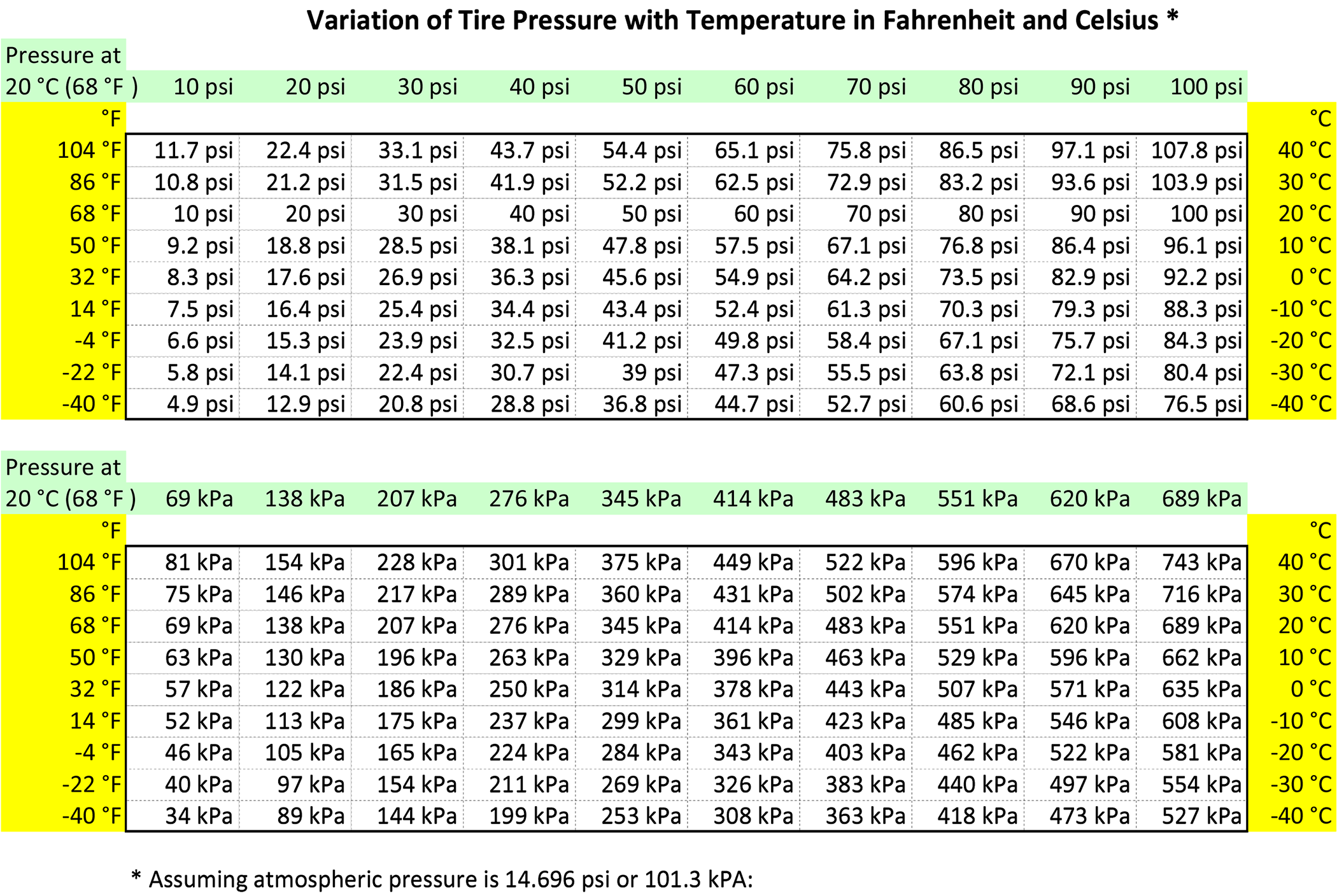
Temperature changes significantly affect tire pressure through the physical relationship between gas volume and temperature. Pressure drops in cold conditions as the air contracts, while warm weather causes pressure to increase as the air expands. A temperature drop of 10°F can reduce tire pressure by approximately 2 to 3 PSI, while the reverse occurs during heating.
This temperature sensitivity means that pressure checks become particularly important when seasonal changes occur or when bikes are stored in environments with significant temperature variation. Riders who store their bicycles outdoors or in unheated spaces should check pressure more frequently, as these storage conditions amplify temperature-related pressure fluctuations.
Choosing the Right Pressure Gauge
Accurate pressure verification requires appropriate tools and techniques. While experienced cyclists can develop a reasonable feel for tire pressure through tactile inspection, reliable measurement requires dedicated equipment that provides consistent, accurate readings.
Floor pumps with built-in gauges represent the most common and practical tool for home pressure maintenance. A quality floor pump with an accurate gauge allows cyclists to inflate tires to precise specifications while verifying the results. The stability and leverage provided by floor pumps make them significantly easier to use than hand pumps for reaching high road bike pressures.
Digital pressure gauges offer superior accuracy compared to analog gauges and provide easy-to-read numerical displays. These compact devices can be carried on rides for verification away from home and are particularly useful for cyclists who maintain multiple bikes with different pressure requirements.
Developing a Consistent Checking Habit
Establishing an appropriate tire pressure checking routine requires balancing frequency with practical considerations. Several approaches work well depending on individual circumstances and riding patterns, and the best schedule is one that you can actually maintain consistently.
Cyclists who ride daily, particularly road cyclists and e-bike commuters, benefit most from checking pressure before each ride. This frequency ensures consistent performance and eliminates the risk of beginning a ride with significantly underinflated tires. Many riders find that incorporating pressure checks into their pre-ride ritual adds minimal time to their routine while providing substantial peace of mind.
Riders who use their bicycles several times per week but not daily can typically maintain adequate pressure with weekly checking. This schedule catches natural pressure loss while remaining convenient for most recreational cyclists. Setting a specific day, such as weekend mornings, helps establish the habit consistently.
Practical Recommendations for Every Rider
For most cyclists, checking tire pressure before every ride provides the best balance of safety, performance, and convenience. This frequency ensures consistent handling, optimal rolling resistance, and maximum flat prevention across all bike types.
At minimum, cyclists should check tire pressure once weekly, adjusting the schedule upward for road bikes, e-bikes, and tires operating at high pressure. Less frequent checking risks significant pressure loss that can impact ride quality and component longevity.
The specific checking schedule matters less than developing a consistent habit. Riders who check pressure regularly, whether daily or weekly, maintain better tire performance than those who check infrequently but thoroughly. Using a reliable pressure gauge and recording preferred settings helps establish and maintain optimal inflation across varying conditions and seasons.
Final Tip: Mark your preferred pressure settings on your frame or stem with a permanent marker for quick reference. This simple trick saves time and ensures you consistently inflate to your ideal pressure regardless of which bike you’re riding that day.