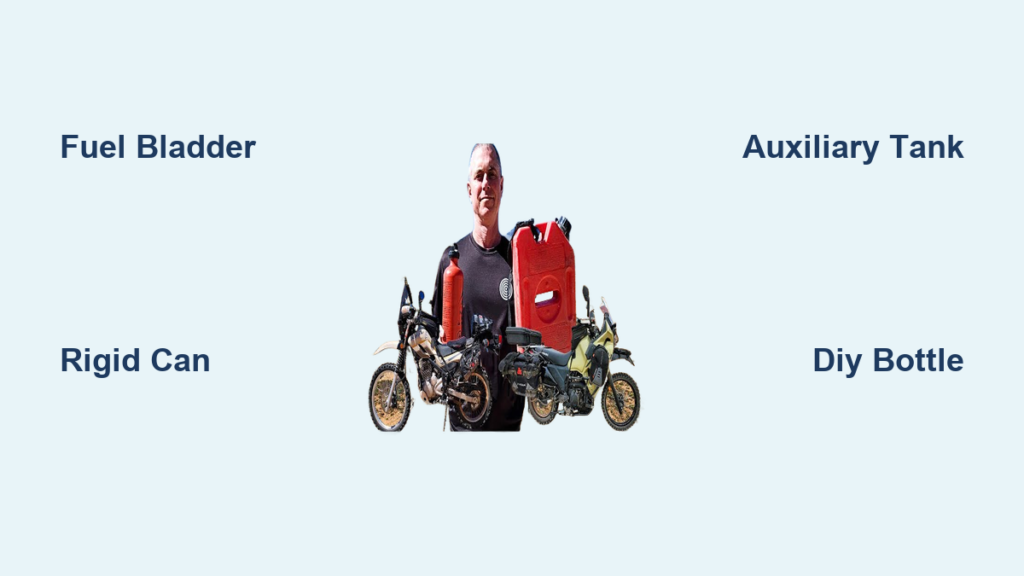
Running out of gas miles from civilization transforms a thrilling dirt bike adventure into a grueling hike home. Whether you’re exploring remote desert trails, tackling backcountry routes, or simply want insurance against unexpected detours, knowing how to carry extra gas on a dirt bike is essential for serious off-road riders. Most dirt bikes deliver only 40-100 miles per tank, and aggressive riding in technical terrain can slash that range by 25% or more. This guide cuts through the confusion to show you exactly which fuel-carrying solutions work best for your riding style, budget, and range requirements—so you can focus on the trail ahead instead of watching your fuel gauge drop.
Your choice depends on three critical factors: how many extra miles you need, how much you’re willing to spend, and whether you want a permanent or temporary solution. A weekend warrior needing just 10-20 miles of backup requires a completely different approach than someone prepping for a 100-mile desert ride where gas stations disappear from maps. The good news is that effective options exist for every scenario—you just need to match the right tool to your specific needs.
Calculate Your Real-World Fuel Range
Before buying any fuel-carrying gear, determine exactly how far your dirt bike travels on a tank under your typical riding conditions. Most riders make the critical mistake of trusting manufacturer mileage estimates, which rarely reflect real-world performance. Aggressive throttle use in technical terrain burns fuel 30-50% faster than cruising on smooth trails, while riders weighing 220+ pounds can lose 15-25% of their range compared to lighter counterparts.
The only accurate method involves filling your tank completely, resetting your odometer, and riding until empty under normal conditions. One desert rider discovered his Yamaha WR250 delivered just 48 miles—not the advertised 70—when riding aggressively in sand dunes. Always add a 10-20 mile safety buffer to your actual range to account for unexpected detours, navigation errors, or slower-than-expected terrain. If your bike gets 55 miles in testing, plan for a maximum 35-mile range between fuel stops to avoid getting stranded.
How Rider Weight Impacts Your Fuel Range
Heavier riders face significantly reduced mileage that directly affects fuel-carrying requirements. A 180-pound rider might get 65 miles from a tank, while a 240-pound rider on the same bike with identical riding style might only get 50 miles. This 23% reduction means the heavier rider needs 30% more extra fuel to achieve the same range extension. Test your bike with your typical gear load (backpack, tools, water) to get the most accurate baseline before selecting any fuel solution.
Fuel Bladders That Won’t Leak or Smell

Fuel bladders provide the best balance of capacity and portability for riders needing 1-5 gallons of extra fuel without permanent bike modifications. These collapsible containers flatten to nothing when empty, making storage between rides effortless.
Giant Loop Gas Bag: The Premium Choice
The Giant Loop Gas Bag stands out as the most trusted option, having earned the SEMA Global Media Award for innovation. Its welded film construction with ballistic nylon and vinyl-coated polyester withstands being driven over without damage. Available in 1-5 gallon sizes (11.5-28 ounces empty), these bags feature a filler neck that accepts most “Blitz” compatible spouts for clean trailside refueling. The main advantages include extreme durability, complete collapsibility, and proven performance in harsh conditions. However, prices range from $149-300, some users report fuel smell permeating the bag, and the daisy chain strapping doesn’t run to the bag’s end, complicating secure mounting. Pro tip: Always carry an extra spout—trailside fueling becomes messy without one.
Desert Fox Gas Bags: Military-Grade Alternative
Desert Fox Gas Bags, distributed by Twisted Throttle, offer military-spec durability at slightly lower prices ($135-190). Their three sizes (0.79-5.3 gallons) feature daisy chain webbing running completely around the bag for versatile mounting options. Standard equipment includes tie-down straps and a fuel spout stored in a dust-proof pouch. Some users note the spout sleeve doesn’t close properly with Velcro, and customer service responsiveness varies. The larger 5.3-gallon capacity makes these ideal for serious desert riders needing maximum range without tank modifications.
Rigid Fuel Containers Compared
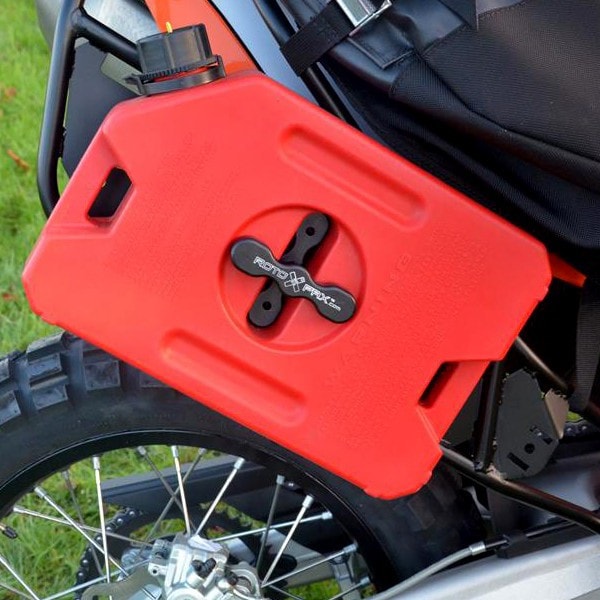
Rigid containers provide security that soft bladders can’t match but sacrifice packability and add permanent weight to your setup.
RotopaX Fuel Cans: The Legal Compliant Option
RotopaX cans are the only rotationally molded, EPA and CARB-compliant fuel containers available in the US. Their 2-gallon can (17.75″ x 13.25″ x 3″) locks securely, stays mounted through rough terrain, and features a color-coded system to distinguish between fuel, water, and first aid supplies. Downsides include top-heaviness when full (especially problematic on bikes with rear racks), the need for specific mounting hardware, and mandatory daily venting to prevent pressure buildup. Critical safety note: Failure to vent these containers at elevation changes can cause dangerous pressure buildup—always vent before refueling.
MSR Fuel Bottles: The Budget-Friendly Favorite
MSR bottles (31 ounces/$30) represent the most popular rigid solution for dirt bike riders. Mounting one on a DrySpec rear fender bracket adds just 27 ounces of weight while providing about 10 miles of extra range. The main limitation is capacity—you’d need four bottles to equal one gallon, quickly becoming cumbersome. Aluminum bottles can crack under heat stress, and the narrow opening doesn’t fit most pump nozzles. For riders needing just an emergency backup, this setup delivers the best value with minimal handling impact.
Auxiliary Fuel Tank Solutions
Riders regularly venturing into remote areas benefit most from integrated tank solutions that provide maximum capacity without external mounting hassles.
Aftermarket Larger Tanks: Permanent Range Extension
IMS, Acerbis, and Clark replacement tanks (2.5-3.5 gallons) add capacity through expanded lower wings, actually lowering the fuel’s center of gravity compared to stock tanks. Used units often cost $150 or less, making them cost-effective for regular long-distance riders. These tanks can extend range to 150+ miles on dual-sport bikes—ideal for desert riding and adventure events. The trade-off is permanent weight addition whether you need the extra fuel or not, and potential installation modifications depending on your bike model.
Camel Auxiliary Tank: Premium Integrated Solution
The Camel Tank ($389) provides 1.8 gallons of auxiliary capacity that tucks neatly behind luggage racks. Its wide opening accepts standard nozzles, and internal lines feed into the main tank for mess-free operation. On a BMW F 800 GS, this setup increased range to over 300 miles. The main drawbacks include permanent weight addition and installation requiring two fairing holes for fuel lines. For riders who regularly need serious range extension without external containers, this premium solution delivers exceptional performance.
Budget DIY Fuel Solutions That Actually Work
Riders on a tight budget or with bikes lacking mounting points can implement effective improvised solutions.
Plastic Bottle Method: The $0 Emergency Backup
Gatorade bottles, soda containers, and water bottles all work for emergency fuel transport—many riders report years of successful use. Carry one or two bottles in your backpack, double-bagged in thick freezer storage bags to prevent leaks, then crush them flat when empty. Critical safety tip: Never carry fuel in plastic bottles against your body for extended periods—fuel fumes can permeate clothing and create fire hazards. This approach works best for occasional emergency use but shouldn’t replace dedicated equipment for regular backcountry riding.
Front Fender Water Bottle Mount: Simple Hardware-Free Setup
A quart bottle strapped to your front fender with large rubber straps stays forward and out of the way. This method adds roughly 10 miles of range on a bike getting 40 mpg—adequate for emergency situations but not serious backcountry travel. Position the bottle behind the fork crown to minimize exposure to debris and potential damage from rocks.
Essential Mounting Systems for Secure Transport

Proper mounting keeps fuel containers stable throughout your ride—a critical consideration when carrying flammable liquid over rough terrain.
Rear Fender Brackets: Clean and Secure Bottle Mounting
The DrySpec bracket system mounts using existing fender bolts, positioning fuel bottles centrally and low for minimal handling impact. Many riders leave these brackets installed permanently even when not carrying fuel. The main drawback is added height that complicates leg swings for shorter riders, though taller riders (6’2″+) rarely notice this issue.
Saddlebag Integration: Dual-Purpose Fuel Storage
Wolfman Daytripper or E12 saddlebags handily hold two fuel bottles while providing additional storage for tools and gear. These bags mount using straps over the fender, positioning fuel bottles in side pouches that stay out of the way while riding. The integrated approach maximizes luggage utility, carrying fuel alongside other essential supplies.
Best Fuel Solutions by Riding Scenario
For minimal extra range (10-30 miles), a single MSR bottle on a rear fender bracket provides the best convenience-to-weight ratio. The DrySpec bracket offers clean, permanent mounting that hardly affects handling.
For moderate extra range (30-60 miles), a 1-gallon fuel bladder like the Giant Loop Gas Bag balances capacity with portability. These strap directly to your bike or fit in a backpack depending on your configuration.
For maximum range (60+ miles), an aftermarket tank from IMS or Acerbis delivers the most integrated solution. The additional capacity is always available without separate mounting, and the lower center of gravity helps maintain handling.
For budget-conscious occasional use, plastic Gatorade bottles in a backpack provide adequate emergency capacity at essentially no cost. Double-bagging in freezer bags adds leak protection for minimal expense.
The right fuel-carrying solution depends entirely on your specific needs, riding style, and budget. Start by calculating your actual range, then determine exactly how much extra fuel your typical adventures require. With the right setup, you’ll ride confidently knowing you’ve planned for the distance—no more watching that fuel gauge with dread as you push deeper into the backcountry.