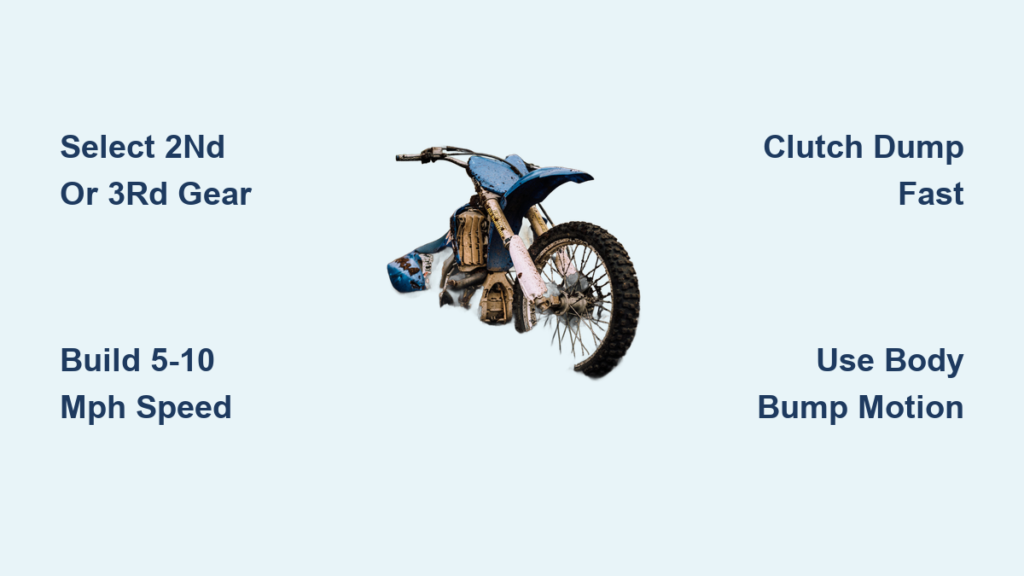
Nothing ruins a perfect riding day faster than turning the key only to hear silence from your dirt bike’s starter. When your battery dies miles from civilization, knowing how to clutch start a dirt bike becomes your ticket back to the trail instead of a long walk home. This essential technique—also called bump starting—works on virtually any dirt bike with a manual transmission, turning your bike’s momentum into the force needed to spin the engine without electrical assistance.
The physics behind clutch starting is simple but effective: as you roll the bike forward, the rear wheel’s rotation transfers through the transmission to the engine. When you suddenly release the clutch, this motion creates enough compression and crankshaft rotation to fire the spark plug and ignite the fuel mixture. Unlike kickstarting, which requires precise timing and physical effort, clutch starting leverages your bike’s movement to do the heavy lifting, making it more reliable for many riders when the battery fails.
Mastering how to clutch start a dirt bike gives you independence on remote trails where dead batteries happen most frequently. Whether you forgot to charge your battery after last weekend’s ride or your electrical system developed a fault mid-ride, this technique ensures you’re never stranded far from help. This guide delivers the precise steps, gear selections, and terrain adaptations you need to successfully bump start your dirt bike in real-world conditions.
Select Second or Third Gear for Reliable Ignition
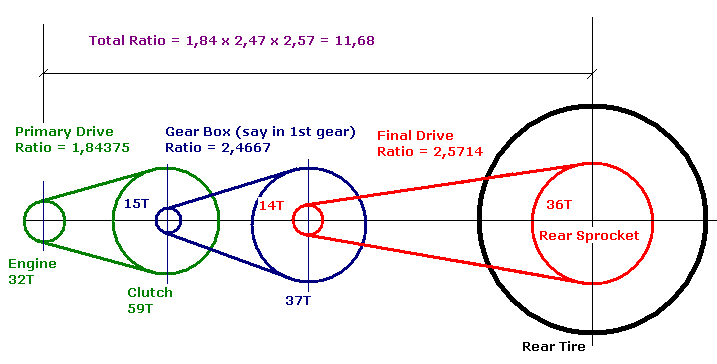
Choosing the wrong gear guarantees clutch starting failure, and first gear is the most common mistake riders make. Despite being the lowest ratio, first gear creates too much mechanical resistance—your wheels can’t generate enough speed to overcome the engine’s compression before stalling. The result? A locked rear wheel and a still-dead engine.
Second gear provides the ideal balance for most dirt bikes, offering enough torque to turn the engine while requiring achievable momentum. For two-stroke engines and smaller four-strokes under 300cc, second gear typically delivers the most consistent results. Larger displacement four-strokes (400cc+) often respond better to third gear, which reduces the compression load during engagement.
Test both gears when practicing to determine what works best for your specific bike. If second gear causes the rear wheel to lock up immediately, switch to third gear before attempting another start. This simple adjustment makes the difference between repeated failures and a smoothly running engine when you need it most.
Generate Critical Momentum on Hills or Flat Ground
Without sufficient speed, your clutch start attempt will fail regardless of technique. The ideal approach speed falls between 5-10 mph—enough to create compression but not so fast that you lose control if the engine fires unexpectedly.
When hills are available, find a long, gentle slope (5-10% grade) that gives you ample distance to build speed. Start in neutral with the clutch pulled in, coasting downhill to reach your target speed before shifting. Gentle slopes work better than steep ones—they provide more time to perfect your timing and reduce the risk of losing control if the engine starts abruptly.
Without hills, recruit one or two helpers to push you to speed. Position yourself with both feet on the pegs, clutch pulled in, and in neutral while your helpers run alongside. Communicate clearly when you’re ready for them to push, aiming for a steady acceleration to 5-10 mph before shifting into gear. The pushers should maintain contact with the bike until you’ve successfully engaged the clutch and the engine fires.
Perfect the Clutch Dump Execution Technique
The clutch dump—releasing the clutch lever suddenly—is the make-or-break moment in bump starting. Most failed attempts happen because riders release the clutch too gradually, allowing the engine to absorb momentum slowly rather than creating the sudden rotation needed for ignition.
Execute the clutch dump in less than half a second: from fully pulled in to completely released with one decisive motion. As you reach your target speed, shift into second or third gear while keeping the clutch pulled in, then release the lever abruptly while keeping the throttle closed. You’ll feel immediate resistance through the handlebars when the engine fires—be ready to gently apply throttle to keep it running.
Critical mistake to avoid: Releasing the clutch while still in neutral. Always shift into gear before dumping the clutch, or you’ll simply roll to a stop with an engine that never engaged.
Boost Success with the Physical Bump Motion

Combine the clutch dump with a downward body motion called the “bump” to dramatically increase your success rate. As you release the clutch, simultaneously push down hard on the seat with your buttocks while applying downward pressure through your feet on the pegs.
This technique works through three mechanisms:
– Increases rear tire traction during the critical engagement moment
– Helps you stay balanced when the engine suddenly fires
– Provides extra force to overcome initial engine compression
The motion should be quick and deliberate—a single downward thrust rather than bouncing. Position yourself slightly forward on the seat before executing the bump, and time it precisely with your clutch release. This technique proves especially valuable on loose surfaces where traction is limited.
Four-Stroke Models with Manual Compression Release

Older four-strokes like the 2001-2002 YZ250F require special handling due to their manual compression release systems. These bikes have a secondary lever (usually on the handlebar) that reduces compression for easier starting.
For these models, follow this precise sequence:
1. Coast downhill in neutral to build speed
2. Pull both clutch and compression release levers simultaneously
3. Shift into second or third gear while maintaining both levers
4. Release the clutch lever abruptly
5. Immediately release the compression release lever
Releasing the compression lever too early or too late prevents ignition, so practice this timing specifically for your bike model. Modern four-strokes with automatic decompression don’t require this extra step.
Keep Throttle Completely Closed During Starting
Contrary to intuition, you should not use the throttle when clutch starting. The residual fuel in your carburetor or fuel system provides sufficient mixture for ignition—adding extra fuel creates an overly rich condition that hinders starting.
Many riders mistakenly twist the throttle during bump starts, thinking it will help the engine fire. In reality, this extra fuel often fouls the spark plug or creates combustion issues. Keep the throttle completely closed throughout the entire process, only applying it after the engine has successfully started.
The only exception is when your bike has been sitting for weeks with stale fuel—then a tiny amount of throttle might help atomize fuel, but this is an advanced technique not needed for standard bump starts.
Diagnose Failed Start Attempts Effectively
When your clutch start fails, use these troubleshooting steps before attempting again:
Rear wheel locks up immediately: Shift to a higher gear (third instead of second) or ensure your compression release lever (if equipped) is fully engaged before clutch release. On four-strokes with manual decompression, this usually means the decomp lever wasn’t pulled properly.
Engine turns over but won’t fire: The problem extends beyond your battery. Check for spark plug issues, fuel delivery problems, or low compression. If your bike won’t bump start, it likely has ignition or fuel system problems that require mechanical attention.
Excessive effort required: A healthy dirt bike should start relatively easily with proper technique. If you’re exhausted after multiple attempts, schedule a mechanic’s inspection to check compression, carburetor condition, and overall engine health.
Adjust Technique for Different Riding Surfaces
Sand and loose dirt require modified technique—shift to third gear to reduce torque load on the rear wheel, and emphasize the physical bump motion to maximize traction. Hard-packed surfaces work best with standard second-gear technique, while muddy conditions may require helpers to push you to higher speeds before attempting the clutch dump.
Pavement provides the most reliable surface for clutch starting due to excellent traction, but requires careful speed control to avoid losing control if the engine fires suddenly. Always practice on multiple surfaces to build adaptable skills.
Practice Before You Need the Skill
Don’t wait for a dead battery to learn how to clutch start a dirt bike. Find an empty parking lot or gentle slope and practice regularly until the technique becomes instinctive. Start with low speeds and gradually increase as your confidence grows.
Focus on mastering the timing between speed, shifting, and clutch release. Each bike behaves differently based on engine displacement and condition—learn your specific machine’s characteristics through repeated practice. Practice in different gears and on various surfaces to build comprehensive skills that work in real emergency situations.
Knowing how to clutch start a dirt bike transforms a potential trail-ending emergency into a minor inconvenience. With proper technique and some practice, you’ll develop the confidence to handle dead batteries wherever you ride, ensuring every trail adventure ends with you riding out under your own power. The next time your starter fails, you’ll be ready to get your engine roaring again in seconds.