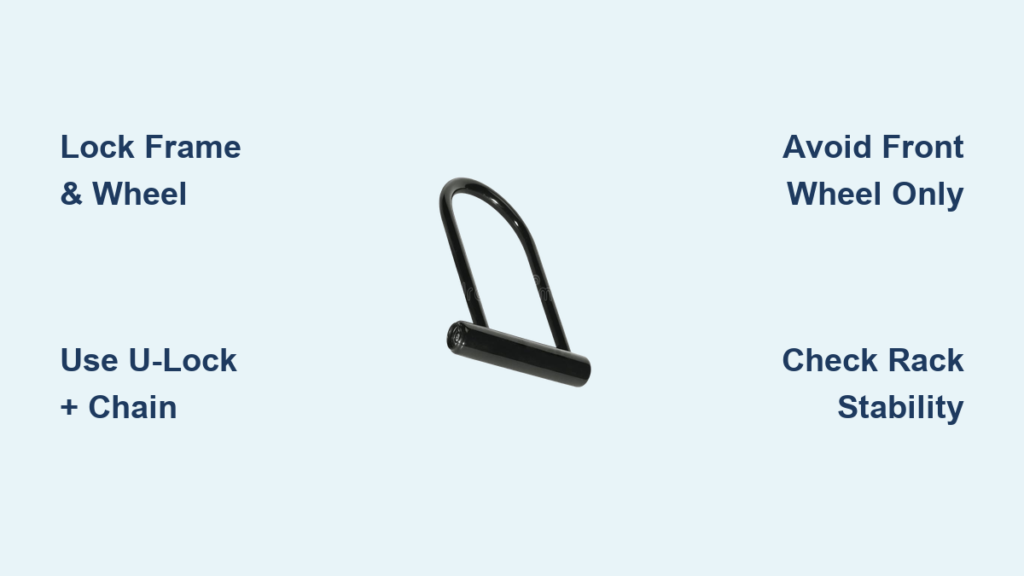
You pull up to your destination, heart sinking as you scan the area for a secure spot to lock your bike. That $1,500 carbon frame represents more than money—it’s your commute, your fitness routine, and your freedom. Knowing how to lock a bike to a bike rack properly separates those who get stolen from those who ride away with their wheels intact. This isn’t just about attaching metal to metal; it’s about understanding thief psychology and structural vulnerabilities.
Most cyclists make critical errors daily that invite theft—a loose lock here, a poorly chosen rack there. The truth is, 70% of stolen bikes were locked with inadequate security. But you’re different. You’re here to learn the proven techniques that actually work when it matters most. Let’s transform your locking routine from guesswork to an unbreakable habit.
Why Your U-Lock Isn’t Enough (And What to Add)

U-Lock Security Standards That Actually Resist Theft
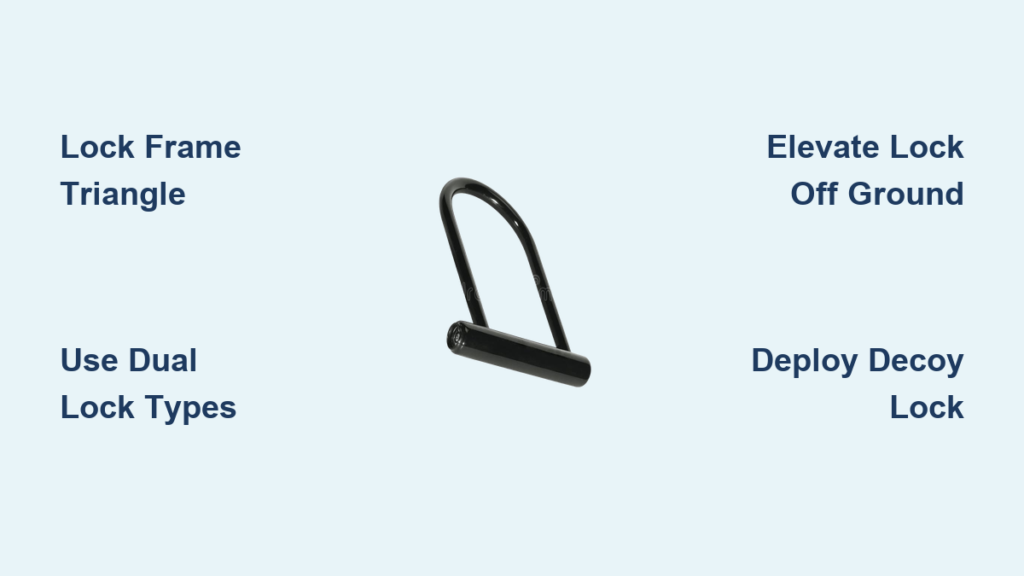
A quality U-lock forms the backbone of bike security but requires specific features to withstand attacks. Choose locks with at least 16mm hardened steel shackles—the thickness creates critical resistance against cutting tools. The best models like Kryptonite New York series feature double-bolting mechanisms where both ends of the shackle lock into the crossbar, preventing rotation during prying attempts.
Critical detail: Look for anti-rotation features that keep the shackle from spinning when attacked. This small design element dramatically increases resistance to leverage attacks. Always position your U-lock low on the rack, close to the ground where thieves can’t generate enough force for prying.
Chain Lock Flexibility Without Compromising Security
When your rack has awkward angles, a quality chain lock becomes essential—but not all chains deliver equal protection. Select hexagonal or square link chains made from hardened manganese steel with minimum 9mm link thickness. These resist cutting far better than round links which roll under cutting pressure.
Pro tip: Opt for 90cm chains for standard racks or 120cm versions for multiple bikes. Nylon sleeves protect your frame finish while concealing the chain structure from thieves. Remember—chain locks weigh 4.3-8.2kg, so balance security needs with practicality.
Cable Lock Reality Check: When They’re Actually Useful
Never rely on cable locks as primary security—they’re cut in seconds by basic bolt cutters. Reserve them exclusively as secondary protection for wheels or accessories when combined with your main U-lock. Steel braided versions offer minimal improvement over standard twisted steel cables.
Critical mistake to avoid: Using a cable lock alone because it’s “good enough for a quick coffee stop.” Thieves target these exact moments. If you only carry a cable, you’re essentially leaving your bike unlocked.
How to Spot Dangerous Bike Racks Before Locking

Instant Red Flags That Signal Rack Vulnerability
Before touching your lock, scan the rack for warning signs: cutting marks on metal, loose bolts, or evidence of previous tampering. Firmly push the rack—if it moves even slightly, it’s not securely anchored. These unstable racks provide perfect leverage points for thieves.
Visual cue: Check for rust at the base where the rack meets the ground. Severe corrosion indicates structural weakness that could be exploited. Skip racks in isolated corners with poor visibility—these locations are theft hotspots.
Structural Integrity Test You Can Do in 10 Seconds
Perform a quick stability test by firmly kicking the rack’s base. A properly installed rack won’t budge. Avoid decorative racks made from thin tubing that bolt cutters can sever in seconds. Concrete-mounted racks provide significantly better security than surface-mounted versions that can be pried loose.
Expert note: Racks with visible weld lines at stress points indicate stronger construction. Skip racks where mounting bolts are exposed—they’re easier to tamper with.
The Frame-and-Rear-Wheel Locking Method That Stops Thieves
Perfect Positioning for Maximum Security
Position your bike so the rear wheel and main triangle align with the rack’s strongest vertical support. Insert your U-lock through the rear wheel, inside the rear triangle, and around the rack post. This single move secures both frame and rear wheel while maximizing lock usage.
Critical positioning: Keep the lock low and close to the ground. High placement creates leverage points for pry attacks. The lock should feel snug with minimal slack—any gap invites tool insertion.
Sheldon Brown Method for Tight Spaces
When rack space is limited, use the Sheldon Brown technique: lock just the rear wheel within the rear triangle using a tight-fitting U-lock. The wheel acts as protection for the frame, making removal impossible without cutting both wheel and frame.
Pro tip: This method requires precise lock sizing—measure your frame triangle before purchasing. The lock must fit tightly with no room for wheel rotation.
Front Wheel Security: Removal vs Secondary Locking Options
Quick-Release Wheel Removal Protocol
For quick-release wheels, remove the front wheel and position it alongside the rear wheel. Secure both wheels and the frame together using your primary lock. This creates a unified mass that’s nearly impossible to manipulate without cutting everything at once.
Time estimate: Proper wheel removal and repositioning takes 20-30 seconds—time well spent compared to replacing a stolen wheel.
Fixed Wheel Protection Strategies
For non-removable wheels, use a secondary cable or mini U-lock to secure the front wheel independently to the frame and rack. Thread the cable through the front wheel spokes, frame triangle, and rack post in a figure-eight pattern that prevents wheel rotation.
Common mistake: Locking the front wheel to the rack without connecting to the frame—thieves simply lift the bike and walk away with everything except the front wheel.
Mastering Different Rack Types: U-Racks, Wave Racks, and Grids

Inverted U Rack Locking Strategy
These provide two vertical posts perfect for U-locks. Always lock at the base where posts meet ground mounting plates. Never lock to the top crossbar—it offers thieves better leverage. Stagger multiple bikes at different heights for shared use.
Visual cue: Look for the thickest section of the rack—typically at the base where structural integrity is strongest.
Wave and Grid Rack Adaptation Techniques
Wave-style racks require identifying the straightest sections closest to ground mounting. Position bikes to maximize lock contact while avoiding wheel interference. Grid racks demand targeting thick vertical members where they connect to the base frame—never use thin horizontal bars.
Critical tip: On grid racks, avoid locking to the outer perimeter where cutters have better access. Target interior intersections that require more complex cutting angles.
3 Critical Locking Mistakes That Make Theft Easy
Parts You Should Never Lock Alone
- Front wheel only – Wheels detach in seconds
- Seatpost or handlebars – These remove easily with basic tools
- Fork alone – Leaves frame completely unsecured
Consequence: Thieves can be gone in under 30 seconds when these mistakes are made. Your bike becomes a parts donor rather than a rideable machine.
Slack Creates Vulnerability You Can’t See
Ensure your lock sits tight against the bike and rack. Any gap invites tool insertion. The lock shouldn’t rest on the ground where it can be hammered or leveraged. Position locks to prevent water accumulation in keyways during rain.
Pro tip: After locking, try to wiggle components. If anything moves more than 1cm, reposition your lock for tighter security.
Overnight Parking: Your Complete Security Checklist
Essential Pre-Departure Verification
Before walking away, verify these critical points:
– [ ] Frame and rear wheel secured to rack
– [ ] Front wheel protected (removed or secondary locked)
– [ ] No accessories left attached
– [ ] Lock positioned low and tight
– [ ] Rack integrity verified
Expert note: In high-theft areas, use two different lock types to defeat varied attack methods. A U-lock plus chain creates security that requires multiple tools to defeat.
Weatherproof Your Locking Setup
Position locks to prevent water accumulation in keyways. Use weatherproof covers during extended wet weather. In extreme cold, warm keys in your hands before insertion—never force frozen mechanisms.
Time-saving shortcut: Apply graphite-based lubricant monthly to maintain smooth operation in all conditions. Avoid oil-based lubricants that attract dirt.
Your bike represents freedom, fitness, and often significant investment. These techniques transform locking from guesswork into habit—one that protects your ride every time you step away. Master these methods once, and you’ll lock confidently for years, knowing your bike will be exactly where you left it. Remember: proper bike security isn’t about what you spend on locks—it’s about how you use them. The thief’s success depends on your mistakes; make sure you don’t provide any.