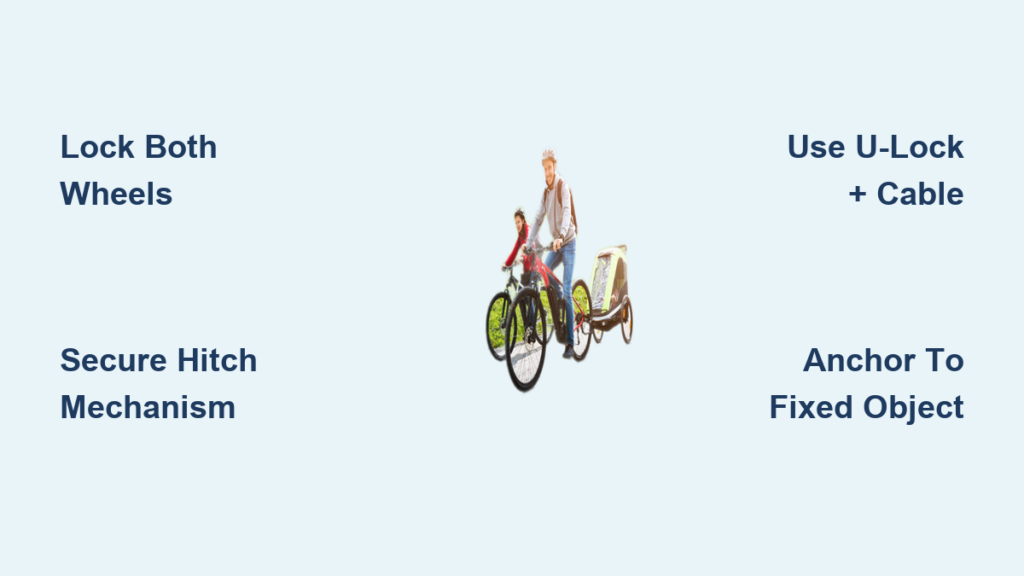
Bike trailers are valuable investments that provide convenient transportation for children, pets, or cargo, yet they’re increasingly becoming targets for thieves. Without proper security measures, your $300-$800 bike trailer could disappear in minutes while you’re grabbing coffee or running errands. Unlike bicycles that have frames designed for locking, bike trailers present unique security challenges with their specialized attachment points and often-exposed wheelbases. This guide delivers specific, actionable techniques to secure your bike trailer effectively—whether you’re making a quick stop downtown or storing it overnight. You’ll learn exactly which lock types work best for trailer-specific vulnerabilities, where to position locks for maximum security, and practical methods to deter even determined thieves.
Why Standard Bike Locks Fail for Trailers
Most cyclists make the critical mistake of using the same locking technique for trailers as they do for bicycles, leaving significant security gaps. Bike trailers have fundamentally different construction with multiple vulnerable points that require specialized attention.
Identify Your Trailer’s Weak Security Points
Trailers contain several inherent vulnerabilities that thieves exploit:
– Wheel hubs: Many trailers have quick-release wheels that can be removed in seconds
– Hitch mechanism: The attachment point to your bike is often the weakest security link
– Frame joints: Folding trailers have pivot points that can be separated
– Cargo area: Soft-sided trailers can be cut open even if the frame is locked
What Makes Trailer Theft Easier Than Bicycle Theft
Thieves specifically target unsecured bike trailers because they’re lighter, easier to carry, and often left unattended near popular destinations. Unlike bicycles that require cutting through multiple cable ties or complex frame geometries, most trailers can be lifted and carried away whole. Statistics show bike trailers are stolen at nearly twice the rate of adult bicycles in urban areas because they’re frequently left unlocked during short stops.
Choosing the Right Lock for Your Bike Trailer

Not all locks provide adequate security for bike trailers. The wrong choice could give you false confidence while offering minimal protection against determined thieves.
U-Locks vs. Cable Locks: Which Actually Secures Trailers
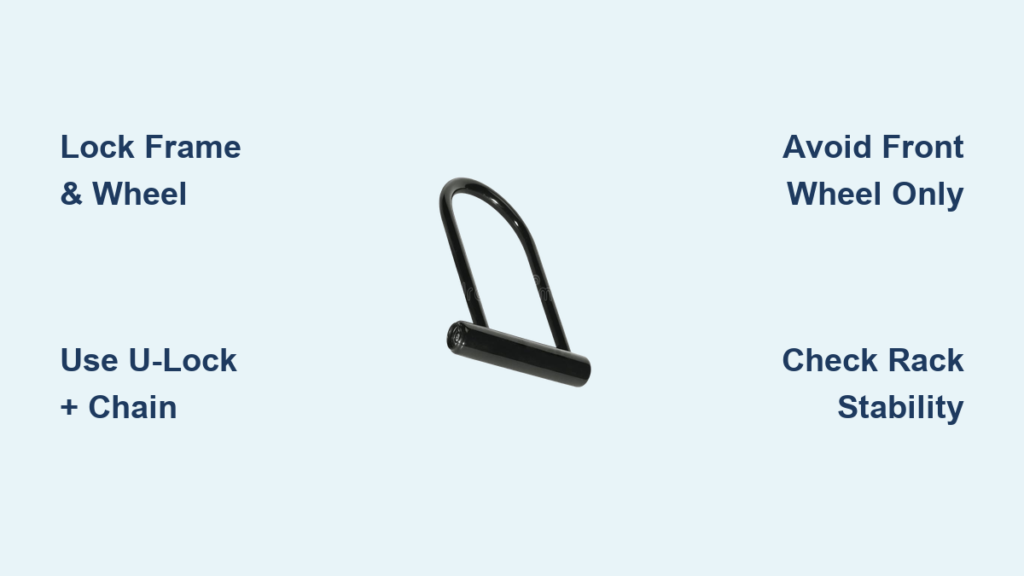
U-locks provide superior security for bike trailers when used correctly, but many cyclists choose inadequate cable locks that can be cut in seconds. For maximum security:
- Use 14mm+ shackle thickness U-locks (thicker than standard bike locks)
- Avoid thin cable locks under 12mm diameter—they’re vulnerable to bolt cutters
- Consider folding locks that can wrap around multiple trailer points simultaneously
Critical Lock Size Requirements for Trailer Security
The most common mistake is using a lock that’s too small to properly secure your trailer. Your lock must be large enough to:
– Encircle both trailer wheels AND attach to a fixed object
– Reach from the trailer frame to a secure anchor point
– Allow enough clearance for proper shackle positioning
For most single-child trailers, you’ll need a U-lock with at least 10-inch internal width. Larger cargo trailers often require specialized long-reach U-locks or heavy-duty chains.
Step-by-Step Trailer Locking Procedures
Knowing which lock to use is only half the battle—proper technique determines whether your security measures actually work. Follow these specific steps to maximize protection.
Securing Your Trailer to Fixed Objects
- Identify suitable anchor points: Look for bike racks, signposts, or fence posts with vertical elements
- Position trailer wheels against the anchor: This prevents lifting the entire trailer over the lock
- Thread lock through both wheels: Pass the shackle through both wheel rims near the hub
- Secure to anchor point: Ensure the lock connects both wheels to the fixed object
- Test security: Attempt to lift or slide the trailer to verify it’s properly secured
Locking Trailers Without Nearby Anchor Points
When no fixed objects are available:
– Use a secondary cable lock to secure the trailer hitch to your bicycle frame
– Position the trailer against a wall or obstruction to limit movement
– Remove quick-release wheels and carry them with you if possible
– Consider a ground anchor system for frequent parking locations
Advanced Security Techniques for High-Risk Areas
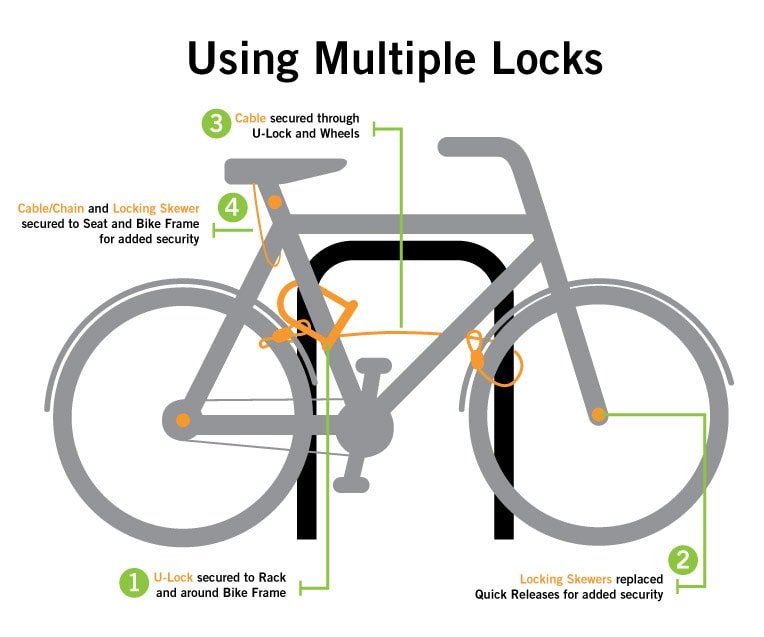
In cities with high trailer theft rates, basic locking methods aren’t enough. Implement these professional techniques to significantly reduce your risk.
Multi-Lock Strategy for Maximum Protection
Professional security experts recommend using two different lock types simultaneously:
– Primary lock: Heavy U-lock securing wheels to fixed object
– Secondary lock: Thick cable lock through hitch mechanism and frame
This approach forces thieves to carry multiple cutting tools, dramatically increasing the time required for theft and reducing your trailer’s appeal as a target.
Trailer-Specific Security Modifications
Consider these permanent upgrades for enhanced protection:
– Replace quick-release wheel axles with bolt-on versions
– Install custom locking plates over vulnerable joints
– Add tamper-proof hitch pins that require special tools for removal
– Apply UV-reactive identification markings inside hidden frame areas
Common Locking Mistakes That Lead to Theft
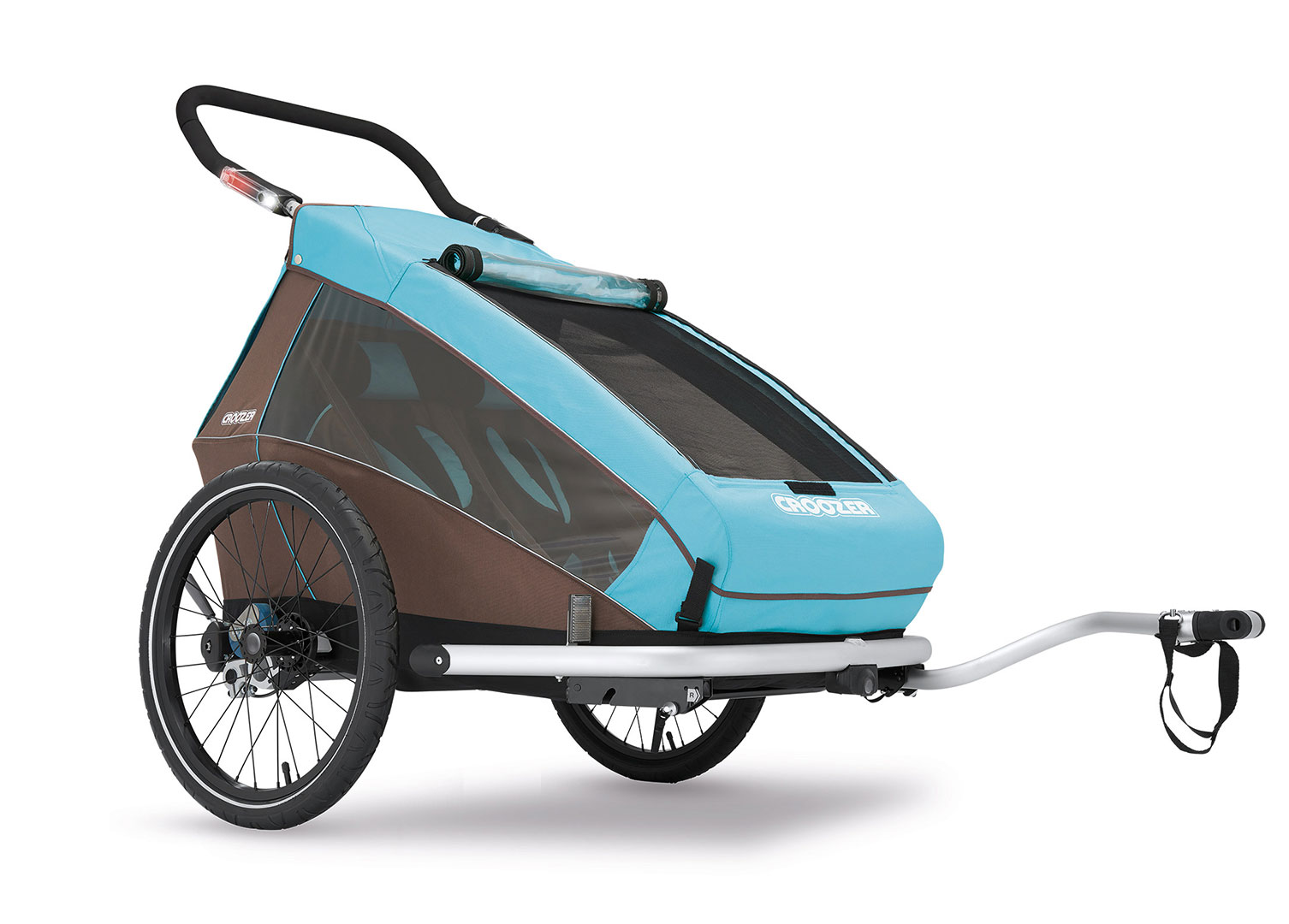
Even with quality locks, improper technique leaves your trailer vulnerable. Avoid these critical errors that security experts see repeatedly.
The “Wheel-Only” Locking Trap
Many cyclists make the mistake of only locking one wheel to a bike rack, leaving the trailer easily removable. Thieves can simply lift the unsecured end and walk away with your entire trailer. Always secure multiple points—both wheels plus the frame—to prevent this common theft method.
Incorrect Lock Positioning on Trailer Frames
Position matters significantly—locks placed near trailer joints or weak points provide minimal security. Always position locks:
– Through both wheels near the hubs (not the tire sidewalls)
– Around the strongest frame sections (main longitudinal tubes)
– With minimal slack to prevent leverage attacks
Emergency Situations: Quick Security When Unprepared
Sometimes you’re caught without proper locks. These improvised techniques can provide temporary security until you can implement proper measures.
Improvised Locking with Limited Equipment
If you only have a cable lock:
– Double-loop technique: Wrap the cable through both wheels twice
– Hitch immobilization: Secure the hitch mechanism to prevent attachment
– Wheel deflation: Slightly deflate tires to make rolling more difficult
Creating Temporary Visual Deterrents
When no lock is available:
– Place visible “alarm” markers: Bright tape with “SECURITY ALARM” warnings
– Position trailer in high-traffic sightlines: Make theft more conspicuous
– Ask nearby businesses for temporary monitoring: Many will watch it briefly
Long-Term Trailer Security Maintenance
Proper security extends beyond just locking technique. Implement these ongoing practices to maintain your trailer’s security integrity.
Regular Security System Checks
Monthly security maintenance should include:
– Inspecting lock mechanisms for wear or damage
– Testing all quick-release components for proper tightness
– Verifying frame integrity at stress points
– Updating your locking strategy as you identify vulnerabilities
Seasonal Security Adjustments
Security needs change with conditions:
– Winter: Salt and moisture accelerate lock corrosion—apply dry lubricant monthly
– Summer: Higher theft rates require more robust locking in tourist areas
– Rainy seasons: Check for rust at lock contact points that could weaken security
When to Consider Additional Security Investments
Not all security solutions require expensive equipment. Evaluate these cost-effective upgrades based on your specific risk factors.
Cost-Benefit Analysis of Security Upgrades
Consider these investments if:
– You live in an area with >5 reported trailer thefts annually
– Your trailer is valued over $500
– You frequently park in high-risk locations
– You transport children (safety justification beyond theft prevention)
Smart Security Budget Allocation
Prioritize spending in this order:
1. Quality U-lock (40% of budget)
2. Secondary cable lock (30%)
3. Hitch security modifications (20%)
4. Registration/identification (10%)
Final Note: Proper bike trailer security requires specialized techniques beyond standard bicycle locking methods. By implementing these trailer-specific strategies—securing multiple points, using appropriately sized locks, and avoiding common mistakes—you can dramatically reduce theft risk. Remember that no security is perfect, but making your trailer more difficult to steal than others nearby is often enough to deter opportunistic thieves. Regularly review and update your security approach as you identify vulnerabilities, and consider permanent modifications for frequently used trailers. The few extra minutes spent securing your trailer properly can save you hundreds in replacement costs and the emotional distress of losing a valuable transportation asset.