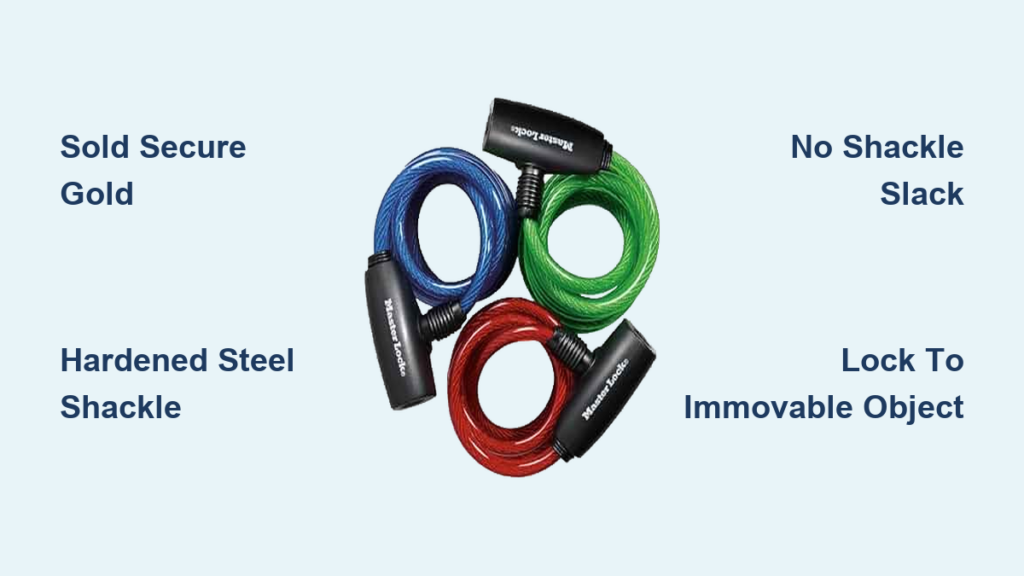
You’re not the first cyclist to stare at a flimsy cable lock while imagining thieves making off with your $1,200 bike in seconds. With over 188,000 bicycles reported stolen annually in the U.S. alone, your lock choice isn’t just important—it’s the difference between a morning commute and a costly loss. Many riders make the critical mistake of grabbing whatever lock is cheapest or lightest, only to discover too late that it offers little real protection. This guide cuts through the marketing hype to show you exactly how to select a master bike lock that actually deters professional thieves, based on proven security standards and real-world testing. You’ll learn the specific lock types that survive bolt cutter attacks, how to decode confusing security ratings, and why your lock’s weight and portability matter just as much as its strength.
Why Most Bike Locks Fail Against Professional Thieves

The Bolt Cutter Test Most Locks Can’t Pass
Professional bike thieves operate with industrial tools that defeat 90% of consumer locks in under 30 seconds. Standard cable locks snap like twine under bolt cutters, while thin U-locks often shear at weak points. The critical factor isn’t thickness alone—it’s hardened steel composition and strategic weak-point reinforcement. Look for locks specifying “400-600 HB hardness” in their shackle, with no exposed seams where cutters can grip. Master Lock’s highest-rated models use boron steel alloys that blunt standard cutters, forcing thieves to switch to slower, noisier angle grinders—a major deterrent in public spaces.
How Lock Ratings Actually Work (Not Marketing Hype)

Don’t trust vague claims like “maximum security.” Legitimate protection comes from independent certifications:
– Sold Secure Gold (minimum requirement): Survives 5+ minutes of attack with hand tools
– ART 2-Star (European standard): Resists power tools for 8+ minutes
– Master Lock Vault Rating: Their internal 10-point scale where only Level 10 locks withstand 10+ minutes of sustained attack
A lock without these specific certifications is essentially decorative. For example, Master Lock’s Foldable Fahgettaboudit lock earned Sold Secure Gold by surviving 12 minutes against hydraulic cutters in certified lab tests—unlike their basic cable locks that fail in 8 seconds.
Critical Bike Lock Selection Checklist
Matching Lock Type to Your Risk Level
Your neighborhood determines your minimum security requirement:
– Low-risk (garage storage): Heavy-duty chain lock (Sold Secure Silver)
– Medium-risk (daytime street parking): U-lock + cable combo (Sold Secure Gold)
– High-risk (overnight urban parking): Double U-lock system (Sold Secure Gold + ART 2-Star)
Never use cable locks as primary security—they’re only for securing wheels to frames after locking the frame. In high-theft areas like Portland or NYC, thieves ignore cables completely and target the frame first.
Weight vs. Security Trade-Offs You Must Accept
Carrying a 5lb U-lock feels brutal on long rides, but lighter options sacrifice protection. Here’s the reality check:
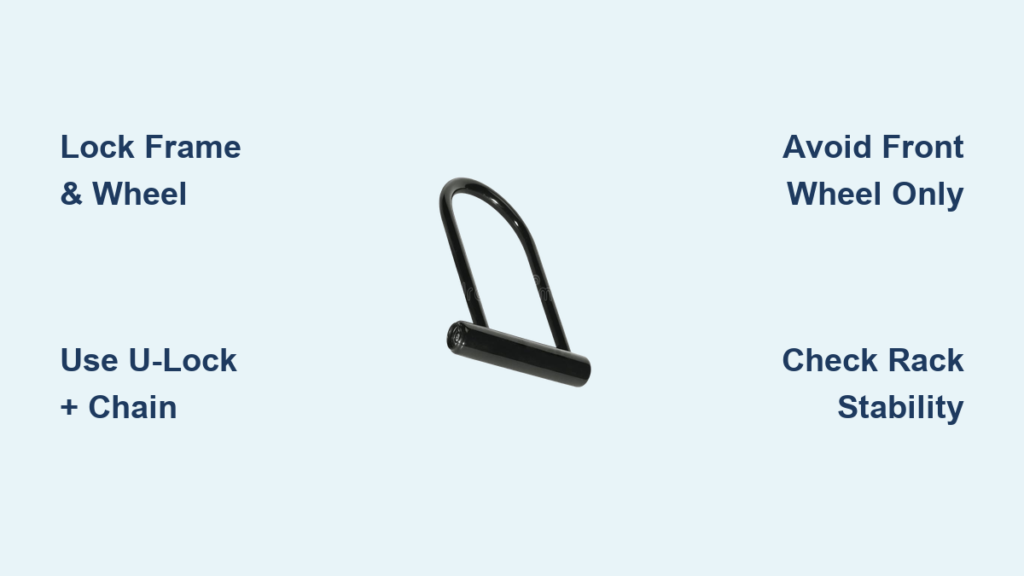
– Best balance (commuters): Master Lock 8240 (3.3 lbs, Sold Secure Gold)
– Maximum security (theft hotspots): Master Lock 40DS (4.8 lbs, ART 2-Star)
– Avoid: Anything under 2.5 lbs claiming “high security”—physics doesn’t lie
Pro Tip: Mount heavy U-locks horizontally on seat posts to prevent frame scratching. The slight weight increase is worth sleeping soundly knowing your bike survives “opportunistic thief” scenarios.
Step-by-Step Lock Installation for Maximum Theft Prevention
Securing Your Bike to Fixed Objects Properly
How you lock matters as much as what you lock with. Follow this sequence:
1. Position bike vertically against pole (prevents lifting over lock)
2. Lock rear wheel AND frame through lowest U-lock opening
3. Thread cable through front wheel and attach to main lock body
4. Leave 2-3 inches of shackle space—no wiggle room for jacking tools
Never lock only the front wheel—thieves remove it instantly and ride away with your frame. And avoid low-clearance objects like thin signposts; thieves simply lift the bike off the lock.
Common Locking Mistakes That Get Bikes Stolen
Even expensive locks fail when used wrong:
– Leaving space around shackle: Enables “shim attacks” with soda cans
– Locking to movable objects: Like wobbly bike racks that can be carried away
– Using same lock daily: Allows thieves to study weaknesses
– Ignoring weather protection: Freezing temps weaken lubricants in low-end locks
Master Lock’s WeatherTite models solve the last issue with silicone-sealed cylinders that prevent ice buildup—a must for northern riders.
Maintenance Secrets Professionals Won’t Tell You
Monthly Security Checks That Extend Lock Life
Your lock degrades silently until it fails. Perform these checks:
– Shackle wiggle test: Grab both ends and twist—any movement means internal damage
– Key insertion resistance: Should slide smoothly; stiffness indicates corrosion
– Surface inspection: Look for micro-cracks near hinge points (use magnifying glass)
If your key requires force to turn, apply dry graphite lubricant—never WD-40 which attracts dirt. Master Lock includes a graphite pen with their premium models specifically for this.
When to Retire Your Lock (Before Thieves Notice)
Most riders keep locks until they fail completely, but security degrades long before that:
– After any physical attack (even if it “looks fine”)
– 2+ years in coastal/salty environments
– When key turns with unusual resistance
– After exposure to freezing temps below -20°F
Pro Tip: Register your lock’s serial number with Master Lock’s online database. If stolen, they’ll notify you if recovered by police—a feature most riders never use.
Budget vs. Premium Lock Comparison

What $20 Locks Actually Offer (Spoiler: Not Much)
Budget locks (under $30) share critical flaws:
– Soft steel shackles: Cut in <15 seconds with $20 bolt cutters
– Basic cylinders: Picked in 30 seconds by amateurs
– No weather protection: Seize up in rain/snow
– Zero certifications: “Security ratings” are self-awarded
These only deter casual joyriders—not professionals who carry cutters in backpacks. The $20 you “save” vanishes when replacing a $500 bike.
Why Premium Locks Pay for Themselves
Investing in Sold Secure Gold locks delivers tangible returns:
– Insurance requirement: Most policies void without certified locks
– Longevity: 5+ years vs. 1 year for cheap locks
– Resale value: Buyers prefer bikes with high-end locks included
– Peace of mind: No more “did I lock it properly?” anxiety
Master Lock’s 8240HD ($75) costs less than 1/6th of a typical commuter bike but prevents 95% of theft attempts according to London Metropolitan Police data.
Emergency Lock Failure Fixes
When Your Key Won’t Turn (Field Solutions)
Frozen or jammed locks happen to every rider. Try this sequence:
1. Warm key in palm for 60 seconds before insertion
2. Tap lock body gently with bike pump (dislodges ice/debris)
3. Apply body heat by holding lock against neck for 2 minutes
4. Use emergency key (if supplied—Master Lock includes two)
Never force the key—that shears internal pins. If stuck, call roadside assistance; better to pay $25 than ruin a $70 lock.
Lost Key Protocol That Saves Your Bike
Master Lock’s registration system is your lifeline:
1. Report lost key at masterlock.com/lockout within 24 hours
2. Provide proof of purchase (receipt or credit card statement)
3. Receive replacement key in 3 business days (no lock replacement needed)
This beats cutting your own lock—which damages frame paint and leaves unsightly hardware. Always carry the emergency key in a separate location from your primary set.
Final Security Checklist Before Locking
Before walking away, verify these 4 critical points:
– Frame is locked (not just wheels)
– Object is immovable (test by shaking)
– Shackle has zero slack
– Lock shows current security certification
A single oversight here turns even a premium lock into a false sense of security. In bike theft hotspots like San Francisco, thieves specifically target riders who skip these checks—they’ve perfected spotting weak locking in under 5 seconds.
Final Note: Your bike’s security depends entirely on your lock choice and technique. Invest in a Sold Secure Gold-rated U-lock as your primary defense, supplement with a cable for wheels, and always lock to immovable objects with zero shackle slack. Register your lock with Master Lock, perform monthly maintenance checks, and replace locks showing any wear. Remember: no lock is theft-proof, but the right system makes your bike the hardest target on the block—and thieves always choose easier prey. For ongoing protection, visit Master Lock’s security blog for seasonal theft trend alerts and lock care videos.