Your bike tire diameter determines whether replacement tires will actually fit your wheels, yet most cyclists struggle to understand the confusing sizing systems on tire sidewalls. That “700C” road tire or “29-inch” mountain bike tire represents the same physical dimension measured in completely different ways. This confusion leads to costly mistakes when ordering replacements online or at bike shops. Understanding bike tire diameter isn’t just about numbers—it’s about ensuring your tires mount safely and perform optimally for your riding style. This guide cuts through the confusion with practical measurement techniques and clear comparisons between the major sizing systems.
The three primary tire diameter systems—ETRTO, imperial, and metric—each describe identical physical dimensions using entirely different formats. A single tire might be marked as 25-622 in ETRTO, 700 x 25C in metric, and 29 x 1.0 in imperial, with all three referring to essentially the same tire. Knowing how these systems translate prevents purchasing errors and ensures compatibility with your specific wheel. Beyond basic fitment, understanding your bike tire diameter helps you make informed decisions about tire width compatibility, rolling resistance, and ride characteristics across different terrains.
Why ISO Bead Seat Diameter Determines Tire Compatibility
Your wheel’s ISO bead seat diameter is the single most critical measurement for tire compatibility, yet most cyclists never check it before buying new tires. This precise millimeter measurement (like 622mm or 584mm) represents the actual physical diameter where the tire bead hooks onto the rim—not the overall tire diameter you see printed on packaging. When you understand this distinction, you’ll avoid dangerous mismatches that could cause tires to blow off during inflation or riding.
How to Locate Your Wheel’s ISO Measurement
Most modern rims have the ISO diameter stamped somewhere on the inner sidewall, though this tiny marking can be difficult to spot. Look for a three-digit number (like 622 or 584) often paired with another number representing rim width. If you can’t find it visually, use digital calipers to measure from bead seat to bead seat across the center of the rim. This measurement must match exactly with your new tire’s ISO specification—unlike nominal sizes like “29-inch” or “700C,” which vary between manufacturers.
Critical warning: Attempting to mount a tire with even a 5mm ISO mismatch creates serious safety risks. A 27-inch tire (ISO 630) on a 700C rim (ISO 622) may seem to fit initially but can blow off during riding due to the 8mm diameter difference. Always verify ISO compatibility before purchasing.
Why 29-Inch and 700C Tires Share the Same ISO Number
Mountain bikers and road cyclists face identical bead seat diameters despite completely different naming conventions. A 29-inch mountain bike wheel and a 700C road wheel both have an ISO diameter of 622mm, meaning they share the same physical rim size. This explains why mechanics can technically mount a road tire on a mountain bike rim (and vice versa), though practical considerations like width compatibility usually prevent this crossover.
The key distinction lies in tire width and rim design: 29-inch mountain bike tires range from 2.0 to 3.0 inches wide and require wider rims, while 700C road tires typically measure 23-32mm wide on narrower rims. Don’t be fooled by the different names—when checking bike tire diameter compatibility, always prioritize the ISO number over nominal sizing.
26-Inch vs 27.5-Inch vs 29-Inch: Real Tire Diameter Comparisons
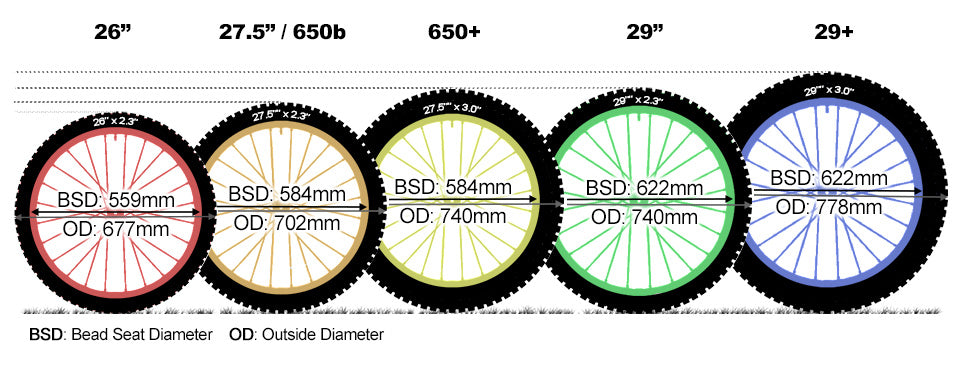
The mountain bike world offers three dominant wheel sizes with confusingly similar yet incompatible diameters. Understanding the precise differences between these sizes prevents costly mistakes when upgrading or replacing wheels and tires. Each size delivers distinct performance characteristics that affect acceleration, rollover capability, and frame fitment.
Why 26-Inch Wheels (ISO 559) Still Matter Today
Despite being largely replaced by larger options, 26-inch wheels (ISO 559) remain relevant for specific applications. Originally popularized on American cruiser bikes nearly a century ago, these wheels became the mountain biking standard in the sport’s early days. Today, they’re primarily found on:
- High-performance folding bikes seeking compact folded dimensions
- Children’s and junior mountain bikes for riders under 5’4″
- Specialized fat bikes with ultra-wide tires (3.7-5 inches)
Pro tip: When replacing 26-inch tires, check for “E.T.” or “ISO” markings—some vintage bikes use 590mm or 597mm rims that look similar but have different diameters. Mounting the wrong ISO size creates dangerous blow-off risks.
How 27.5-Inch (ISO 584) Wheels Balance Speed and Agility
The ISO 584mm diameter presents a fascinating case of bicycle industry naming confusion—it’s called 27.5-inch on mountain bikes but 650B on road and gravel bikes. This single physical size serves two distinct purposes:
- Mountain biking: Offers better rollover than 26-inch wheels while maintaining maneuverability that 29-inch wheels sacrifice
- Road/gravel riding: Allows fitting wider tires (up to 47mm) on smaller frames that can’t accommodate 700C wheels
This diameter delivers the sweet spot for technical trail riding where quick acceleration matters more than top speed. Shorter riders often prefer 27.5-inch wheels because they reduce the standover height challenge presented by larger 29-inch wheels.
When 29-Inch Wheels (ISO 622) Provide Real Advantages
The ISO 622mm diameter powers both road cycling’s 700C standard and mountain biking’s 29-inch revolution. These wheels deliver measurable performance benefits:
- Each rotation covers more ground, reducing pedal strokes per mile
- Larger contact patch improves traction on loose surfaces
- Better rollover capability maintains momentum over obstacles
But consider this: Riders under 5’6″ may struggle with handling due to the larger turning radius and increased leverage requirements. Always test ride before committing to 29-inch wheels if you’re on the shorter side.
How to Measure Bike Tire Diameter Accurately (Without Guessing)
Nominal tire sizes like “26-inch” or “700C” provide only approximate measurements that vary significantly between manufacturers. For precise applications like bike computer programming or custom frame building, you need the actual rolling diameter of your specific tire and rim combination.
The Rolling Circumference Method for Perfect Accuracy
- Position your bike vertically with valve stem at 6 o’clock
- Mark the floor directly beneath the valve stem
- Roll the bike forward in a straight line until the valve returns to 6 o’clock
- Measure the distance between marks (this is your rolling circumference)
- Divide by pi (3.14159) to calculate actual diameter
This method accounts for your specific tire pressure, rider weight, and tire construction—factors that change the effective diameter by up to 15mm compared to nominal sizing. For bike computers, enter the rolling circumference measurement directly rather than calculating diameter.
Why Online Calculators Often Give Wrong Results
Most online diameter calculators use theoretical formulas that ignore real-world variables like:
- Tire expansion during break-in period (can increase diameter by 1-2mm)
- Pressure effects (a 10 PSI difference changes diameter by 3-5mm)
- Rim width influence (wider rims stretch tires slightly larger)
For critical applications like frame clearance checks, always measure your actual mounted tire rather than relying on calculated values.
Matching Tire Width to Diameter: Avoid Fitment Disasters

Your bike tire diameter determines which rims will accept your tires, but width compatibility creates another layer of critical considerations. Mounting the wrong width tire on your rims creates safety hazards and performance issues that many cyclists overlook.
The ETRTO Width Compatibility Chart You Need
| Rim Internal Width | Minimum Tire Width | Maximum Tire Width |
|---|---|---|
| 17-19mm | 28mm | 42mm |
| 20-22mm | 35mm | 50mm |
| 23-25mm | 44mm | 60mm |
Using a tire narrower than recommended risks pinch flats and rim damage, while oversized tires may not seat properly on the rim. Always consult your wheel manufacturer’s specific recommendations—hookless rims often have stricter width requirements.
Frame Clearance Checks Before Buying Wider Tires
Before upgrading to wider tires, verify clearance at these critical points:
- Chainstays: Measure with tire under load (sit on bike while checking)
- Seatstays: Don’t forget mud accumulation in wet conditions
- Fork crown: Often the tightest clearance point on road bikes
- Brake calipers: Wider tires may rub against brake arms
Critical mistake: Many cyclists check clearance with the bike unloaded, then experience rubbing when the suspension compresses during riding. Always test with your weight on the bike.
Choosing the Correct Bike Tire Diameter: 5 Critical Compatibility Checks
Before ordering new tires, verify these five compatibility factors to ensure proper fit and safe operation. Skipping any of these checks risks dangerous mismatches that could lead to tire blow-offs or frame damage.
How to Verify Vintage Bike Tire Compatibility
Older bikes (pre-1980s) often use obscure sizing systems that don’t match modern standards. For vintage road bikes:
- Check for “27-inch” wheels (ISO 630) – incompatible with 700C tires
- Look for “650” markings (could be 650A, B, or C with different diameters)
- Measure bead seat diameter with calipers if markings are unclear
Many vintage bike owners unknowingly ride with improperly fitted tires that create dangerous blow-off risks. When in doubt, consult a specialist who understands historical sizing systems.
When You Can Safely Mix Diameter Systems
Certain ISO-compatible sizes allow creative tire choices when done correctly:
- 650B (ISO 584) gravel tires on 27.5-inch mountain bike rims
- 26-inch fat bike tires (ISO 559) on specialized wide rims
- 700C tires on cyclocross bikes designed for mixed conditions
Key requirement: Always verify rim width compatibility first—mounting a narrow road tire on a wide mountain rim creates dangerous bead seating issues. The ISO diameter must match exactly, but width compatibility determines safe operation.