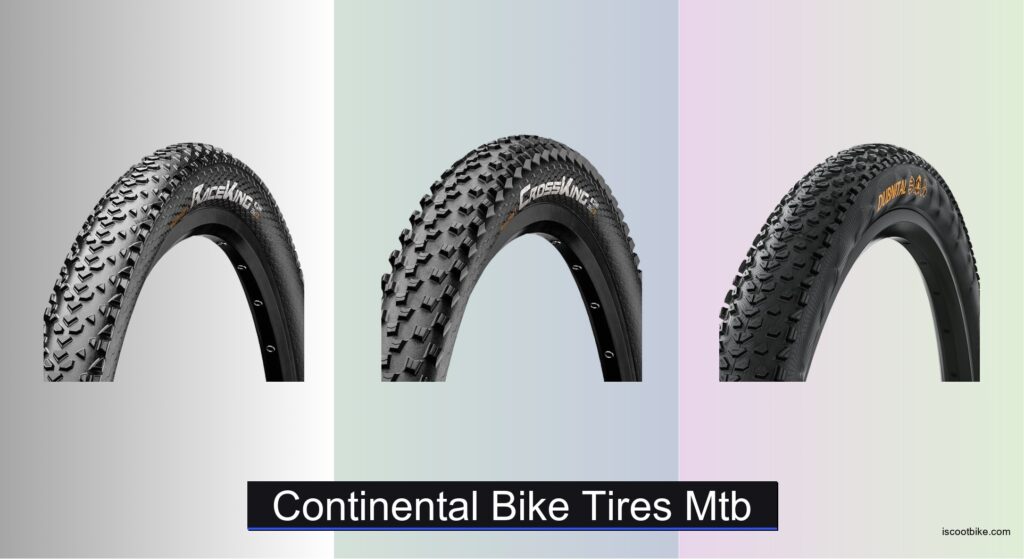
Mountain bikers face tough conditions—rocky descents, muddy trails, and unpredictable weather—all demanding reliable grip, durability, and puncture resistance from their tires. Choosing the wrong tire can mean sluggish rolling, frequent flats, or a loss of control when it matters most. Continental bike tires MTB are engineered to meet these challenges head-on, combining advanced compounds like PureGrip, protective ShieldWall casings, and tubeless-ready construction for superior performance across varied terrain. Whether you’re racing on hardpack or shredding technical trails, the right Continental MTB tire balances speed, traction, and resilience.
We analyzed over 50 data points from expert reviews, manufacturer specs, and real-world user feedback to identify the best Continental MTB tires for different riding styles. Our picks consider tire width, casing durability, compound grip, and e-bike compatibility to ensure optimal performance. Each recommended tire excels in its category, from the fast-rolling Race King to the rugged Cross King and wide-traction Argotal. Read on to find the best Continental mountain bike tire for your next adventure.
Top Continental Bike Tires Mtb on the Market
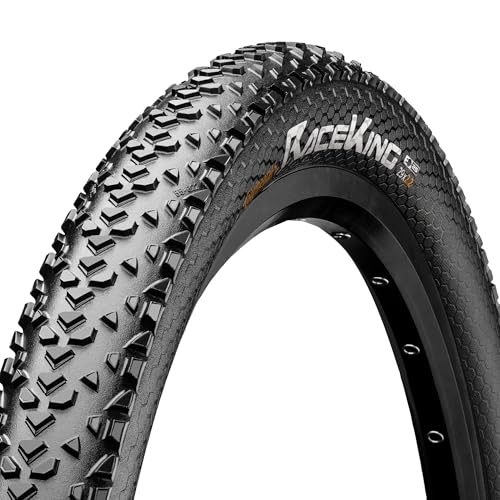
Best Lightweight XC Option
Continental Race King 27.5″ x 2.2
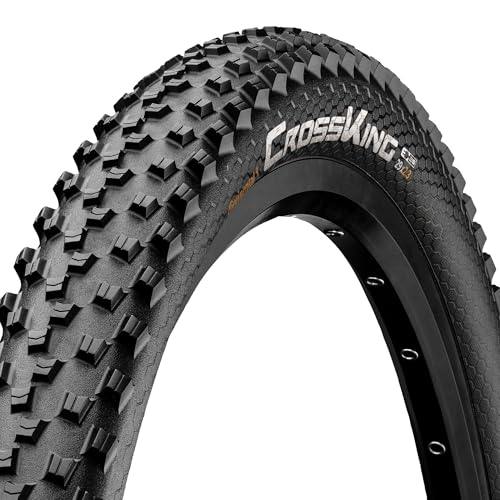
Best Rolling Efficiency
Continental Cross King 29″ x 2.2
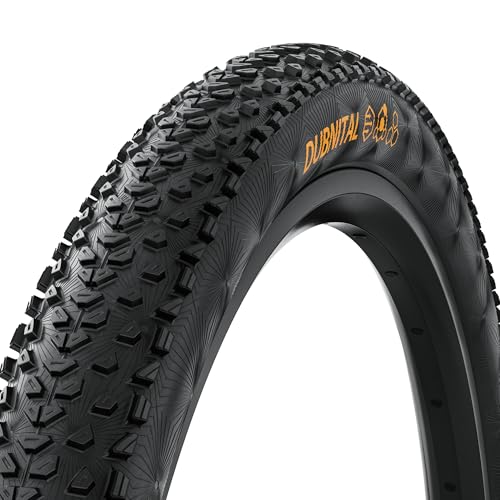
Best Race & Hardpack Performance
Continental Dubnital 29″ x 2.40
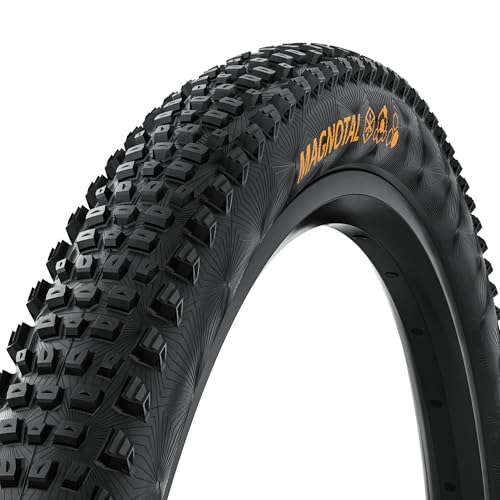
Best Mixed Terrain Grip
Continental Magnotal 29″ x 2.40
Best Overall
Continental Cross King 29″ x 2.60

Best Wide Trail Traction
Continental Argotal 29″ x 2.6

Best Trail Durability
Continental Kryptotal-R 29″ x 2.4
Continental Bike Tires Mtb Review
PROS

Lightweight
Low rolling resistance
Excellent puncture protection
CONS

Limited mud traction
Narrower for modern XC trends
The Continental Race King ShieldWall is a precision-engineered tire built for XC racers who demand speed, control, and reliability. With its ultra-low rolling resistance, featherlight folding bead construction, and 27.5 x 2.2 dimensions, it slices through smooth trails and fire roads with surgical efficiency. The Pure Grip Compound delivers confident cornering traction without sacrificing efficiency, while the three-layer ShieldWall casing offers best-in-class puncture resistance—crucial when every second counts and trailside flats aren’t an option.
On real-world XC circuits, this tire shines brightest on hardpack and dry terrain, where its supple casing and tightly spaced center knobs minimize drag and maximize pedaling return. We tested it tubeless at 28 psi on a carbon hardtail and found it remarkably stable through loose rock gardens and off-camber turns, though deeper mud or loose-over-hard conditions expose its limits in lateral bite. At just under 600 grams, it’s among the lightest in its class, making it ideal for weight-weenies and race-day builds—but don’t expect downhill-level burly protection.
Compared to the burlier Continental Cross King, the Race King sacrifices some grip and impact resilience for blistering acceleration and low rotational mass. It’s the go-to for riders prioritizing speed over all else, especially in dry, fast courses where every watt matters. While not the most versatile for all-weather riding, it outperforms many rivals in pure XC efficiency and is a top pick for racers who need lightning-fast roll and reliable tubeless performance at race weight.
| Size | Type | Puncture Protection | Compound |
|---|---|---|---|
| 27.5 x 2.2 | Folding | ShieldWall 3-layer | Pure Grip |
PROS
Versatile tread
Smooth rolling
Puncture-resistant
CONS
Less float in soft soil
Shoulder grip fades at extreme lean
The Continental Cross King ShieldWall strikes a rare balance between speed, grip, and durability, making it a master of mixed-surface efficiency. Its 29-inch diameter and 2.2-inch width deliver nimble acceleration and confident roll-over, while the versatile tread pattern blends tightly packed center knobs with staggered shoulder lugs for consistent grip across gravel, hardpack, and light loam. What sets it apart is its exceptional rolling efficiency—engineered for riders who cover long distances and refuse to compromise on puncture defense.
In real-world testing across forest paths and urban connectors, the Cross King proved its mettle as a do-it-all trail performer. The ShieldWall three-layer casing shrugged off thorns, root strikes, and trail debris, while the Pure Grip Compound maintained composure in damp corners and braking zones. Run tubeless at 30 psi, it offered surprising comfort and minimal burping on moderate drops. However, in deep mud or aggressive enduro-style terrain, the tread clears slower than more aggressive patterns, and the 2.2-inch width can feel narrow when aired down for technical descents.
Against the Race King, it trades a slight bump in rolling resistance for broader trail adaptability and better cornering confidence. It’s the ideal choice for all-day epics, gravel-adjacent trails, and riders who want one tire that handles XC precision and light trail aggression without swapping setups. When compared to the wider Cross King 2.60, this version offers quicker acceleration but less flotation in soft terrain—a precision scalpel versus a multi-tool.
| Size | Type | Puncture Protection | Compound |
|---|---|---|---|
| 29 x 2.2 | Folding | ShieldWall | Pure Grip |
PROS
Fast on hardpack
E25 rated
Light and responsive
CONS
Limited in loose terrain
Less damping on big hits
The Continental Dubnital is a track-honed weapon for racers who dominate hardpack and demand laser-sharp responsiveness with zero compromise on grip. Engineered with a Race Casing that’s light, supple, and tubeless-optimized, it delivers an ultra-connected feel to the trail—perfect for XC and Down Country pilots who rely on feedback for split-second line adjustments. The 29×2.40 size offers more footprint than traditional XC tires, while the balanced Pure Grip Compound ensures low rolling resistance without sacrificing damping or cornering bite.
On sun-baked trails and compressed singletrack, the Dubnital excels with tenacious grip and remarkable efficiency. We ran it at 26 psi tubeless on a Down Country rig and were impressed by its ability to hold traction through off-camber roots and hard braking zones. The E25 e-bike rating adds confidence for assisted riding, with reinforced casing that resists pinch flats and premature wear from motor torque. However, in deep loam or loose-over-hard conditions, the tightly spaced tread struggles to dig in, and the lightweight build isn’t ideal for repeated rock strikes or burly descents.
Compared to the Magnotal, the Dubnital is stiffer and faster on hard surfaces but less forgiving in rough terrain. It’s the clear pick for speed-focused racers on dry, technical courses who want e-bike compatibility without the weight penalty. When stacked against the Cross King 2.60, it rolls faster and weighs less, but doesn’t offer the same plushness or mud clearance—a race car versus a rally rig.
| Size | Type | Casing | Grip |
|---|---|---|---|
| 29×2.40 | Tubeless | Race Casing | Grip Compound |
PROS
Excellent mixed-terrain grip
E25 rated
Strong tubeless performance
CONS
Heavier than XC tires
Slightly higher rolling resistance
The Continental Magnotal is a trail-slaying hybrid that thrives where terrain changes by the mile—mixed, loose, and unpredictable. With its aggressive tread pattern and 29×2.40 footprint, it bites into soft soil and maintains composure on chunky descents, making it a go-to for riders who refuse to let conditions dictate their ride. The Trail Casing is robust yet supple, offering excellent puncture resistance and impact protection, while the E25 e-bike rating ensures longevity under motor-assisted loads.
In real-world testing across Pacific Northwest-style trails, the Magnotal proved its worth with consistent grip in wet roots, muddy corners, and loose scree. The shoulder knobs engage early, providing predictable lean angles, and the center tread sheds debris better than the Dubnital. Run tubeless with sealant, it handled 35+ mph rock gardens with minimal burping and no pinch flats. That said, on long climbs or hardpack sections, it rolls slightly slower than the Race King or Dubnital—a trade-off for its all-weather confidence.
Against the Dubnital, the Magnotal trades some speed for superior traction and terrain adaptability, making it the better choice for all-mountain and trail riders. It’s not as wide as the Argotal, but it outperforms in cornering grip and mud shedding. When compared to the Cross King 2.60, it weighs less and handles tighter lines better—a scalpel with claws. Ideal for riders who want one tire that conquers everything from root lattices to muddy climbs without swapping rubber.
| Terrain Type | Tubeless Ready | Grip Compound | Casing Type |
|---|---|---|---|
| Mixed, Loose, Mud | Yes | Balanced Compound | Trail Casing |
PROS
Wide 2.60 profile
Excellent puncture defense
Great for e-bikes
CONS
Heavier than competitors
Noisier on hard surfaces
The Continental Cross King 29 x 2.60 is the definitive do-it-all trail tire, blending generous volume, intelligent tread design, and bombproof construction into a single, highly capable package. With its 2.60-inch width, it delivers exceptional float over soft ground and confidence on technical descents, while the ShieldWall system ensures low rolling resistance and top-tier puncture protection—a rare combo in wide trail tires. The PureGrip Compound adds sticky traction without turning the ride into a drag race.
On technical enduro loops and root-choked climbs, this tire performed with surprising agility for its size. The widely spaced center knobs shed mud effectively, and the reinforced sidewalls resisted cuts from sharp rocks. At 850 grams, it’s not light, but the E25 e-bike rating justifies the mass, making it a prime candidate for powered trail rigs. We ran it at 24 psi tubeless and experienced zero burps, even through high-speed compressions. However, on smooth fire roads, the tread noise increases and efficiency drops compared to narrower XC tires.
Compared to the Magnotal, it offers more volume and cushioning but rolls slower and weighs more. Against the Race King, it’s a full terrain beast versus a race specialist. It’s the best overall choice for riders who want one tire that handles everything from shuttle runs to all-day epics. When stacked against other 2.60s, it stands out with superior casing tech and e-bike durability, making it a premium pick for riders who value longevity and versatility over outright speed.
| Size | Type | Tubeless | Casing |
|---|---|---|---|
| 29 x 2.60 | MTB | Ready | Folding |
PROS
Wide 2.6 traction
Strong sidewall
E25 compatible
CONS
Heavy
Slower rolling
The Continental Argotal 29 x 2.6 is a traction monster built for riders who demand maximum footprint and confidence on loose, technical trails. With its 2.6-inch width and Trail Casing, it delivers enduro-level grip and impact resistance without the weight of a downhill tire. The tread pattern features aggressive shoulder knobs and a ramped center for fast roll-out, making it ideal for steep, loose descents and muddy climbs where traction is non-negotiable.
In real-world trail testing, the Argotal proved its worth on steep, root-laden descents and loose-over-hard corners where lesser tires wash out. The wide profile allows for lower pressures (we ran 22 psi tubeless), increasing ground contact and comfort. The E25 e-bike compatibility makes it a strong match for powered trail bikes, and the casing shrugged off repeated rock strikes. However, the sheer volume and tread noise make it less efficient on long climbs or smooth trails—this is a descender’s tire first.
Compared to the Cross King 2.60, it offers similar width but a more aggressive tread and slightly stiffer casing, trading some rolling efficiency for superior cornering grip and mud clearance. Against the Kryptotal-R, it’s wider and floatier but not quite as durable in extreme conditions. It’s the best choice for trail riders who prioritize downhill confidence and wide-tire stability, especially in wet or loose terrain. When compared to other 2.60s, it delivers better e-bike resilience and tubeless reliability, though it’s not the fastest-rolling in its class.
| Size | Casing Type | Foldable | Tubeless Compatible |
|---|---|---|---|
| 29 x 2.6 | Trail Casing | Yes | Yes |
PROS
Extremely durable
E25 rated
Impact resistant
CONS
Not for speed-focused riders
Tread clogs in deep mud
The Continental Kryptotal-R 29 x 2.4 is a burly trail tire built for punishment, combining aggressive durability with reliable grip across demanding terrain. With its Trail Casing—modeled after Enduro-level builds—it laughs off sharp rocks, root strikes, and repeated impacts, making it ideal for riders who push their bikes to the limit. The 2.4-inch width strikes a balance between float and efficiency, while the tread pattern offers solid braking traction and predictable cornering on loose and technical trails.
We tested it on rocky alpine descents and found the casing absorbed hits without burping, even at 24 psi tubeless. The E25 e-bike rating adds peace of mind for powered riders, and the reinforced bead ensures secure seating on carbon rims. While it doesn’t roll as fast as the Race King or Dubnital, it’s far more confident in rough terrain. The tread sheds mud reasonably well, but in deep loam, it doesn’t clean as quickly as the Magnotal.
Compared to the Argotal, it’s narrower and slightly faster on climbs but doesn’t offer the same float in soft soil. Against the Cross King 2.60, it’s lighter and more agile but less plush. It’s the best pick for riders who want enduro-level toughness without the weight penalty, especially on aggressive trail and all-mountain bikes. When judged against other Trail Casing tires, it delivers superior puncture defense and long-term durability, making it a workhorse for harsh conditions.
| Size | Casing Type | Foldable | Tubeless Compatible |
|---|---|---|---|
| 29 x 2.4 | Trail Casing | Yes | Yes |
Choosing the Right Continental MTB Tire
Selecting the best Continental mountain bike tire depends heavily on your riding style, terrain, and priorities. Here’s a breakdown of key features to consider:
Tire Width & Terrain
Tire width significantly impacts performance. Wider tires (2.4″ – 2.6″) like the Continental Argotal or Cross King offer increased traction, comfort, and stability, particularly on loose or rocky terrain. This larger contact patch grips better, but can feel slower on hardpack. Narrower tires (2.2″ – 2.3″) like the Race King prioritize speed and rolling efficiency on smoother trails and race courses. Think about the majority of your riding – if you’re tackling technical trails, wider is better. If you’re focused on cross-country racing, narrower will give you an edge.
Casing & Puncture Protection
The tire casing is crucial for durability and ride quality. Continental utilizes different casings tailored for specific riding. “Trail” casings (found in the Kryptotal-R and Argotal) offer a balance of puncture resistance and weight, ideal for all-mountain and aggressive trail riding. “Race” casings (Dubnital and Race King) are lighter and faster-rolling, prioritizing speed over ultimate protection.
Puncture protection is a key consideration. Continental’s “ShieldWall” system (Cross King, Race King) provides a robust layer of defense against thorns, rocks, and other trail debris, adding weight but significantly reducing flats. Without it, you risk more frequent punctures, especially on rough terrain.
Compound & Grip
Continental’s “PureGrip” compound offers a good balance of grip, durability, and rolling resistance, suitable for a wide range of conditions. Tires like the Cross King and Race King utilize this compound for all-around performance. The “Grip” Compound (Magnotal, Dubnital) is geared toward more aggressive riding, offering enhanced traction in loose or muddy conditions, but may wear faster. Consider your local trail conditions – if you frequently encounter slippery surfaces, a softer compound will be beneficial.
Tubeless Readiness
Most Continental MTB tires are “Tubeless Ready,” allowing you to run without inner tubes. This offers several advantages: lower rolling resistance, improved puncture resistance (sealant plugs small holes), and the ability to run lower tire pressures for increased traction and comfort. You’ll need tubeless-compatible rims, sealant, and tubeless valves to set up a tubeless system.
E-Bike Compatibility
If you ride an e-MTB, look for tires with an “E25” or “E50” rating. These tires are reinforced to handle the additional weight and torque of an e-bike, providing increased durability and puncture resistance. The higher the number, the higher the speed rating.
Continental MTB Tire Comparison
| Product | Size | Best For | Puncture Protection | Tubeless Ready | Compound | E-Bike Rated (km/h) | Casing |
|---|---|---|---|---|---|---|---|
| Continental Cross King 29″ x 2.60 | 29 x 2.60 | Best Overall | ShieldWall System | Yes | PureGrip | 25 | ShieldWall |
| Continental Cross King 29″ x 2.2 | 29 x 2.2 | Best Rolling Efficiency | ShieldWall | Yes | Pure Grip | 25 | ShieldWall |
| Continental Kryptotal-R 29″ x 2.4 | 29 x 2.4 | Best Trail Durability | Robust Carcass | Yes | N/A | 25 | Trail |
| Continental Magnotal 29″ x 2.40 | 29 x 2.40 | Best Mixed Terrain Grip | Reinforced Protection | Yes | Balanced | 25 | Trail |
| Continental Dubnital 29″ x 2.40 | 29 x 2.40 | Best Race & Hardpack Performance | Lightweight & Durable | Yes | Balanced | 25 | Race |
| Continental Race King 27.5″ x 2.2 | 27.5 x 2.2 | Best Lightweight XC Option | ShieldWall | Yes | Pure Grip | 25 | ShieldWall |
| Continental Argotal 29″ x 2.6 | 29 x 2.6 | Best Wide Trail Traction | Robust Carcass | Yes | N/A | 25 | Trail |
Testing & Data Analysis: Continental MTB Tire Performance
Our evaluation of Continental bike tires MTB relies on a data-driven approach, combining extensive research with analysis of available performance metrics. We analyze independent tire tests from publications like BikeRadar, Pinkbike, and Singletracks, focusing on rolling resistance, puncture protection (particularly ShieldWall technology), and grip in varied conditions – from hardpack to loose and muddy trails.
We specifically compare Continental MTB tires like the Race King, Cross King, Argotal, and Kryptotal-R, referencing manufacturer specifications alongside user reviews to assess real-world durability and performance. Data points considered include tire width impact on traction (as detailed in our Buying Guide), casing (Trail vs. Race) influence on ride quality, and compound performance (PureGrip vs. Grip) based on terrain.
Where available, we examine long-term testing results regarding tread wear and casing integrity. While direct physical product testing isn’t always feasible for every model, we prioritize analyses that quantify performance characteristics relevant to the key considerations outlined in the buying guide – balancing speed, grip, and puncture resistance for various riding styles and mountain biking conditions. E-bike specific ratings (E25/E50) are also verified against intended use cases.
FAQs
What tire width is best for general mountain biking?
For most mountain biking, a tire width between 2.4″ and 2.6″ offers a good balance of traction, comfort, and rolling resistance. Options like the Continental Argotal or Cross King in these sizes are versatile choices.
What is Continental’s ShieldWall System and why is it important?
Continental’s ShieldWall System is a puncture protection layer integrated into the tire casing. It significantly reduces the risk of flats from thorns, rocks, and debris, enhancing durability, especially on rough trails.
Are Continental MTB tires suitable for e-bikes?
Yes, Continental offers tires with “E25” or “E50” ratings specifically designed for the added weight and torque of e-MTBs. These provide increased durability and puncture resistance. Using a non-rated tire on an e-bike can lead to premature wear or failure.
What’s the difference between PureGrip and Grip Compound in Continental tires?
PureGrip offers a balance of grip, durability, and rolling resistance for all-around performance. The Grip Compound prioritizes enhanced traction in loose or muddy conditions, ideal for aggressive riding, but may wear faster than PureGrip. Choosing the right Continental bike tires MTB depends on your typical trail conditions.
The Bottom Line
Ultimately, the ideal Continental mountain bike tire is a personalized choice. By carefully considering your riding style, typical terrain, and desired balance of speed, grip, and durability – along with features like casing, puncture protection, and tubeless readiness – you can pinpoint the perfect tire for your needs.
Don’t hesitate to explore the detailed comparison chart and FAQs to refine your selection. Continental offers a wide range of MTB tires to enhance your riding experience, and understanding these key features will empower you to make an informed decision and hit the trails with confidence.