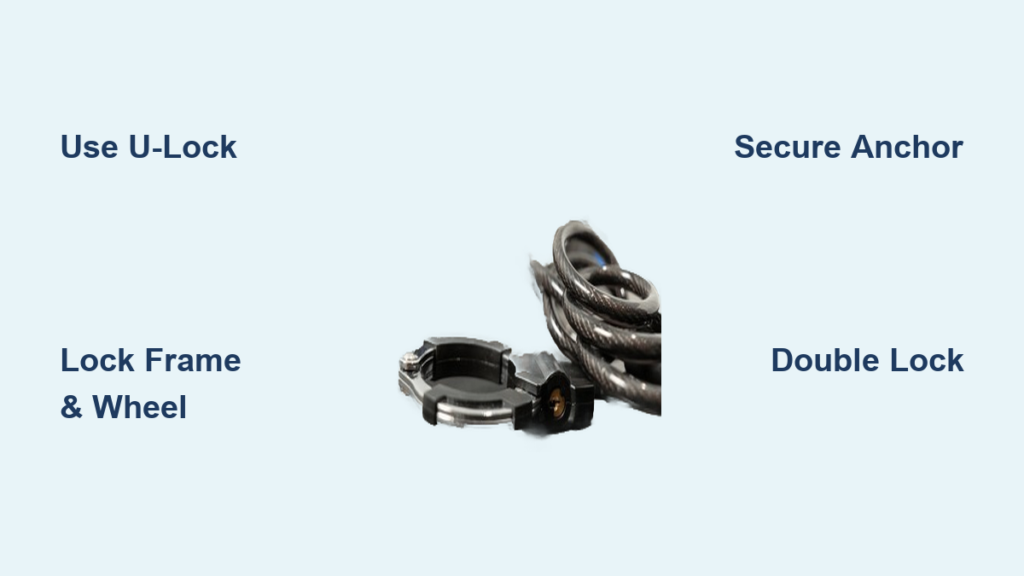
Leaving your electric scooter unattended in public? Without proper security, it could be gone in seconds. How to lock a scooter to a bike rack isn’t just about tossing on a cable lock—it requires using the right tools, the right technique, and the right anchor point to make theft too difficult to attempt. Most e-scooters weigh under 50 pounds, making them easy targets for lift-and-carry thefts. Relying on app locks or alarms alone won’t stop a determined thief. The real defense involves a hardened steel U-lock securing the scooter’s frame to a fixed, immovable object like a designated bike rack.
This guide breaks down exactly how to lock a scooter to a bike rack the right way. You’ll learn how to choose the strongest lock, identify secure attachment points on your scooter, select a reliable anchor, and apply proven locking techniques that work for quick stops or overnight parking.
Choose the Right Lock Type for Maximum Security

Not all locks offer the same protection. Your choice determines how long a thief will spend trying and whether they give up.
Use a U-Lock as Your Primary Lock
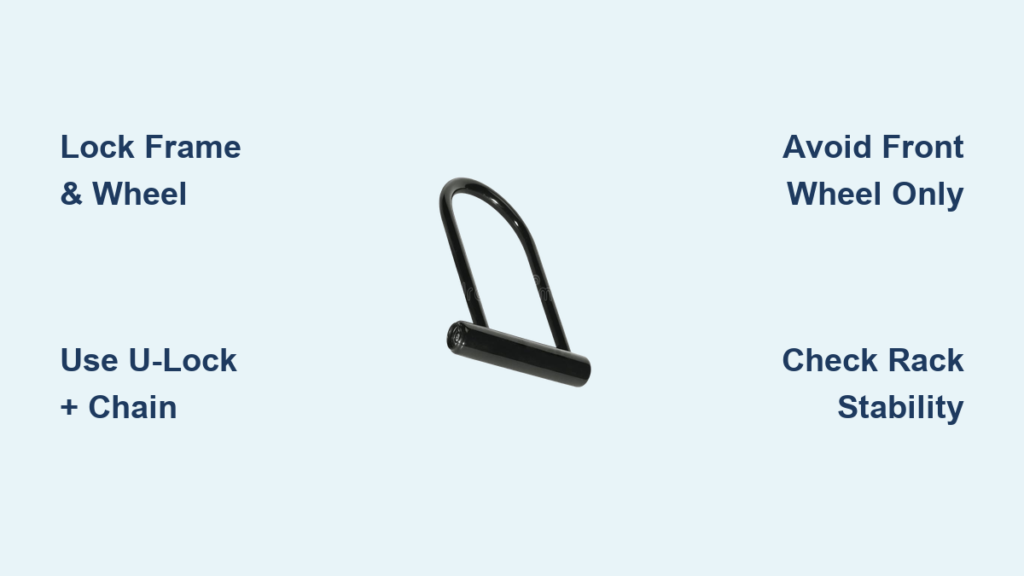
A U-lock (also called a D-lock) is the top choice for locking an e-scooter to a bike rack. Its solid, hardened steel shackle resists bolt cutters, saws, and leverage attacks. High-end models like the Kryptonite New York Fahgettaboudit or ABUS Granit use heat-treated steel up to 18mm thick, making them extremely difficult to break.
• Best for: Daily urban commuting, medium- to high-risk areas
• Weight: 5 to 6 pounds (a necessary trade-off for strength)
• Key tip: Buy the shortest shackle that fits your scooter and rack. Less internal space means fewer tools can fit inside the lock.
Position the lock with the keyhole facing down to block debris and drilling attempts. A snug fit around the rack and scooter leaves no room for jacks or cutters.
Try a Folding Lock for Better Portability
Folding locks offer strong security with better portability than bulky U-locks.
• Design: Multiple 5mm hardened steel bars linked by reinforced rivets
• Pros: Compact, mounts easily on the stem, balances security and convenience
• Cons: Slightly less secure than U-locks due to joint vulnerabilities
Ideal for riders who want solid protection without the weight. Avoid cheap versions with thin links or weak joints.
Use a Chain Lock for Overnight Parking
Heavy-duty chain locks provide unmatched flexibility and cutting resistance.
• Example: Kryptonite New York Chain (5 feet, 15 pounds)
• Strength: Hardened steel links resist grinders and bolt cutters
• Drawback: Weight makes it impractical for daily carry
Reserve chain locks for overnight parking or long-term storage where you can leave the lock behind.
Avoid Cable Locks as Your Only Security
Cable locks are not enough on their own.
• Most can be cut in seconds with handheld tools
• Even hardened cables are weaker than solid shackles
Use cable locks only as secondary locks to secure removable wheels or accessories.
Never Rely on Disc or Ring Locks Alone
These locks the wheel but don’t anchor the scooter to anything.
• A thief can lift the entire scooter and walk away
• Some include alarms, but physical anchoring is still required
• Often incompatible with hub motors or solid wheels
Use disc locks only in addition to a U-lock or chain.
Identify Secure Locking Points on Your Scooter
Where you attach the lock matters as much as the lock itself. Target structural parts that cannot be removed quickly.
Lock Through the Frame or Stem
The frame, especially the deck-stem junction, is the strongest point.
• This area is welded or built into the scooter’s core
• Cannot be unbolted without tools
• Prevents the entire scooter from being separated
If your scooter has a non-removable stem, threading the lock through it is also effective.
Use Built-In Locking Features
Some scooters have reinforced folding latches or integrated carrying handles designed for locking.
• Models like the Apollo City 2022 have welded handles perfect for U-locks
• Inokim Light 2 has a folding mechanism slot ideal for securing
Check your model’s design. These factory-built loops are often the safest option.
Always Include a Wheel in the Lock Loop
Loop the lock through one wheel (preferably the rear if it houses the motor) and the frame.
• Prevents wheel removal while keeping the scooter anchored
• Stops thieves from lifting the scooter off the lock
But never lock only the wheel. This leaves the frame free to be carried away.
Avoid Weak or Removable Parts
Never lock through handlebars, phone mounts, baskets, lights, or quick-release wheels. These are designed to be removed and offer zero security. If it can be unscrewed, it is not safe to lock to.
Pick a Solid Bike Rack or Anchor Point
Even the best lock fails if attached to a weak anchor. The rack must be permanent and immovable.
Choose Cemented Steel or Iron Fixtures
Ideal anchors include designated bike racks bolted or cemented into concrete, stair railings anchored into buildings, and steel utility poles or parking meters with deep foundations. Test stability by pushing or shaking the rack. If it moves, it is not secure.
Avoid These Weak Anchors
Never lock to thin signposts, chain-link fences, trees, short posts, or hollow or rusted pipes. A thief can defeat a 100-dollar lock in seconds by removing a 20-dollar post.
Look for Visibility and Lighting
A strong anchor in a dark alley is still risky. Always park in well-lit areas with high foot traffic and stay within view of CCTV cameras. Thieves avoid attention. A busy sidewalk is safer than a secluded corner.
Apply the Correct Locking Technique
Technique turns good equipment into real protection. Follow this method for maximum security.
Use the Frame-and-Wheel Method
This is the gold standard for locking an e-scooter to a bike rack.
- Position the scooter tightly against the rack
- Open your U-lock and thread it through the bike rack bar, the scooter’s frame (deck-stem or handle), and the rim or spokes of one wheel (rear preferred)
- Close and lock the mechanism firmly
- Tilt the lock so the keyhole faces downward
This secures two parts of the scooter and the rack in one loop, making it impossible to remove the scooter without cutting the lock.
Perform the Tug Test
After locking, pull hard on the scooter from all angles. If it moves, the lock is not tight enough. If the rack shakes, find a better anchor. A properly secured scooter should not budge.
Keep the Lock Snug
Leave no gap inside the U-shackle. Gaps allow thieves to insert bottle jacks or crowbars. A tight fit blocks tool access and increases break time.
Add a Second Lock for High-Risk Areas

In theft-prone zones or for overnight parking, double locking is essential.
Combine Two Different Lock Types
Use a U-lock plus a folding lock, or a U-lock plus a chain. This forces thieves to carry multiple tools, dramatically reducing success odds.
Why Two Locks Work Better
One lock might be vulnerable to a specific tool. Two different types require bolt cutters and an angle grinder, increasing noise, time, and visibility. Even a basic second lock adds significant delay.
Use Self-Locking as a Last Resort
No rack available? You are at higher risk, but you can still deter casual theft.
Create a Closed Loop with U-Lock and Cable
Attach a U-lock to the scooter’s frame, then thread a cable through both wheels and back into the U-lock. This prevents rolling but does not stop lifting. Still better than nothing.
Fold and Lock the Handlebars
If your scooter folds, fold the handlebars down and use a small padlock or mini U-lock to secure them to the deck. This stops the scooter from being unfolded and ridden away.
Warning: These methods are not theft-proof. Always prioritize fixed anchors.
Boost Security with Extra Measures

Physical locks are the foundation, but layer on technology for added protection.
Install a GPS Tracker
A hidden GPS tracker helps recover a stolen scooter.
• Real-time location via smartphone app
• Geofencing alerts if moved unexpectedly
• Hide it in the deck or stem to prevent removal
Popular options include Tile Pro, Apple AirTag (in waterproof case), or Vodafone V-Safe. This does not prevent theft but improves recovery odds.
Enable Alarms and App Locks
Many scooters have built-in motion alarms up to 120 decibels.
• Sounds when vibration or movement is detected
• Alerts you instantly via app
• Can scare off thieves in public areas
But alarms rely on battery power. If the scooter is powered off or drained, they fail. Use them as a supplement, not a replacement for physical locks.
Register and Insure Your Scooter
Protect your investment beyond just locking.
• Record the serial number (found on deck or stem)
• Take photos of unique features
• Register with local programs like Project 529 Garage
• Get e-scooter insurance covering theft, damage, and liability
Insurers often require proof of proper locking and may deny claims if a cable lock was used in a high-risk area.
Avoid Common Locking Mistakes
Even experienced riders make errors that invite theft.
Never Lock Only the Wheel
This is the number one mistake. A thief removes the wheel or lifts the scooter. The lock stays behind and the scooter is gone. Always include the frame.
Do Not Trust Handlebar-Only Locks
Handlebars are held by bolts, easily removed with a hex key. Lock stays on the rack, front end comes off, and the scooter is stolen in under 30 seconds. Frame-first, always.
Do Not Use Weak Anchors
A 100-dollar lock on a 10-dollar post is useless. Verify the rack is cemented and sturdy. Avoid anything that wobbles or looks flimsy.
Do Not Leave Gaps in the Lock
Extra space equals tool access. No room for jacks, cutters, or drills means longer attack time and higher chance of failure.
Do Not Rely on Electronic Locks Alone
App locks, Bluetooth, and fingerprint systems are convenient but not physical barriers. Battery dies, lock fails. Use them with a U-lock, never instead of one.
Maintain Your Lock and Gear
A neglected lock can fail when you need it most.
Lubricate and Clean Regularly
Apply dry lubricant to the keyhole and shackle every few months or after wet rides. This prevents rust and ensures smooth operation. Replace missing dust covers.
Inspect for Damage
Check for scratches, dents, or pry marks indicating tampering. Look for corrosion on chains or joints and loose rivets on folding locks. Replace compromised locks immediately.
Monitor Battery for Smart Features
If using GPS or alarms, keep the main battery charged. Avoid leaving active alarms on for days, which can drain the battery. Consider trackers with independent power sources.
Final Checklist: Lock It Right Every Time

Before walking away, run through this list:
• High-security U-lock or chain used (no cable-only)
• Locked through frame plus wheel plus rack
• No gaps in the lock (snug fit)
• Keyhole facing down
• Anchor is cemented and immovable
• Well-lit, high-traffic location
• Second lock or alarm/GPS added for high risk
• Accessories removed or secured
• Tug test passed (scooter does not move)
• Serial number recorded and insured
Frequently Asked Questions About Locking a Scooter to a Bike Rack
What is the best lock for securing an e-scooter to a bike rack?
A hardened steel U-lock (also called a D-lock) is the best primary lock for securing an e-scooter. Models like the Kryptonite New York Fahgettaboudit or ABUS Granit offer superior resistance to bolt cutters, saws, and leverage attacks. Choose a short-shackle model for the tightest fit.
Can I use a cable lock to secure my scooter?
Cable locks should not be used as your primary security. Most can be cut in seconds with handheld wire cutters. Use them only as secondary locks to secure removable wheels or accessories in low-risk situations.
Where should I lock my scooter on the bike rack?
Lock through the scooter’s frame (specifically the deck-stem junction), one wheel (preferably the rear wheel containing the motor), and the bike rack bar itself. Never lock only the wheel or handlebars, as these can be removed quickly.
What bike rack should I use for locking my scooter?
Use a cemented steel or iron bike rack that is immovable. Avoid thin signposts, chain-link fences, trees, short posts, or rusted fixtures. Test the rack by pushing it. If it moves, find a stronger anchor.
How do I prevent my scooter from being stolen overnight?
For overnight parking, use two locks (a U-lock plus a chain or folding lock), add a GPS tracker and alarm, and park in a well-lit, high-traffic area with CCTV coverage. Consider bringing the scooter indoors if possible.
Key Takeaways for Locking Your Scooter to a Bike Rack
Knowing how to lock a scooter to a bike rack the right way transforms a vulnerable target into a theft-resistant machine. Invest in a solid U-lock with a short shackle, secure the frame (not just the wheel) to a cemented bike rack, and always pair your physical lock with smart habits like parking in visible, well-lit areas. Add a second lock, GPS tracker, or alarm for high-risk situations. Your scooter is only as safe as the weakest link in your security chain. Make every link strong.