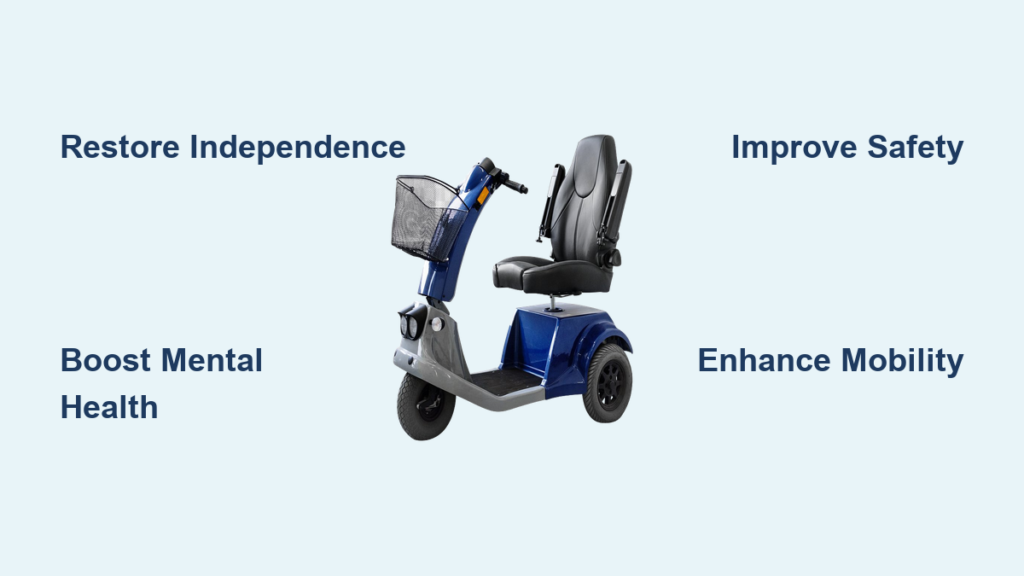
Imagine being able to leave the house whenever you want, no waiting for a ride, no fear of falling, no pain after a short walk. For millions of people with mobility challenges, that freedom is real, thanks to mobility scooters. These compact, motorized vehicles do far more than help you get from point A to point B. They restore independence, boost mental health, improve physical safety, and reconnect users with the world around them.
The benefits of a mobility scooter go well beyond convenience. For seniors, individuals recovering from injury, or those living with chronic conditions like arthritis or multiple sclerosis, a scooter can be the difference between isolation and active participation in life. Research shows that 74% of users would not travel the same distances or at all without their scooters. That’s not just a statistic. It is a testament to how deeply these devices impact daily living.
Restore Your Independence with a Mobility Scooter

Mobility scooters transform users from passive dependents into active decision-makers. No longer limited by distance, pain, or reliance on others, scooter owners regain control over their routines and choices. This fundamental shift from needing assistance to self-sufficiency is the most profound benefit users report.
Travel Without Assistance
One of the most immediate benefits is the ability to move without help. Unlike manual wheelchairs that require pushing or upper-body strength, scooters are motorized and controlled with simple hand levers. This means you can leave the house spontaneously, run errands alone, and navigate stores, sidewalks, and parks independently. No more scheduling rides or feeling like a burden. The scooter becomes your personal transportation, available whenever you need it.
Make Your Own Decisions
Independence is not just about movement. It is about autonomy. With a mobility scooter, you decide where to go, when to leave, and how long to stay. That control restores dignity and combats the helplessness that often comes with declining mobility. Users report feeling like themselves again, able to plan outings, visit family, or simply enjoy a walk in the park on their own terms.
Access Public Transportation Easily
Most public transit systems are scooter-friendly. Buses have ramps, trains accommodate mobility devices, and many stations are equipped with elevators. This access expands your range far beyond what walking or a cane allows. Whether it is a downtown shopping trip or a visit to a community center, your scooter makes it possible without needing a driver.
Boost Your Mental and Emotional Well-Being
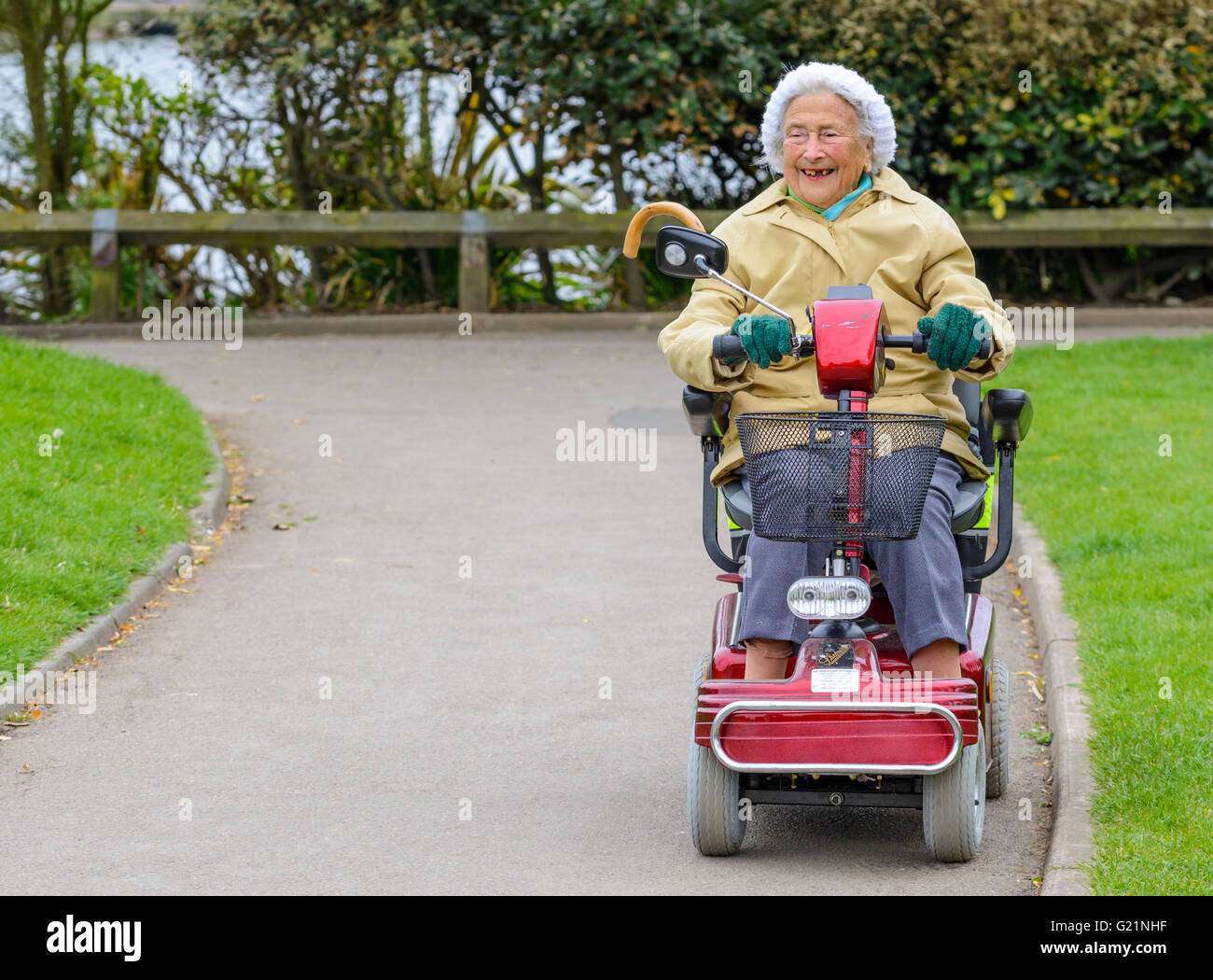
Limited mobility does not just affect the body. It takes a toll on the mind. Mobility scooters act as a powerful antidote to loneliness, anxiety, and depression. The psychological benefits often surprise new users and their families.
End Social Isolation
When walking becomes difficult, many people stop leaving the house. Over time, this leads to isolation. Friends stop visiting, events are skipped, and daily life shrinks. A scooter breaks that cycle. You can attend church, join a book club, or meet a friend for coffee. These activities keep you socially connected and emotionally fulfilled. One user shared that after getting her scooter, she started doing things she had not done in years. She felt independent again, and her life got better.
Reduce Anxiety and Depression
Being stuck at home increases the risk of depression. Lack of sunlight, physical inactivity, and social withdrawal all contribute. Scooters reverse these trends by getting users outdoors and engaged. Exposure to natural light boosts Vitamin D and regulates mood. Movement, even assisted, triggers endorphins. Seeing familiar faces reduces feelings of loneliness. Research confirms that users consistently report lower anxiety and improved emotional well-being after adopting a scooter.
Restore Confidence and Purpose
There is a deep psychological shift when you stop relying on others for basic movement. You are no longer the person who needs help. You are the one driving to the store, visiting neighbors, or attending family events. That shift rebuilds confidence and restores a sense of purpose. A retired teacher reported that her scooter allowed her to return to the library and local events, significantly improving both her physical and emotional health.
Improve Physical Safety and Health
While scooters conserve energy, they also actively protect your body and promote better health outcomes. Many users discover that their overall activity levels increase after getting a scooter, paradoxically improving their physical condition.
Prevent Falls and Injuries
Balance issues, weakness, or neurological conditions increase fall risk, especially over long distances. Mobility scooters provide a stable, low-center platform with anti-tip wheels and secure seating. This stability drastically reduces the chance of falling, especially on uneven sidewalks or crowded streets. Modern models also include front and rear lights for visibility, smooth responsive braking systems, and ergonomic controls that do not require grip strength. These features give users and their families peace of mind, encouraging more frequent outings without fear.
Reduce Pain and Fatigue
Conditions like arthritis, fibromyalgia, or chronic back pain make walking exhausting. Every step can cause discomfort, leading many to avoid activity altogether. A scooter eliminates that strain. By mechanizing movement, scooters protect joints and muscles, prevent overexertion, and allow longer outings without pain. This energy conservation is key. Instead of spending all your energy just getting to the store, you can shop, socialize, and enjoy the day without needing to rest for hours afterward.
Stay Active and Healthy
Using a scooter helps you stay more physically active. Because movement is easier, users tend to go out more often. They visit parks, attend events, and walk short distances when needed. This continued engagement supports circulation, joint flexibility, and lower-body coordination. Plus, increased time outdoors means more sunlight exposure, boosting Vitamin D levels which are essential for bone health and immune function.
Choose the Right Scooter for Your Lifestyle
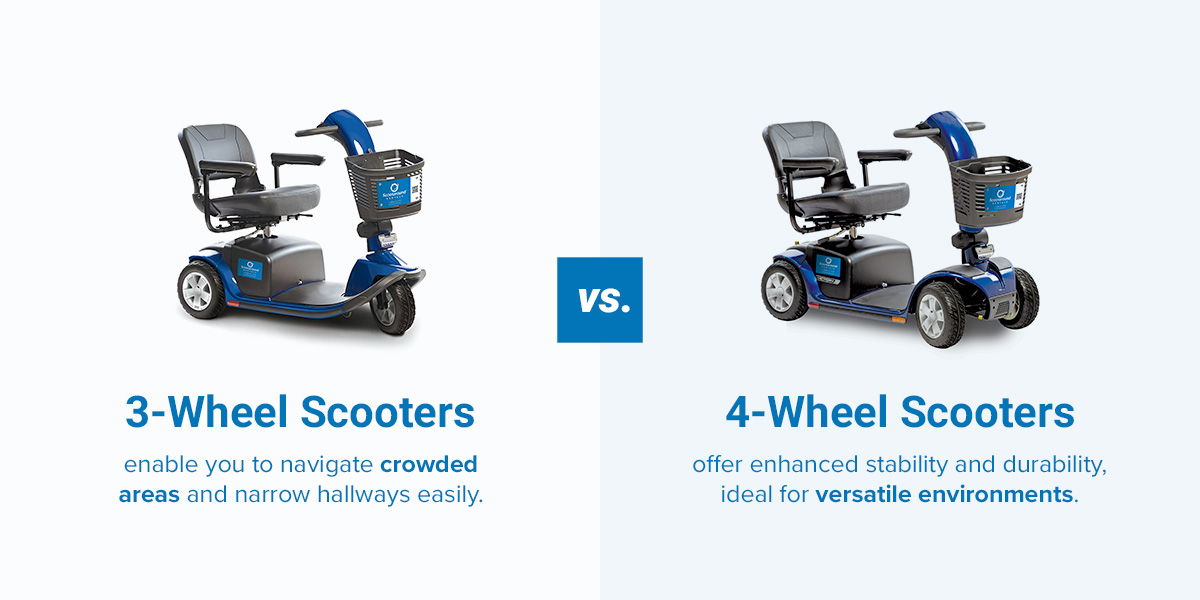
Not all scooters are the same. The right model depends on your environment, strength, and daily needs. Understanding the different types helps you make an informed choice.
Pick by Use Case
Different designs serve different purposes. Travel scooters are lightweight, foldable, and easy to disassemble for car transport. Three-wheel scooters have a tight turning radius, making them ideal for indoor use and narrow spaces. Four-wheel scooters offer greater stability and are better for outdoor terrain and longer trips. Heavy-duty Class 3 scooters are built for rough ground, higher speeds, and road use. Foldable models like the EcoFold X220 or TravelMate C340 fit in small homes or car trunks.
Learn to Operate Easily
You do not need special skills to use a scooter. Most models feature handlebar or steering wheel control, thumb-operated speed levers, and simple on/off switches and charging ports. The learning curve is minimal. Many users are comfortable within minutes. Battery systems are intuitive, and maintenance is low, requiring routine charging and occasional tire checks.
Overcome Physical Barriers
Scooters help you navigate environments that would otherwise be off-limits. Ramps, elevators, and accessible entrances in public spaces make it possible to enter stores, libraries, and parks. Long distances like crossing a mall or walking through a zoo become manageable. This access ensures you remain part of community life, not excluded by design.
Experience Modern Comfort and Technology
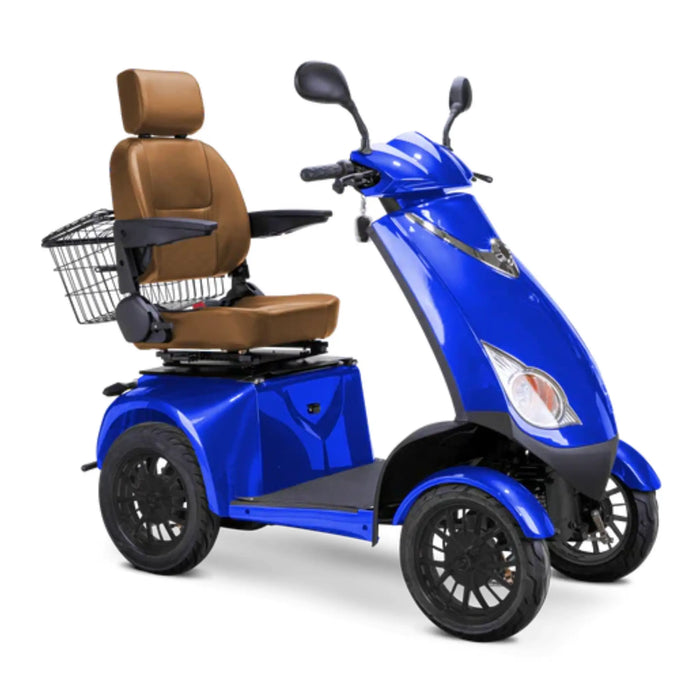
Today scooters are far from clunky medical devices. They are sleek, smart, and designed for comfort. Modern innovations have transformed the user experience significantly since the first mobility scooter was invented in 1968 by Allan R. Thieme.
Enjoy Advanced Battery Power
Gone are the days of heavy lead-acid batteries. Most modern scooters use lithium-ion technology, offering longer range up to 20 miles per charge, lighter weight, faster charging, and longer lifespan. This means fewer recharges, greater freedom, and less effort when transporting the scooter. The average cost to fully charge a scooter is just a few cents, making it an economical choice.
Ride in Comfort
Ergonomics matter, especially for extended use. Features include adjustable padded seats, armrests and seat belts for support, suspension systems that absorb bumps, and customizable seating for back or hip pain. These upgrades make rides smoother and more comfortable, even on uneven surfaces.
Use Smart Safety Features
Innovation has made scooters safer and easier to manage. LCD displays show battery level, speed, and diagnostics. Front and rear lights improve visibility at night. GPS navigation helps you find your way. Anti-tip wheels prevent rollovers on slopes. Automatic diagnostics alert you to maintenance needs. These features enhance safety, especially in low-light conditions or unfamiliar areas.
Who Benefits Most from a Mobility Scooter

Mobility scooters are not just for the elderly. They serve a wide range of users facing mobility challenges. Understanding who benefits most helps you determine if a scooter is right for you or a loved one.
Ideal for Seniors and Chronic Conditions
Common users include seniors with age-related fatigue, joint pain, or balance issues. People with arthritis, MS, or Parkinson who struggle with walking benefit significantly. Post-surgery or injury patients needing temporary or long-term support often choose scooters. Individuals with cardiopulmonary conditions who tire easily find scooters essential. According to the CDC, 12.2% of U.S. adults have serious difficulty walking or climbing stairs, and many of these individuals could benefit from a scooter.
Signs You Might Need One
Consider a mobility scooter if you struggle to walk more than a few minutes, fear falling when moving around, rely on others for transportation, or avoid going out due to pain or exhaustion. These are clear indicators that a scooter could dramatically improve your quality of life.
Save Money and Stay Connected
Beyond personal benefits, scooters offer economic and social advantages. The value extends beyond the individual user to families and communities.
Cut Transportation Costs
Compared to cars or ride services, scooters are incredibly affordable. Charging costs just a few cents per use. There is minimal maintenance with no oil changes, insurance, or registration required. There are no fuel expenses. They are a budget-friendly alternative to taxis, ride-shares, or specialized transport services, especially for frequent short trips.
Rejoin the Community
Mobility scooters do not just help individuals. They strengthen communities. When people can access shops, events, and public spaces, they support local businesses, maintain friendships and family ties, and participate in civic life. This inclusion fosters healthier aging and more connected neighborhoods. Studies found users felt more part of society after getting a scooter. That is proof that mobility equals belonging.
Contribute to a More Inclusive Society
Widespread scooter use promotes accessibility awareness. As more people use mobility devices, cities improve infrastructure, adding ramps, wider sidewalks, and accessible entrances. This creates a ripple effect, making public spaces friendlier for everyone, including parents with strollers, travelers with luggage, and people with temporary injuries.
Frequently Asked Questions About Benefits of a Mobility Scooter
How does a mobility scooter improve daily life?
A mobility scooter improves daily life by giving you the freedom to move independently without relying on others. You can run errands, visit friends, attend events, and navigate your community on your own schedule. This independence reduces feelings of helplessness and restores dignity.
Can a mobility scooter help with mental health?
Yes. Mobility scooters combat isolation, anxiety, and depression by enabling social interaction and outdoor activity. Users report higher self-esteem and life satisfaction after getting a scooter. The ability to leave the house freely has a significant positive impact on emotional well-being.
Are mobility scooters safe for seniors?
Yes. Modern mobility scooters include safety features like anti-tip wheels, front and rear lights, smooth braking systems, and stable seating. These features reduce fall risk and provide peace of mind for users and their families. The stability of a scooter is often safer than walking on uneven surfaces.
How much does it cost to operate a mobility scooter?
Operating a mobility scooter is very economical. Charging the battery costs only a few cents per full charge. Maintenance is minimal, involving routine charging and occasional tire checks. There are no fuel costs, insurance premiums, or registration fees required.
Who should consider getting a mobility scooter?
Anyone experiencing difficulty walking, fear of falling, reliance on others for transportation, or avoidance of activities due to pain or exhaustion should consider a mobility scooter. This includes seniors, individuals with chronic conditions like arthritis or MS, post-surgery patients, and those with cardiopulmonary issues.
Final Thoughts on the Benefits of a Mobility Scooter
The benefits of a mobility scooter extend far beyond movement. They restore independence, protect mental health, enhance safety, and reconnect users with life. Research confirms that 74% of users would not travel the same distances without their scooters, demonstrating how essential these devices have become.
Whether you are managing a chronic condition, recovering from injury, or simply aging with grace, a scooter can be the key to staying active, confident, and engaged. It is not just a device. It is a pathway to freedom that transforms how you experience the world around you.
If you or a loved one struggles with mobility, consider exploring mobility scooter options. The right scooter can open doors you thought were closed and help you reclaim the active, independent lifestyle you deserve.