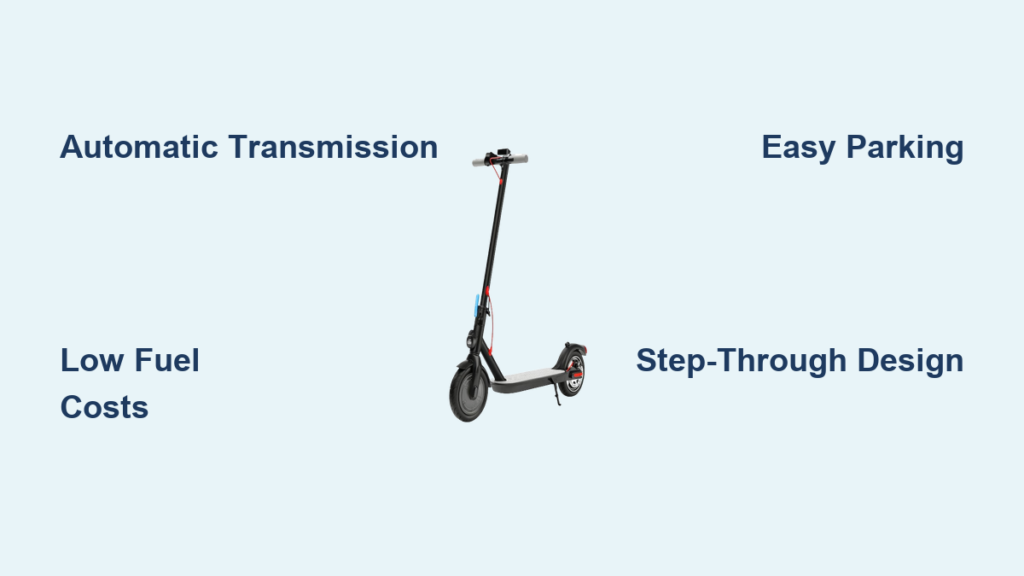
If you’re choosing between a scooter and a motorcycle for city commuting, the answer might surprise you: the scooter often wins for urban riders. While motorcycles dominate in speed, power, and long-distance capability, scooters offer a smarter, simpler solution for daily travel. With their automatic transmission, step-through design, and superior fuel economy, scooters eliminate the hassles that make motorcycles impractical for many riders. This guide breaks down exactly where scooters outperform motorcycles, from cost savings to comfort, maneuverability, and everyday practicality.
Operational Simplicity That Makes City Riding Easier
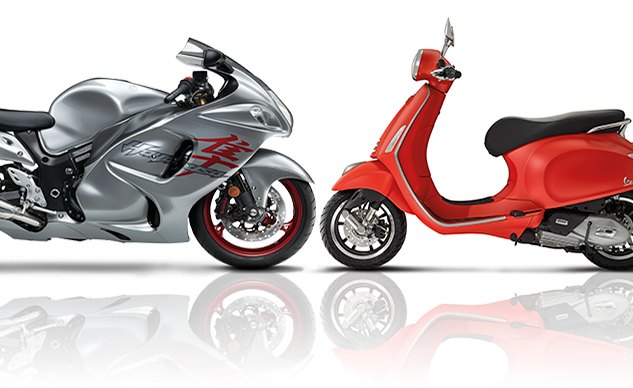
Scooters are designed for effortless riding, especially in stop-and-go traffic or tight city streets. Their core advantage lies in ease of operation, making them ideal for new riders, casual users, and anyone who wants to skip the mechanical complexity of a motorcycle.
Twist-and-Go: No Clutch, No Gears, Just Ride
Scooters use a Continuously Variable Transmission that automatically adjusts to your speed, removing the need to coordinate hand and foot controls. This twist-and-go system means no stalling at red lights, less mental load so you can focus on traffic, and smooth acceleration when filtering through lanes. While some high-end motorcycles now offer automatic options, they remain rare and expensive. On scooters, this simplicity is standard, not a premium feature.
Step-Through Frame for Easy Mounting
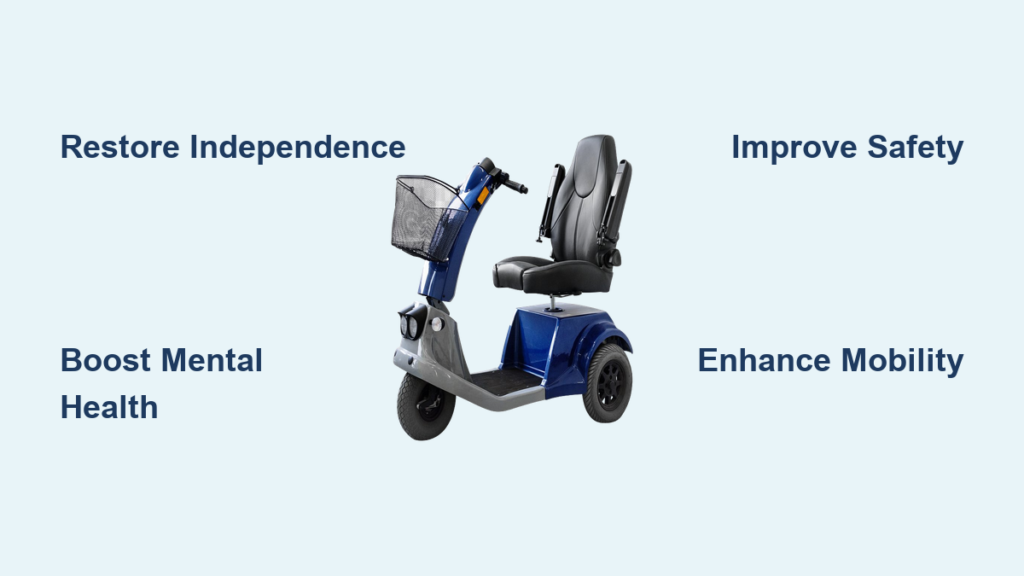
Mounting a scooter feels natural. You simply step through the frame and sit down with both feet flat on the floorboard. This design works идеально for riders in work clothes, skirts, or suits, and it’s easier for those with limited mobility or joint pain. Compare that to motorcycles, where you must straddle a fuel tank and balance on one foot. For short riders or those with physical limitations, scooters remove a major barrier to entry.
Low-Speed Stability and Control
Thanks to a low center of gravity and lightweight build, scooters feel stable and easy to handle at slow speeds. The engine and drivetrain are mounted low and toward the rear, which reduces tipping risk when starting or stopping and makes maneuvering in parking lots effortless. If a scooter tips over, it’s far easier to lift than a 400+ pound motorcycle, a real advantage in crowded urban environments.
Lower Costs That Add Up Over Time
When it comes to ownership, scooters consistently beat motorcycles on affordability. From purchase price to fuel, maintenance, and insurance, the financial edge is clear, especially for city dwellers who ride daily.
Cheaper to Buy From the Start
Entry-level scooters start as low as $1,500 to $2,600, while even basic motorcycles often begin around $4,000 to $6,000. Brands like Honda, Yamaha, and Kymco offer reliable models under $3,000 with modern safety features like ABS. Even resale holds strong, as Vespa scooters retain value like premium motorcycles. Because scooters are less attractive to thieves than high-performance bikes, your risk of total loss may be lower.
Fuel Efficiency That Saves You Money Weekly
Scooters dominate in fuel economy. Here is what you can expect:
• 50cc models get 90 to 100 mpg, perfect for short commutes
• 125cc models reach 80 to 100 mpg, with the Honda Metropolitan exceeding 100 mpg
• 150 to 300cc models still achieve 70 to 85 mpg, ideal for longer urban trips
Compare that to most motorcycles, which average 45 to 65 mpg, and high-performance models can drop below 35 mpg. Over a year, a scooter rider can save hundreds of dollars in fuel alone.
Minimal Maintenance, Lower Repair Bills
Scooters are built for low upkeep. Belt drives require no weekly cleaning, lubrication, or tension adjustments, unlike chain drives on motorcycles. Fewer moving parts mean fewer things to break, and longer service intervals mean oil changes every 1,500 to 3,000 miles. Smaller tires cost less to replace, and riders often describe scooters as set-and-forget machines that stay reliable with basic care.
Insurance and Licensing Savings
Insurance companies see scooters as lower risk due to their limited speed and power. Monthly premiums are often 30 to 50% lower than for motorcycles, and young riders save significantly. In many regions, scooters under 50cc do not require a full motorcycle license. Some states allow operation with just a driver’s license, and even where licensing is required, the automatic transmission reduces the need for advanced training.
Built Specifically for City Life
Scooters are not just cheaper, they are engineered for urban environments. Every design choice, from size to storage, reflects a focus on practicality in crowded cities.
Agile in Traffic, Easy to Park Everywhere
Scooters thrive where motorcycles struggle. Their narrow profile lets you filter between lanes where legal, their light weight makes low-speed handling effortless, and their small turning radius allows U-turns in tight spaces. When it is time to park, scooters fit into half the space of a motorcycle, can park perpendicular to the curb in small gaps, and qualify for scooter-only zones often located right at storefronts. Riders report parking steps from their destination, a luxury car and motorcycle drivers rarely enjoy.
Storage That Works Without Add-Ons
Here is a game-changer: under-seat storage comes standard on nearly every scooter. The lockable compartment is large enough to hold a full-face helmet, grocery bags, a backpack, or rain gear. Larger models like the BMW City X can fit two helmets. Motorcycles typically require aftermarket saddlebags, trunks, or tank bags, adding cost, weight, and complexity. Many scooters also include glove boxes, cup holders, and USB ports, features most motorcycles treat as luxuries.
Weather Resistance That Protects Your Investment
Unlike exposed motorcycles, scooters have fully enclosed bodywork that shields the engine and transmission from rain, dirt, and road grime. This durability means less wear and tear, especially in wet or salty climates. You can park your scooter outdoors without constant worry, and cleaning is as simple as a hose-down.
Comfort That Works for Daily Commutes

For short-to-medium city rides, scooters often deliver a more comfortable experience than many motorcycle styles, especially sportbikes or cruisers.
Upright, Relaxed Riding Position
Scooter ergonomics are designed for comfort. Your feet sit forward on a flat floorboard, your back stays straight without leaning over handlebars, and your wrists remain neutral without strain from aggressive grips. This posture reduces fatigue on daily commutes, making it ideal for riders with back, neck, or wrist issues.
Smooth Ride on City Streets
Scooter suspension is tuned for paved urban roads, not off-road trails. This means effective absorption of potholes and bumps, minimal vibration compared to larger engines, and a quiet, fluid ride often described as gliding. While not built for highway comfort over long distances, scooters excel where most city riders spend their time: under 30 miles at speeds under 50 mph.
Ride in Any Clothes, Any Weather
Scooters let you ride in regular clothes for short trips. There is no hot engine between your legs thanks to enclosed bodywork, the step-through design works with skirts, suits, or uniforms, and less wind blast on legs due to body shielding. In warm weather you stay cooler, in light rain you stay drier. It is practical transportation, not a gear-intensive hobby.
Real-World Performance in Urban Conditions
Raw speed is not everything. In city environments, scooters offer real-world performance advantages that matter more than horsepower numbers.
Quick Off the Line When It Counts
Scooters deliver strong low-end torque thanks to CVT tuning. This means fast 0 to 30 mph acceleration perfect for beating traffic lights, smooth power delivery without gear shifts, and confidence when merging into city traffic. You will not win a drag race, but you will out-accelerate most motorcycles in city conditions where constant stopping and starting dominate.
Built-In Safety Through Moderate Speed
There is a saying among scooter riders: it is more fun to ride a slow scooter fast than a fast motorcycle slow. Scooters encourage engagement without ego. And their lower top speeds, typically 40 to 70 mph depending on engine size, act as a built-in safety feature with less temptation to speed in urban zones, lower risk of severe tickets or accidents, and easier compliance with legal limits.
Small Wheels Mean Big Agility
Scooters typically use 10 to 12 inch wheels, smaller than most motorcycles. This reduces high-speed stability but offers major urban benefits including a tighter turning radius for navigating alleys and parking lots, lighter steering effort at low speeds, and easier tipping into corners when filtering through traffic. Yes, small wheels feel bumpier on rough roads, but in smooth city environments they enhance control and precision.
Lifestyle Benefits Beyond the Specs
Choosing a scooter is not just about numbers, it is about how you want to move through the world. For many riders, it represents a shift toward simplicity, fun, and practicality.
Less Stress, More Enjoyment
Scooter riders report reduced commuting stress with no traffic frustration, more smiling and waving because scooters feel friendly rather than intimidating, and a sense of freedom without ego. There is no pressure to look cool or keep up with traffic. You are not fighting the machine, you are part of the flow.
Inclusive and Approachable Community
Scooters attract a diverse community including older riders who can no longer manage heavy bikes, commuters in business attire, and urban explorers who stop often to shop or take photos. In cities like Paris, Bangkok, or Rome, scooters are the dominant form of transport, seen as smart, efficient, and stylish. That cultural shift is growing in North America and the UK.
Better for the Environment
With lower emissions and higher fuel efficiency, scooters have a smaller carbon footprint than most motorcycles and far less than cars. Electric scooters are already popular in cities, offering zero emissions, quiet operation, and lower running costs. They represent the natural evolution of urban two-wheeled transport.
When a Motorcycle Is Still the Better Choice
Scooters are not perfect for every rider or every situation. Know the limits before you decide.
Highway Use and Long-Distance Riding
Scooters under 150cc struggle at 70+ mph. Larger models can manage, but wind blast and vibration increase fatigue quickly. For highway use and long-distance rides, the suspension and ergonomics of touring motorcycles are superior.
Off-Road and Rough Terrain
Scooters are pavement-only with no off-road capability. If you need to traverse gravel roads, dirt trails, or uneven surfaces, a motorcycle with appropriate suspension and ground clearance is essential.
Performance Enthusiasts
If you love high-speed thrills, aggressive cornering, or engine roar, a motorcycle delivers that experience in ways a scooter cannot match. Some riders simply want performance over practicality, and that is a valid choice.
But ask yourself this: how often do you really need those capabilities? For 90% of daily urban travel, a scooter covers the job better and cheaper.
Key Takeaways for Choosing a Scooter Over a Motorcycle

The advantages of a scooter over a motorcycle are not about lacking power, they are about prioritizing practicality, simplicity, and urban intelligence. With automatic transmission, step-through access, under-seat storage, and fuel economy that beats hybrids, scooters are purpose-built for city life. They cost less to buy, insure, maintain, and fuel. They are easier to park, easier to ride, and easier to store. They encourage a lifestyle of low-stress, high-enjoyment commuting where you arrive at your destination ready to smile.
If your goal is getting from A to B efficiently, affordably, and with a smile, the scooter is not a compromise. It is the smarter choice for urban riders who value their time, money, and sanity over horsepower numbers they will rarely use.
Frequently Asked Questions About Scooter Advantages
Are scooters safer than motorcycles?
Scooters have lower top speeds, which reduces the risk of high-speed accidents, but they also have smaller wheels that are less stable at highway speeds. Safety depends more on rider behavior, gear, and riding conditions than the vehicle type itself.
Can I use a scooter for highway commuting?
Scooters under 150cc typically cannot maintain safe highway speeds. If you need to commute on highways regularly, look for 150cc to 300cc scooters that can handle 70+ mph, or consider a motorcycle.
Do scooters require less maintenance than motorcycles?
Yes. Scooters typically have belt drives instead of chains, fewer moving parts, and smaller engines that require less frequent servicing. Oil changes, tire replacements, and general repairs are usually cheaper.
Are scooters good for beginner riders?
Absolutely. The automatic transmission, low seat height, lightweight design, and step-through frame make scooters one of the most beginner-friendly two-wheeled options available.
How much can I save switching from a motorcycle to a scooter?
Savings vary by usage, but you can expect lower purchase prices, 30 to 50% lower insurance premiums, 50 to 100% better fuel economy, and reduced maintenance costs. Over a year of daily commuting, hundreds of dollars in fuel savings alone are common.
Can I park a scooter anywhere a motorcycle cannot?
Yes. Scooters fit into smaller spaces, can often use dedicated scooter parking zones, and may qualify for street-side parking in areas where motorcycles are not permitted. Their compact size opens up parking options that motorcycles cannot access.